
Image: Inside Egypt
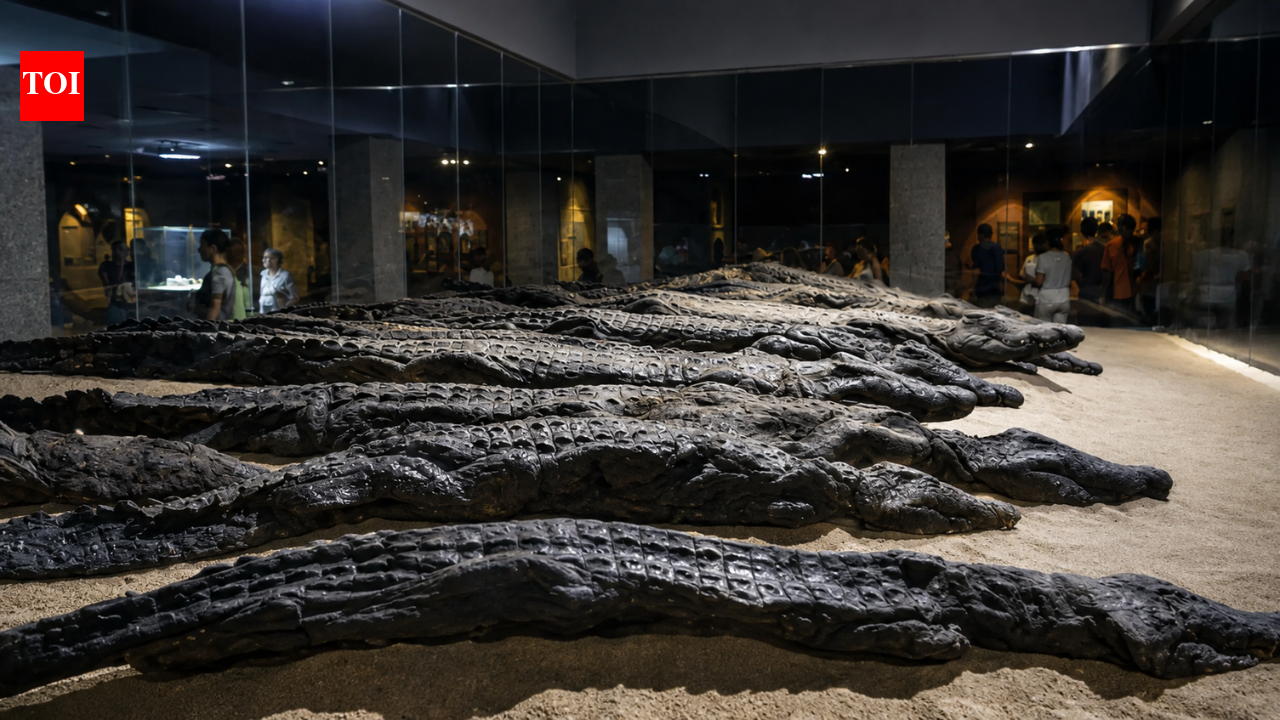
For more than 2,000 years, the Temple of Kom Ombo on the banks of the Nile stood as one of ancient Egypt’s most important centres of crocodile worship. Dedicated to Sobek, the crocodile-headed god associated with the Nile, fertility and royal power, the temple attracted pilgrims who offered mummified crocodiles as sacred votive gifts. Archaeologists have uncovered hundreds of crocodile mummies ranging from hatchlings to enormous adults, raising a long-standing question: were these animals specially bred for ritual purposes or captured from the wild? Modern genetic research is now helping answer that mystery, revealing not only the identity of these sacred reptiles but also offering new insights into Egypt’s changing environment thousands of years ago.
How Kom Ombo Temple became the centre of one of ancient Egypt’s largest crocodile cults dedicated to the god Sobek
Located near modern-day Aswan, the Ptolemaic Temple of Kom Ombo is unique because it was dedicated to two deities simultaneously, Sobek, the crocodile god, and Horus the Elder (Haroeris).Sobek was revered as a symbol of strength, fertility and the life-giving power of the Nile. Ancient Egyptians believed the god protected the land and ensured the river’s annual floods that sustained agriculture. As a result, crocodiles were regarded as sacred animals rather than merely dangerous predators. Around the temple, priests maintained crocodile cemeteries where thousands of mummified reptiles were buried as offerings. Some were carefully wrapped in linen, while others were preserved whole, reflecting the enormous religious importance crocodiles held in ancient Egyptian society.
Modern DNA sequencing identified the sacred crocodiles as a different species than many researchers expected
A breakthrough came with the study ‘The Secrets of Sobek – A Crocodile Mummy Mitogenome from Ancient Egypt’ by Evon R. Hekkala, Matthew L. Aardema, Apurva Narechania, George Amato, Salima Ikram, Matthew H. Shirley, Kent A. Vliet, Seth W. Cunningham, M. Thomas P. Gilbert and Oliver Smith, published in the Journal of Archaeological Science: Reports.The researchers analysed DNA recovered from an adult crocodile mummy believed to have originated from Kom Ombo using advanced next-generation sequencing techniques.Instead of identifying the animal as the familiar Nile crocodile (Crocodylus niloticus), the genetic evidence showed it belonged to the West African crocodile (Crocodylus suchus), a closely related but genetically distinct species. The mitochondrial genome matched Crocodylus suchus far more closely than Crocodylus niloticus, providing the clearest genetic evidence yet that this species played an important role in ancient Egyptian religious practices.
What the findings suggest about the ancient Egyptians’ crocodile species
The discovery carries implications far beyond identifying a single mummy. In ‘The Secrets of Sobek – A Crocodile Mummy Mitogenome from Ancient Egypt,’ Hekkala and colleagues argue that the findings support historical accounts suggesting ancient Egyptians distinguished between different forms of crocodiles centuries before zoologists formally recognised separate species.The Greek historian Herodotus described differences among sacred crocodiles, while the French naturalist Étienne Geoffroy Saint-Hilaire proposed in 1807 that more than one crocodile species had inhabited Egypt.The genetic evidence from the Kom Ombo mummy supports those early observations, indicating that Crocodylus suchus likely lived naturally in the Egyptian Nile and surrounding regions during antiquity. Today, however, its geographical range has contracted significantly, probably because of long-term environmental changes and the progressive drying of the Sahara.
Why some sacred crocodiles were hunted in the wild rather than raised in captivity
Kom Ombo’s crocodile mummies have also provided clues about how the animals were obtained. Using high-resolution synchrotron imaging, researchers examined another crocodile mummy from Kom Ombo in the study ‘Wild Crocodiles Hunted to Make Mummies in Roman Egypt: Evidence from Synchrotron Imaging.’ The virtual examination revealed injuries and stomach contents indicating that the animal had lived in the wild before being killed and mummified.The researchers concluded that at least some crocodiles offered to Sobek were captured from natural habitats rather than bred specifically for temples, demonstrating that ancient Egyptian mummification practices were more diverse than previously believed.
What these crocodile mummies reveal about both Egypt’s religious beliefs and its environmental history
The crocodile cemeteries surrounding Kom Ombo are far more than collections of ritual artefacts. They preserve biological records from an ecosystem that has changed dramatically over thousands of years.By combining archaeology, ancient DNA and modern imaging technologies, scientists are reconstructing the relationship between Egyptians, the Nile and the crocodiles they considered sacred. The research by Evon R. Hekkala and colleagues demonstrates that these mummies are not merely religious relics; they also preserve evidence of species distributions, environmental change and biodiversity in ancient North Africa.More than two millennia after priests laid the crocodiles to rest beneath the sands of Kom Ombo, the sacred reptiles continue to answer questions their creators could never have imagined, revealing how faith, wildlife and genetics intersect in one of ancient Egypt’s most remarkable archaeological legacies. Go to Source