
Friday, July 3, 2026
34 C
New Delhi

America’s burning town is quietly coming back to life after decades of destruction

America’s burning town is quietly coming back to life after decades of destruction

For more than 60 years, Centralia has been defined by what lies beneath it: an underground coal fire that has never gone out. Once home to thousands, the Pennsylvania mining town was gradually emptied as heat, toxic gases, and ground collapse made everyday life unsafe. Buildings were demolished, roads were closed, and Centralia came to be known as a cautionary tale of industrial disaster. Yet today, something unexpected is unfolding. With people largely gone and development frozen, Centralia is no longer only a symbol of destruction. In the absence of human pressure, nature has begun to return.

The origins of the burning town

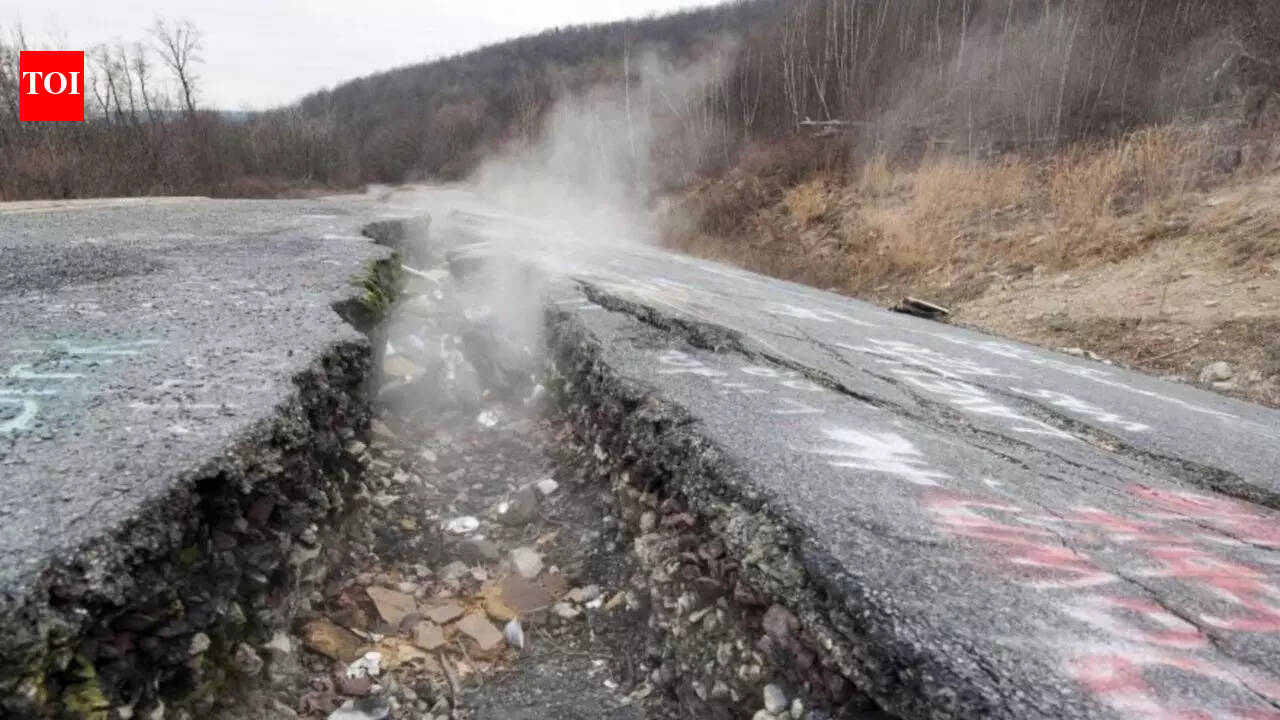
Centralia’s transformation began in 1962, when a trash fire at a local landfill ignited coal seams beneath the town. Efforts to extinguish the blaze failed, and the fire spread through abandoned mine tunnels below the surface. Over time, carbon monoxide seeped into homes, sinkholes opened without warning, and ground temperatures rose to dangerous levels. After decades of costly and unsuccessful containment attempts, authorities accepted that the fire could continue burning for generations.As conditions worsened, state and federal authorities offered residents buyouts. Most families left. By the early 1990s, the town was officially condemned, and nearly all buildings were demolished. Streets remained, but houses, schools, and businesses disappeared. Centralia became a ghost town, its identity shaped as much by absence as by the persistent heat below the ground.

What replaced abandonment

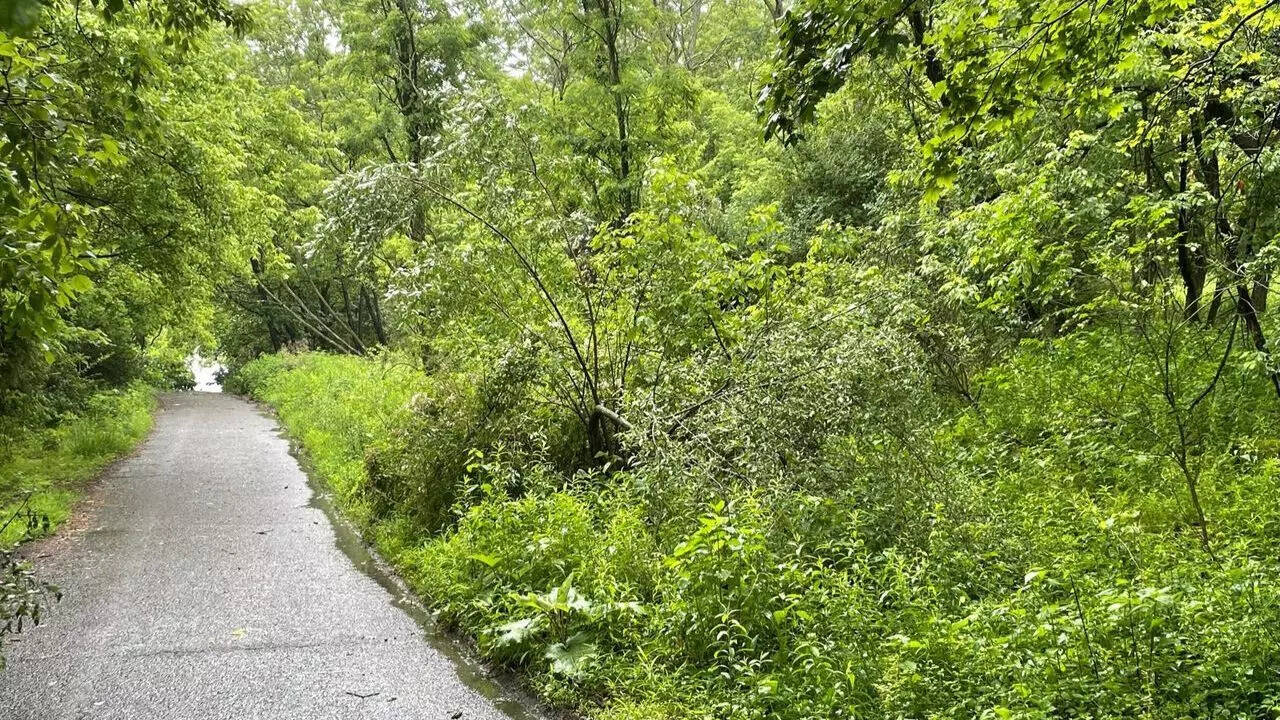
Where homes once stood, grasses, shrubs, and young trees now spread across the land. Former neighbourhoods have gradually transformed into open fields and emerging woodland, with the old street grid barely visible beneath layers of vegetation. With traffic gone, buildings removed, and human activity largely absent, the land has remained undisturbed for years at a time. That quiet has allowed plant life to establish itself steadily. Wildflowers, hardy grasses, and saplings now thrive in soil once compacted by roads and foundations.Insects arrived first, followed by birds and small mammals drawn by new food sources and shelter. What was once regarded only as a toxic, abandoned landscape has slowly taken on the characteristics of an unintended nature reserve, shaped not by conservation planning or restoration efforts, but simply by being left alone.
What replaced abandonment

Why people are not returning

The underground fire has not gone away. In some areas, steam still rises through cracks in the ground, especially after rainfall. These reminders of danger remain constant, and Centralia is still considered unsafe for redevelopment. While ecosystems have adapted above the burning coal seams, the risks below continue to shape the town’s future.Despite the visible recovery of the landscape, Centralia is not being repopulated. Rebuilding is prohibited, and the few remaining residents are exceptions rather than signs of revival. The town’s fate is defined by monitoring and containment, not by the return of permanent human settlement.

A lesson written into the land

Centralia’s story is no longer only one of failure. It also reveals how landscapes can change when human activity retreats. The town has not been saved, and the fire still burns, but life has found space to return in unexpected ways. After decades of destruction driven by industry and abandonment, Centralia stands as a quiet reminder that nature often moves in when people move out, even in places once thought to be beyond recovery. Go to Source


Hot this week

Mongolian proverb of the day: ‘A horse knows the road, even if its rider does not’

‘A horse knows the road, even if its rider does not’ A horse on the steppe remembers what maps forget: A proverb from Mongolia where survival once depended on animal instinct, weather sense, and inherited knowledge of t Read More

Palestinian proverb of the day: ‘A house without curtains cannot face the wind’

‘A house without curtains cannot face the wind’ A house without curtains is not just exposed to wind. Read More

Bhutanese proverb of the day: ‘Whatever joy you seek, it can be achieved by yourself; whatever misery you seek, it can be found by...

Bhutanese proverb of the day on happiness and sorrow. Bhutan is one of the happiest countries of the world and it is no wonder that a Bhutanese proverb lays bare their secret of happiness. Read More

Scientists thought ravens followed wolves for food. A 2.5-year GPS study told a different story.

Scientists Thought Ravens Followed Wolves for Food. They Were Wrong. Ravens Predict Them For decades, biologists believed ravens found their next meal by shadowing wolves across the landscape until the predators made a kill. Read More

This 4,000-year-old wooden monument in England may have been built to ‘extend summer’

Studies show that the ancient timber circle, dubbed “Seahenge,” was built in 2049 B.C. It was excavated from a salt marsh near a beach on England’s east coast in 1999. Read More

Topics

Mongolian proverb of the day: ‘A horse knows the road, even if its rider does not’

‘A horse knows the road, even if its rider does not’ A horse on the steppe remembers what maps forget: A proverb from Mongolia where survival once depended on animal instinct, weather sense, and inherited knowledge of t Read More

Palestinian proverb of the day: ‘A house without curtains cannot face the wind’

‘A house without curtains cannot face the wind’ A house without curtains is not just exposed to wind. Read More

Bhutanese proverb of the day: ‘Whatever joy you seek, it can be achieved by yourself; whatever misery you seek, it can be found by...

Bhutanese proverb of the day on happiness and sorrow. Bhutan is one of the happiest countries of the world and it is no wonder that a Bhutanese proverb lays bare their secret of happiness. Read More

Scientists thought ravens followed wolves for food. A 2.5-year GPS study told a different story.

Scientists Thought Ravens Followed Wolves for Food. They Were Wrong. Ravens Predict Them For decades, biologists believed ravens found their next meal by shadowing wolves across the landscape until the predators made a kill. Read More

This 4,000-year-old wooden monument in England may have been built to ‘extend summer’

Studies show that the ancient timber circle, dubbed “Seahenge,” was built in 2049 B.C. It was excavated from a salt marsh near a beach on England’s east coast in 1999. Read More

Indian-origin Rep Thanedar tells ‘racist’ Brandon Gill what the Internet has been constantly reminding him. ‘You married an Indian American’

Shri Thanedar picked a fight with Brandon Gill over the latter’s hatred towards Indians. Congressman Brandon Gill is known for his statements against Muslims and H-1B visa holders. Read More

Congress demands dissolution of Ram temple trust

Jairam Ramesh NEW DELHI: Congress Friday demanded dissolution of the Ram Janmabhoomi Teerth Kshetra Trust over the donation theft row and sought a SC-monitored probe. It demanded that PM Narendra Modi break his silence on the issue. Read More

Related Articles