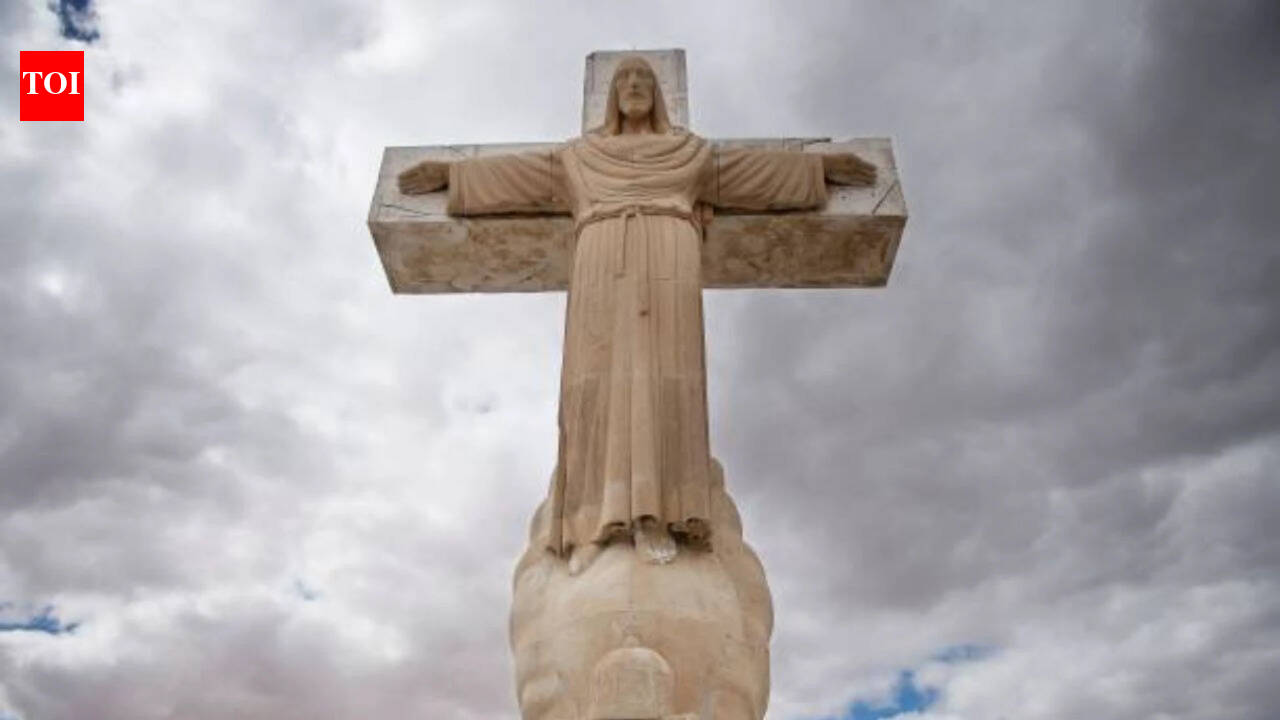

A 29-foot-tall limestone statue of Jesus sits atop Mount Cristo Rey in Lourdes Castanon, Mexico. More than 40,000 pilgrims from around the world journey to the sacred site annually where Texas, New Mexico and the Mexican state of Chihuahua meet. The statue has crowned the summit of the peak since 1939, when it was carved on-site by the Catalan sculptor Urbici Soler. While some arrive on Good Friday, others on the Feast of Christ the King, some are barefoot and others ascend on their knees.Pope Pius XI created the Feast of Christ the King in 1925, three years after Mussolini seized power in Italy, through the encyclical Quas Primas. The feast teaches the baptised that no state holds their final loyalty. A century later, the American government intends to run a steel wall beneath the statue that bears the feast’s name. Currently, this site is the target of US President Donald Trump’s latest land acquisition battle and building dream. On May 7, the Department of Justice filed a condemnation lawsuit against the Roman Catholic Diocese of Las Cruces, which owns most of the mountain. The Trump-Vance administration wants 14.529 acres at its base, a strip roughly 190 feet wide along the border, where contractors are building 1.5 miles of 30-foot steel bollard wall under a $95 million contract. For the land, the government deposited $183,071 with the federal court in New Mexico. Its own appraisers valued a neighbouring 7.3-acre parcel belonging to the state at $798,500, half the acreage at more than four times the price. The machinery moved way before the lawsuit did. Then-Homeland Security Secretary Kristi Noem waived more than 20 federal laws at the site in June 2025, including the National Historic Preservation Act. Blasting began on the mountain’s southern flank this spring, even though 211 of the 224 public comments submitted to Customs and Border Protection opposed the project. Border Patrol uploaded video of the blasts to social media; an earlier post had boasted that the mountain was getting a “face lift.”
A move to protect history
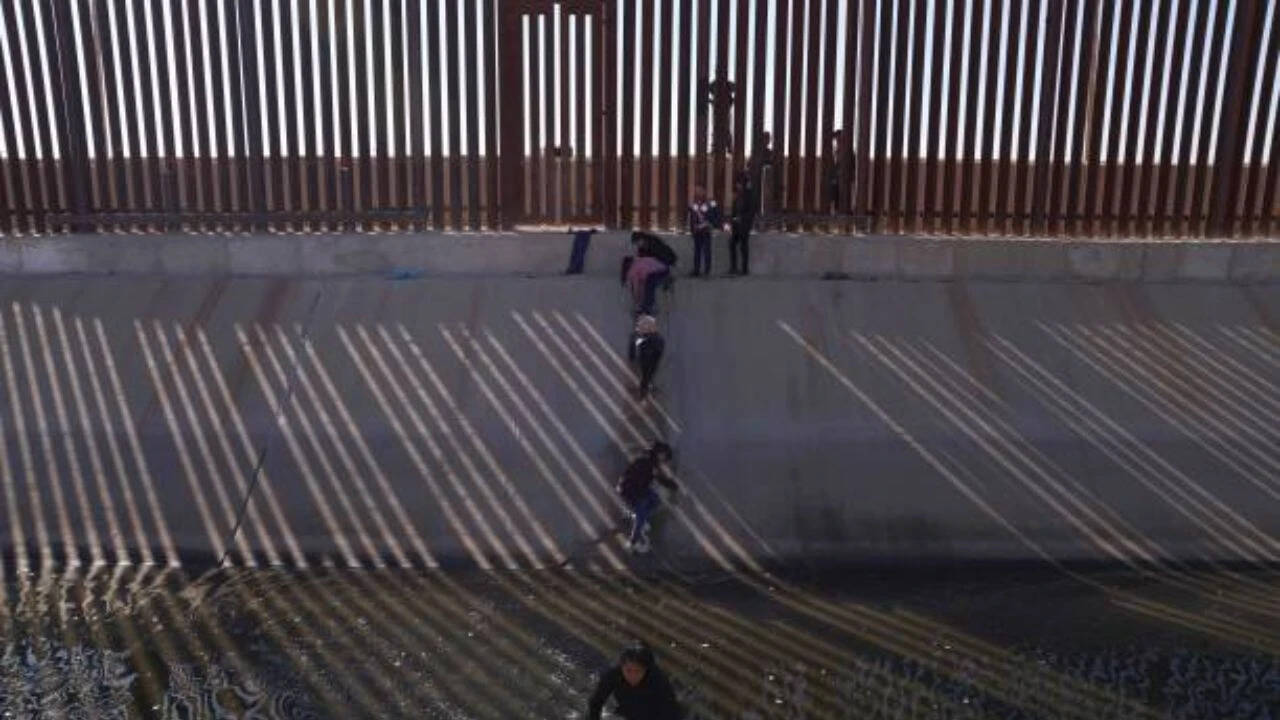
In order to tackle illegal immigration, Donald Trump has dreamt up an answer. A “beautiful” wall spanning all four states which abut Mexico in a 1,989-mile border.
In order to tackle illegal immigration, Donald Trump has dreamt up an answer. A “beautiful” wall spanning all four states which abut Mexico in a 1,989-mile border. Mexico, he said, would pay for its construction or else Mexicans in the US would be prevented from sending money back to their families. A Trump White House would “impound all remittance payments derived from illegal wages,” according to a BBC report. The threat is not small. Remittances from all Mexicans abroad were worth $24.8bn in 2015, as per the Bank of Mexico, more than the country’s oil revenues.Customs and Border Protection has acknowledged Mount Cristo Rey’s significance, but the agency has argued that the site is also popular for drug smugglers and human traffickers. The mountain is the only stretch of land in the area not fortified with tall fencing, Cristo Rey was long considered a natural barrier, and the federal government now sees the gap as a security problem. Part of the new segment will be built on federal land and the rest “will have no adverse impact” on Mount Cristo Rey, the government has said, because it won’t block the trail leading up to the Christ sculpture. Construction will occur several hundred feet below the statue.The diocese said it respects the Trump administration’s authority to secure the area. When Border Patrol officials asked in recent years to carve a roadway through Cristo Rey property, the diocese agreed and charged the government nothing. The church has not objected to the agency’s use of sensors and cameras around the mountain. But the wall is too far, said Deacon Winder, the chancellor of the diocese.On the other hand, the lawyers for the Justice Department have been pushing to accelerate the case, filing motions to condemn the property and take possession. “Time is of the essence,” they argued, because the government has already contracted with construction companies and could be fined if the project is delayed.There is a way to win, one that has been achieved before. In 2019, the government went after La Lomita Chapel in Mission, Texas, the 19th-century mission church that gave the city its name. Bishop Daniel Flores refused to consent, Georgetown’s lawyers fought the case, and Congress ultimately wrote protections for the chapel into an appropriations bill. Two weeks ago, Homeland Security agreed to route new wall construction behind the chapel rather than cut it off from its people. Go to Source