
Wednesday, August 5, 2026
30.3 C
New Delhi

45,000-year-old crystal tool reveals Neanderthals valued beauty too

A 45,000-year-old crystal tool found in France suggests Neanderthals chose beauty as well as practicality

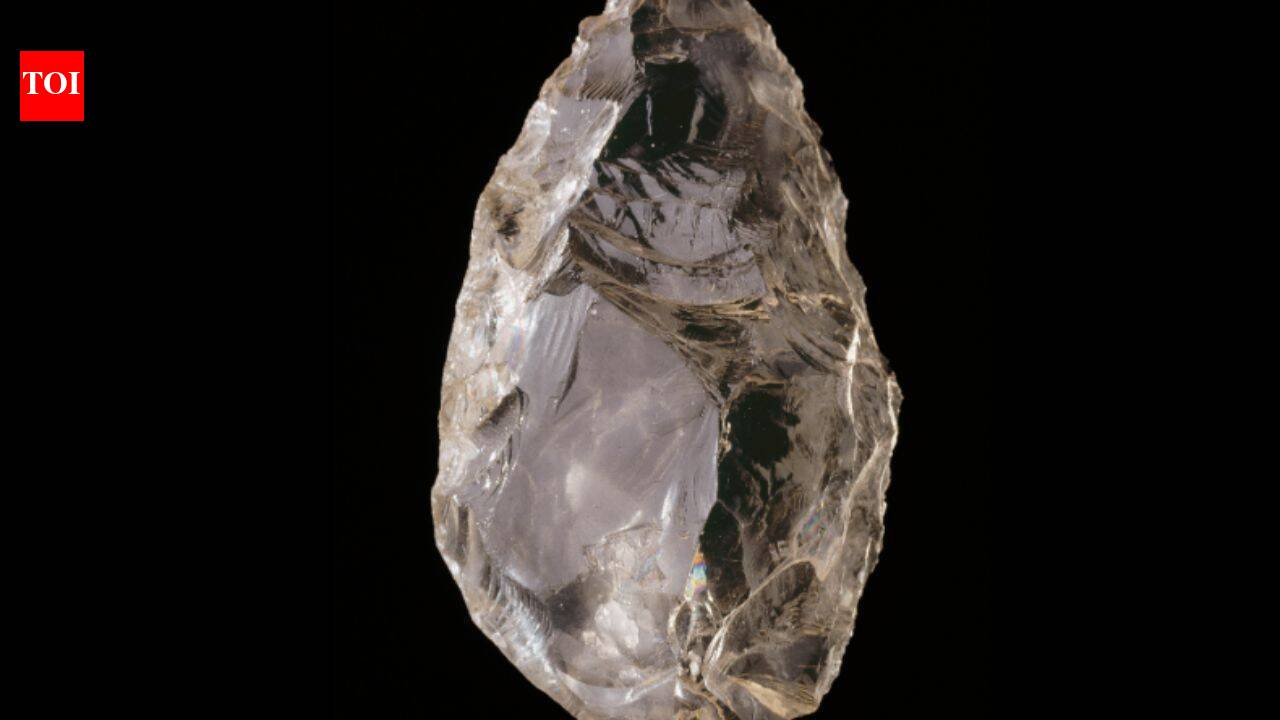
A remarkable find in France reveals a 45,000-year-old Neanderthal quartz scraper that changes the narrative around these ancient beings. This tool, crafted from rare rock crystal, highlights that Neanderthals had an appreciation for aesthetics and craftsmanship, challenging the notion of them as mere primitive beings. The sophistication in its creation suggests a deeper cultural understanding and skillful manipulation of their environment, offering insights into Neanderthal life and artistry.

A small piece of translucent quartz discovered in a French cave nearly a century ago has continued to reshape the way scientists view Neanderthals. The object, a carefully worked rock crystal scraper, was not made from the materials these prehistoric toolmakers usually relied upon. Instead, someone selected a rare, visually striking stone and transformed it into a practical tool. Found among other quartz artefacts in the Dordogne region, the discovery challenged early assumptions that Neanderthals lacked creativity or an appreciation for unusual materials. Today, the artefact offers a glimpse into how function and visual appeal may have existed together in Neanderthal craftsmanship.

45,000-year-old Neanderthal quartz scraper highlights unusual stone tool technology in France

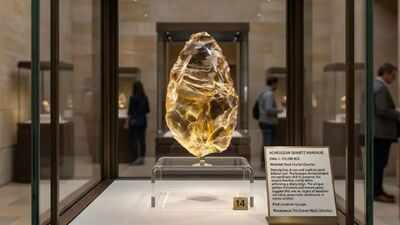
The rock crystal scraper comes from Abri des Merveilles, an archaeological site in southwestern France’s Dordogne region. Reportedly, the cave became significant after American archaeologists uncovered a group of unusual quartz tools there in 1924.As per the 1931 American School of Prehistoric Research bulletin, the excavation was led by George MacCurdy from the institution now associated with Harvard University. Among the finds was a transparent, yellow-tinted piece of microcrystalline quartz that had been shaped into a tool. The artefact is now held by France’s National Archaeological Museum.Unlike many Neanderthal tools made from flint or chert, this object was created from rock crystal, a material that behaves differently when fractured. Flint was often preferred because it produced predictable sharp edges, making it reliable for cutting and scraping tasks. Quartz required more skill and judgement, as its structure made shaping it less straightforward.The cave also contained small fragments of quartz left behind during production, suggesting the tool was likely made at the site rather than carried there after completion.

Neanderthal rock crystal tools show careful material selection

The presence of rock crystal tools at Neanderthal sites has long attracted attention because the material appears to have been selected for more than just its usefulness.The scraper may have served a practical purpose, possibly as a combination scraping and pointed implement. Yet its clear appearance and unusual colour raised questions about why Neanderthals chose this stone when other materials were easier to work.According to Harvard University, American School of Prehistoric Research, the quartz may have come from deposits connected to waterways near the Vézère River, a tributary of the Dordogne. The exact age of the Abri des Merveilles layers remains uncertain, but archaeological evidence suggests the tools were created somewhere around 45,000 years ago.


Neanderthal rock crystal tools show careful material selection<br />” msid=”132917640″ width=”” title=”PC: Ministère de la Culture” placeholdersrc=”https://static.toiimg.com/photo/83033472.cms” imgsize=”” resizemode=”4″ offsetvertical=”0″ placeholdermsid=”47529300″ type=”thumb” src=”https://static.toiimg.com/photo/83033472.cms” class=”” data-src=”https://static.toiimg.com/photo/msid-132917640/neanderthal-rock-crystal-tools-show-careful-material-selectionbr.jpg” data-api-prerender=”true”/> </p>
<p> PC: Ministère de la Culture</p>
</p></div>
</p></div>
<p><h3> Neanderthal creativity beyond old stereotypes</h3>
</p>
<p> For much of the early 20th century, Neanderthals were often portrayed as primitive and lacking the abilities associated with modern humans. According to the 1931 bulletin, these ideas were heavily influenced by interpretations of Neanderthal fossils, including the remains of an elderly individual from La Chapelle-aux-Saints in France.The individual had suffered from severe arthritis, but early interpretations focused on physical differences and helped create the inaccurate image of Neanderthals as crude, almost animal-like beings.MacCurdy’s interpretation of the rock crystal tools offered a different perspective. He argued that the choice of material showed an awareness of shape, colour and quality. In his view, the tools indicated that Neanderthals were capable of recognising aesthetic qualities even while making objects for everyday use.He did not describe them as artists in the same way as later human societies are understood to have been, but he suggested that they possessed a sense of visual appreciation. </p>
<p><h3> Ancient tool revealed the complexity of Neanderthal culture</h3>
</p>
<p> When the quartz tools were first studied, evidence of Neanderthal symbolic behaviour was far more limited than it is today. Archaeologists had not yet uncovered many of the examples now associated with Neanderthal creativity, including possible pigment use, engravings and decorative objects.Later discoveries and advances in genetics changed the scientific picture of Neanderthals. Evidence that they interbred with Homo sapiens, along with growing research into their behaviour, has shown that they were far more complex than earlier descriptions suggested.The rock crystal scraper became an early piece of evidence in that shift. It showed that Neanderthal technology was not simply about survival and efficiency, but could also involve decisions influenced by the appearance and character of materials. </p>
<p><h3> A small artefact with a long scientific legacy</h3>
</p>
<p> The Abri des Merveilles scraper remains a modest object in size, but its importance lies in the questions it raised. A single quartz tool forced archaeologists to reconsider assumptions about the minds behind prehistoric technology.The artefact’s careful shaping and unusual material choice provide a rare connection to the decisions of an individual Neanderthal craftsman thousands of years ago. Whether the stone was selected partly because of its beauty or simply because it was available, its existence shows that Neanderthal toolmaking involved thought, preference and a close relationship with the materials around them.Nearly 45,000 years later, the small piece of rock crystal continues to offer evidence of a more nuanced understanding of one of humanity’s closest extinct relatives.    <a href=Go to Source

Hot this week

Meet Seungah Chung, the US eighth-grader who used 200 ants to discover landmark navigation

Seungah Chung (Image Credit: Society For Science) Most of us have seen ants marching across the ground without giving them much thought. Seungah Chung saw something different. Read More

‘Orchestrated spectacles’: India rejects Pakistan’s ‘Youm-e-Istehsal’ on revocation of Article 370

“World not fooled by orchestrated spectacles”: India slams Pakistan for statements on 370 abrogation, violence in PoJK NEW DELHI: India on Wednesday strongly rejected Pakistan’s observance of the so-called “Yo Read More

‘Spewing venom to stay politically relevant’: Owaisi hits back with ‘chair-stool’ jab at Keshav Maurya over madrassa remarks

Asaduddin Owaisi; Keshav Prasad Maurya NEW DELHI: All India Majlis-e-Ittehadul Muslimeen (AIMIM) chief Asaduddin Owaisi on Wednesday hit back at Uttar Pradesh deputy chief minister Keshav Prasad Maurya over his remarks on madrassas Read More

Evening news wrap: Meta CEO Mark Zuckerberg apologises to Centre; Rahul Gandhi meets student protesters, targets PM Modi & more

File photo: Meta CEO Mark Zuckerberg and Congress MP Rahul Gandhi Meta CEO Mark Zuckerberg apologises to Centre over CSAM, deepfakes. Rahul Gandhi meets student protesters, attacks PM Modi and Amit Shah over crackdown. Read More

Trump’s immigration crackdown hits US military families; over 50 spouses, parents detained

File photo: US President Donald Trump (Picture credit: AP) The US administration led by President Donald Trump has detained dozens of parents and spouses of active-duty American service members as part of its expanded immigration cr Read More

Topics

Meet Seungah Chung, the US eighth-grader who used 200 ants to discover landmark navigation

Seungah Chung (Image Credit: Society For Science) Most of us have seen ants marching across the ground without giving them much thought. Seungah Chung saw something different. Read More

‘Orchestrated spectacles’: India rejects Pakistan’s ‘Youm-e-Istehsal’ on revocation of Article 370

“World not fooled by orchestrated spectacles”: India slams Pakistan for statements on 370 abrogation, violence in PoJK NEW DELHI: India on Wednesday strongly rejected Pakistan’s observance of the so-called “Yo Read More

‘Spewing venom to stay politically relevant’: Owaisi hits back with ‘chair-stool’ jab at Keshav Maurya over madrassa remarks

Asaduddin Owaisi; Keshav Prasad Maurya NEW DELHI: All India Majlis-e-Ittehadul Muslimeen (AIMIM) chief Asaduddin Owaisi on Wednesday hit back at Uttar Pradesh deputy chief minister Keshav Prasad Maurya over his remarks on madrassas Read More

Evening news wrap: Meta CEO Mark Zuckerberg apologises to Centre; Rahul Gandhi meets student protesters, targets PM Modi & more

File photo: Meta CEO Mark Zuckerberg and Congress MP Rahul Gandhi Meta CEO Mark Zuckerberg apologises to Centre over CSAM, deepfakes. Rahul Gandhi meets student protesters, attacks PM Modi and Amit Shah over crackdown. Read More

Trump’s immigration crackdown hits US military families; over 50 spouses, parents detained

File photo: US President Donald Trump (Picture credit: AP) The US administration led by President Donald Trump has detained dozens of parents and spouses of active-duty American service members as part of its expanded immigration cr Read More

Texas uses discarded Christmas trees to help sea turtles survive

Discarded Christmas trees are repurposed to build sand dunes along the Texas coast. These trees are placed on beaches to trap shifting sand and strengthen the shoreline. Read More

Related Articles