
Image: AI generated
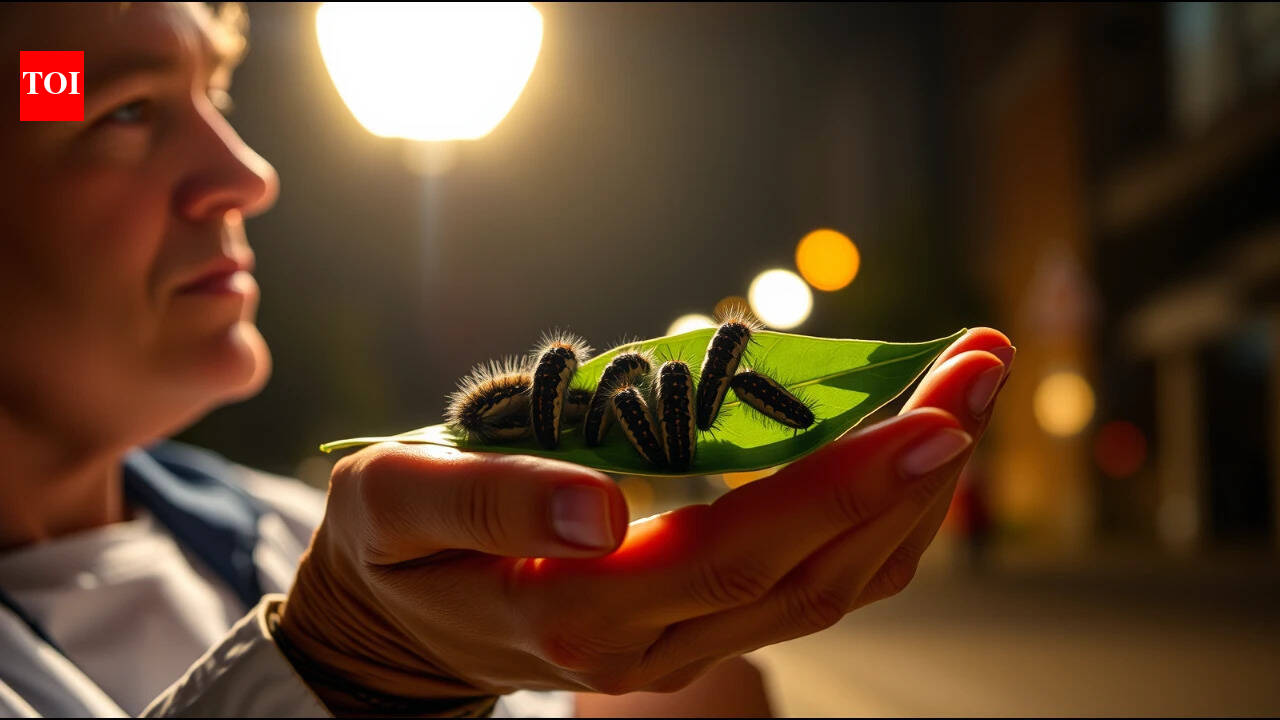
Over three summers, a doctoral researcher named Douglas Boyes spent more than 400 hours crouched beside English roadside hedges after dark, tapping branches with a stick and counting how many moth caterpillars fell onto a canvas tray below. Boyes, who split his time between Newcastle University and the UK Centre for Ecology and Hydrology, expected artificial street lighting to reduce caterpillar numbers by something like 10 per cent. What he actually found was far more severe, and it revealed something specific about which type of streetlight was doing the most damage.
How scientists discovered streetlights were linked to fewer caterpillars
The research compared 26 pairs of roadside sites across Oxfordshire, Buckinghamshire and Berkshire, matching a lit stretch of hedgerow or grass margin against a similar unlit stretch nearby. According to thestudy published in Science Advances, caterpillar numbers in lit hedgerows came in 47 per cent lower than in unlit hedgerows, while lit grass margins showed a 33 per cent reduction compared to their unlit counterparts.The fieldwork was designed specifically to avoid a common bias in insect lighting research. Rather than counting adult moths drawn toward light traps, which only shows where moths flew on a given night, Boyes counted caterpillars directly on the plants where they had been feeding for weeks, since caterpillars cannot fly away from unfavourable conditions. Hedgerows were sampled during daylight using the beating tray method specifically so no caterpillar would be drawn toward a light source while being counted, while grass margins were swept after dark, when caterpillars typically climb up plant stems to feed.
Why the type of streetlight made such a big difference
Breaking the results down by lamp type revealed an even sharper pattern. Hedgerows lit by white LED streetlights showed a 52 per cent drop in caterpillar numbers, compared to a 41 per cent drop under older high-pressure sodium lamps. In grass margins, the gap was even wider, with LED-lit sites showing a 43 per cent decline against just an 11 per cent decline under low-pressure sodium lighting.According to the UK Centre for Ecology and Hydrology, which co-led the research, this pattern suggests the specific type of lighting mattered more than simply whether a stretch of road was lit at all. White LED lights emit more light across the blue end of the spectrum compared to older sodium lamps, a difference researchers believe may be particularly disruptive to nocturnal insects.
What LED adoption has looked like in practice
The shift toward LED lighting has moved quickly, both on roads and inside homes, largely because LEDs use significantly less electricity than older lighting technology while lasting considerably longer, making them an easy economic choice for governments and homeowners alike. In the United States, only 4 per cent of households used LEDs for most or all of their indoor lighting in 2015, a figure that climbed to 47 per cent by 2020 and reached 63 per cent by 2024, reflecting how rapidly this lighting transition has taken place largely without ecological considerations factored into the decision.The study also found that caterpillars collected from lit stretches weighed significantly more than those from unlit stretches, an effect that was strongest under LED lighting. Rather than treating this as a positive outcome, the researchers interpreted the heavier weights as a sign of disrupted development, since artificial light at night is known to interfere with the natural growth and moulting cycles of some insect species.
What this finding means, and what it does not mean
The study’s authors were careful to place their findings in proper context. They estimated that only around 1.1 per cent of the land across their study region was directly lit above the light threshold used in the research, meaning street lighting represents a relatively localised pressure rather than the primary driver of the broader insect declines being recorded across Europe, which are more strongly linked to habitat loss, pesticide use, intensive farming and climate change.What makes the finding practically useful is that, unlike many drivers of insect decline, artificial lighting has relatively simple and low-cost fixes already available. These include fitting shields that direct light downward onto roads rather than sideways into hedgerows, using warmer coloured LED bulbs that emit less light at the blue end of the spectrum, and dimming streetlights after midnight when human traffic is lowest.Boyes died in autumn 2021, just weeks after his research was published, at the age of 25. Colleagues have since established an award in his name, given to young insect recorders, continuing the kind of painstaking, hands-on fieldwork that shaped his own research into one of the clearer pieces of evidence linking a specific, fixable human choice to measurable harm for a group of insects most people rarely think to look for in the dark. Go to Source