
From nuclear wasteland to wildlife sanctuary: Chernobyl’s unexpected rebirth
Forty years after the world’s worst civilian nuclear accident, a thriving wildlife sanctuary has emerged in the Chernobyl Exclusion Zone (CEZ), with wolves, foxes, lynx, elk, wild boar, brown bears and European bison now flourishing despite continuing radiation.The 1986 disaster released a radioactive cloud across Europe and led to the evacuation of around 115,000 people. Almost immediately, radiation poisoning killed 31 plant workers and firefighters. A 2,600 km² exclusion zone was established, prohibiting human residence, commercial activities, natural resource extraction and public access.
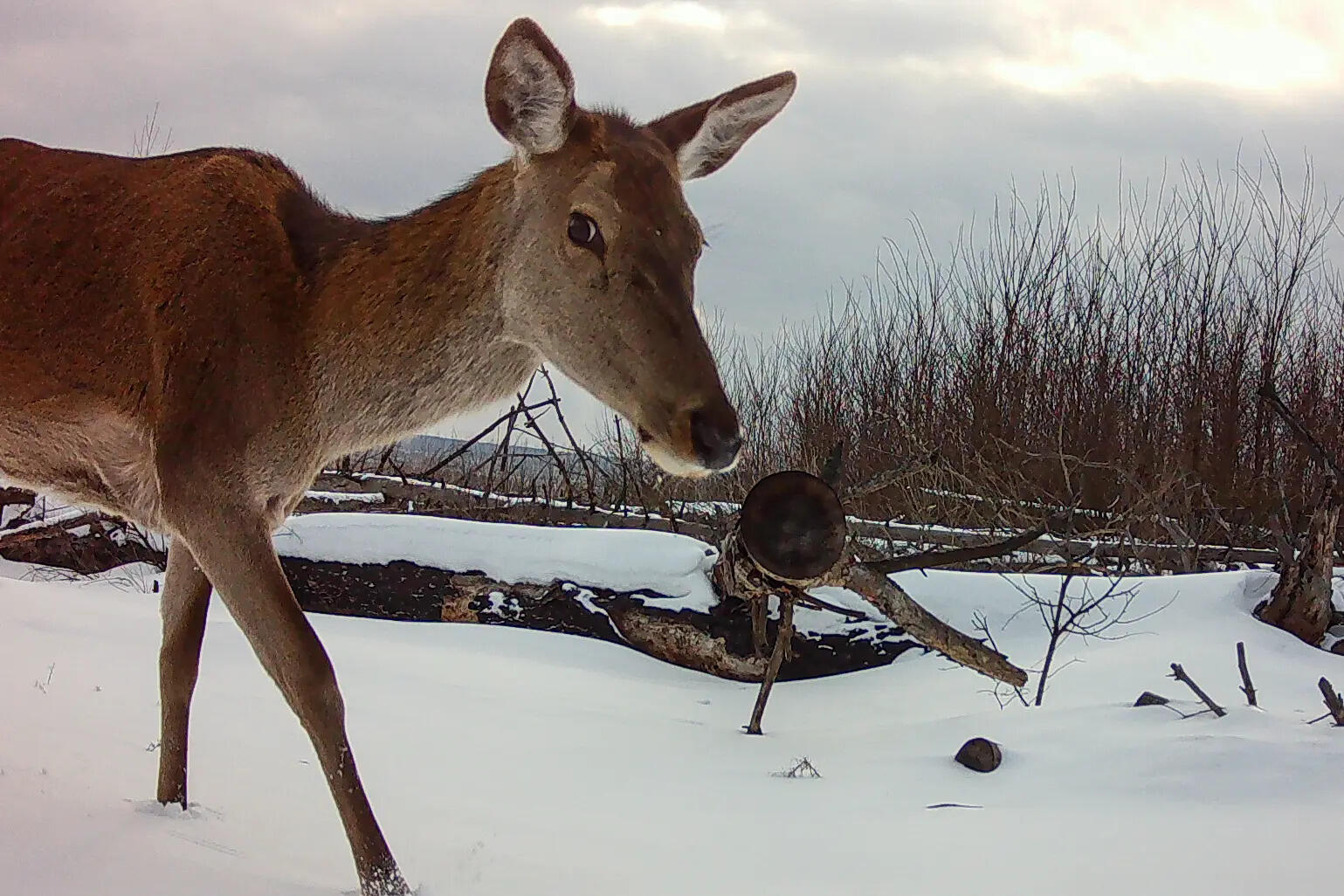
A wild deer walks on snow in a forest inside the Chernobyl exclusion zone, Ukraine. (AP Photo)
Wildlife returns
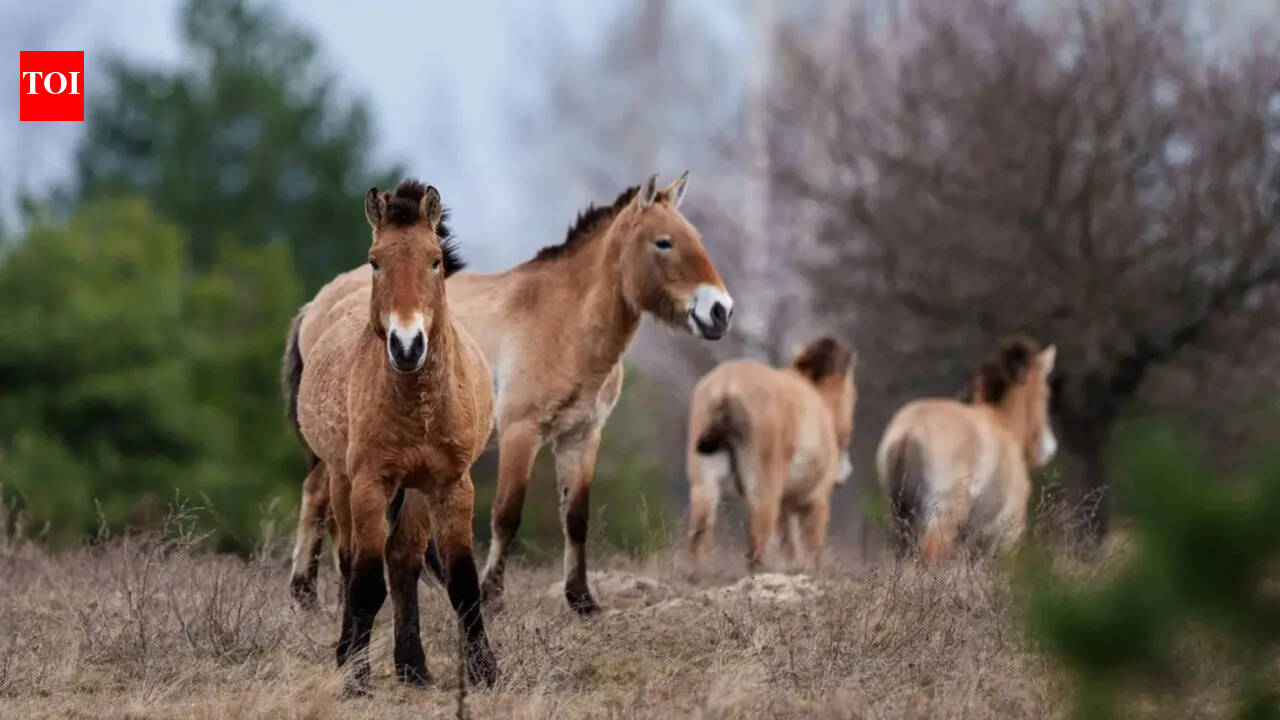
According to the IAEA’s 2006 Chernobyl Forum report, the absence of human activity has had a more positive impact on animal numbers than radiation has had a negative one. Large mammal populations in the Belarusian sector of the zone are comparable to or higher than those in uncontaminated nature reserves.Endangered species that have returned include Przewalski’s horses (reintroduced in 1998, now over 150 animals), Eurasian lynx, European bison, black storks, white storks and white-tailed eagles.Most significant is the return of the globally endangered greater spotted eagle, which had vanished from the area at the time of the accident. According to earlier reports, this region is now the only place in the world where the population of this rare species is growing.The IAEA report notes that wolves and wild boar have significantly increased in numbers, and beavers have established about 100 families in the drainage channels of the Pripyat floodplain. The CEZ has become a breeding area for white-tailed eagles, spotted eagles, eagle owls, cranes and black storks.
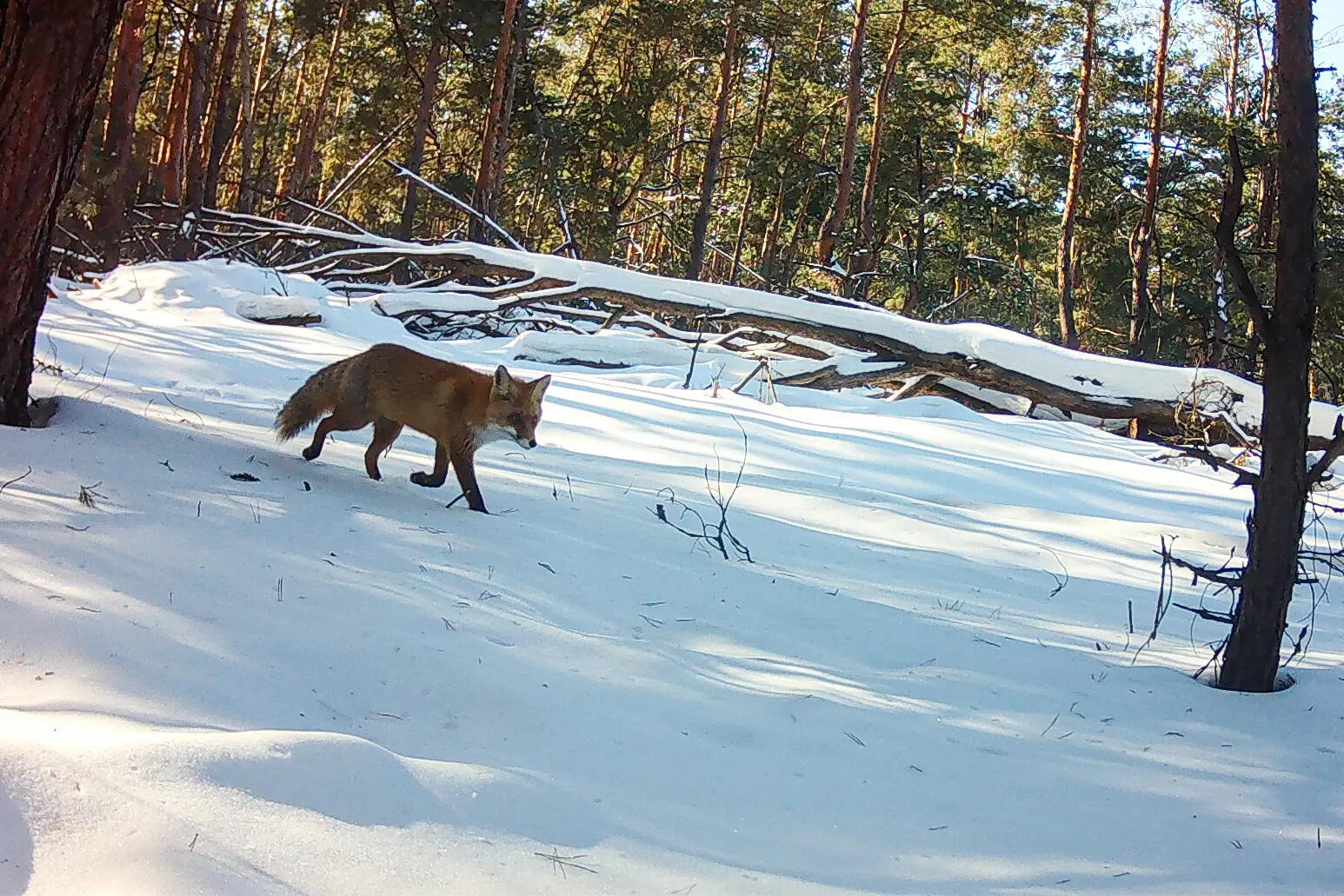
A fox walks on snow in a forest inside the Chernobyl exclusion zone, Ukraine. (AP Photo)
Adaption to radiation
Some species appear to be adapting to the radioactive environment. The IAEA report confirms that tree frogs in the zone are darker, as higher melanin levels seem to protect against radiation damage. Wolves show potential adaptations to survive chronic radiation and reduce cancer risks.A black fungus discovered growing inside reactor 4 appears to use melanin to convert gamma radiation into energy, growing faster than normal. Some plants in the zone demonstrate DNA repair as a response to high radiation levels.
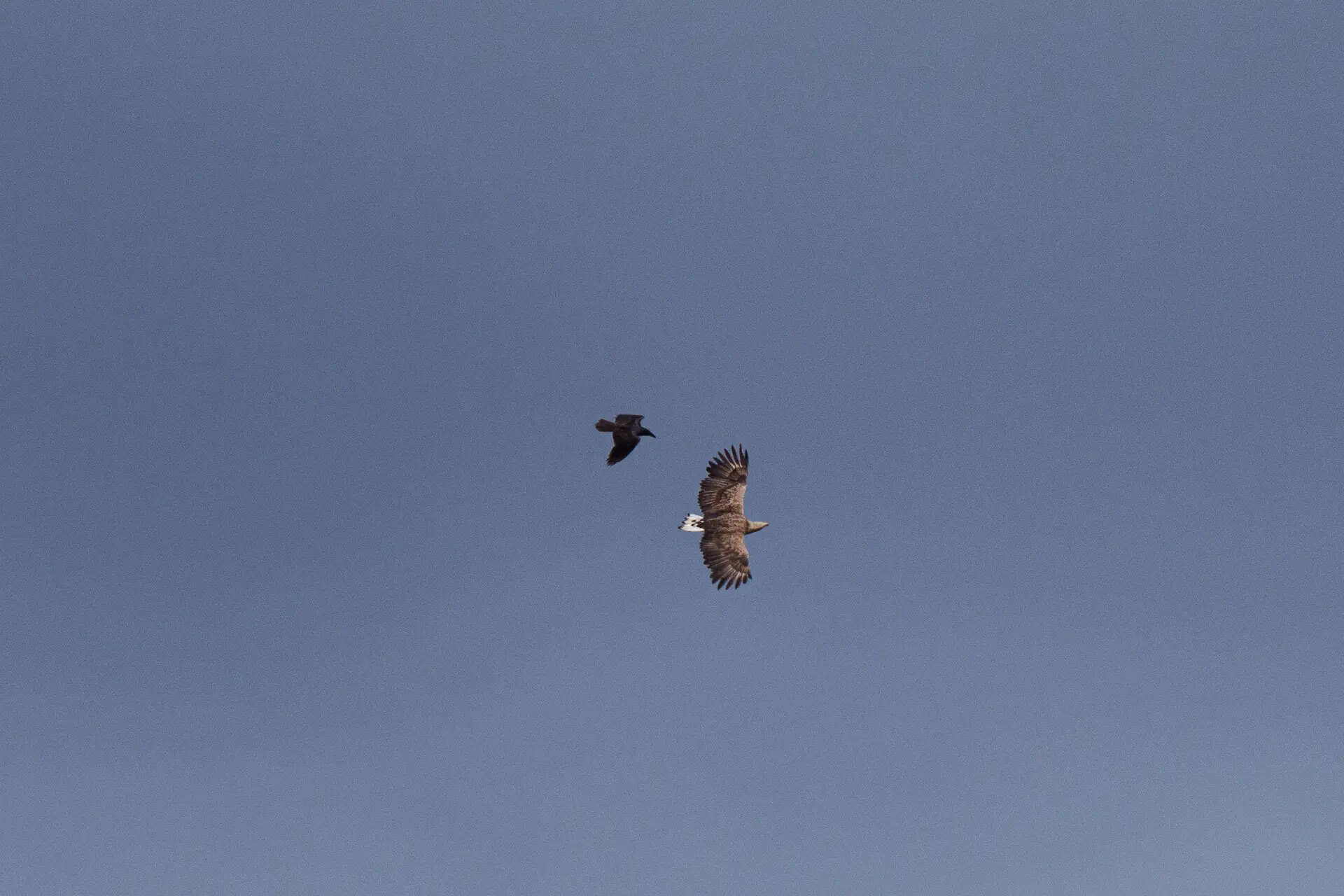
A crow and a bald eagle flying above the Chernobyl exclusion zone, Ukraine. (AP Photo)
Radiation effects and recovery
The IAEA report confirms that radiation caused acute adverse effects in the most exposed areas — increased mortality of coniferous plants, soil invertebrates and mammals, reproductive losses, and chronic radiation syndrome in animals. However, no adverse effects have been reported in plants and animals exposed to a cumulative dose of less than 0.3 Gy during the first month after fallout.Following the natural reduction of exposure levels due to radionuclide decay and migration, populations have been recovering. By the next growing season after the accident, plant and animal viability substantially recovered through reproduction and immigration. A few years were needed for recovery from major radiation-induced effects.
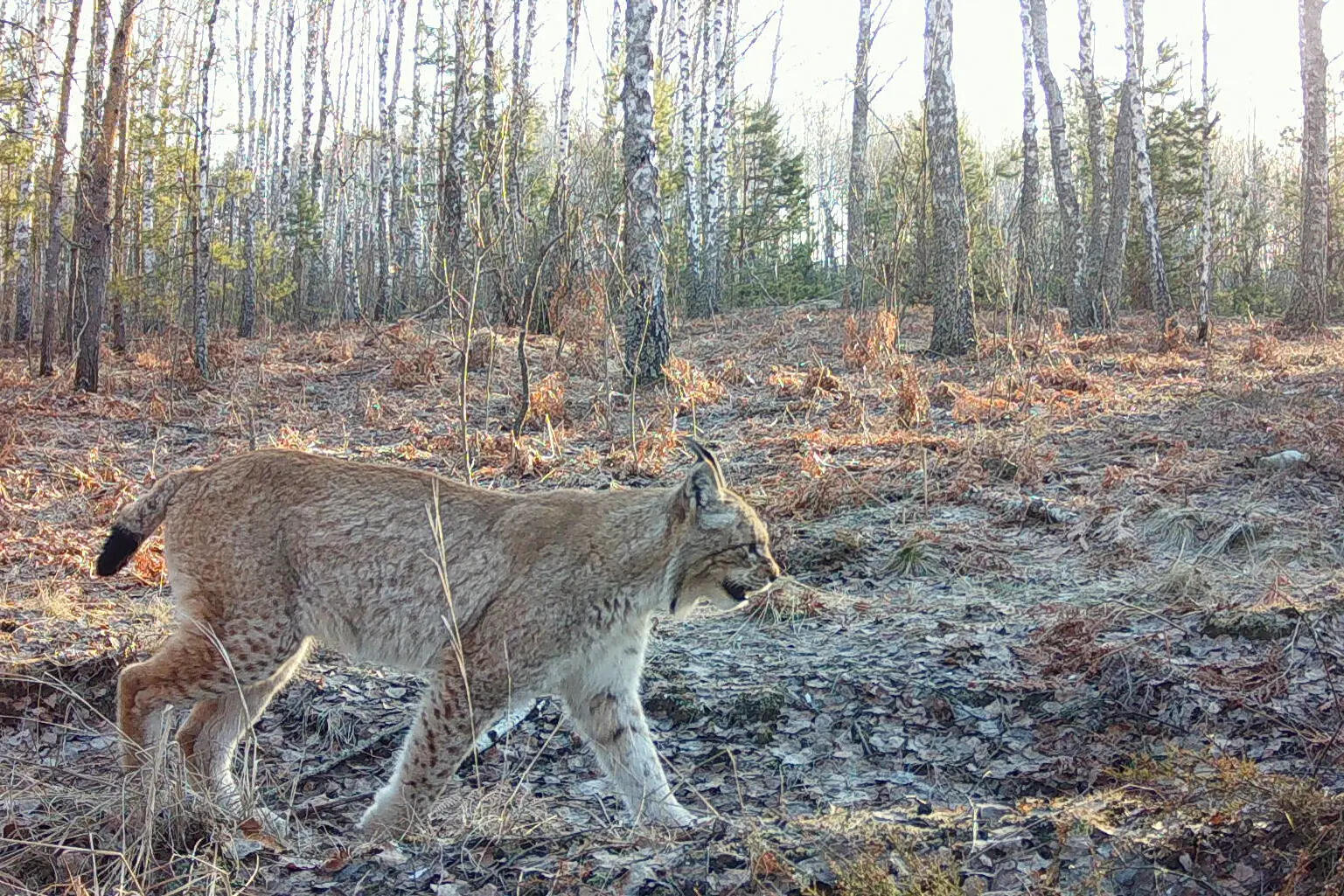
A wild lynx walks in a forest inside the Chernobyl exclusion zone, Ukraine. (AP Photo)
Why this matters
The IAEA report concludes that the recovery of affected biota has been confounded by the overriding response to the removal of human activities, termination of agricultural and industrial operations and accompanying environmental pollution in the most affected area. As a result, many plant and animal populations have expanded, and current environmental conditions have had a positive impact on the CEZ’s biota.According to a 2025 Elsevier study published in Mutation Research, the CEZ has become an “unintended but invaluable natural laboratory” for studying genetic and ecological effects of chronic radiation exposure. The study documents both vulnerability to mutagenic stress and resilience through evolutionary adaptation.Research from the University of Galway (2024) found that soil microbiomes in highly radioactive areas appear largely resilient to radiation, with no links found between soil radiation levels and the effect of fire on soil microbial diversity.
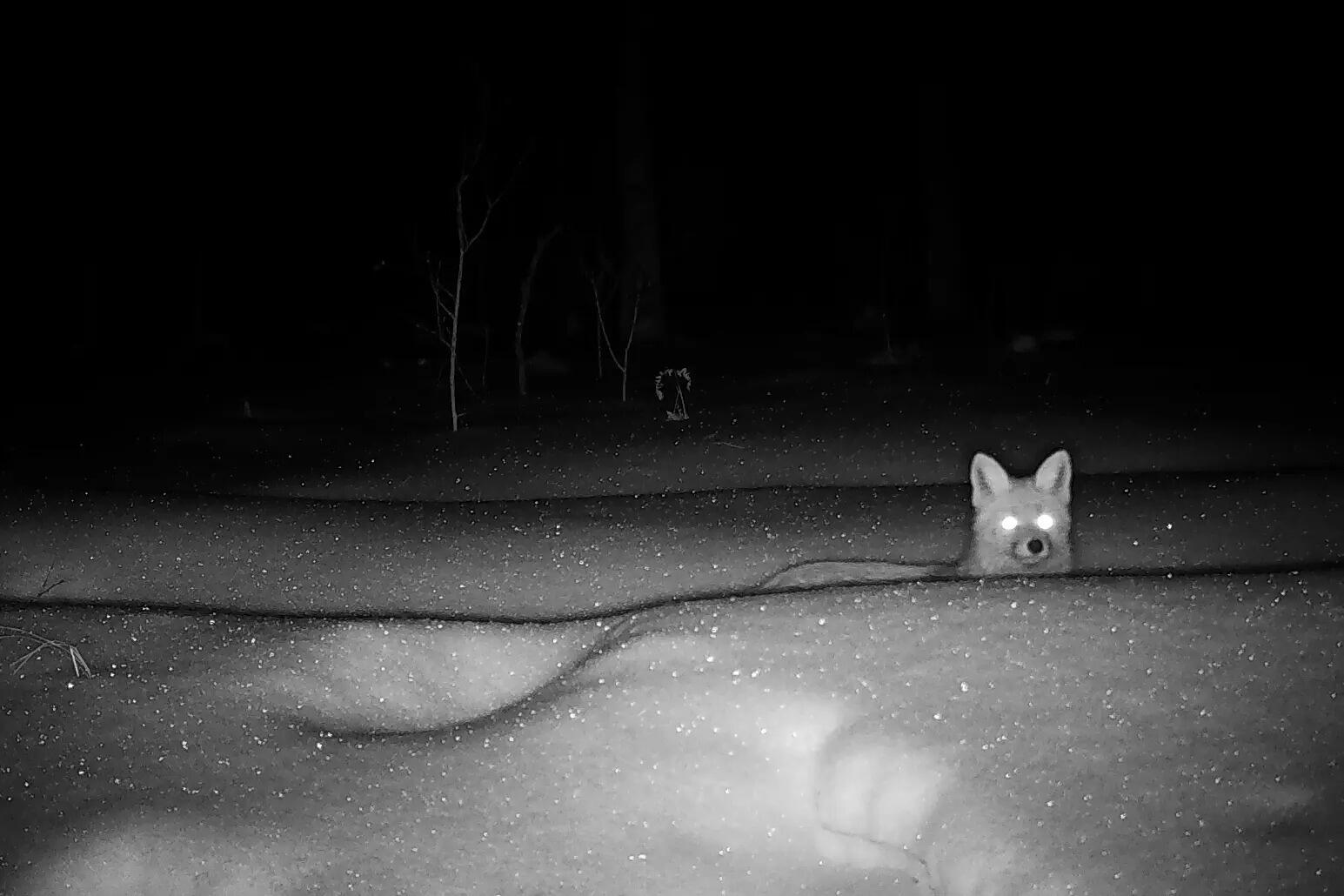
A wild fox is seen in a forest inside the Chernobyl exclusion zone, Ukraine.(AP Photo)
Lessons from disaster
The Chernobyl Exclusion Zone is now one of Europe’s largest nature reserves, providing an important site for ecological research, particularly for how ecosystems recover when undisturbed.”There are lessons to be learned from such catastrophes, and no neat conclusions, even 40 years after the disaster,” a 2026 analysis in The Conversation noted. “Wildlife has largely returned to the area around Chernobyl due to the absence of people, although not predictably or evenly. It does illustrate, however, how ecosystems can respond and still flourish when the usual rules do not apply.” Go to Source