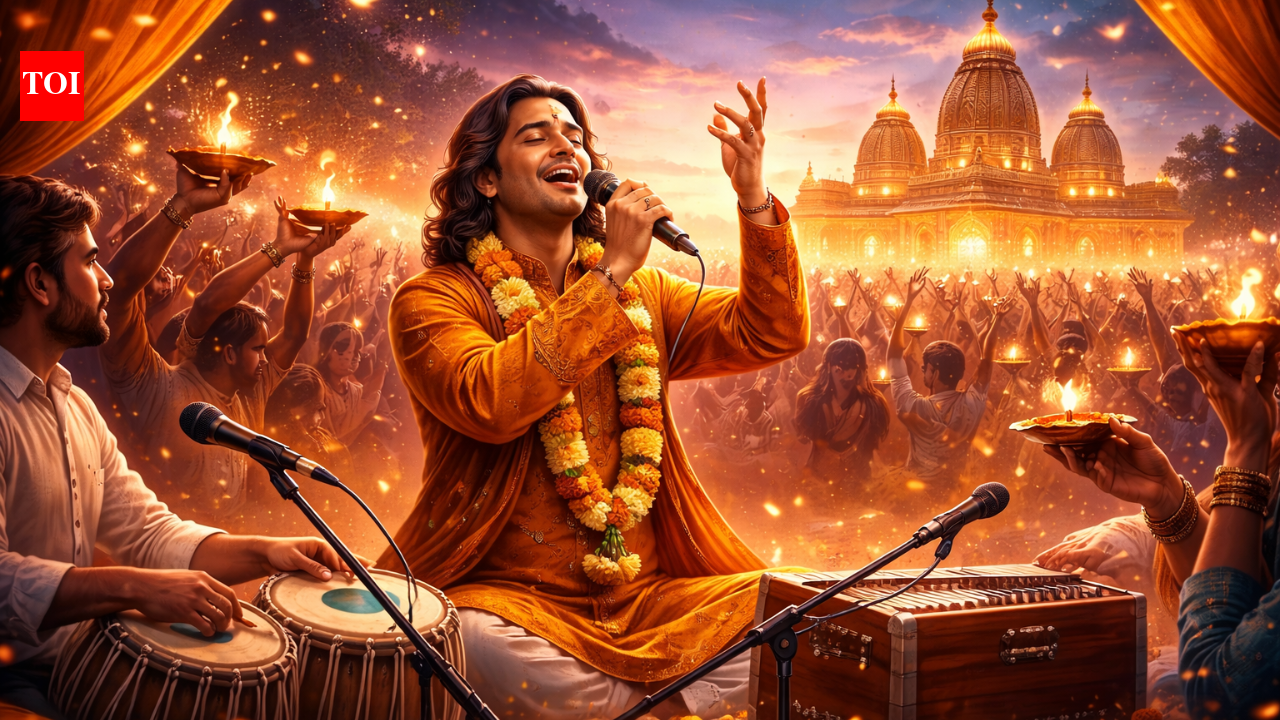

AI-generated image (Picture credit: OpenAI via ChatGPT)
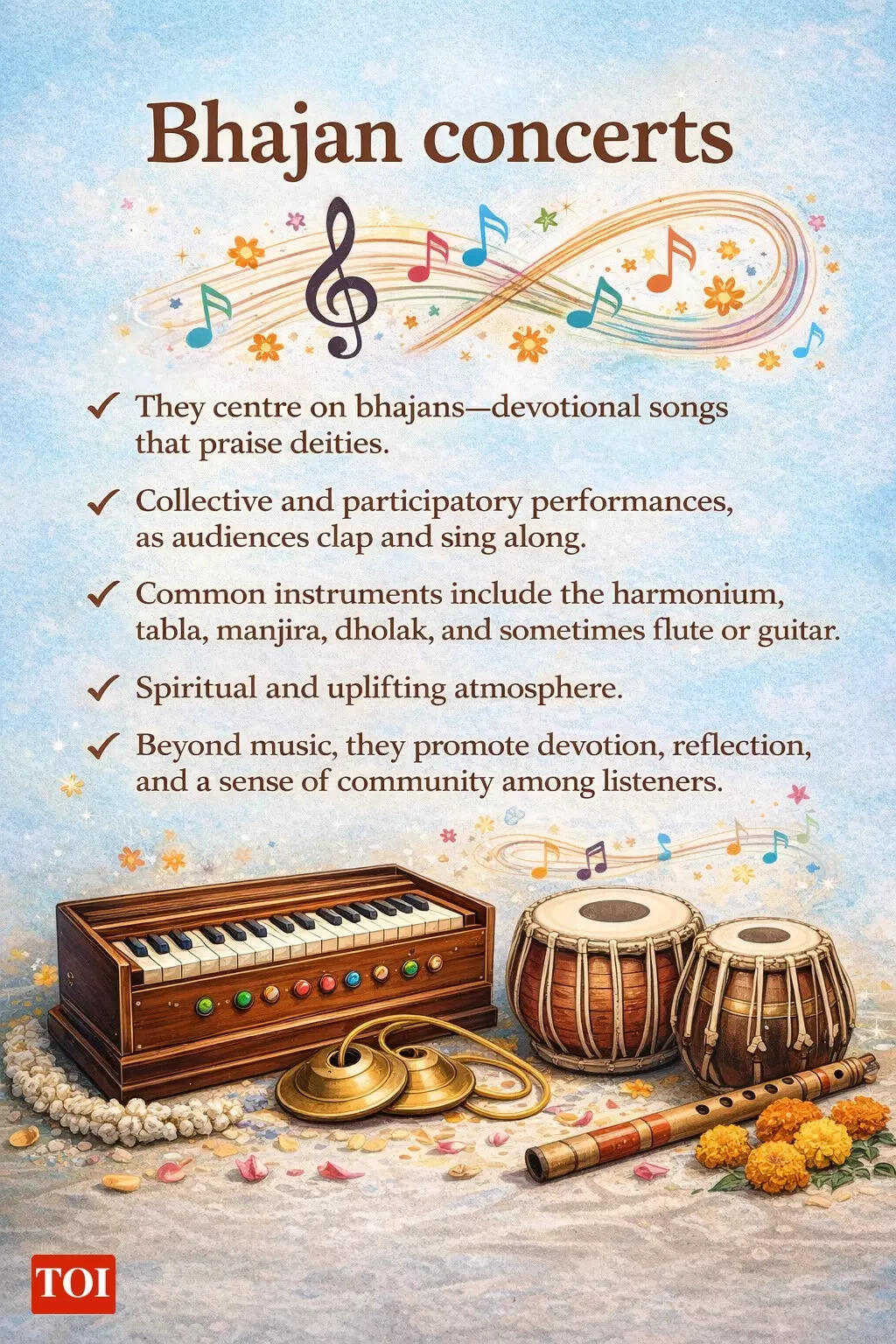
Imagine a musical gathering where there is no chaotic crowd pushing past you, no frenzy to get closer to the stage and no noise competing with the music.Instead, people sit in quiet anticipation, moving in rhythm, listening as much as they sing.Imagine a musical evening where the audience is not driven by spectacle, but by the steady beats of a harmonium, tabla and manjira.The sound from the speakers does not overwhelm. It settles gently, carrying chants and sacred names that seem to resonate somewhere deeper than sound itself.Here, the audience is not screaming. Some sit with their eyes closed, absorbing the melody. Others clap softly before slowly rising to their feet, singing and swaying together in an unspoken rhythm.The artist, too, remains seated. Calm, composed, guiding the music rather than performing for applause.There is an atmosphere that feels simple and sacred. Children sit beside grandparents, both equally immersed in the experience. Children sit beside grandparents, both equally immersed in the experience.And when the evening ends, the venue remains orderly but something within you feels quieter, as if an inner clutter has briefly come to rest. If this sounds unlike a concert, that is because it is. And yet, it is exactly what a bhajan or a kirtan concert feels like.
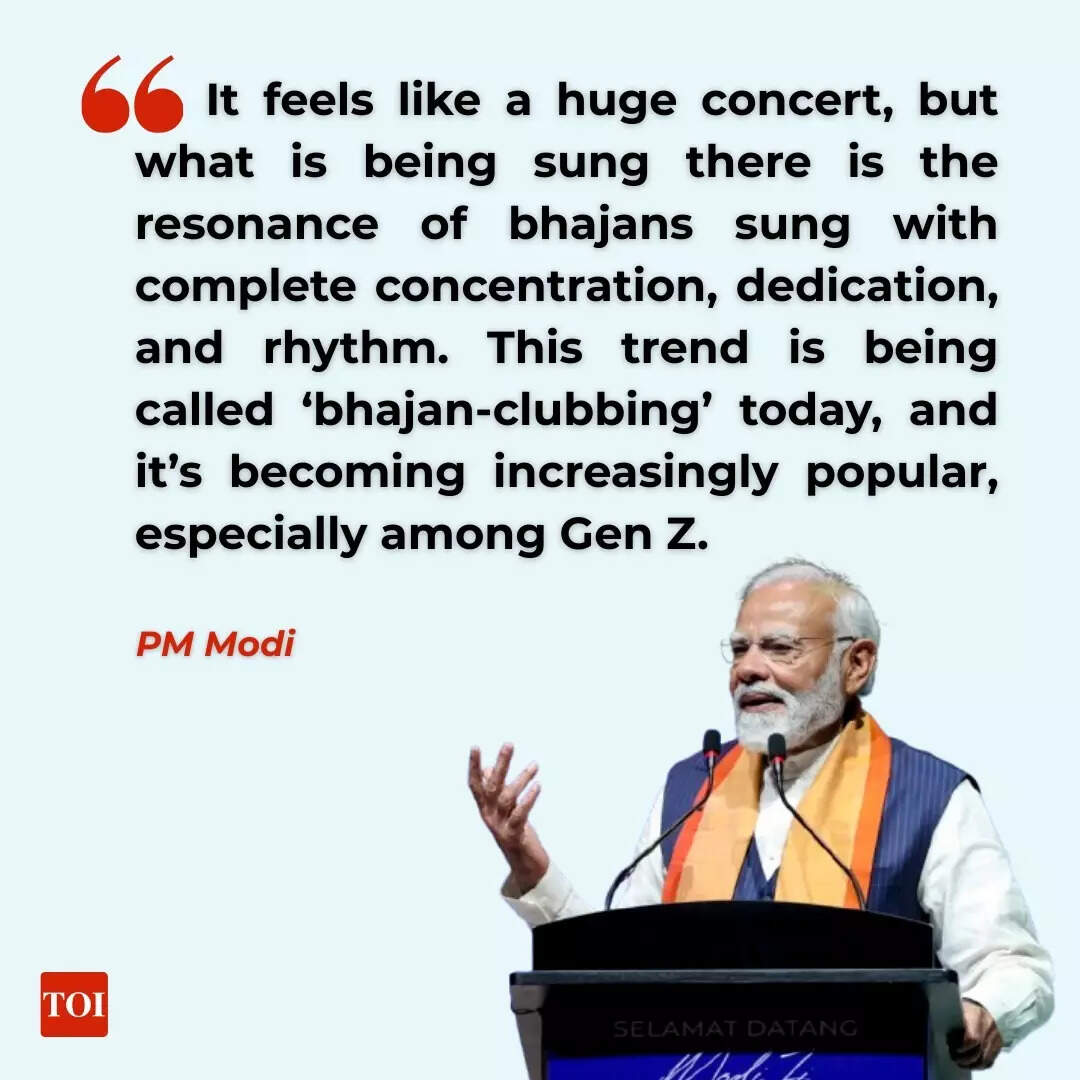
Over the past few years, devotional and spiritual music gatherings have begun drawing noticeably larger and younger audiences across India and among the global diaspora.Digital streaming platforms have reported steady growth in devotional music consumption, particularly among listeners under 35, while large-scale kirtan and bhajan events are increasingly being hosted in auditoriums and convention centres rather than only temples or community spaces.Organisers and artists attribute this shift to a growing search for experiences that combine music, community and emotional grounding in an otherwise fast-paced urban life.The growing visibility of such gatherings has also entered public discourse. In one of his recent Mann Ki Baat addresses, Prime Minister Narendra Modi spoke about the cultural significance of bhajans and collective devotional practices.“Large numbers of the youth are gathering in different cities across the country. The stage is decorated… there is lighting, music… there is all the pomp and show, and the atmosphere is no less than a concert. It feels like a huge concert, but what is being sung there is the resonance of bhajans sung with complete concentration, dedication, and rhythm. This trend is being called ‘bhajan-clubbing’ today, and it’s becoming increasingly popular, especially among Gen Z,” PM said.
The reference reflected how devotional music, once confined largely to religious or local settings, is now being discussed in the context of social and cultural engagement at a national level.My introduction to this world came through the music of international spiritual artist Radhika Das.I had first encountered his work online a few years ago. His videos, blending traditional Indian kirtan with contemporary musical arrangements, stood out immediately.Watching chants of Radhe Radhe Govinda echo through spaces like London’s Union Chapel felt both familiar and unexpectedly global.The energy in those videos, where people sang and danced together in devotion, sparked a curiosity in me. I wanted to experience that atmosphere firsthand.At the time, it seemed unlikely. Das appeared to be largely based in the UK and I assumed attending one of his concerts would remain a distant possibility. When I later discovered he had toured India, I realised I had missed the opportunity. Disappointed but hopeful, I made a quiet promise to myself, the next time he returned, I would attend.A year later, life had moved on. College had given way to my first newsroom job. My usual days were spent scanning agency wires and chasing stories.One such routine afternoon, an entertainment wire, the kind that often resembles promotional material, caught my eye. I almost scrolled past it before a familiar name made me pause. Radhika Das. It was an announcement of his upcoming India tour.Within minutes, I was searching for tickets. The early bird window was open and without much hesitation, I booked one.Only later did I wonder whether any of my friends would be interested in attending a bhajan concert. After some persuasion and a few shared YouTube clips one friend agreed, more out of curiosity than conviction. The plan was set.Months later, the evening finally arrived.Like most evenings in Delhi, the plan to reach early remained only a plan. After navigating Delhi traffic and a hurried entry into the YashoBhoomi Convention Centre, the atmosphere began to shift even before the music started.Volunteers greeted attendees warmly, applying tilaks as people entered the hall. The auditorium slowly filled, carrying an air of anticipation rather than impatience.When Das and his team took the stage, the applause felt welcoming rather than frenzied. He began not with high energy, but with stillness, asking the audience to close their eyes and take a few deep breaths, as if preparing everyone to arrive fully in the moment.What followed was a gradual transformation. The chants of Namah Shivaya and later Sita Ram spread across the hall, moving the audience from silence to participation.Without realising it, people who had begun the evening seated found themselves clapping, swaying and eventually dancing.

Strangers smiled at one another, united by rhythm rather than familiarity. My friend, initially unsure of what to expect, was soon completely absorbed in the atmosphere.Between performances, Das spoke about the significance of chanting and the role devotion had played in shaping his own journey.His reflections were simple, often humorous, but resonated with the audience.At one point, he narrated a story about a devotee, playfully referred to as ‘Patel’, that drew laughter across the hall but also carried an unmistakable sense of recognition.In the story, the devotee is repeatedly invited by Krishna (the divine) to leave worldly life and return to the spiritual realm.Each time, however, he requests more time: first to complete his education, then to build a career, later to marry, raise children, and fulfil responsibilities. Years pass and the invitation keeps getting postponed.When the divine messenger finally returns, he learns that Patel has passed away — only to discover that he has been reborn as a household dog, still attached to worldly duties, still asking for more time.The audience laughed, but the humour carried an underlying message that many seemed to relate to.The story mirrored a familiar human tendency, the constant belief that spiritual reflection can wait until everything else is settled. In that shared laughter, there was also a moment of quiet self-awareness visible across the hall.As the evening progressed, the music intensified. The final performance, Bhajman Radhe Radhe Govinda, became the emotional peak of the concert.Speaking about his recent visit to Vrindavan and his connection with India as his spiritual home, Das’s voice carried visible emotion. The audience responded in kind. Hands raised, eyes closed, voices merging into a collective chant. For a brief moment, the boundaries between performer and audience seemed to dissolve.Nearly two hours passed unnoticed. Concerns about late-night travel or early workdays faded into the background.When the music finally stopped, there was a lingering reluctance to leave, the familiar feeling of returning to ordinary life after an experience that felt unusually immersive.As we walked out, I asked my friend if it had been worth coming. He smiled and simply said, “I still have goosebumps.” It was perhaps the simplest summary of the evening.For me, the experience also reshaped what a concert could mean. Previous concerts I had attended were defined by crowd anxiety or performative spectacle. This felt different, less like entertainment and more like participation.Bhajan concerts may appear to be a modern phenomenon, but their roots run deep within India’s cultural traditions.The practice of naam sankirtan, popularised by saints such as Chaitanya Mahaprabhu, has long brought communities together through collective singing and devotion.Whether in Maharashtra’s Warkari tradition, local jagrans or household kirtans, the essence has remained the same, music as a shared spiritual expression.This idea finds resonance in classical devotional literature as well. In the Ramcharitmanas, Goswami Tulsidas writes, “Kaliyug keval naam adhaara, sumir sumir nar utarahin paara,” suggesting that in an age marked by distraction and restlessness, remembrance through the divine name becomes a path to inner steadiness.Seen in that context, the contemporary bhajan concert appears less like an innovation and more like a continuation, a familiar tradition finding new form for a new generation.What seems to be changing today is the format. A younger audience is rediscovering these traditions through contemporary presentation, larger venues, and global artists who bridge devotional music with modern sensibilities.As I hurried towards the metro later that night, the chants of Radhe Radhe Govinda still playing in my head, it felt as though the concert had ended but something quieter had begun.The bridge to that experience may have closed with the final note but it had also revealed a path, one that each listener perhaps continues to walk on their own. Go to Source