How India is losing electricity without using it
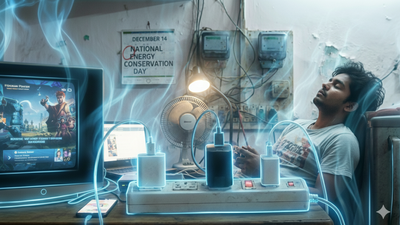
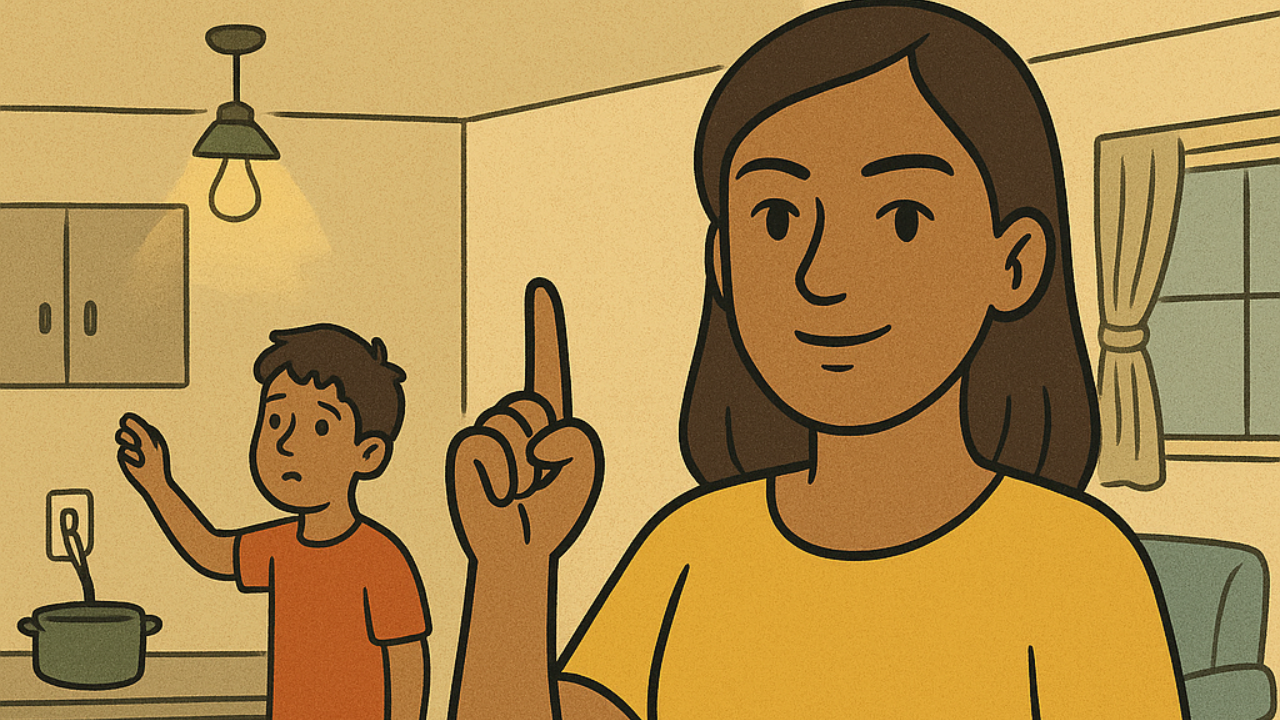
Every month, millions of Indian households pay for electricity they never actually use. The lights might be off, the fans switched down, but hidden leaks quietly drain energy, inflate bills, and add to the country’s carbon footprint. Unlike water dripping from a tap, electricity leaks have no sound, no puddle, no visible cue. So, it goes unnoticed and we don’t react. From chargers left in sockets to old appliances that hum non-stop, these silent drains often called “phantom loads” cost families thousands of rupees each year and contribute millions of tonnes of avoidable CO₂ emissions nationally.Meet Urja,On the surface, she seems like the poster child for energy consciousness. She turns off lights before leaving a room, switches off fans, monitors unnecessary usage, and genuinely believes she’s doing more than her part. She even scolds her younger brother for leaving the kitchen light on. But the truth sits quietly in the corners of her home long after she’s stopped noticing.When you zoom in, cracks appear. Urja’s refrigerator, a sturdy 12-year-old unit that has probably watched her grow from a child to a working adult, gulps far more electricity than she imagines. She recently bought a new AC, but to save money, she picked a three-star model instead of the more efficient four- or five-star options. Her chargers, laptop, phone, tablet,and Wi-Fi stay permanently plugged into the socket because “it’s too much effort” to unplug them. The fridge door remains open while she chats about work gossip. Her microwave glows like a digital clock. And the TV? That one never gets unplugged, just in case she wants to switch it on “for background noise” while doomscrolling.Sounds familiar, doesn’t it? These are the small, invisible slips that quietly drain energy, money, and the planet.
.
A problem cannot be solved without acknowledging that it exists in the first place. Habits cannot be unlearned without awareness of their silent effects. And wastage cannot be curbed in our homes and offices until we recognise the leaks, the ones hiding in our everyday appliances tthat urgently need fixing.
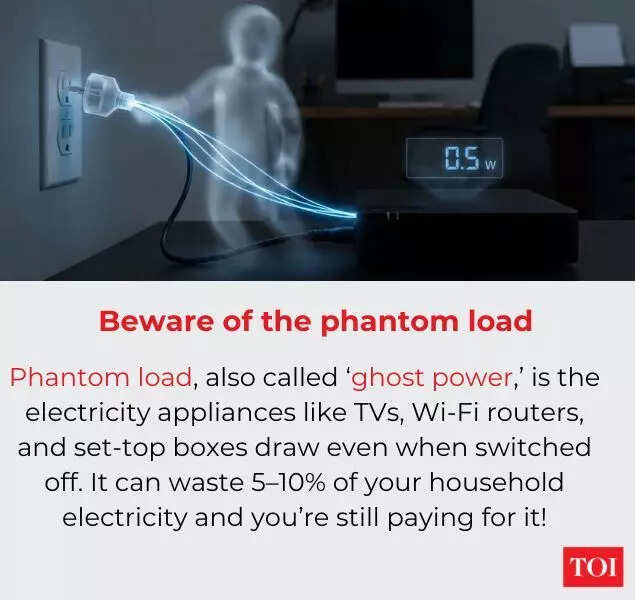
Beware of the phantom load
Addressing the ‘vampire’ in the room: “Phantom energy”
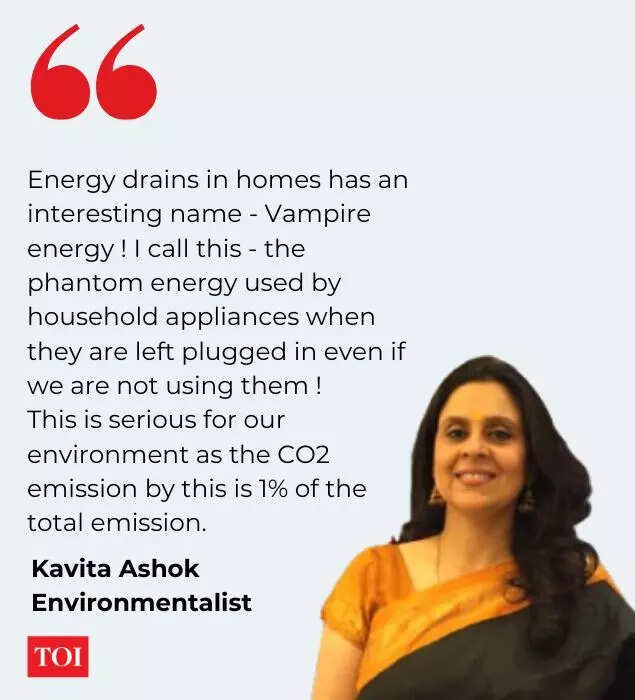
Environmentalist Kavita Ashok calls these hidden electricity leaks “vampire energy” — the silent drain that happens even when appliances appear to be off.“Energy drains in homes have an interesting name — vampire energy. I call it the phantom power used by household appliances when they’re left plugged in even when we aren’t using them. This is serious for our environment, as the CO₂ emissions from this alone account for nearly 1% of total emissions. It also reduces the lifespan of domestic appliances due to constant wear and tear More so the electricity bill shoots up by 5-10% by this unnecessary power consumption”
.
Energy conservation day: Why this conversation matters
Every year on December 14 , India observes National Energy Conservation Day , a moment meant not just to raise awareness but to remind citizens that energy efficiency is a shared responsibility. Introduced in 1991 and championed by the Bureau of Energy Efficiency (BEE) , the day reflects India’s commitment to reducing unnecessary consumption and promoting sustainable practices and that is not possible without energy conservation which is the cornerstone of sustainable development.Energy conservation isn’t merely a matter of turning off lights. It’s about recognising deeper patterns in the devices we buy, how long we use them, how we maintain them, and the behaviours we normalise in our homes and institutions. The day calls for introspection: Are we actually conserving energy, or just feeling like we are?Because the hidden truth is that much of India’s electricity is wasted long before it lights a bulb or cools a room.
Invisible energy drains: The waste we pay for but don’t use
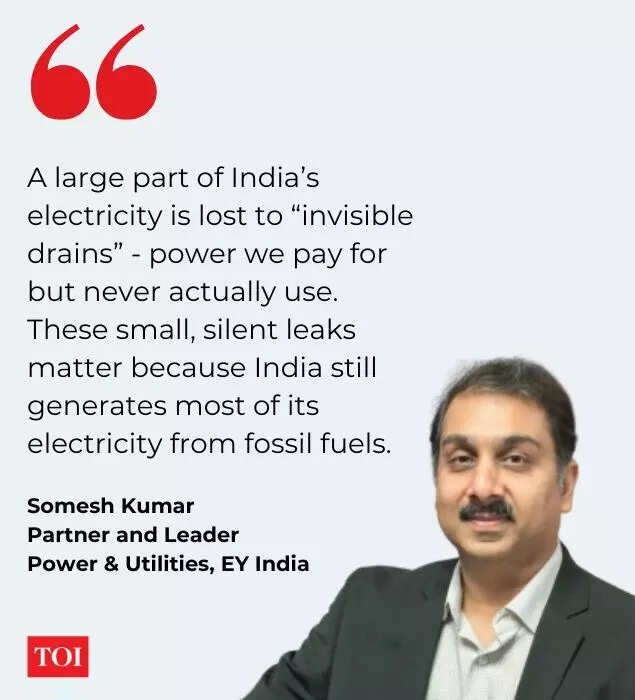
A large part of India’s electricity silently disappears into what experts call “invisible drains” — electricity we pay for but never actually use. Somesh Kumar, partner and leader, Power & Utilities, EY India, explains that this loss can be grouped into three major categories: Phantom Loads, Inefficiency Losses, and Structural Leakage.
.
Phantom Loads (Standby Power)Often termed “ghost power,” this refers to electricity drawn by appliances even when switched off. Set-top boxes, Wi-Fi routers, TVs, gaming consoles, and chargers continue consuming power silently to maintain internal clocks or remain ready for remote-control operation.This alone accounts for 5–10% of household electricity consumption , costing families Rs1,500–Rs3,000 annually and adding up to nearly Rs 200 billion nationally .Inefficiency Losses Old or poorly maintained appliances such as air conditioners, refrigerators, fans, washing machines become energy-hungry over time. Dust-clogged filters, worn-out seals, and aging motors force them to work harder, increasing consumption by 10–15% in many households.Structural LeakageFaulty wiring, old circuits, and leakage currents can silently inflate household electricity bills by around 9% . In offices and institutions, mis-calibrated systems, aging motors, and refrigerant leaks can push waste up to 12% of total consumption. All this occurs without any visible sign which makes it particularly dangerous.
Why household energy wastage matters more than you think
These quiet leaks are far more serious when placed in context with India’s power generation mix.In 2024, fossil fuels, primarily coal, still contributed 78% of India’s electricity. Every watt wasted at home directly translates into:
- Extra coal burned
- Higher emissions released into the atmosphere
- Greater stress on India’s already stretched power grid
When phantom loads, old appliances, and wiring losses across millions of households are added together, they contribute millions of tonnes of avoidable CO₂ emissions every year. Energy wastage isn’t just a household problem, it’s a climate problem.
Behavioural Complacency: The Hidden Culprit
A quick survey conducted among a small group of people revealed a pattern that most people were willing to adopt cost-effective energy measures and cared about the environmental impact of hidden energy drains, which highlights that most energy waste isn’t because people don’t care. It’s mostly because:
- We tend to ignore what we can’t see
- We underestimate small losses
- We prioritise convenience over conservation
- We assume “one device won’t make a difference”
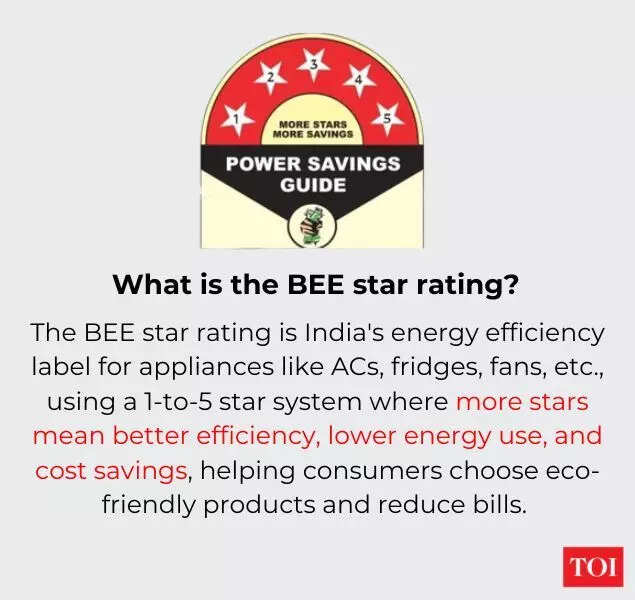
But it does, especially when multiplied by India’s millions of households..Lack of AwarenessAnother reason revealed was lack of awareness. Many people didn’t even know that standby consumption exists and what actually is the star rating that we see on appliances. Ishita Mahapatra, 23, said “Honestly, I never checked star ratings before buying any appliance. I was curious about what they meant, but I assumed it was just some pricing gimmick. I usually focus more on features and how the product looks, and wasn’t aware or particularly concerned about how much electricity it might consume or waste while buying”.
.
The State Energy Efficiency Index 2024 shows that the domestic sector accounts for nearly one-third of India’s electricity consumption, highlighting how crucial household actions are. Complacency or lazinessEven those aware often don’t have the time or motivation to unplug devices, maintain appliances, or check wiring.Affordability constraintsMany households opt for cheaper, old-tech or low-star appliances because they cannot afford more efficient models. Ironically, this results in higher electricity bills, a long-term penalty for a short-term saving.Invisible consequences On being asked why he thinks energy wastage continues to happen in his home, Shivendra Singh, 26, said, “We’ve all heard and seen energy-saving campaigns, but I think the problem is that we’ve never really experienced electricity scarcity firsthand.” “There’s no visible consequence when we waste power. So we underestimate the harm. Because the impact isn’t immediate or personal, it’s easy to ignore it in daily life”, he added.
Urban vs rural patterns: Waste differs, impact doesn’t
Somesh Kumar, Partner and Leader, Power & Utilities, EY India explained how Urban households waste more energy overall because of higher appliance density — ACs, large fridges, multiple TVs, routers, smart devices. Cooling inefficiencies and standby loads dominate their silent losses.Rural homes, though consuming less power, surprisingly waste more per device due to:
- Older appliances
- Low-efficiency models
- Aging fans and pumps
- Even more limited awareness of standby load
“With 86% of rural households historically dependent on biomass, electrification is growing rapidly. If rural India adopts low-efficiency appliances now, these could remain in use for 10–15 years, locking in long-term inefficiency. Cities waste more because they use more. Villages risk wasting more because their choices today shape consumption for a decade” said Somesh Kumar.
India’s growing digital footprint and its hidden environmental cost
Your smartphone scrolling, cloud backup, digital payments, streaming all depend on massive data centres. These energy-intensive facilities require extensive cooling, magnifying their consumption. If the digital economy grows faster than renewable energy integration, India’s coal dependency will deepen. Digital convenience, too, comes with a rising environmental price.
‘Invisible energy leaks inside homes are silently raising bills and emissions’
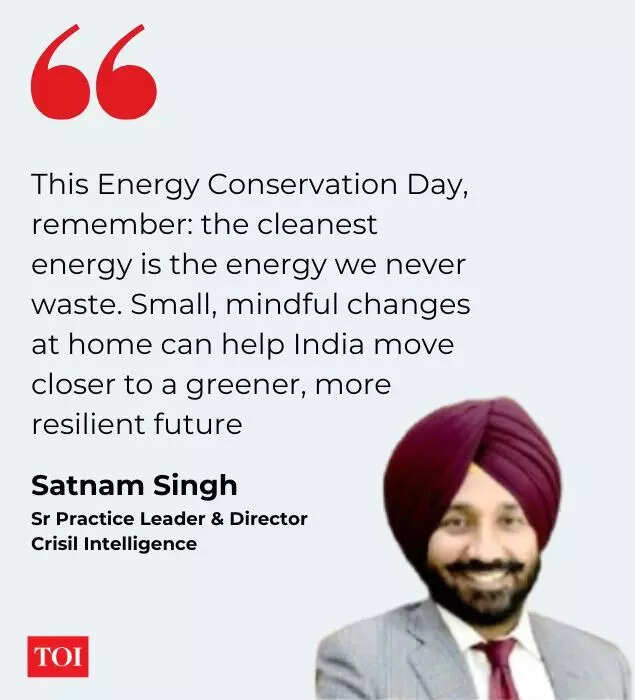
Satnam Singh, Senior Practice Leader & Director at Crisil Intelligence, underscores the scale of household inefficiency at a time when India’s energy demand is soaring and the country is trying to shift to cleaner, more efficient systems. He explains that despite advances in technology and policy, the biggest energy losses often occur inside our own homes—long before electricity is put to any productive use.“As India pushes toward cleaner energy and smarter consumption, a surprising amount of electricity is still being lost inside our own homes—long before it reaches any productive use. Old refrigerators, air conditioners, fans and TVs consume far more power than modern models… often using 40–60% more electricity.Many devices never fully switch off… This standby load can account for up to 10% of a household’s consumption. Every unit wasted at home means more fuel burned for power generation… Cutting this invisible consumption is one of the fastest, lowest-cost ways to reduce emissions. This Energy Conservation Day, remember: the cleanest energy is the energy we never waste.”
.
Even the smallest habits like leaving a charger plugged in, a microwave display glowing, a router humming nonstopextract costs from both the environment and the household wallet.Practical, low-cost steps to fix hidden energy leaks
- Switch off devices at the plug to prevent standby loss
- Clean AC filters and service appliances regularly
- Replace old or low-star appliances with BEE-rated efficient ones
- Switch to LED lighting
- Use smart power strips or timers
- Set ACs to 22–26°C
- Avoid overstuffing refrigerators
- Monitor consumption through smart meters or apps
- Unplug chargers once devices are full
- Encourage collective responsibility within families and workplaces
- Replace very old appliances with new and power efficient ones
Many of these steps cost nothing but save 5–12% on bills.
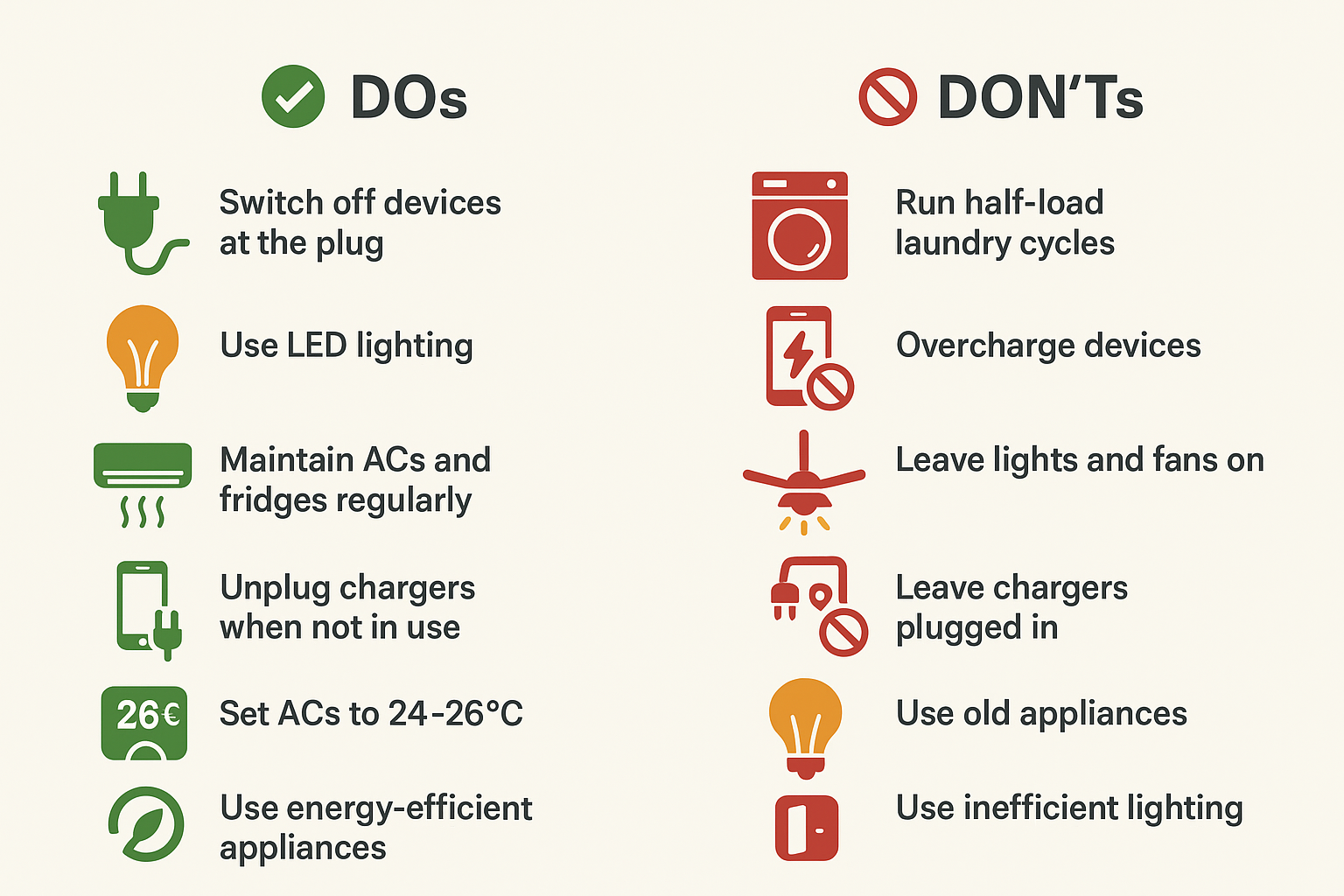
Dos and don’ts
Energy Efficiency Across States: Who’s leading the charge
India’s energy efficiency performance varies significantly across states, according to the State Energy Efficiency Index (SEEI) 2024 released by the Bureau of Energy Efficiency (BEE) in association with the Alliance for an Energy Efficient Economy. The index evaluates 36 states and union territories across seven sectors including buildings, industry, transport, agriculture, municipal services and DISCOMs using 66 indicators to assess how effectively regions are implementing energy‑saving measures. In the latest rankings, Maharashtra topped the list overall , followed closely by Andhra Pradesh , while Assam and Tripura led in their respective energy‑use groups based on total consumption. Five states Andhra Pradesh, Karnataka, Maharashtra, Telangana and Tamil Nadu were classified as “front runners” for scoring above 60% on the index. States such as Assam and Kerala made it into the “achiever” category, showing solid implementation, while several others including Haryana, Punjab, Rajasthan, Odisha and Uttar Pradesh were placed in the “contender” group, highlighting room for stronger action. These varied performances reflect not just differing consumption patterns but also how state‑level policies and on‑ground execution shape energy efficiency outcomes.
Celebrating small wins
Just like we cut a cake to celebrate joy, perhaps we can celebrate Energy Conservation Day every day by cutting down energy wastage. Small, mindful acts — unplugging a charger, turning off a router at night, closing a fridge door promptly, can collectively move India towards a greener, more efficient future.Energy conservation isn’t just a national mission. It’s a household habit that can significantly contribute to India’s energy conservation goals for the years to come.The story of energy waste is invisible, but the solutions are tangible, low-cost, and achievable. All it takes is awareness, a shift in habits, and a little daily mindfulness.This Energy Conservation Day: Don’t waste what you don’t use. Go to Source