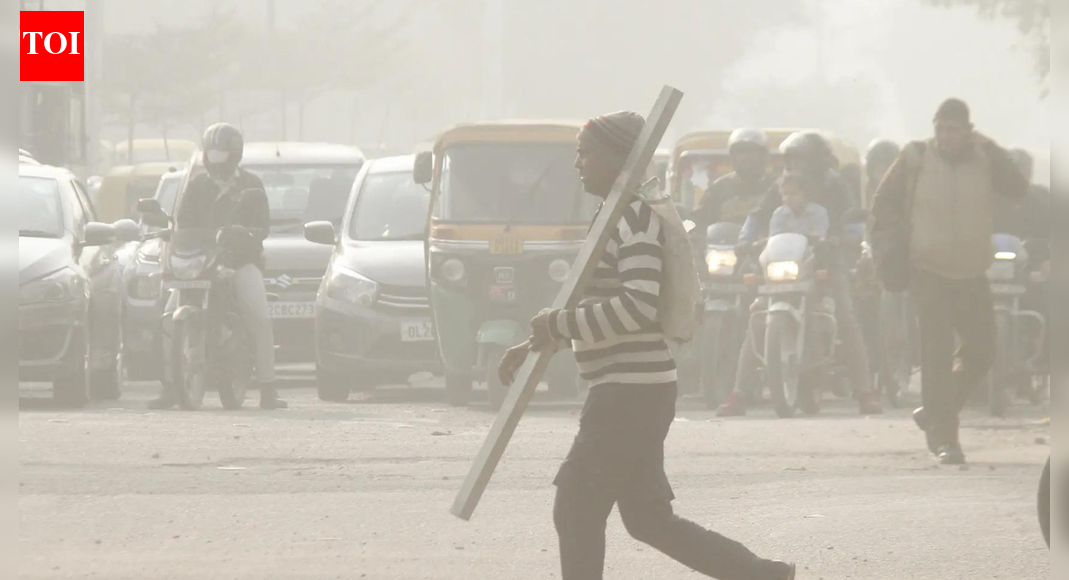

NEW DELHI: Supreme Court on Monday bristled at attempts to pin the blame for Delhi-NCR air pollution on farm fires and asked the Union and NCR govts to detail measures taken on other pollution sources — vehicles, industries, construction, dust — and the tangible results achieved through implementation of such steps.Amicus curiae and senior advocate Aparajita Singh and additional solicitor general Aishwarya Bhati said stubble burning incidents contribute to pollution in Delhi-NCR for just 15 days in winter months, but there are other major causes of pollution which need to be addressed round the year.In defence of farmers, a bench of CJI Surya Kant and Justice Joymalya Bagchi said, “Let stubble burning not be made a political or ego issue. During Covid (lockdown), stubble burning was there. Yet, we could see stars in the night sky. You (govt) say measures have been taken. Still, we can’t see stars. What are the tangible results achieved through enforcement of graded action plan (Grap)? What actions have been taken against other sources of pollution?”Measures must be implemented round the year, says apex courtWhat is being done about high-end gas guzzlers, the bench asked. “Strengthening quality public transport is key to reducing vehicular contribution towards air pollution. But that will take time and should be part of the long-term plan,” it said, adding that financial empowerment of people in India has led to a burgeoning number of cars in the capital city, which was not planned to accommodate so many people with individual vehicles.As Bhati informed the court that the number of incidents of stubble burning has gradually gone down in the states of Punjab, Haryana and Rajasthan, the bench asked if there has been corresponding improvement in air quality in Delhi-NCR. “Normatively, you might have banned construction activities but is there sincere implementation on the ground?”Bhati admitted that Grap restrictions have not been scrupulously enforced. The bench said that both short-term and long-term measures require intensive implementation round the year and promised that matters relating to air pollution would be heard by SC at least twice a month round the year.Senior advocate Ranjit Kumar said all thermal power plants were required to implement sulphur dioxide emission control measures, primarily by installing the Flue Gas Desulphurisation (FGD) system, by 2021.The deadline has been extended by the govt several times, and now the thermal power plants have been asked to implement the emission control measure by 2027-29, he said.When Bhati said that the govt has already filed both short-term and long-term plans to tackle the problem of air pollution, the bench asked why they are not been revisited if they have not been able to reduce pollution.On many occasions, the rural-urban bias of experts results in misdirection of efforts to curb pollution, it said, and suggested that experts aware of ground realities of India, not those who studied at Harvard or other foreign universities, prepare action plans.The bench posted the matter for further hearing on Dec 10.