
India’s seismic risk far from marginal, warn geologistsSeveral experts described the withdrawal as “a missed opportunity to strengthen India’s disaster resilience”, particularly in regions that scientists long warned could experience a devastating earthquake.
Israel Iran War
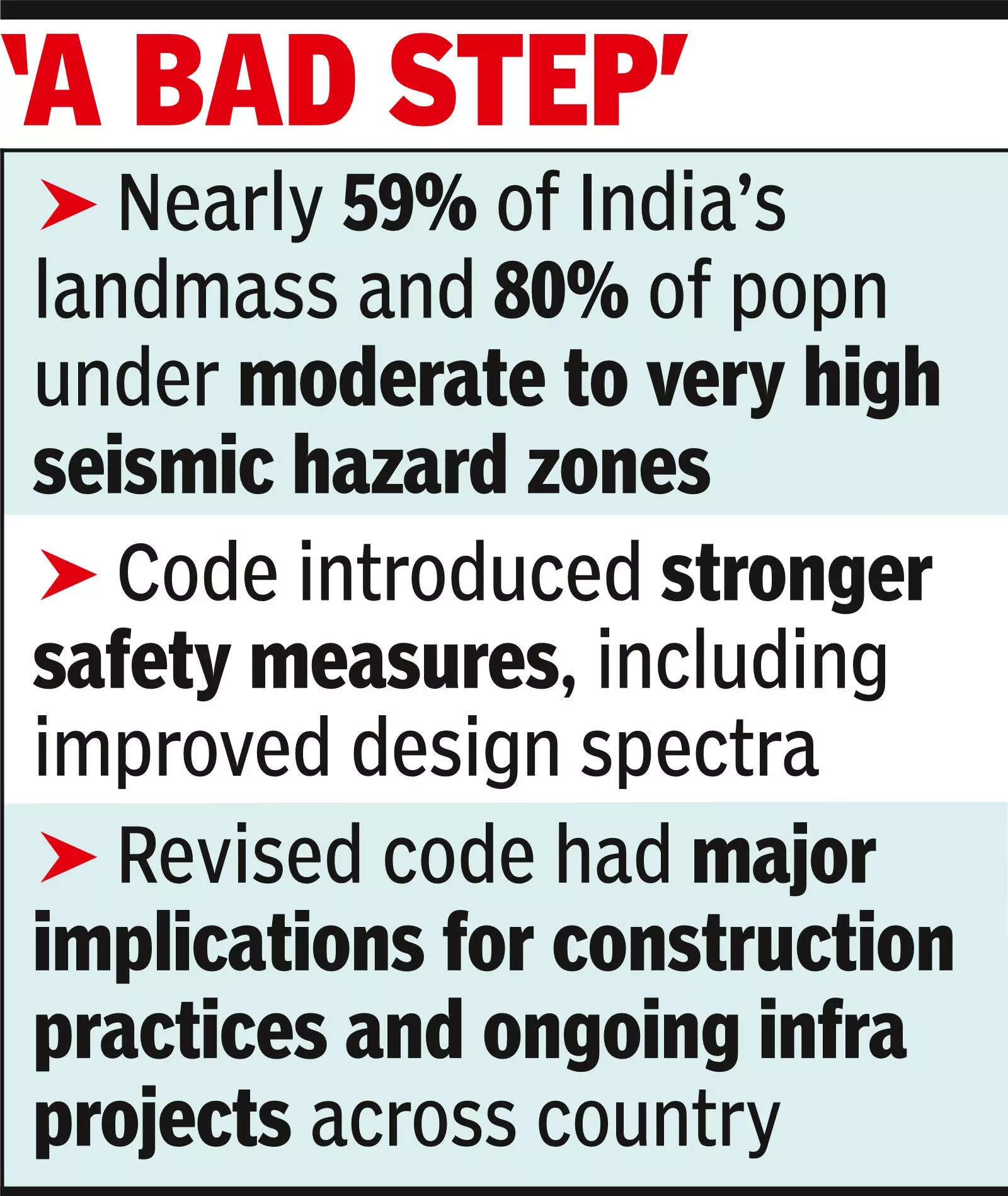
Senior geoscientist CP Rajendran termed the rollback a “bad step”. “We don’t know what triggered the govt to roll back such a bold policy. The new seismic code was based on the knowledge the scientific community had accumulated about earthquakes and its possible impact on India,” he said.Rajendran added that scientists repeatedly warned that the Himalayan region could witness a magnitude eight or a larger quake in future. “New code was a reflection of the real earthquake risks the country faces,” Rajendran said.Geologists pointed out that India’s seismic risk was far from marginal. According to experts, nearly 59% of the country’s landmass and nearly 80% of the population fell under moderate to very high seismic hazard zones.Piyoosh Rautela, geologist and former executive director of Uttarakhand State Disaster Management Authority, said the proposed revisions to the code represented a major step forward in improving the country’s preparedness.“The proposed revisions marked a major step in strengthening India’s seismic design framework to better protect the country’s built environment from future earthquakes,” Rautela said. He added that the newly- proposed Zone VI covering the Himalayan arc acknowledged the persistent tectonic threat along the Indo-Eurasian plate boundary — similar to the earthquakes seen during the 2001 Bhuj and 2015 Nepal earthquakes.Experts further said the revised code introduced stronger safety measures, including improved design spectra, a 10-30% increase in base shear requirements, stricter rules for structural irregularities, and more rigorous geotechnical and dynamic analyses. These changes aimed to promote performance-based engineering — ensuring buildings were designed not only to survive shaking, but also to minimise collapse risks and economic losses during large quakes.At the same time, experts acknowledged that the revised code had major implications for construction practices and ongoing infrastructure projects across the country.