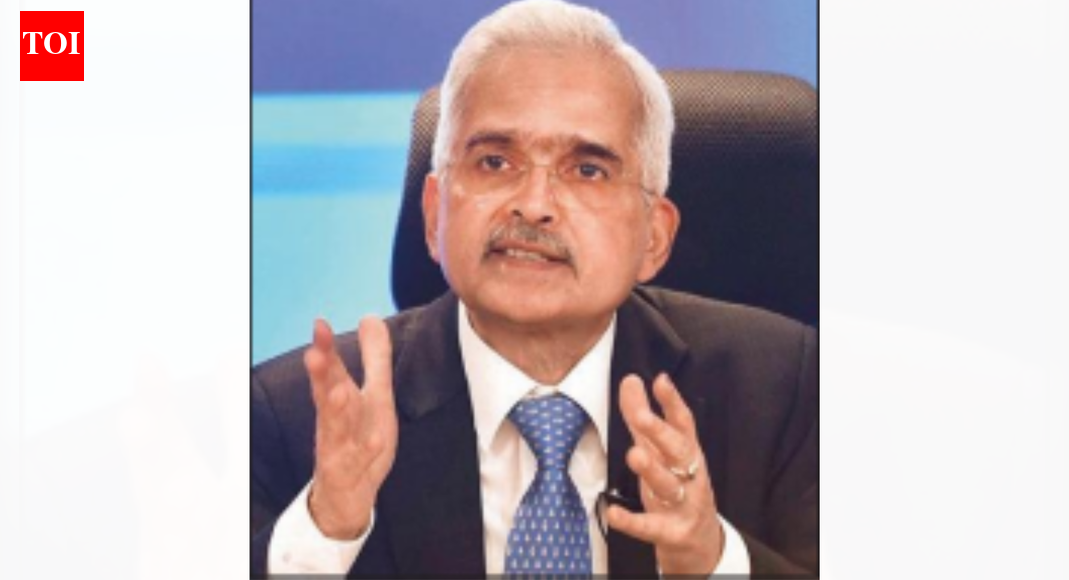

Principal secretary to the PM, Shaktikanta Das, said govt’s push for atmanirbharta or self-reliance would enable the country to be an architect of global growth
NEW DELHI: Amid a shift in global power dynamics, India will back a rules-based global order while forging partnerships and strategies to secure its national interest, a top govt official said Friday. Delivering the inaugural Bibek Debroy Memorial Lecture, principal secretary to PM Shaktikanta Das said that India is adapting to the new alignment and reiterated the need to revitalise the multilateral system. “Today we stand at an inflection point where shifting geopolitical winds and trade policies are reshaping the global economic order. Traditional multilateralism, once a cornerstone of global governance, is under severe strain. It is increasingly being sidelined by geopolitical rivalries, protectionism and fragmentation. Key international institutions are struggling to deliver on their mandates. Institutions, which were once the bedrock of rules-based system, are underperforming in their core mandates,” he said while pointing to disruption in supply chains and trade tensions. Das, however, argued that India was well placed to deal with the challenges thanks to a series of reforms undertaken in the last few years. “India stands today at the cusp of a historic journey – from being an ‘Incredible India’ to a credible India. There will be headwinds and challenges emanating from known and unknown sources. In the recent past, India has successfully emerged out of what appeared to be perfect storms caused by multiple global shocks since the Covid-19. And now with policies that the country has adopted, the wind is in our sails,” he said. The former RBI governor listed out a raft of reforms – from GST, and its recent revamp, to the insolvency law, labour codes and RERA – to argue that there was a fundamental shift in the economy, which was resulting in faster economic expansion. He also said that India had managed to successfully pull back from the expansionary monetary and fiscal policy post-Covid, unlike a delay in several countries. Das said govt’s push for atmanirbharta or self-reliance will enable the country to be an architect of global growth. “Atmanirbharta is not being isolationist, but a strategy to build core competence and resilience. Economic Atmanirbharta means developing the capacity to produce critical goods and technologies at home and reducing over-reliance on foreign sources. “Atmanirbharta has two complementary dimensions: economic self-reliance and geopolitical autonomy. A self-reliant economy, with strong domestic capabilities, gives us greater strength to sustain our economic growth; and an autonomous foreign policy enables us to deal with the external environment in our best national interest. Together, they ensure that India’s rise is resilient, sustainable, and beneficial to us and to the world,” he said. Envisioning India 10 years from now, Das spoke of a young workforce highly skilled in digital tools; seamless transactions and innovations on a world-class digital infrastructure; economic activity increasingly getting formalised; and Indian-led innovations in AI, health, and space driving productivity gains.