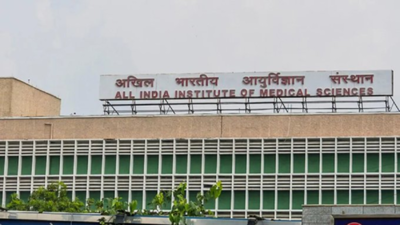
At AIIMS Delhi, 524 faculty posts are vacant out of a sanctioned strength of 1,306
NEW DELHI: Nearly four out of every 10 sanctioned faculty posts remain vacant across 11 AIIMS, exposing a deep staffing crunch at India’s premier public hospitals even as patient loads continue to rise. RTI replies accessed by TOI show that 1,600 of 4,099 faculty positions – about 39% – are lying vacant, raising concerns about the impact on patient care, specialist services and medical education.The data, compiled from RTI responses received from 11 All India Institute of Medical Sciences across different states, point to a widespread shortage cutting across both older, established AIIMS and newer institutes.At AIIMS Delhi – the country’s oldest and largest AIIMS and a national referral centre for complex cases – 524 faculty posts are vacant out of a sanctioned strength of 1,306, across key departments such as medicine, surgery, anaesthesia, paediatrics, neurology, oncology and emergency care.Several newer AIIMS are facing even higher shortages. AIIMS Jodhpur is worst hit, operating with 46.7% of faculty posts vacant (189 of 405). AIIMS Gorakhpur follows with 45.5% vacancies, while AIIMS Jammu reports a 44.3% shortfall. More than 40% of posts are also unfilled at AIIMS Kalyani and AIIMS Bilaspur. AIIMS Nagpur has 137 vacant posts out of 373 sanctioned positions, amounting to 36.7% vacancies.Other institutes show relatively lower – but still significant – shortages. AIIMS Bathinda is short of 37.4% of its faculty strength, AIIMS Raipur 34.8%, AIIMS Bhubaneswar 26%, and AIIMS Bhopal 25.6%.Health experts warn that prolonged faculty shortages at teaching hospitals affect outpatient services, surgery schedules, ICU supervision and the training of undergraduate and postgraduate doctors, as senior faculty juggle clinical, academic and administrative roles.Responding to staffing concerns, Rima Dada, media cell in-charge at AIIMS Delhi, said recruitment efforts were ongoing. “Interviews are underway, and the process of filling vacant posts is being carried out regularly,” she said.AIIMS hospitals cater to lakhs of patients every year, many referred from district and state hospitals for complex care. The RTI data accessed by TOI underline a widening gap between rapid infrastructure expansion and the pace of faculty recruitment, raising questions about whether India’s flagship medical institutions are being staffed adequately to meet rising healthcare demand.