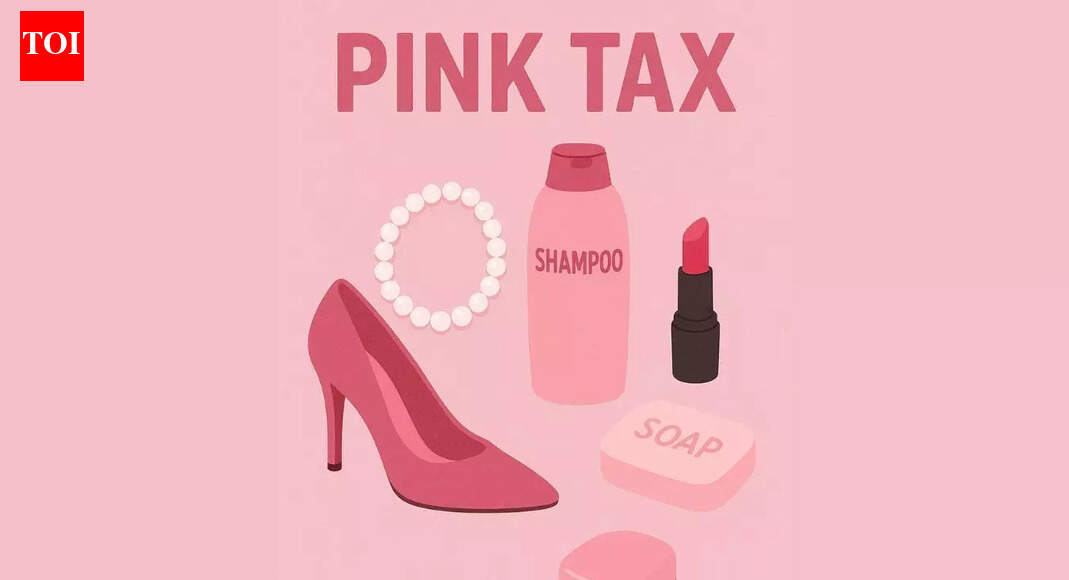


This is a representative AI image
What is luxury?For a woman, simply being able to take a walk at night is often considered a luxury. But this freedom isn’t free. It comes at a cost most people never see, the extra money, effort and emotional labour women pay every day just to exist.Every rupee women spend is backed by labour, yet when it comes to buying everyday essentials, its value seems to shrink. Every morning, as I get ready for office, I inevitably spend more than a man would and not because I am extravagant, but because of the hidden taxes I pay every time I buy something.Why? Because a moisturiser packaged in lavender tones, promising “smooth skin” , costs more than a man’s basic black bottle offering the same function. When I calculated my spending on personal care, clothing, services and daily necessities, the pattern became impossible to ignore.How? Because women consistently pay more year after year simply because products are marketed to them. And no, this isn’t just a Western problem. India isn’t exempt.
What is Pink Tax?
It may sound like a trivial question, but the answer points to a deeper issue: the Pink Tax. It is not a government levy or an official surcharge. Instead, it is the invisible premium women pay for products and services marketed “for women” , even when they are nearly identical to men’s versions. Simply put, it’s the cost of being a woman. Many everyday products aimed at women are priced higher than their male counterparts despite serving the same purpose.”I think most people have little idea of the extra costs a woman has to bear simply to exist. There is a concept of ‘Pink Tax’ that few men are aware of, as it mainly involves women’s personal care products. Beyond the monetary aspect, there is also a safety angle to all this,” said Aashish Saxena.That’s the Pink Tax — and that’s why a pink razor costs more than a man’s black one.The Pink Tax shows up across everyday life:Personal care products: Women’s shampoos, conditioners and moisturisers routinely cost more than men’s, even when the difference is limited to packaging or colour.Fashion and accessories: Women’s formalwear and accessories are often priced higher despite similar materials and construction. The markup is usually explained away as “fashion” or “finishing” .Cosmetic procedures: Aggressively marketed to women, adding to the financial burden.Healthcare: Gynaecological check-ups, fertility consultations and reproductive healthcare come with higher recurring costs.”If you book a full comprehensive check-up for men on the health/medical app, it costs Rs 4,999, but for women, it costs Rs 5,999,” said Pallavi, pointing to the hidden cost.
How marketing makes femininity costlier
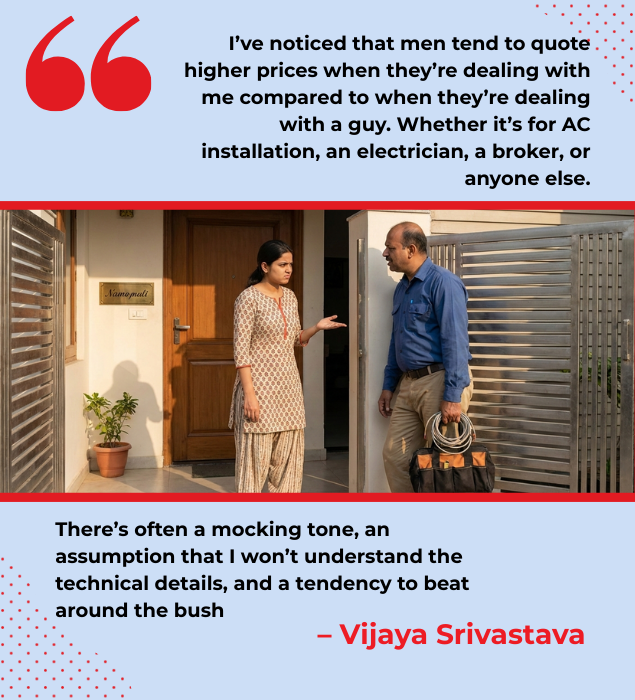
Women are often seen as less price-sensitive when it comes to personal care, not because they want to be, but because many of these products are framed as necessities. Companies exploit this shift. What was once optional is now presented as baseline: SPF, retinol, serums, AM/PM routines, laser treatments, Botox, hair removal, marketed as “permanent” solutions that never truly end.”If we look at the market, the range of products available for women the variants and the overall maintenance and is far wider compared to men. The skincare industry largely targets women, giving men limited space under the idea of toughness,” said Vijaya Srivastava.Pallavi also points to fashion as another quiet contributor to the hidden tax. “Why can’t I have jeans with normal-sized pockets that can fit today’s phones?” she asks.”Men can just slip their phones into their pockets and walk freely. Why do we have to carry a handbag just to hold a phone? Because we don’t have pockets.” Her frustration reflects how design choices, driven by fashion norms and commercial interests, create yet another invisible cost: one paid in convenience, money and everyday freedom.
The safety tax: Paying to feel safe
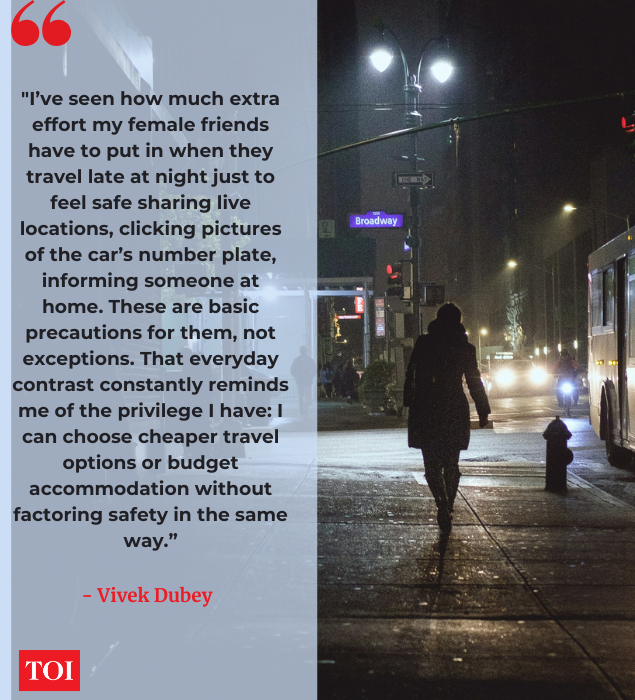
Beyond products, women quietly absorb another cost, the safety tax! In urban India, women often pay a premium simply to move through the city. Public transport that is cheaper for men is not always an option. Cabs, safer buses or higher travel classes become necessities, not luxuries.Ignoring buses, trains and shared autos “just to feel safe” is common and expensive. “While men don’t have to think twice about getting into a crowded metro or bus, a woman might opt for a far more expensive cab just to avoid harassment,” said Aashish.Aastha Jha explains the cost she absorbs every month. “I pay Rs 6,000 for travel to office every month. I haven’t used shared autos, buses or the metro enough to even compare. My area is quite secluded with poor connectivity, so sharing doesn’t feel safe.” She adds that this expense isn’t consciously planned. “I don’t budget for it deliberately, but I’ve been doing it subconsciously for years.” While men may think about safety during odd hours, Aastha notes the difference during the day. “Men my age think about safety late at night. During normal hours, they don’t have to factor it in.”For women, even basic freedoms come with anxiety. “Being able to take a walk at night feels like a luxury. Whether you live in a gated society or a secluded area, you never really know who could harm you.” Her colleague Vivek Dubey agrees. “Safety matters to everyone, but not in the same way. I can book a cab at midnight without much thought. My main concern is the driver’s driving, not my personal safety.” He admits this is a privilege men often overlook. “I can take a bike taxi because it’s cheaper. I wouldn’t recommend the same to my female friends because of harassment risks.”
Housing: Where safety overrides affordability
Safety also dictates where women live.”When I came to New Delhi, my priorities were safety and security,” recalls Jyoti, a college student. “I looked at high-rise societies with rents far above my budget, but I had no choice,” she said.Natasha Singh adds, “Safety plays a huge role in evaluating cost of living.” After a robbery at her home, she and her flatmate were more concerned about security than stolen items. “When my flatmate was not in town, I used to travel all the way from Noida to Gurgaon to live with my parents because I didn’t feel safe living alone.”
The unpaid labour tax
Women also bear the burden of unpaid domestic and emotional labour: cooking, cleaning, caregiving and emotional management, the work that doesn’t show up in GDP calculations.
Healthcare and fertility pressure
Menstrual products are unavoidable expenses men do not face. Beyond that, women incur ongoing costs linked to reproductive health, PCOS, fertility testing, supplements and preventive check-ups.”Women experience more frequent health milestones and transitions, which leads to higher spending on routine medical care and supplements — costs that are rarely framed as healthcare burdens,” said Priyanka Mukherjee.”The biggest hidden tax that I pay, I think, is healthcare tax. Firstly, female health is the least talked about. And because of that, even the most basic tests cost thousands. And I am just talking about tests, have not even started on medication, consultation,” said Aastha.Period poverty adds another layer. Despite GST removal on sanitary pads in 2018, one in ten girls under 21 in rural areas still cannot afford menstrual products.
The pay gap makes the burden heavier
Women earn less but pay more.In India, women earn approximately Rs 40 for every Rs 100 earned by men. The country ranks 131 out of 148 in the Global Gender Gap Report 2025.”Yes, I do believe women are often paid less than male colleagues with similar experience or output, though the gap is not always obvious on paper. It shows up in slower growth, fewer leadership opportunities, or being expected to “prove” consistency over time,” said Priyanka reflecting on the disparity that only makes the burden of the Pink Tax feel heavier.Vijaya highlighted what she sees as one of the biggest hidden taxes women pay at work. “I’ve had colleagues with the same or even less work experience earn a higher CTC than me. I’ve also seen my female colleagues having to switch jobs more frequently than men simply because companies don’t make retention offers to them,” she said.”Men, on the other hand, are often retained. There’s never been an official declaration, but the pattern is quite evident. Having to repeatedly adjust to new environments is another hidden tax I’ve noticed,” she added.The Pink Tax doesn’t just hurt wallets — it reinforces inequality!
The ‘career loss’ tax
Safety concerns also push many women out of high-paying night shifts or demanding roles altogether. A budding journalist, Oshin, said she considered quitting because late working hours didn’t feel feasible for her. Living far from work, she didn’t want to take on the additional financial and emotional burden of arranging safety every night.
Does simply existing as a woman cost more?
Smriti Jain believes it does. “Simply being a woman comes with higher, unavoidable expenses. While awareness is growing, the true economic impact is still not fully acknowledged,” she said.Natasha echoed the sentiment, saying, “From daily transport to monthly periods, our lives are forced to be comparatively more expensive. Whether it is shopping for toiletries or simply getting a haircut, everything is more costly, marketed as a better lifestyle choice.”Priyanka, speaking candidly, agreed. “Honestly, yes. Simply existing as a woman costs more — financially, emotionally and mentally. From safety planning and health spending to clothing choices shaped by social scrutiny, there are constant micro-costs attached to being cautious, prepared and presentable,” she said.She added that one of the biggest hidden taxes rarely discussed is mental bandwidth. “The cost of constantly thinking ahead. ‘Is this safe?’ ‘Should I stay late?’ ‘Do I need a cab?’ ‘Will this be misread?’ That constant vigilance has an economic value we never calculate.””For many women, safety often feels like something you have to plan and pay for, rather than something that simply exists,” she added.
Vivek acknowledged the disparity. “Yes, I do think simply existing as a woman costs more, financially, mentally and emotionally. But I don’t think society truly acknowledges it. There’s a kind of collective blindness around this issue. It’s almost as if society has accepted that it’s expensive to be a woman and decided this is just how things are,” he said.Rajeev Singh another male colleague of Vivek also agreed. “Men generally have greater flexibility to compromise on comfort or safety. Social norms, lower levels of harassment and fewer restrictions on movement allow men to accept risks that would be unreasonable or dangerous for women. Womanhood does appear costly — even if you subtract safety-related expenses,” he said.
Does society acknowledge how expensive womanhood is?
Aastha believes the issue is deeply structural. “Absolutely. Society itself has made womanhood expensive by keeping research and technological development that could genuinely benefit women scarce,” she said. “An HPV vaccine that could prevent cervical cancer costs thousands. These are exactly the areas that should be mass-produced, considering women make up nearly half the country’s population,” she added.Priyanka, however, feels the burden remains largely invisible.
I don’t think society fully acknowledges how expensive womanhood is because many of these costs are normalised and invisible. They’re framed as ‘choices’, not necessities. Until we recognise these expenses as structural rather than personal, women will continue to bear them quietly, without much conversation.
Priyanka Mukherjee
Is safety treated as a luxury rather than a right?
Natasha believes it is. “It’s a known fact that women feel more restricted even if it’s self-imposed, after a safety incident occurs in their vicinity. When a DU student was harassed outside a girls’ college, the response was to put up posters listing ‘dos and don’ts’ for women. That tells you everything. Our safety is treated like a joke, not a basic right,” she said.Vivek added that meaningful change requires structural effort. “Real change would require going back to the basics, changing policies, enforcing laws, redesigning public spaces, and challenging everyday behaviour. That takes effort and intent. And perhaps that’s why the issue is often ignored, even though it affects the dignity and daily lives of nearly half the population,” he said.Taken together, these everyday choices where women live, how they travel, the work they take on and the risks they avoid rarely show up as line items in budgets or policy discussions. Yet they quietly shape women’s freedom, mobility and opportunities in ways that are easy to overlook but hard to escape.The bill may be invisible, but it’s paid daily. Go to Source