
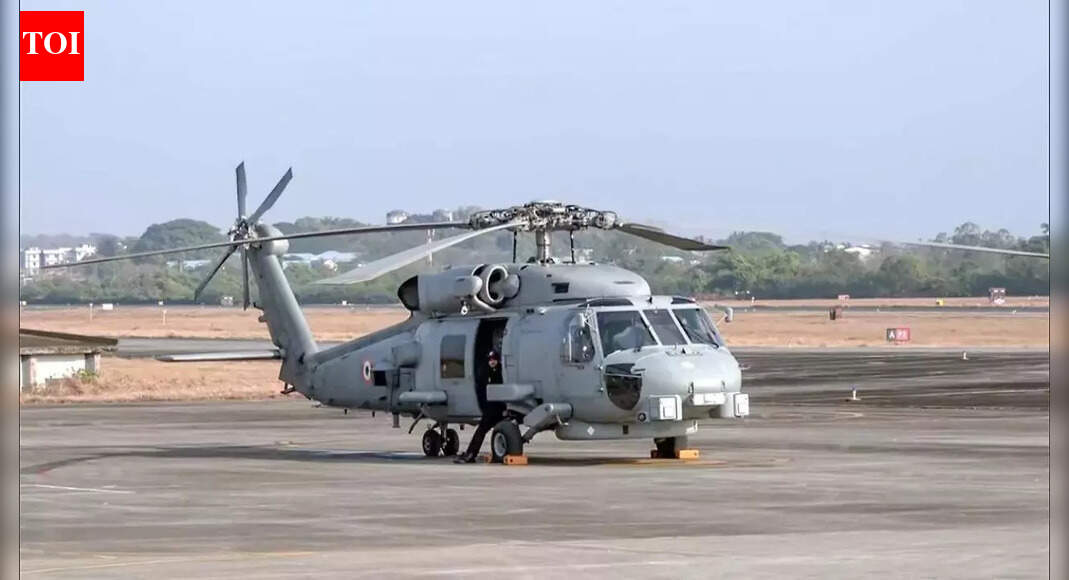


Indian Navy commissioned its second MH 60R helicopter squadron, INAS 335 (Ospreys) at INS Hansa, in Vasco on Wednesday.
NEW DELHI: The Indian Navy on Wednesday commissioned its second squadron of MH-60R (Romeo) multi-role helicopters, INAS 335 ‘Ospreys’, at Goa’s INS Hansa naval air base, marking a key step in strengthening India’s submarine warfare and maritime surveillance capabilities on the western seaboard.The squadron was commissioned in the presence of Chief of Naval Staff Admiral Dinesh Tripathi, with the induction ceremony marked by a traditional water cannon salute. The event concluded with a march past of the newly inducted helicopters, often described as the Navy’s “flying destroyers”.Addressing the gathering, Admiral Tripathi shed light on the changing nature of threats in India’s maritime neighbourhood. “The maritime environment around us, today, is more complex and contested than ever before. Shifting geopolitics, fast-moving technologies, and an expanding spectrum of threats – from grey-zone activities to supply chain disruptions at sea – are shaping this new reality,” he said.He said the Navy’s modernisation drive is closely linked to India’s broader strategic goals. It is within this challenging and dynamic strategic context that India is undertaking its maritime voyage towards becoming Viksit Bharat by 2047, he added.
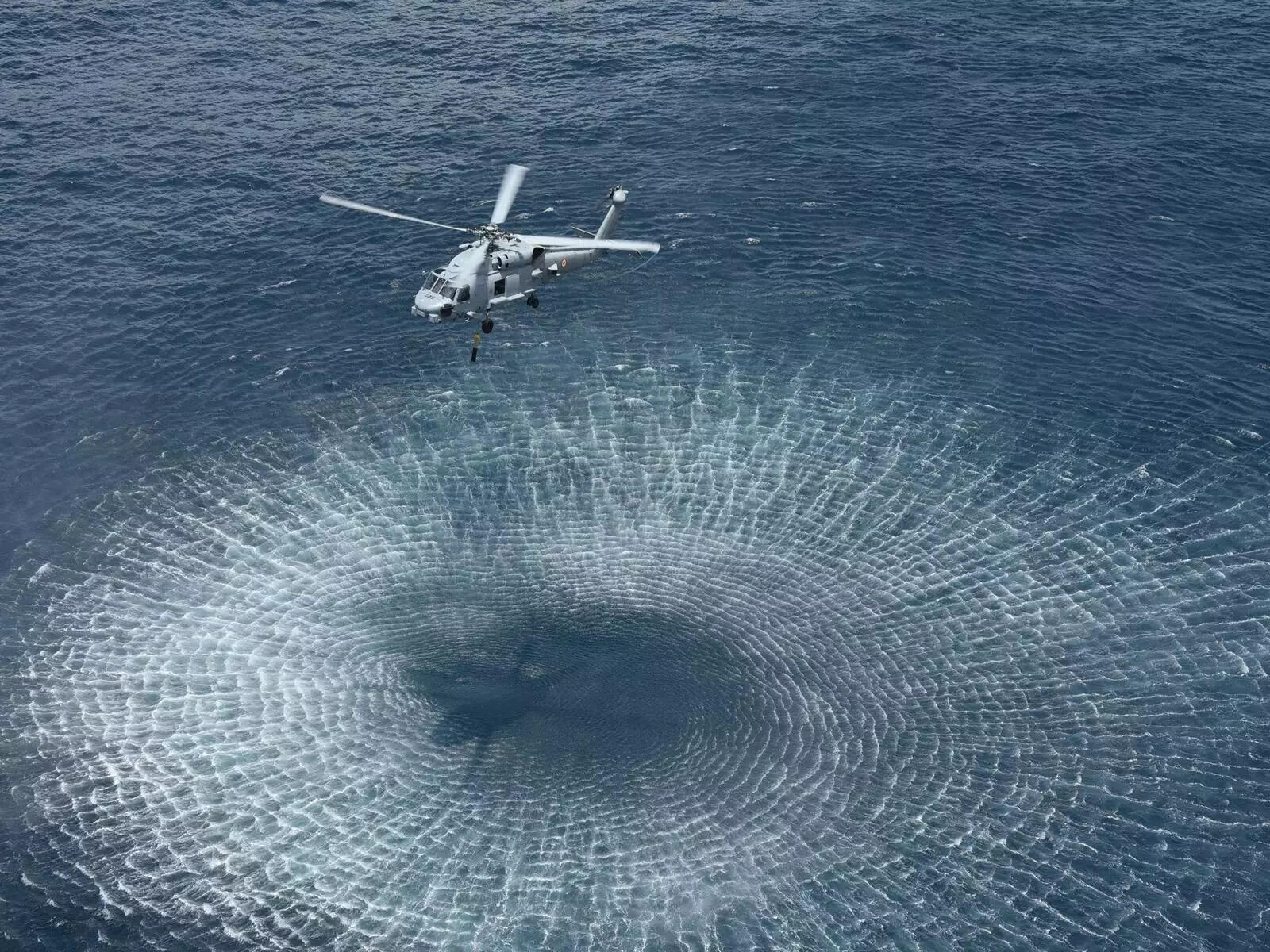
Indian Navy’s second MH-60R squadron INAS 335 at INS Hansa
“Strengthening maritime security and deterrence, therefore, are fundamental to safeguarding our sea lines of communications, and growing national maritime interests,” the Navy chief said.Highlighting the operational significance of the induction, Admiral Tripathi said the deployment of the MH-60R helicopters on the western coast as the first operational squadron marked a major milestone for naval aviation. “The induction of the versatile, multi-role MH60R helicopter on the Western Seaboard, as the first operational squadron, marks an important milestone for our Navy,” he said.The Navy chief also drew attention to the historical resonance of the occasion. “The commissioning today also comes at a moment of great significance – 2025 marked 75 years since the Government of India approved the formation of a Fleet Air Arm, a decision that gave wings to Naval Aviation, thereby transforming our Navy into a potent multi-dimensional force, and giving us a decisive edge at sea,” he said.He noted that the date also coincided with a key chapter in India’s military history. “It is a matter of even greater significance that, precisely 64 years ago, on the night of 17/18 Dec 1961, Operation Vijay commenced, wherein ships of the Indian Navy sailed into Goa, to liberate it from the Portuguese,” Admiral Tripathi said.Recalling the role of naval aviation during that operation, he added, “There too, Naval Aviation played a part, with the erstwhile Vikrant and its integral air wing stationed just beyond the horizon, securing the approaches to Goa.”Why does it matter?The Navy chief outlined how the MH-60R induction fits into a broader push to enhance maritime domain awareness and strike capability. He said the Navy is moving ahead with the acquisition of 15 MQ-9B Sea Guardian remotely piloted aircraft, which will bolster persistent surveillance across India’s maritime areas of interest.“In addition to building its shore-based aviation capabilities, the Indian Navy has maintained an unwavering focus on the enhancement of the integral shipborne aviation capabilities – both fixed and rotary wing,” he said.Admiral Tripathi said recent procurements were aimed at building a balanced and future-ready force. “It is in this context that the recent signing of the contract for 26 Rafale-M carrier-borne aircraft assumes particular significance, strengthening our long-range maritime strike and land-attack capabilities, as well as Fleet Air Defence,” he said.He added that rotary-wing platforms play a critical supporting role at sea. “Complementing the deck-based fighters, rotary-wing platforms, that include the shipborne Uncrewed Aviation Systems, extend the Fleet’s ability to undertake persistent surface and air surveillance, standoff anti-submarine and anti-surface warfare, logistics support, and search-and-rescue at sea,” he said.With the commissioning of INAS 335, the Navy’s operational footprint in the Arabian Sea is set to deepen, reinforcing India’s maritime deterrence posture at a time of intensifying strategic competition in the region. Go to Source