


CJI Kant
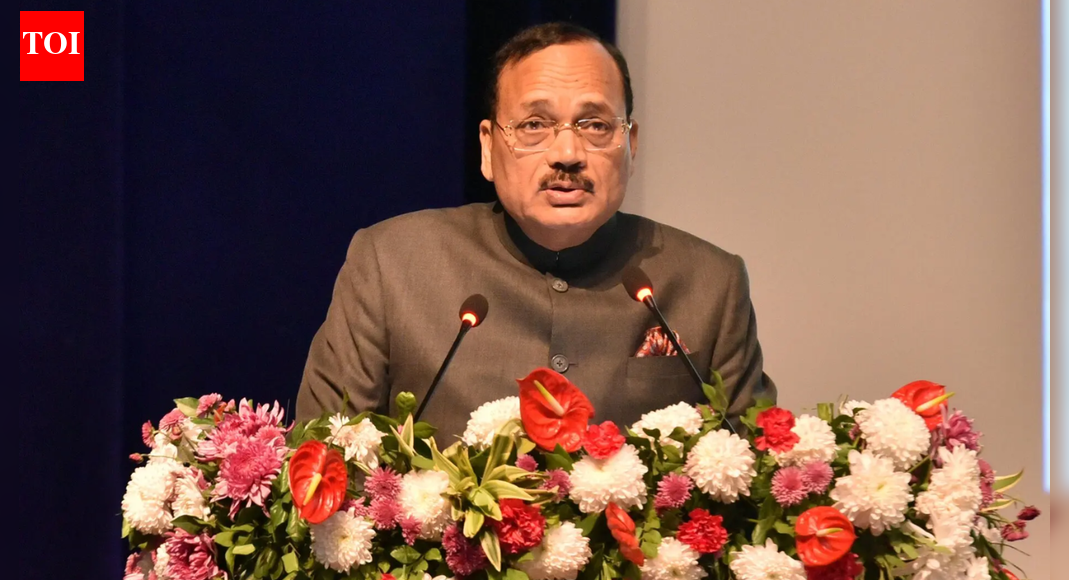
NEW DELHI: CJI Surya Kant on Friday said he envisions a transition towards a “multi-door courthouse,” where courts function as comprehensive centres for dispute resolution and not merely for trials.The CJI said courts should offer multiple pathways such as mediation, arbitration and litigation, depending on the nature of the dispute.
“As we look forward towards the horizon, I envision a transition towards the multi-door courthouse. What I mean to say is that this is a visionary concept where the court ceases to be a singular venue for trials. Rather, it becomes a comprehensive centre for dispute resolution,” he said.When a person approaches a court, “they must find the doors to mediation, arbitration, and ultimately litigation, each tailored to the specific nature of their grievance,” he said.However, he noted that some disputes will still require adjudication. “We must acknowledge that there are bound to be some cases which cannot be resolved through arbitration or mediation. Therefore, the judicial system will always be prepared for fair litigation trials to adjudicate those disputes.” Describing the idea as the “ultimate empowerment of litigants”, the CJI stressed that mediation can significantly reduce judicial pendency. He reiterated that mediation should not be seen as a weakness of the legal system. “Mediation is not a sign of the law’s weakness, but rather its highest evolution,” he said.The CJI said for effective implementation of mediation at all levels, India needs more than 2,50,000 trained mediators. The country currently has around 39,000 trained mediators, facing a serious gap between demand and supply. He cautioned that training mediators requires careful selection and preparation. Mediation, he said, is not merely an art, as the “temperament, behaviour, compassion, passion, commitment, and devotion” of a mediator play a crucial role in ensuring success.CJI Kant was addressing the inaugural session of the Bar Council of India’s national conference and symposium on mediation in South Goa.