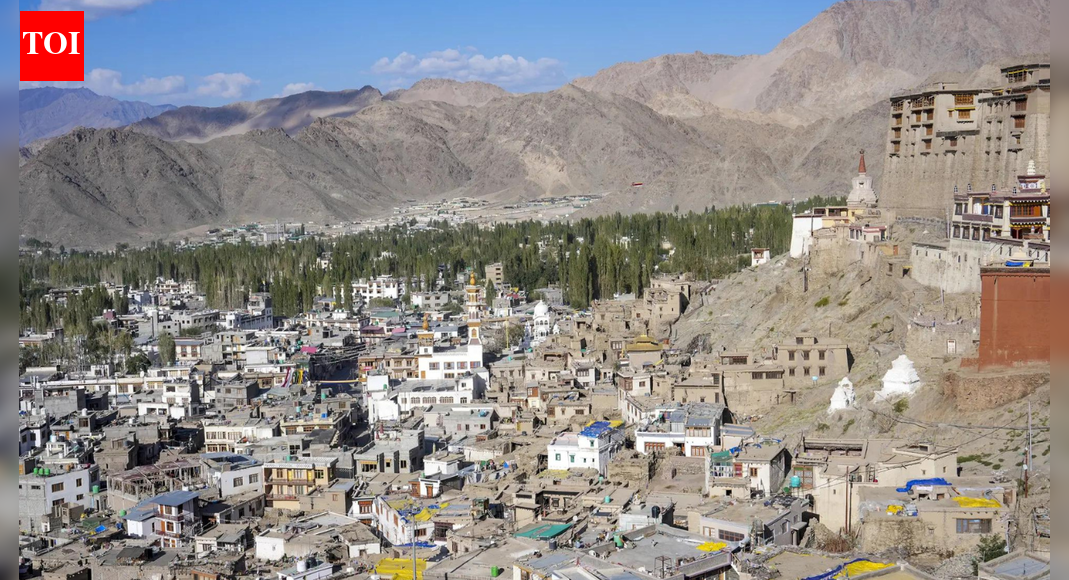

Ladakh (PTI)
SRINAGAR: Debate over Ladakh’s campaign for statehood and Sixth Schedule status sharpened Wednesday when Leh Apex Body presented its draft to the public in Leh, drawing pushback from participants who questioned whether the region with a small population of 300,000 and limited revenue base could sustain itself as a state.LAB, a coalition of political and religious groups leading the agitation for greater constitutional protections, had presented its draft proposal to the Union home ministry’s high-powered committee a month ago.LAB president Chering Dorjay said the “majority of people” want statehood and Sixth Schedule status — a constitutional provision that grants tribal areas autonomy through district councils empowered over land, resources, and local governance. He said the public debate was deliberate, adding: “When we submitted the draft to the home ministry’s high-powered committee, we also released it to the press so people remained informed about it.”However, several participants said Ladakh would struggle to generate enough revenue to run a state govt and argued that enhanced powers for existing hill councils would be more realistic.Dorjay countered that the region could rely on central schemes, grants, and other allocations that “Ladakh as a state will get”. He said LAB is open to incorporating “good suggestions” once talks with the Centre resume. “But the question is that talks are not happening,” he said, while urging Centre to “call us for talks”.Talks between the committee and Ladakhi representatives were held on Oct 22 in New Delhi. LAB and Kargil Democratic Alliance (KDA) — a political and religious coalition from Kargil — later submitted a joint 29-page proposal on Nov 14.The draft seeks general amnesty for climate activist Sonam Wangchuk and others arrested after the Sept 24 protest and police firing in Leh that left four protesters dead. It reiterates that full statehood, Sixth Schedule protections, and constitutional safeguards under Article 371 are essential to restoring public confidence.