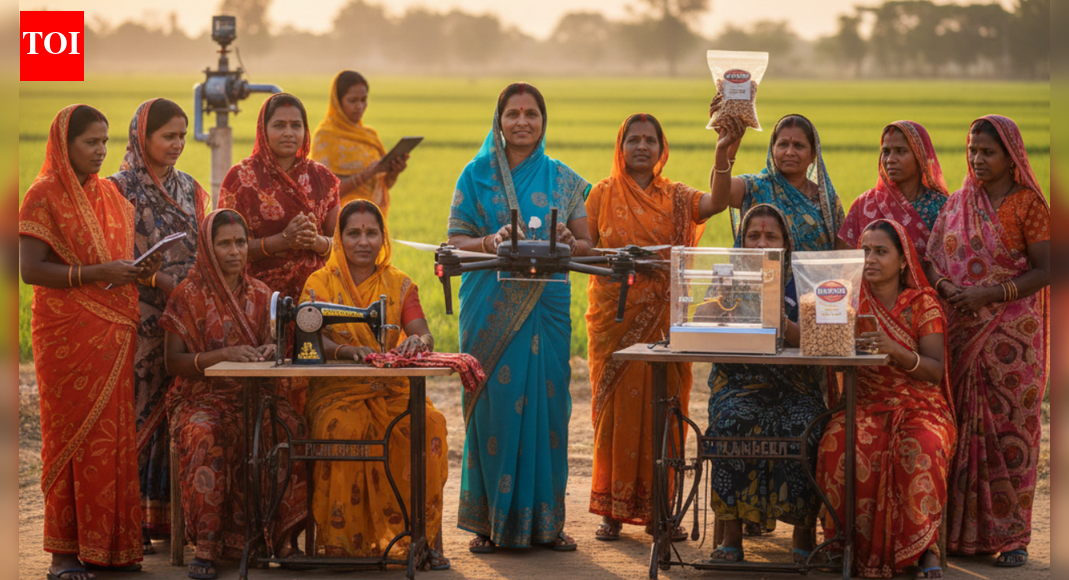

Over the past few decades, women’s participation in India’s rural economy has moved from the margins to the centre of policy conversations. From savings collectives and micro-enterprises to agriculture, dairy and small manufacturing, women – particularly in hinterlands – are increasingly being seen not merely as beneficiaries of welfare, but as economic agents capable of driving household incomes and local growth.When Shashibala Sonkar from a small town in Mirzapur, UP, first joined a self-help group (SHG) five years ago, she saw it as a way to make a little money to ease her financial troubles and access small loans. This year, she crossed a milestone that officially changed her life: her household income surpassed Rs1 lakh a year, qualifying her as a Lakhpati Didi – one among millions of rural women recognised by the Centre as economic contributors and community inspirations.
IPL Auction 2026
“Our finances were not strong. I used to look for some or other work through which I could support my family. I used to do tailoring and knitting, then I joined the samooh (SHG) and things changed” said Shashibala in conversation with TOI.
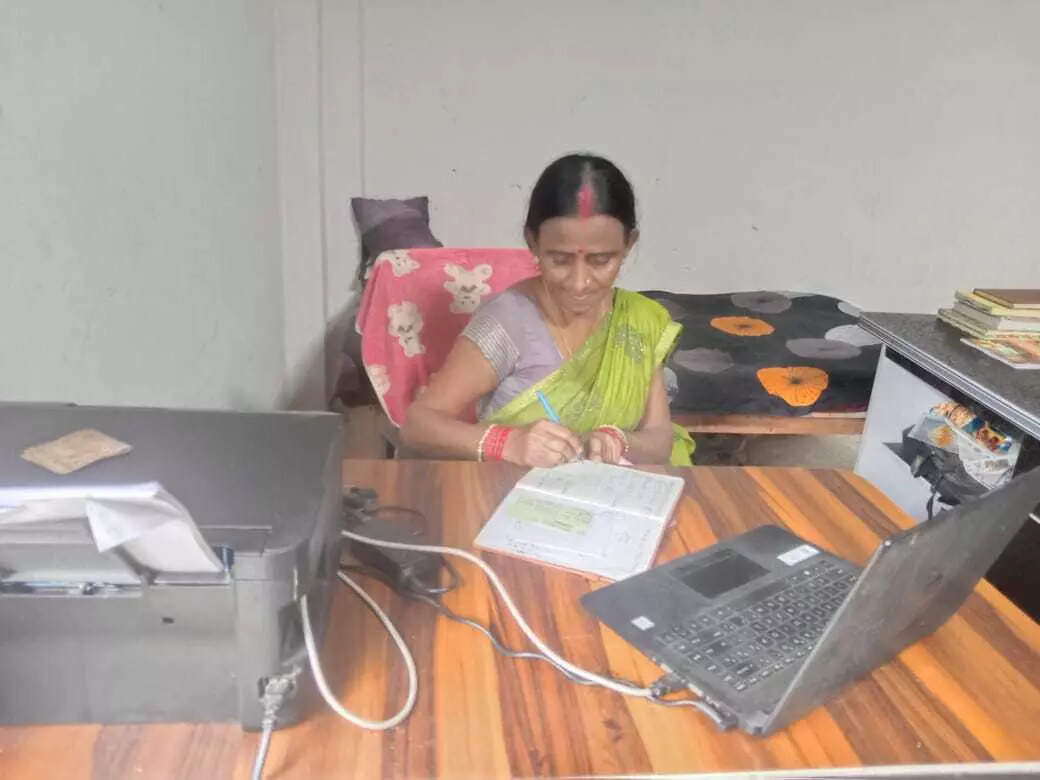
Her story reflects a shift in rural India’s socio-economic landscape. This shift in thinking has found formal expression in the government’s push to strengthen and scale self-help groups (SHGs), which today form one of the largest women-led grassroots economic networks in the world. With millions of women organised into savings and credit collectives, the focus has gradually moved beyond subsistence livelihoods towards income sustainability and entrepreneurship. And this shift is also increasingly becoming a political battleground.
What Is a Lakhpati Didi – And where did It come from?
The term Lakhpati Didi refers to a member of a self-help group whose annual household income exceeds Rs 1 lakh, sustained over at least four agricultural or business cycles, with a monthly average above Rs 10,000. These women are recognised not just for income, but for adopting sustainable livelihood practices and managing resources effectively.The idea was centrally promoted by the Union government in 2023 on Independence Day, when Prime Minister Narendra Modi described his vision of making “two crore Lakhpati Didis in villages”, highlighting the role of SHG women in the rural economy.This target was taken forward with formalisation in the Budget 2024, where finance minister Nirmala Sitharaman raised the scheme’s ambition from two crore to three crore Lakhpati Didis. The initiative builds on the Deendayal Antyodaya Yojana – National Rural Livelihoods Mission (DAY-NRLM), launched under the ministry of rural development. This is itself the evolved form of India’s long-standing SHG network, which traces its institutional history to 1992’s NABARD SHG-Bank Linkage Programme and gained scale under NRLM from 2011 onwards.
How self-help groups work on the ground
An SHG typically comprises 10-20 rural women who save small amounts collectively, access credit, and then invest in income-generating activities. These range from dairy and agriculture to services and small enterprises. Over time, the groups federate into larger bodies for better access to training, finance and markets.Shashibala told TOI, in 2021 she along with some other women of the community established ‘Om Sai Ajivika Mahila Swayam Sahayata Samooh’ which has been “transformative and helpful’ for her and all the other women associated with the group. Currently she is the only one from the group to be recognised as Lakhpati Didi.She says, “the journey which began five years ago has been slow, steady, but sustainable.”
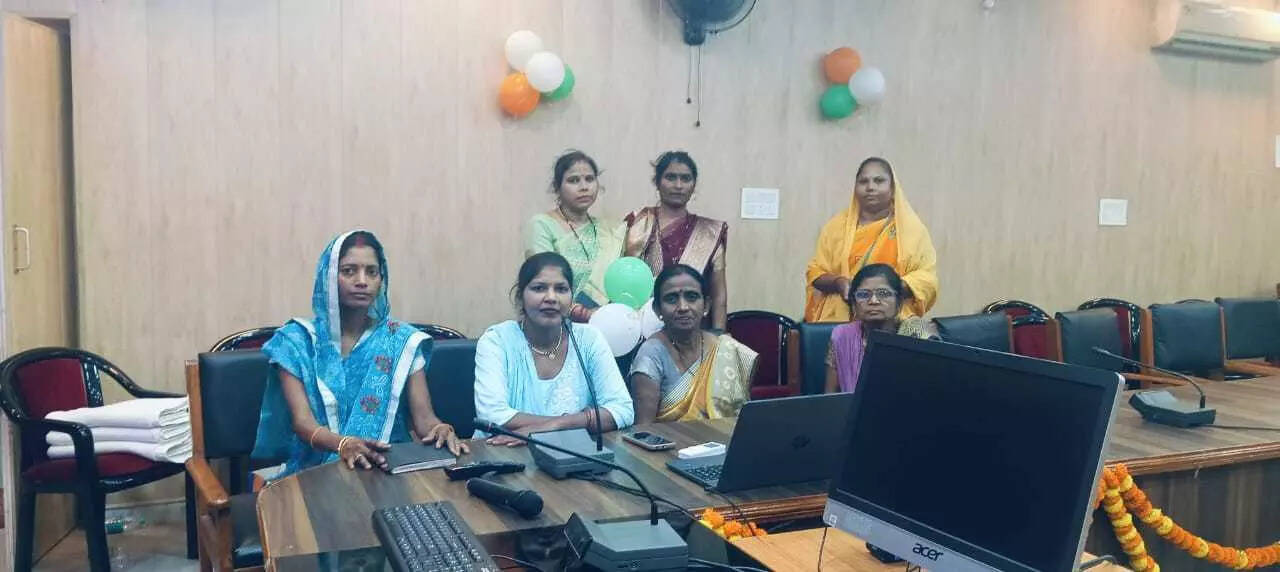
Under DAY-NRLM, SHGs receive:
- Revolving funds (Rs 20,000–Rs 30,000 per group, of their own saving),
- Community investment funds (up to Rs 2.5 lakh),
- Bank linkages (Financial inclusion is a key component to make SHG members preferred clients of the banking system, which in turn helps in)
- Collateral-free bank loans up to Rs 20 lakh with interest subvention and overdraft facilities.
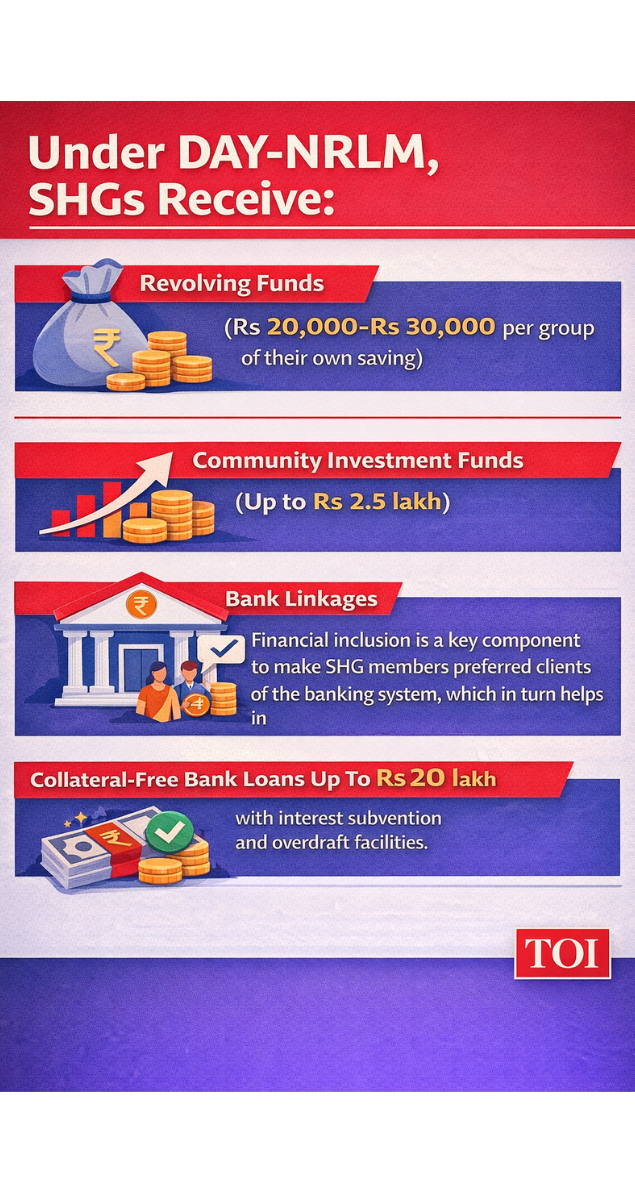
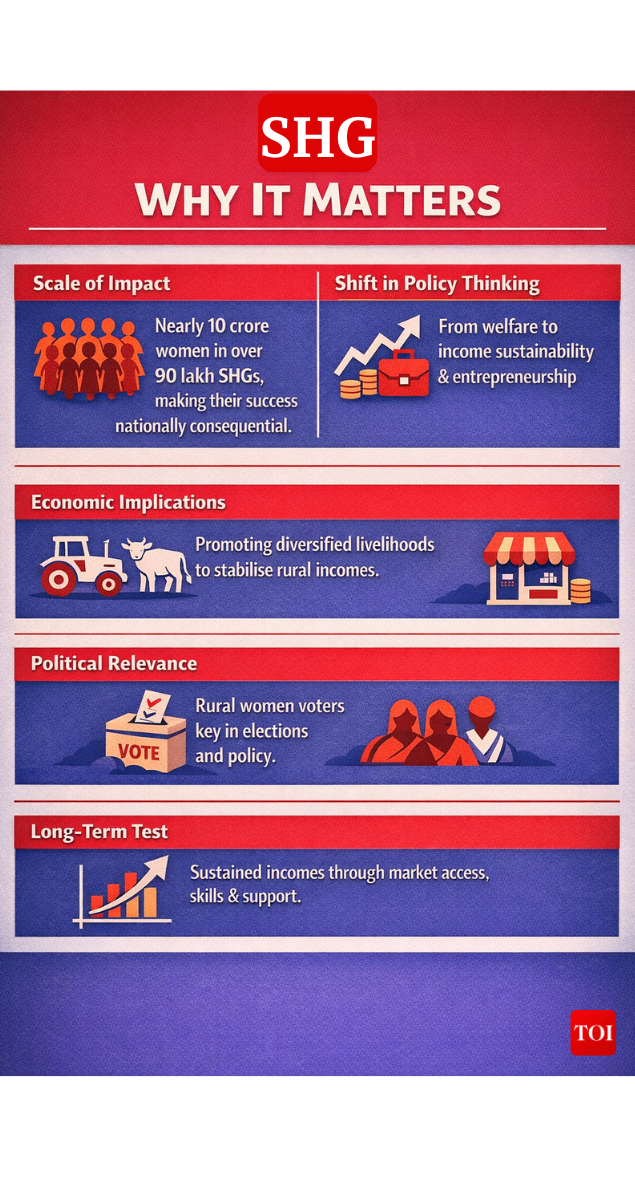
The system has helped organise nearly 9–10 crore women into over 90 lakh SHGs nationwide as of mid-2025. These funds form the very backbone on which the initiatives by SHG sustain themselves on. Shashibala has established a Namkeen manufacturing unit in her town with the help of funds acquired through the SHG. According to her, who also holds a senior position in the group, the loans “aren’t that difficult to get” when compared to usual bank loans which require collateral, guarantees and a lengthier process. “When we started the group I decided I needed something sustainable and even my son was planning for business so we went for namkeen business. But the problem was the finances, you can ask relatives for help but then after everything they’ll offer what a few thousands that’s not enough,” she told TOI. She further added, “I initially took a loan of Rs 2 lakh from CCL (joint account of position holders in group), it wasn’t that difficult to get it, probably due to SGH, and further some help through ‘Gram Sanghatans’ which work in association with self-help groups.”She also tells us that although getting loans through group wasn’t a task, it was comparatively when she required more capital and her son applied for a loan under PMEGP (PM employment generation program). But, it became “easier” when she became a guarantor in the application and eventually acquired a Rs 10 lakh loan. In many states, SHG groups have diversified beyond savings and credit into local manufacturing, services and even tech-related work. For instance, Sita Devi from a small village in Karnal, Haryana, after enrolling under NRLM, she underwent FL-CRP training and completed her graduation. She later received drone pilot training in Gurgaon. On completing the course, she was provided a drone, which now forms the backbone of her livelihood. She undertakes agricultural tasks such as fertiliser spraying and crop monitoring.SHGs have been mobilised for campaigns like Har Ghar Tiranga – stitching tricolour flags linked to rural livelihoods – demonstrating their reach into community life.
Scale and impact – By the numbers
The latest official figures show a sharp rise in women achieving Lakhpati Didi status. By late 2025, over 2 crore women had crossed the Rs 1 lakh household income threshold, spanning thousands of self-help groups across states. Shashibala said, “there are people from ‘Development alternative’ (people from government) who work in coordination with SGH, they look into and facilitate initiatives, make regular regulatory visits and they this year in their August audit decided to recognise her as Lakhpati Didi.” Earlier this year on Independence Day when PM Narendra Modi from the rampart of Red Fort acknowledged the contribution of Lakhpati Didis to the economy and women empowerment, Shashibala was among the 15 Lakhpati Didis sitting in the audience gallery.
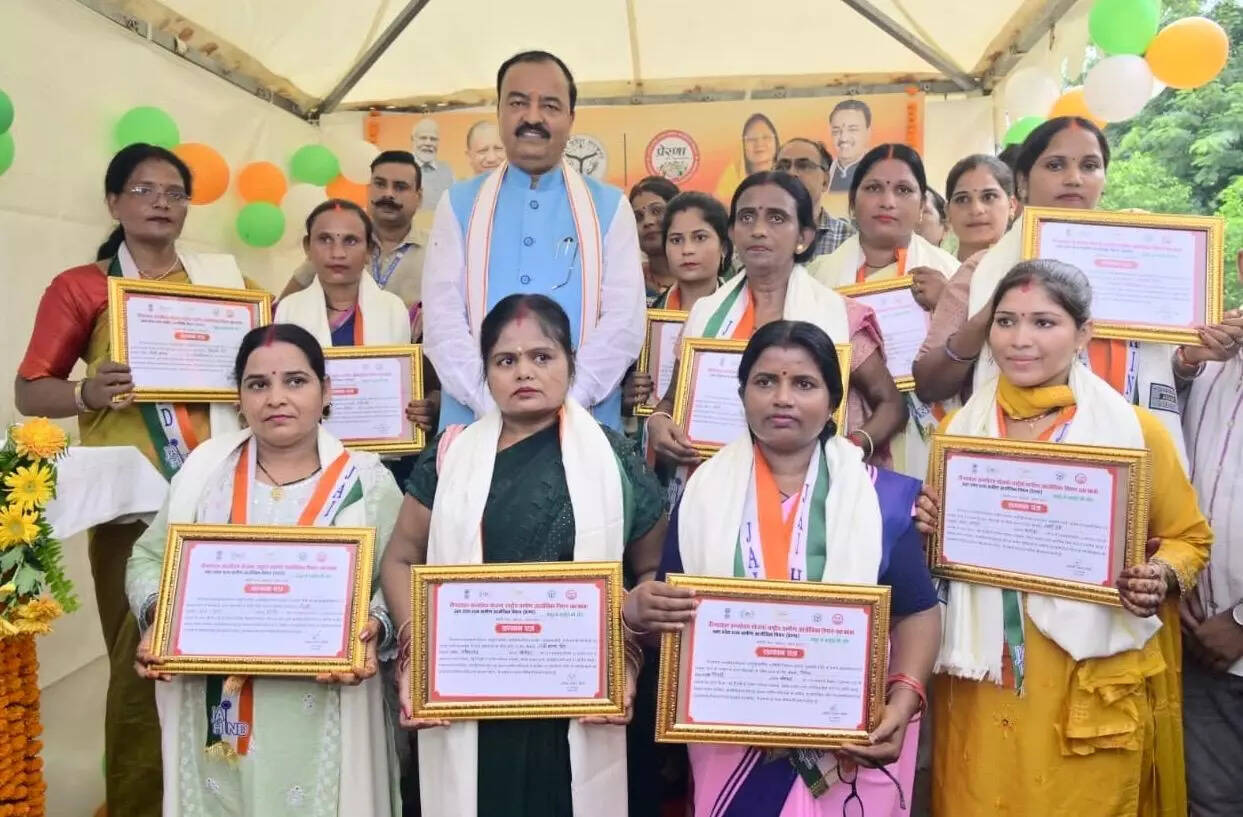
She was also given the certificate of recognition by the UP deputy CM Keshav Prasad Maurya in an event to felicitate the newly recognised Lakpati Didi in August.
Individual states have also pushed their own efforts: Uttar Pradesh recorded over 17.09 lakh Lakhpati Didis, with investments in revolving funds, bank loans and sector-specific linkages like integrated farming, dairy, sericulture and producer groups. Meanwhile Gujarat reported nearly 5.96 lakh Lakhpati Didis, backed by over Rs 1,400 crore in funds and Rs 3,600 crore in credit to SHGs.
Why they matter beyond economics
SHGs – and by extension Lakhpati Didis – are more than income networks. They serve as conduits for financial literacy, skill development, collective action, social support and opinion making. The government’s own notes describe them as fostering inclusion and entrepreneurship, not just subsistence livelihoods. As in the case of Shahsibala, there is now always a perpetual beeline of media, organisations and people inviting her to events, and ceremonies. She now has become an inspiration for many women, more recently Gates Foundation is working on a series with her, focusing on empowering women, and bolstering the reach and development work of the self-help group network.Researchers also point to the vital roles SHG women played during crises like the COVID-19 pandemic, where they took up mask production, sanitiser making and community outreach, illustrating their importance in local resilience. The tight knit network and personal equations provides these women from humble backgrounds a sworn credibility and a standing in local communities, much more than average political party or leader. This has helped these women to emerge as a new brand of influencers – which work probably on a more reliable, traditional word of mouth.
The election lens: Why SHG women are politically significant
As a long-term development project, SHGs are not new. But what has changed in recent years – and become politically salient – is the scale Lakhpati Didi has gained political visibility at a time when rural women’s votes – particularly in swing regions – matter decisively.In the 2024 Lok Sabha election, parties across the spectrum sought to court women voters with tailored promises, from direct cash transfers to livelihood programmes. While Lakhpati Didi itself was not an election manifesto pledge per se, its enhancement in Budget 2024, including the decision to raise the target from two crore to three crore women – presented mid-election year – added a political dimension to it.Political analysts note that SHG women represent a large, organised and socially influential constituency, particularly in states such as Bihar, Uttar Pradesh, West Bengal, Andhra Pradesh, Telangana, Odisha and Madhya Pradesh, where rural votes often decide tight contests. Unlike cash-transfer beneficiaries, SHG members are embedded in community networks, making programme performance – timely credit, training quality, market access – a subject of collective discussion at the village level.For the ruling party, showcasing Lakhpati Didis aligns with broader narratives of Aatmanirbhar Bharat and women’s empowerment. Opposition parties, while supportive of women’s economic opportunities, have raised questions about implementation gaps, inclusion errors, and whether benefits reach the poorest households.In several states, opposition leaders have challenged governments on delayed payments, limited access to training, or insufficient infrastructure support – common electoral talking points in rural constituencies. These debates intensify in assembly polls, where the award or denial of a programme’s benefits can shift local votes.Election strategists have pointed out that in close contests, SHG-linked livelihoods can influence voting behaviour not through direct transfers, but through perceived economic stability and dignity of work. The continuation – or disruption – of livelihood support can shape local political loyalties, particularly among women voters who have traditionally been less courted through income-focused programmes.
How political parties view them
The BJP has regularly highlighted Lakhpati Didi milestones in public events and state tours, framing them as achievements of its governance model. Government events such as Lakhpati Didi Sammelans – where certificates are handed over to newly certified women – are often attended by senior leaders to underline the scheme’s reach. Regional and opposition parties have sometimes echoed similar goals, advocating for rural women’s empowerment as part of their platforms. However, where the ruling coalition touts numerical targets and credit support, critics focus on on-ground gaps – such as whether infrastructure, market access and sustainable demand truly follow the initial income gains.Election pundits explain that such programmes serve not just as welfare tools but as voter engagement levers: assured income gains, community status and local group networks can translate into political loyalty or voting preferences, especially in marginal seats. The recently concluded Bihar elections have put the political significance of these women to the fore. Reports have also highlighted that these women were tasked with ensuring at least 80 per cent women voting at every booth they were provided with electors and were under constant monitoring. They were used as community mobilisers to reach out to women multiple times a day, and encourage them to go out and vote. These women were also instrumental in taking the Rs 10,000 financial aid announced for women months before elections to their communities. The Election Commission itself used the network of Didis for spreading electoral awareness, for identifying Burqha-clad women at booths. More than 1,80,000 women were deployed on booths throughout the state in both phases of elections. In this background it becomes even important to acknowledge that Bihar saw a massive jump of 8.8 per cent more women voting in comparison to men. Opposition from RJD to Congress have questioned the use of Didis in the electoral process. Political analysts pointed out the possible conflict of interest, as to the very beneficiaries of the government’s financial aid were used for handling polling-related duties for voter awareness. In conclusion, with a national target of three crore Lakhpati Didis, the scale of ambition is enormous. Achieving it will require deepening credit linkages, enhancing digital infrastructure, strengthening market networks, and ensuring equitable inclusion of marginalised communities.Politically, as India moves for next election cycle through state elections, Lakhpati Didi is likely to remain a reference point in debates on rural development and women’s economic participation. Whether it endures as a transformative livelihood model or becomes another contested policy marker will depend on how effectively income gains are sustained beyond targets – and beyond election seasons.But one fact is determined, as we live in the times of influencer marketing these women have emerged as the newest addition to that brand of influencers and as a political constituency which no party can afford to ignore. Go to Source