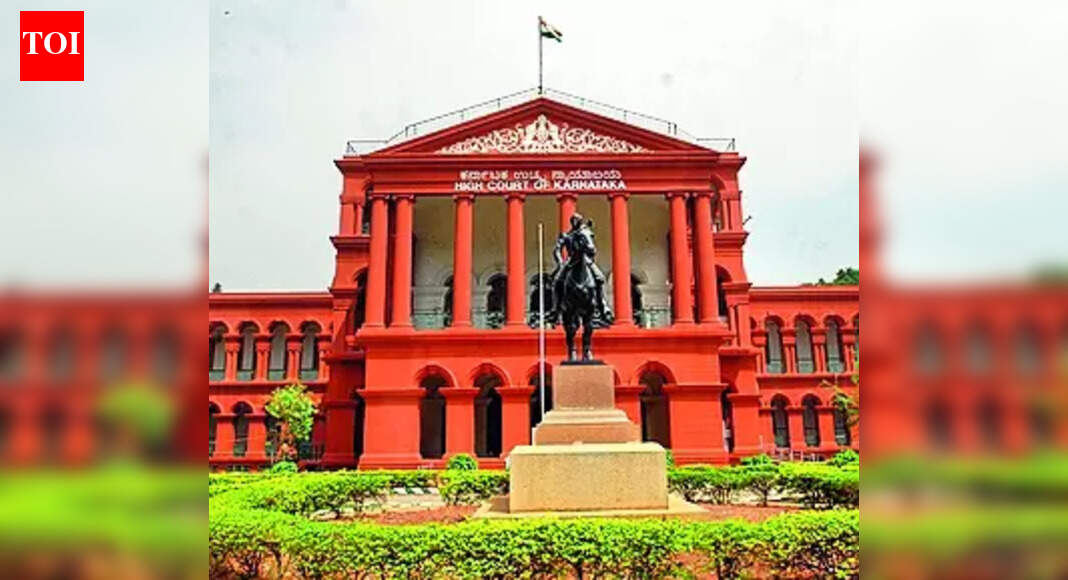

Karnataka HC
BENGALURU: Karnataka HC has held that even a third party can, depending on the facts of the case, challenge a lok adalat award through a writ petition if the award is alleged to have been secured fraudulently by excluding a proper and necessary party. The observation was made by Justice M Nagaprasanna while quashing a decree passed by a civil court in Hosapete, Vijayanagara district, arising from a compromise recorded before a lok adalat. The case is related to a land partition dispute in Kamalapur village. A compromise petition had been entered into before the lok adalat between Nagamma Nagalapura and the children of Karadantappa, both belonging to different branches of the family of Khemmani Hanumanthappa, the original owner of the properties. Guramma and her children, who also claimed to be part of the same family, were not arrayed as parties to the suit. Challenging the decree dated July 8, 2023, Guramma and her children contended that they were necessary parties and the compromise was entered into in collusion, with the intent of denying them their legitimate share in property. They had initially filed an appeal but withdrew it after being advised that an appeal was not maintainable against a decree drawn from a lok adalat compromise. They subsequently approached HC. Opposing the plea, the respondents argued that the writ petition was not maintainable as Guramma and her children were not parties to the original partition suit. After examining the records, provisions of the Code of Civil Procedure, and earlier judgments, Justice Nagaprasanna held that in certain circumstances, a third party is entitled to invoke writ jurisdiction to challenge a lok adalat award if fraud is alleged on the grounds that the party was deliberately not impleaded despite being necessary to the proceedings. Allowing the petition, the court ordered restoration of the civil suit before Hosapete court. It also directed that any financial transactions carried out pursuant to the compromise should be deposited before the trial court, remaining subject to the final outcome of partition proceedings.