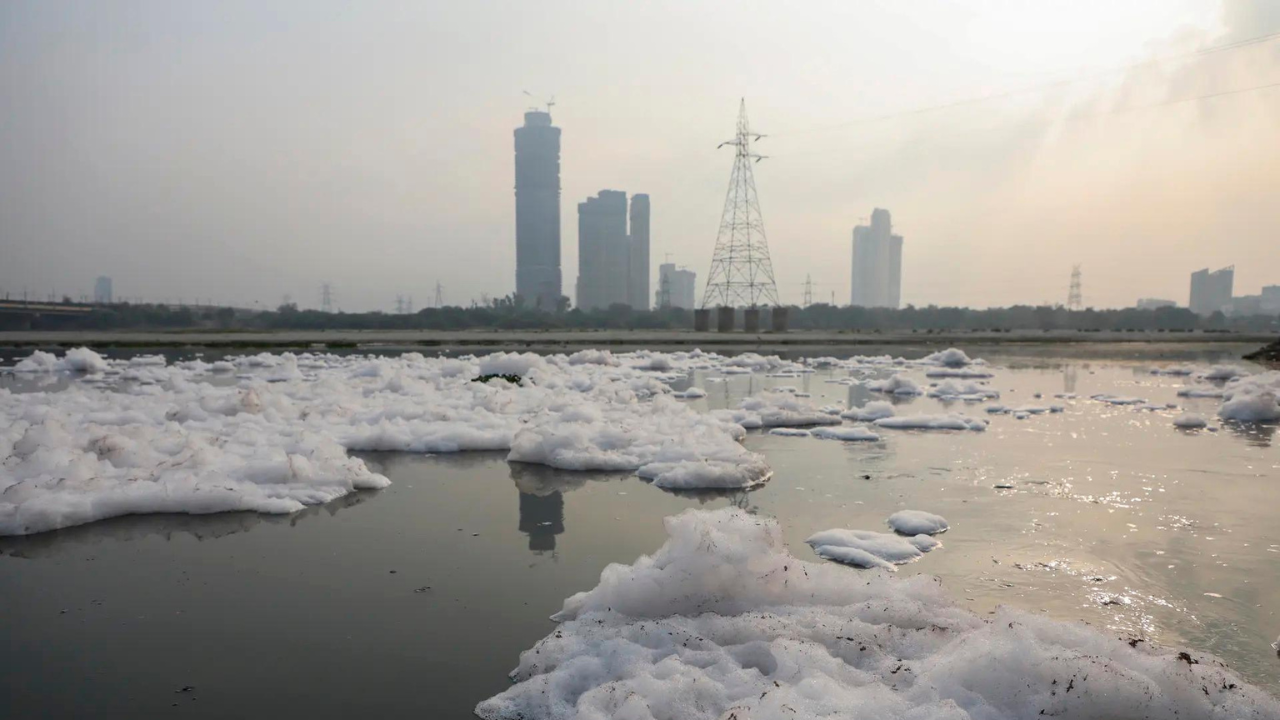

Yamuna river (PTI file photo)
NEW DELHI: “Nature provides enough to satisfy every man’s needs, but not every man’s greed.” The words widely attributed to Mahatma Gandhi perhaps resonate nowhere more starkly today than along India’s rivers.From Delhi to Mumbai, Chennai to Hyderabad and Bengaluru, India’s urban rivers tell similar stories. They have been straightened, narrowed, encroached upon and increasingly turned into conduits for the waste generated by constantly expanding cities. Rivers that once shaped settlements now survive by carrying sewage.Yet every river has paid a different price.The Yamuna has lost much of its width to floodplain encroachments and water diversion. A recent study found that the river, which flows through the northern and southern stretches of the national capital and is also known as the Kalindi, has shrunk by nearly 68% over the past 220 years.If the Yamuna is struggling, the Sahibi River in national capital has already crossed the brink and is now ecologically degraded, according to Central Water Commission report of Jal Shakti ministry.Once an important seasonal river flowing through western Delhi, the Sahibi has gradually disappeared beneath urban expansion. Today, most residents know it simply as the Najafgarh drain or nala, a heavily polluted water channel carrying black sewage through the city.Meanwhile, Mumbai’s Mithi river has been reduced to a storm-water drain overwhelmed by unchecked urban development. Hyderabad’s Musi and Chennai’s Cooum now carry far more sewage than freshwater, while Bengaluru’s Vrishabhavathi has effectively become the city’s wastewater channel.Even the mighty Brahmaputra in Northeast, relatively cleaner than most urban rivers, is steadily losing land to relentless erosion as climate change and urban pressures continue to mount.Together, they reveal a common truth: India’s cities have grown by steadily reducing the space available for rivers.
Delhi: Yamuna that lost its floodplain
No river illustrates this transformation more dramatically than the Yamuna.A recent study by researchers from Delhi University and the Indian Institute of Science Education and Research (IISER), Bhopal, found that the Yamuna’s average width through Delhi has shrunk by nearly 68%, from about 658 metres in 1799 to roughly 210 metres today. Water discharge has fallen by almost 90%, largely because of barrages, canals and diversion projects.The researchers also argue that shrinking floodplains have made Delhi more vulnerable to flooding. Embankments have confined the river to an increasingly narrow channel, helping explain why the capital witnessed record floods in 2023 despite lower river discharge than during the 1978 floods.The Yamuna has long occupied centre stage in Delhi’s political discourse. Every election brings renewed promises to clean the river, with rival parties blaming each other for its deteriorating condition.Yet, despite repeated assurances, the river remains heavily polluted and is often described as being on the brink of becoming biologically dead.Its condition is impossible to ignore. As it winds through Delhi, the Yamuna carries dark, polluted water choked with untreated waste. Downstream, it reaches Agra, where it flows beside one of the world’s greatest monuments — the Taj Mahal. The contrast between the pristine marble monument and the foul-smelling river has become an uncomfortable reminder of India’s environmental challenges.
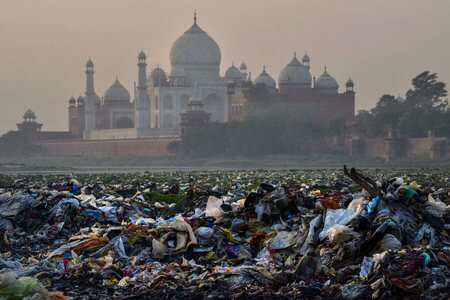
Agra: Garbage lines the polluted banks of the Yamuna near the Taj Mahal
During US President Donald Trump’s visit to the Taj Mahal in 2020, authorities even released additional water into the Yamuna to improve its appearance.
Mumbai: When a flood exposed a dying Mithi river
For Mumbai, it took a disaster.The catastrophic floods of July 26, 2005, which claimed over 500 live, exposed what decades of urban expansion had done to the 17.8-km Mithi River.According to the Mumbai Metropolitan Region Development Authority (MMRDA), suburban development over the past 25 years has “drastically degraded” the river’s water quality. Once an important natural storm-water channel, the Mithi now carries untreated sewage, industrial effluents, municipal waste and sludge.
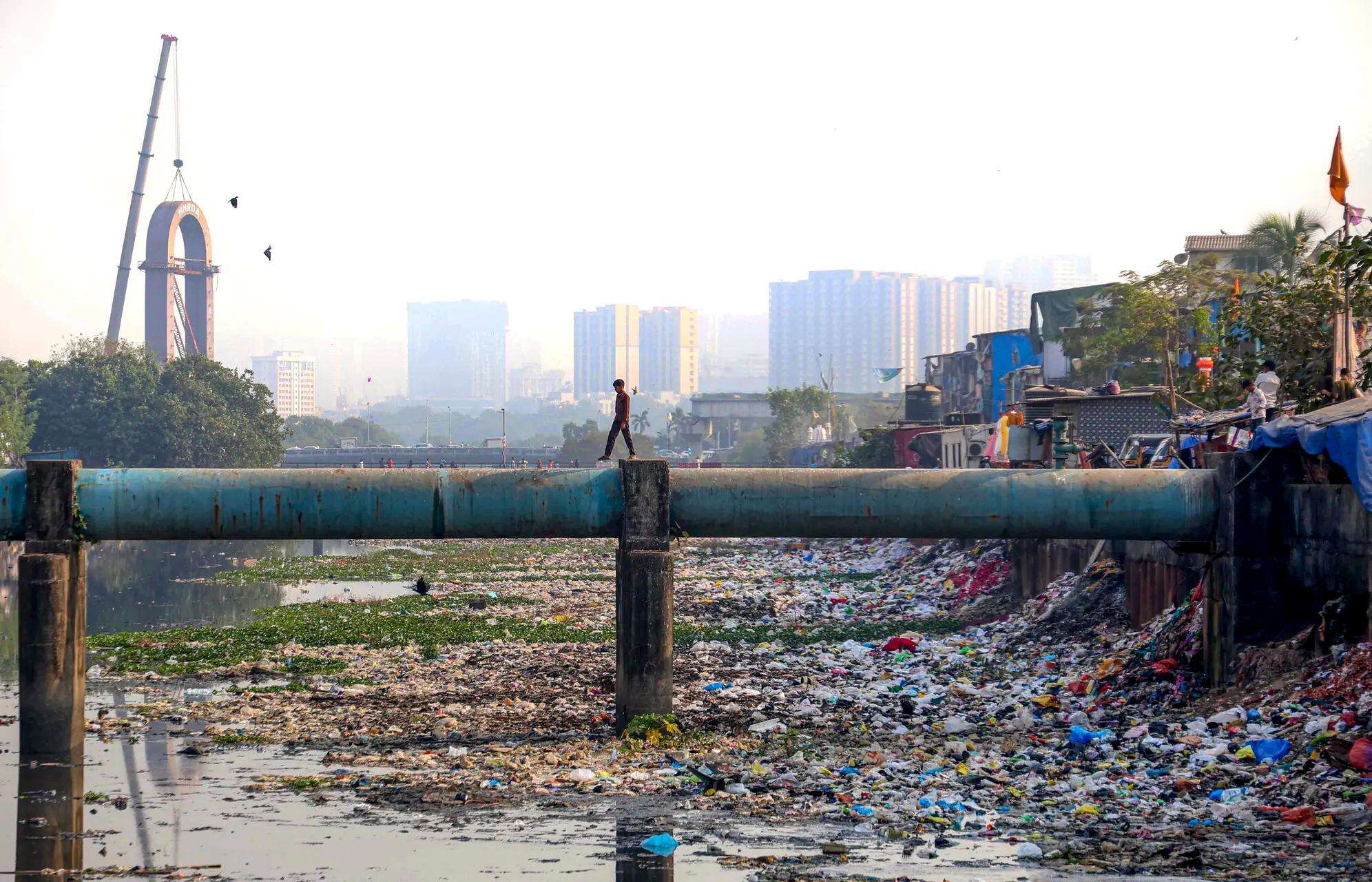
Wetlands and floodplains have disappeared under roads, industrial estates and the Bandra-Kurla Complex. Encroachments have narrowed the river, reducing its ability to carry monsoon runoff.Although the Brihanmumbai Municipal Corporation said that widening and retaining-wall works have doubled storage capacity and tripled carrying capacity since 2005, officials admit pollution remains the biggest challenge.The Maharashtra Pollution Control Board identifies untreated sewage, industrial discharge and solid waste as the principal reasons behind the river’s continued degradation.The BMC and MMRDA have undertaken widening, deepening, desilting, construction of retaining walls and pollution-control works along the river.The largest municipal body in country, BMC has said that retaining wall construction is nearly complete, while MMRDA is implementing sewage interception and an odour-control pilot project aimed at improving dissolved oxygen and reducing pollution.The renewed desilting and anti-encroachment initiatives after the alleged desilting scam were also reported.
Hyderabad: Musi river flowing mostly on sewage
The Musi tells perhaps the clearest story of a river losing its natural identity.The Telangana government’s Musi Riverfront Development Corporation said the river now runs “nearly dry” through Hyderabad because reservoirs upstream, catchment degradation and urban encroachments have drastically reduced natural flows.What remains is largely sewage.The Union environment ministry classifies stretches of the Musi among India’s “Priority-I polluted river stretches”, while the ministry of Jal Shakti said four sewage treatment plants with a combined capacity of 593 MLD have been created under the National River Conservation Plan.Even so, untreated wastewater continues entering the river through multiple nalas or drains as Hyderabad continues to expand its stretches and grow into a full-fledged metropolitan area.
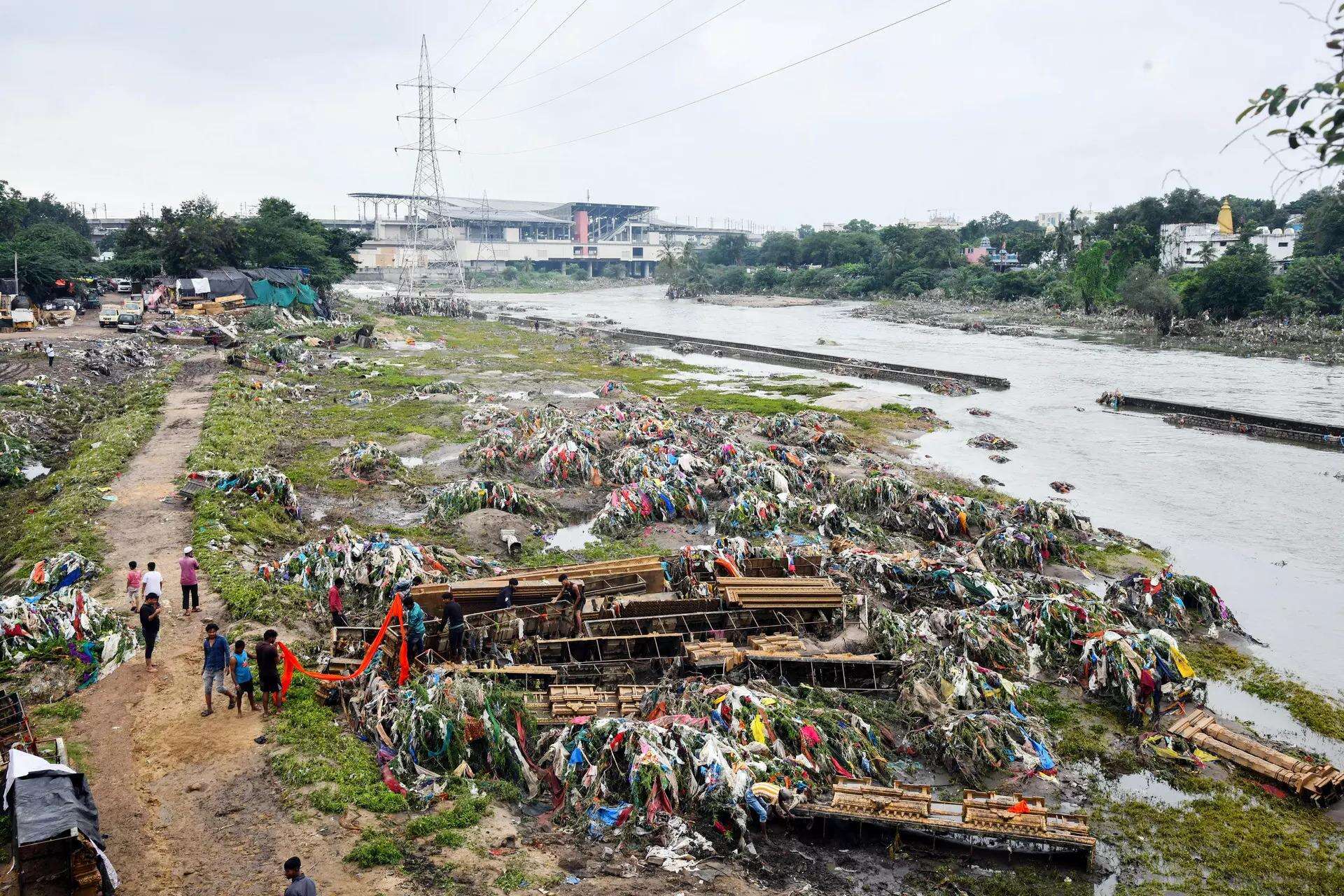
The state now proposes a 55-km riverfront restoration project centred on complete sewage interception, ecological restoration and flood management, an acknowledgement that beautification alone cannot revive a river whose biggest problem is pollution.
Chennai: Cooum river reduced to urban sewer
The story of the Cooum is equally sobering.Flowing about 65 km, the river once supported transport and recreation before becoming overwhelmed by Chennai’s urban growth.Government data cited in Parliament records Biochemical Oxygen Demand (BOD) levels of 105 mg/litre in the Cooum — among the highest for India’s urban rivers. Healthy river water typically records BOD below 3 mg/litre.Under the National River Conservation Plan, projects worth Rs 404.25 crore created 264 MLD of sewage treatment capacity through four treatment plants, according to environment ministry. However, the project includes both Cooum and Adyar rivers.Yet Cooum’s untreated sewage continues entering the river through multiple drains.A Comptroller and Auditor General audit mentioned that Tamil Nadu itself described the Cooum as “an urban sewer due to drainage of municipal and industrial waste.”The Chennai River Restoration Trust has cleared encroachments, relocated thousands of families and restored stretches near Island Grounds.But officials continue to acknowledge that stopping sewage inflows remains the key challenge.
Bengaluru: Vrishabhavathi river carrying city’s waste downstream
If Hyderabad’s Musi resembles an open drain, Bengaluru’s Vrishabhavathi has effectively become one.The Central Pollution Control Board describes the river as acting as “a drain for domestic and industrial wastewater.”Flowing into the Byramangala reservoir before joining the Arkavathi, the river carries much of Bengaluru’s treated and untreated sewage downstream.CPCB has repeatedly directed Karnataka authorities to strengthen sewage treatment, improve industrial effluent management and protect floodplains.Heavy rainfall frequently transports garbage and plastic downstream. Residents near Bidadi have complained that truckloads of Bengaluru’s waste accumulate around bridges after every major spell of rain.The river illustrates how pollution generated inside one city increasingly affects communities far beyond municipal boundaries.
Assam: A different kind of shrinking Brahmaputra river
The Brahmaputra also nurtures some of the Northeast’s fastest-growing urban centres. From Dibrugarh to the bustling metropolis of Guwahati, cities have risen and continue to expand along the banks of the mighty river.Unlike India’s urban rivers, the Brahmaputra’s greatest challenge is not just sewage.It is erosion.Every year, villages, farmland and public infrastructure disappear as one of the world’s largest braided rivers shifts course.Recognising the scale of the problem, the Centre and the Asian Development Bank signed a $200-million agreement in 2024 to strengthen flood and erosion management across 650 km of the river in Assam.The Assam government documents described erosion as one of the state’s biggest developmental challenges. Protection works continue around vulnerable areas such as Majuli, while future planning increasingly relies on satellite imagery, GIS mapping and hydrological modelling.Although pollution levels remain far lower than those in India’s metropolitan rivers, officials warned that urbanisation and untreated sewage around cities such as Guwahati are emerging concerns.The Brahmaputra demonstrates that shrinking rivers are not always about pollution. Sometimes, rivers lose land while people lose homes.The Brahmaputra’s relentless erosion and annual floods continue to threaten millions in the Northeast. Fed by heavy monsoon rains, the river frequently swells beyond its banks, leaving large parts of the region inundated.
Ganga: A river struggling under weight of India’s cities
If the Ganga is India’s most revered river, it is also among its most stressed. Flowing through some of the country’s fastest-growing cities, including Haridwar, Kanpur, Prayagraj, Varanasi, Patna and Kolkata.The Ganga faces a different challenge. Unlike the Yamuna, its biggest burden stems from industrial pollution, compounded by religious offerings, ritual waste, funeral remains and the enormous crowds that gather during events such as the Mahakumbh.For centuries worshipped as “Maa Ganga” and celebrated as a symbol of purity, the river today ranks among the world’s most polluted waterways.The river has increasingly become a victim of urban expansion, pollution and shrinking natural floodplains.As cities have grown, the Ganga’s floodplains have steadily disappeared beneath roads, residential colonies, commercial developments and embankments. These encroachments have narrowed the river’s natural corridor, reducing its ability to spread during the monsoon, recharge groundwater and sustain wetlands.Pollution remains the river’s biggest challenge. Despite significant investments under the Namami Gange programme, untreated sewage from expanding urban centres continues to enter the river through hundreds of drains.Industrial effluents, particularly from leather tanneries, sugar mills, distilleries and textile units, add to the pollution burden, although regulatory enforcement has improved in recent years. During the lean season, reduced environmental flows due to barrages and water diversion further limit the river’s ability to dilute pollutants.Large-scale restoration efforts have expanded sewage treatment capacity, intercepted drains and improved riverfront infrastructure in several cities. Yet government assessments continue to emphasise that engineering projects alone cannot revive the Ganga.
More than water, a test of India’s cities
Taken together, these rivers tell a remarkably similar story despite their different geographies.Some have been narrowed by embankments. Others have lost wetlands, floodplains and natural channels to highways, commercial districts and housing colonies. Many now receive more sewage than freshwater.Governments have invested thousands of crores in programmes such as Namami Gange, the Yamuna Action Plan, the National River Conservation Plan and city-specific restoration projects. New sewage treatment plants, riverfronts and desilting drives are important interventions.But almost every official report arrives at the same conclusion: rivers cannot be revived by engineering alone.Unless untreated sewage is intercepted, floodplains are protected, encroachments are prevented, and ecological flows are maintained, India’s rivers will continue to shrink-even if they appear cleaner on the surface.The question is no longer whether India’s cities need rivers. They always will. The real question is whether India’s cities can continue to grow without taking away the very space that allows rivers to remain alive. Go to Source