
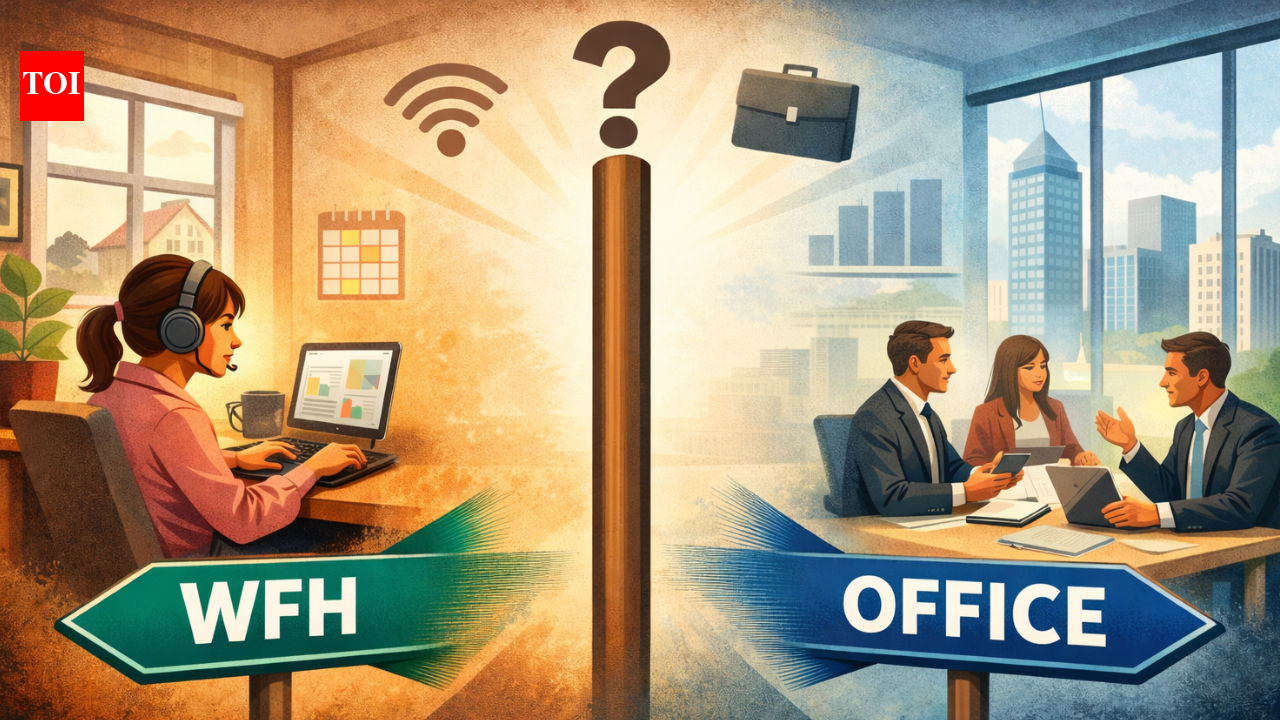

Representative AI image
Work from home, a concept that barely featured in corporate vocabulary before 2020, quickly became the backbone of the global economy when the Covid pandemic brought daily life to a standstill. Offices shut overnight, cities fell silent, but work could not stop. Across industries, companies improvised at speed, building digital systems and remote processes that allowed business to continue without physical workplace gatherings.What began as a crisis response stretched far longer than many expected. For nearly four to five years, remote, then hybrid work defined professional life for millions. Companies discovered they could save on office space, electricity and travel-related expenses. Employees found they could reclaim commuting hours and redesign their workdays. But as organisations now push for a return to offices, some partially and others more aggressively, the big question is resurfacing: if work from home kept businesses running through the worst disruption in decades, why is it now being rolled back?The answer lies in a complex mix of productivity gains, cultural shifts and unintended consequences, as told by multiple corporate workers to TOI.
The productivity surprise
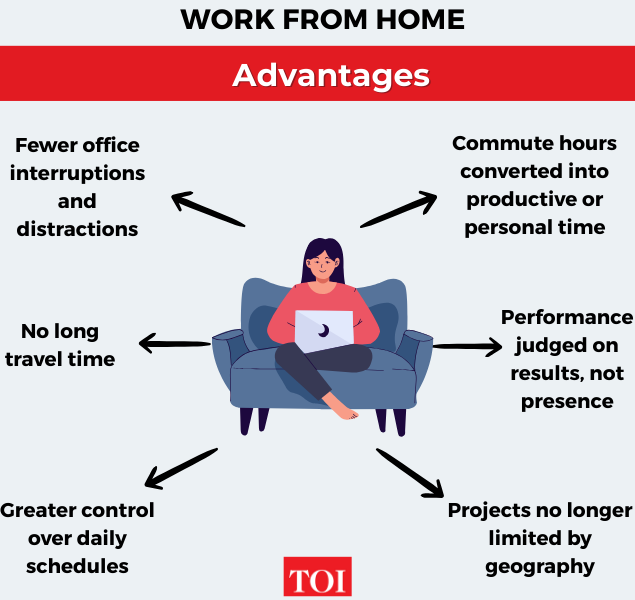
For many employees, the early phase of remote work delivered an unexpected boost.“Without daily commuting and office distractions, I could start work with more energy and focus deeply on tasks,” said Abhishek Gupta, who works at a multinational company. Like many others, he found that removing travel time and office interruptions helped him complete tasks “faster and with better quality than in a traditional office setup”. Across sectors, from technology and finance to consulting and public relations, professionals describe the pandemic years as a period of intense but often highly productive work. Flexible schedules enabled many to craft their schedules based upon meaningful output instead of physical presence.Rachit Jasrotia, a senior project manager with a tech firm, believes the change made the teams more disciplined in the way they worked. Clear documentation, structured digital workflows and asynchronous collaboration became the standard. “Many of the practices introduced during that period — flexible schedules, async collaboration, and an emphasis on clear documentation — have continued and are now part of how we operate by default,” he said.
Opportunity without borders
Remote work did more than change how people worked, it changed who got access to work.Kriti, who joined the workforce in the field of finance after the pandemic, says she witnessed how Covid-era remote practices opened up more global collaboration. “Earlier we had limited work since they preferred work to be done by those who were in the US office,” she says. “But due to Covid, a lot of work started being done remotely, which gave Indian teams more opportunities to participate.”Her experience reflects a broader shift many multinational firms saw during the pandemic: location became less of a constraint. Work that was once tied to specific offices began flowing more freely, expanding exposure and responsibility for teams outside traditional headquarters.
The rise of outcome culture
One of the most significant long-term shifts has been in how productivity is measured. Before the pandemic, time spent in the office often carried implicit weight. Remote work weakened that equation.“Productivity today is judged far more by outcomes — timely delivery, quality of insights, governance rigor, and the impact created,” said Gitanjali, a mid-level employee at a tech-firm. “This is a notable shift from earlier years where visibility or presence carried more weight. My work is data driven hence measured by accuracy, timeliness, and the strategic value delivered, not where I’m sitting. Covid played a key role in normalising this outcome‑focused approach,” she said reflecting on her time as a corporate employee before, during and after the pandemic.Other professionals across industries also said that performance conversations are now more closely tied to impact, quality and timeliness than just hours logged. The pandemic proved that high-quality work could happen without physical proximity, and many organisations adapted their evaluation frameworks accordingly.Even those who entered the workforce after the crisis found these norms already embedded. Meghna, who works in public relations, says flexible work structures and virtual collaboration were presented as standard practice when she began her career. “There is a clear focus on deliverables rather than rigid working hours,” she says. “There’s an understanding that people can be productive without being physically present at all times.”
Flexibility — With a cost
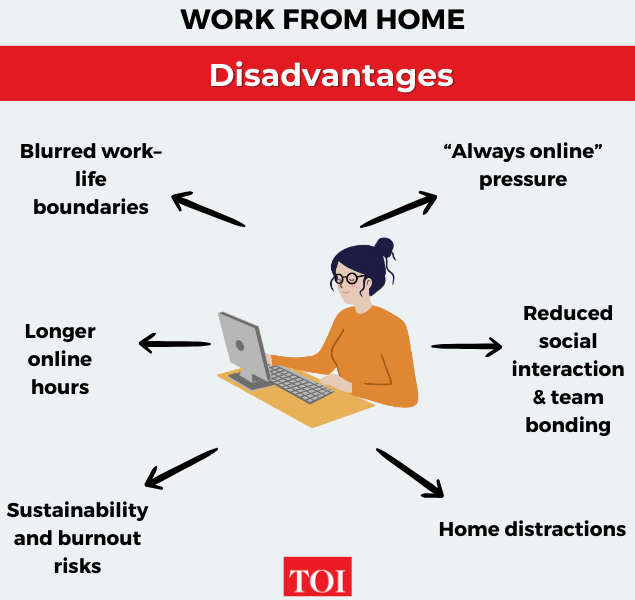
If remote work brought freedom, it also brought fatigue and mixed feelings on always “being available”Gitanjali talked about how she felt the pressure sometimes to “always be reachable” but found ways to manage. “While I don’t feel explicit pressure to be “always online,” the nature of managing a large and diverse portfolio sometimes creates an implicit expectation to stay reachable across time zones. Stakeholders often operate with tight timelines, so responsiveness is important. I manage this by setting clear expectations, planning communication windows, and keeping governance structures strong so that not everything needs immediate escalation.”Rachit Jasrotia added that while flexibility improved autonomy and focus, sustainability became a conscious effort. “ Hybrid work gives tremendous flexibility, but without intentional boundaries, work can easily spill into personal time. It requires conscious effort to disconnect, especially when tools and communication channels are always within reach.”Still, few professionals advocate a complete return to pre-pandemic routines. Instead, most are looking for balance – structured flexibility rather than either total remote work or rigid office mandates. Like Kriti who believes work from home has its challenges at times but overall it has made work more “sustainable” following pandemic-era policies at least partly.
Visibility creeps back
While many employees say performance is now judged more by outcomes, a quieter shift is underway as offices reopen and hybrid schedules take hold: the importance of being seen is returning, in some workplaces.Flipkart, a major e-commerce firm, announced the end of its work from home policy early last year.Amazon also mandated 5-days of work from the office. Wipro followed suit and tightened work from home rules, has mandated at least six hours in office for three days a week. Similarly, many other firms have tightened or shut-down altogether their work from home policy.Durgesh Kumar Jha, a public relations consultant, spoke on this, “In my experience, productivity at the workplace is increasingly judged by visibility rather than outcomes,” says “Work which is not seen, discussed, or repeatedly reinforced often goes unnoticed.”Meanwhile, in hybrid environments, digital presence has become the new form of visibility. Being active on internal chat platforms, speaking frequently in meetings and responding quickly to messages can shape perceptions of engagement — sometimes as strongly as tangible output.This, employees say, has revived a softer form of presenteeism. It is no longer about sitting late at a desk in the office, but about being continuously visible online.“There is pressure to respond quickly while working from home. I have experienced longer online hours and frequent messages,” said Abhishek, being at mid-management level. However, he remained in favour of the hybrid mode at his workplace adding, “However, once expectations are clarified, this becomes manageable.”That pressure to be seen often translates into pressure to be available.“There is a constant pressure to be available, irrespective of where you work from,” said Durgesh, adding “Availability is often confused with commitment.”Others describe it as less explicit but still persistent. Meghna noted that in client-facing roles, responsiveness is part of the job. “News cycles, client requirements, or urgent developments can sometimes demand quick responses beyond regular hours,” she said. “It’s more role-driven than policy-driven pressure.”Hybrid work has blurred time zones and boundaries, making delayed responses more noticeable. Some professionals say this has made work feel more continuous, even when organisations formally promote flexibility.
The boundary problem
One theme cuts across roles and industries: blurred boundaries.“Yes, the lines can blur, especially when working from home,” Meghna said. “It’s important to disconnect and protect personal time to avoid burnout,” she added, while referring to conscious efforts to separate the ‘two’ lives.Several professionals say they now rely on deliberate routines which includes- defined work hours, no-meeting windows and stricter notification controls – to prevent work from spilling into personal life.
The hybrid mode
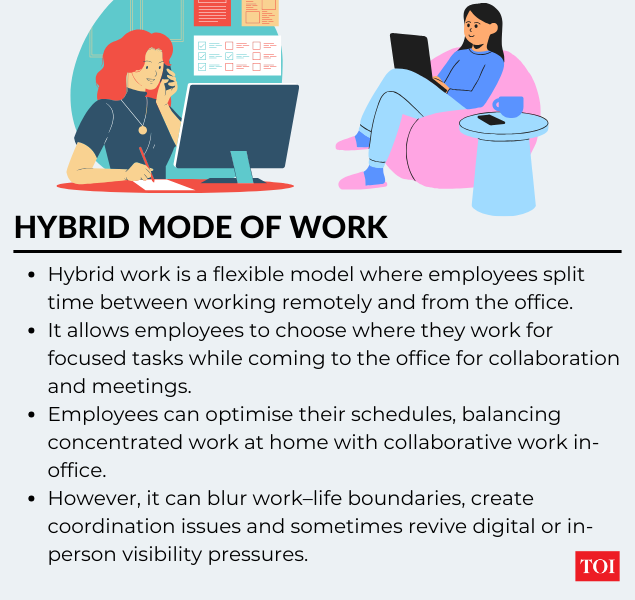
As more companies call employees back to the office, the work-from-home boom may be receding, but it is not disappearing. Instead, a hybrid compromise is emerging. Offices are increasingly seen as spaces for collaboration and relationship-building, while focused individual work often continues remotely.The future of work, professionals argue, will depend less on location and more on clarity.“Work-from culture has created an opportunity to build more inclusive, flexible, and high-impact teams. The key is balancing autonomy with clarity—clear priorities, shared expectations, and trust-based collaboration,” said Rachit. While Abhishek says, “Based on real experience, WFH works. It saves time, reduces stress, and improves focus. With trust, accountability, and clear boundaries, WFH is not just convenient—it is a better way of working for modern corporates.”
The culture per-se that began as a necessity has now become a negotiation. Companies are rethinking space and culture. Employees are rethinking boundaries and balance. The next phase of work will probably not be as simple as choosing between home and office, but about defining how both can coexist without sacrificing productivity or well-being. Go to Source

