
Image: IANS
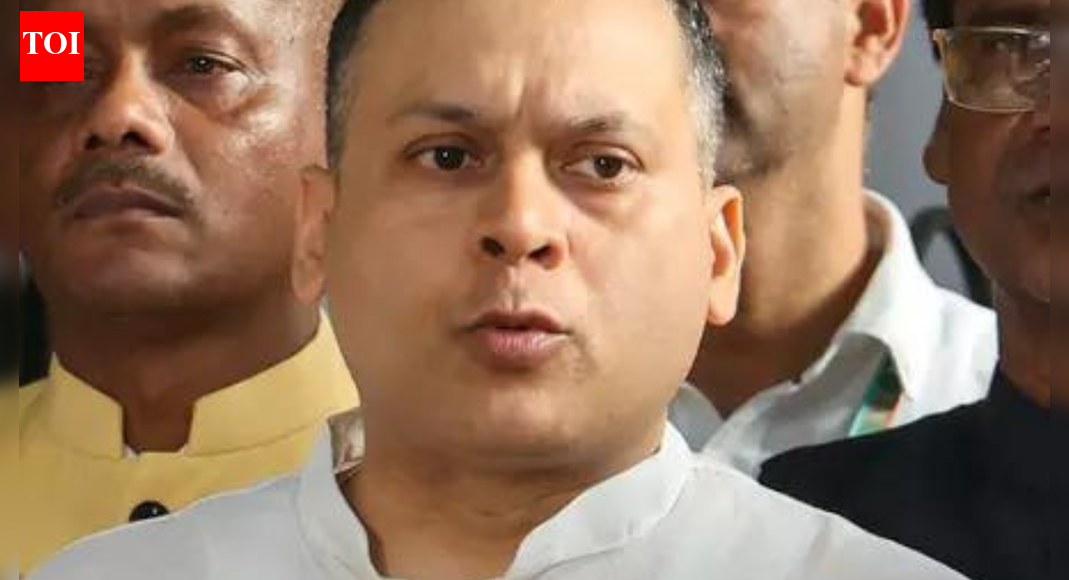
NEW DELHI: BJP on Monday dismissed Sonia Gandhi’s criticism of MGNREGA’s rollback as a flight of her “political fancy”, asserting that the VB-G RAM G law is not a demolition of the UPA-era Act but a repair job aimed at renewal and expansion of social protection in an India in the throes of change.BJP’s IT department head Amit Malviya said, “This is not demolition – it is overdue repair. The real choice is not between compassion and reform, but between paper guarantees that under-deliver and a modern framework that actually works. VB-G RAM G is not a retreat from social protection; it is its renewal and expansion for a changing India.”Malviya’s statement came after the Congress leader said that the “demolition” of Mahatma Gandhi National Rural Employment Guarantee Act will have catastrophic consequences for crores of people across rural India and called upon all to unite and safeguard the rights meant to protect everyone.He accused her of mischaracterisation and uttering outright falsehoods, claiming that MGNREGA was not a result of wide consultations as she had said but was conceived by National Advisory Council, which was headed by her and functioned like a super cabinet.Rebutting her arguments, he said the legal right to employment remains untouched, though with a changed budgeting framework. From being open-ended and reactive, it is now a norm-based system like all govt schemes. Far from weakening the job guarantee, guaranteed employment has been strengthened from 100 days to 125 days, he added.The new law will not suppress rural wage growth, he said, holding that the criticism ignores the changes rural India has witnessed. “While MGNREGA did play a role in alleviating distress, it has not kept pace with today’s rural realities. NABARD and MPCE data show that 80% of rural households report higher consumption, 42.2% report higher incomes and 58.3% now rely exclusively on formal credit. MGNREGA today functions as a fallback safety net, not as the defining feature of rural livelihoods.”Taking on the charge that Centre is shifting the financial burden to states by moving from a 90:10 expenditure model to 60:40 one, Malviya said MGNREGA was never funded to the extent of 90% by Centre in practice as states already bore 25% of material costs, major administrative expenses and 100% of unemployment allowance, often without predictability or transparency.”The new model simply formalises and rationalises funding, making states equal partners rather than passive implementers of top-down mandates,” he said.