


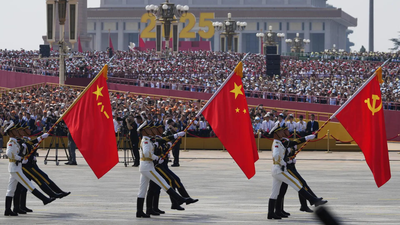
The weapons and military units on display in China’s major parade (Image credit: AP)
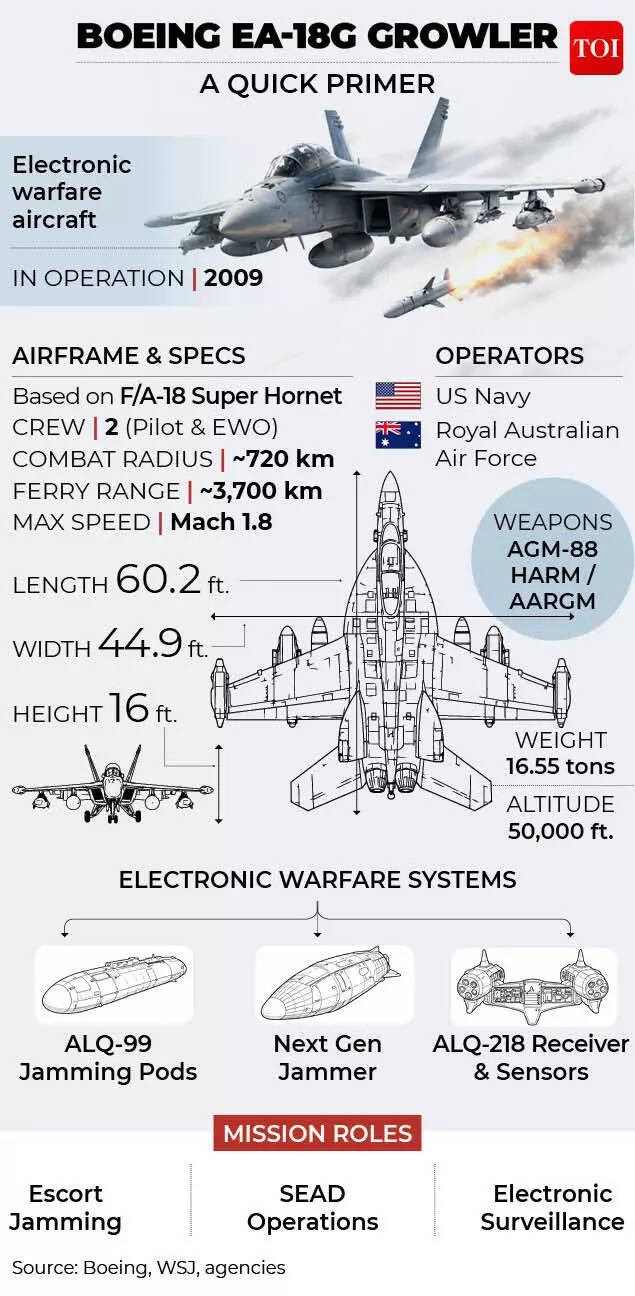
China, one of the largest arms exporter in the world, received a reality check after its weapons and radars fell short during Operation Sindoor, and more recently, Venezuela attack. The latter also exposed the failure of Russia anti-aircraft missiles.The US operation in Venezuela’s capital not only led to the capture of President Nicolás Maduro and his wife, but also served a reputational blow to Beijing, underscoring Washington’s continued technological superiority over Chinese-supplied military equipment, according to a Taiwanese official, Newsweek reported.The EA-18 Growlers reportedly played a crucial role in the SEAD mission by deploying advanced electronic jamming and communications-disruption capabilities. The Growler is a carrier-launched electronic warfare aircraft built not for delivering ordnance, but for controlling the electromagnetic battlefield. During the Venezuela operation, it formed part of a large US aerial force that disabled radar and communication networks, enabling special forces aircraft to move into and out of Venezuelan airspace with speed and minimal resistance.During Operation Sindoor in May last year, Indian forces systematically targeted and neutralised key Pakistani military and terror infrastructure, repeatedly penetrating Chinese-supplied air defence systems such as the HQ-9, which failed to intercept incoming missile attacks, including strikes by the BrahMos.
Venezuela defence system: ‘Full of flaws, slow to react’
The radar involved was China’s JY-27A system, sold to Venezuela and promoted internationally by Beijing as being capable of detecting stealth, low-observable aircraft, the Washington Times reported. Analysts have described the system as “full of flaws and slow to react”.The system is central to China’s air-defence ambitions, intended to counter advanced US platforms such as the F-35 and F-22 fighter jets, as well as B-2 and next-generation B-21 stealth bombers in a potential conflict with the United States.The Maduro government invested roughly $2 billion in Russian S-300 air defence missile systems, along with associated radar and communication networks integrated with China’s JY-27A radar. Russia also supplied the Pantsir-S1, a combined gun-missile air defence system designed to counter drones and low-flying helicopters — the very types of platforms that breached Venezuelan airspace during the operation. “None of them fired. Not one,” Washington Times quoted online military analyst Shanaka Anslem Perera saying.The US operation lasted less than three hours, during which elite military units, including Delta Force, seized Maduro and his wife from their compromised Caracas compound, airlifted them to a US warship, and later flew the couple to New York.Some Chinese analysts, however, contended that the States was operating against a far weaker opponent, suggesting the mission was not necessarily indicative of how such capabilities would perform against major powers, South China Morning Post reported.
Operation Sindoor
Pakistan gets nearly 82% of its defence imports from China. Operation Sindoor exposed serious vulnerabilities in Beijing’s weapons when pitted against Indian and Western systems.The most visible failures were in Pakistan’s Chinese-made air defence and missile systems. Assessments indicated that the HQ-9 and HQ-16/LY-80 air defence units were ineffective against Indian aircraft and missiles, even around sensitive military installations. The PL-15 beyond-visual-range air-to-air missile, promoted as a rival to advanced Western systems, reportedly malfunctioned or failed to hit targets, with Indian officials later displaying fragments of a recovered PL-15 missile that had landed without striking anything. Chinese-supplied fighter jets such as the J-10C and JF-17 Block III also failed to significantly challenge Indian air operations, despite unverified claims of aerial successes.Together, these failures have reinforced longstanding concerns about the reliability and combat effectiveness of Chinese military exports, damaging China’s credibility as an arms supplier and opening space for rivals, including India, to emphasise proven performance in real combat conditions.Also read: How Op Sindoor exposed pattern of failures, underperformance by Chinese weapons systems Go to Source