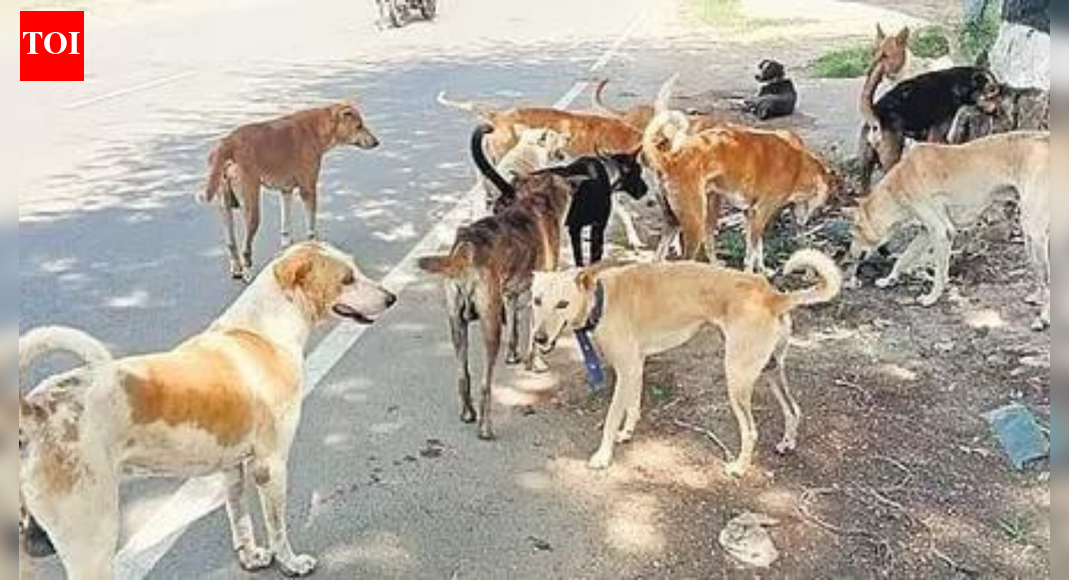

Image: IANS
A coalition of multisectoral experts from a range of global institutions has lent its weight to petitioners in the stray dog case being heard in Supreme Court. The coalition warned that authorities’ proposals to remove and mass-shelter India’s free-living community dogs could undermine public health, go beyond the law, destabilise urban ecosystems and impose enormous fiscal costs, without delivering greater public safety. The cautionary note draws on experience of veterans in public health, behavioural science, veterinary medicine and law. Signatories include Chinny Krishna who pioneered India’s Animal Birth Control programme, evolutionary biologist Lee Dugatkin (University of Louisville, US), Anindita Bhadra of IISER Kolkata, public health expert Leena Menghaney, Pushpinder Singh Khera of AIIMS Jodhpur, and Julie Corfmat of Mission Rabies among a host of others. Organisations include International Companion Animal Network (ICAN), Pet Dog Trainers of Europe (PDTE), International Institute for Canine Ethics (IICE) and Bangalore Hundeskole Academy for Research and Canine Studies (BHARCS). Highlights of their analysis:
- Free-living dogs form stable social groups when food sources, sterilisation, and vaccination coverage remain consistent.
- Large-scale removal disrupts these systems, creating territorial vacuums that are rapidly filled by other dogs — often unvaccinated and unsterilised — an effect associated with increased dog-bite incidents and heightened disease risk.
- Mass removal undermines rabies control by dismantling herd immunity. India’s existing Catch-Neuter-Vaccinate-Release (CNVR) framework, when implemented consistently, targets the internationally recognised threshold of vaccinating at least 70% of dogs in a given area.
- Data show steep declines in human rabies deaths and dog-bite incidence in areas with sustained sterilisation and vaccination programmes. Abandoning this approach risks reversing hard-earned gains achieved over past two decades.
- Mass sheltering, experts argue, compounds the risks. High-density animal housing is globally classified as a biohazard activity, requiring stringent quarantine, disease surveillance, and worker-safety protocols.
Dugatkin noted claims justifying removal often rest on myths rather than biology. “These dogs have coexisted with humans in India for millennia. Disrupting stable populations based on fear or misinformation ignores everything we know about animal behaviour and disease ecology,” he said. Anthrozoologist Sindhoor Pangal said the debate had become detached from evidence. “Replacing proven, low-cost public-health systems with a mass-detention model is not just unscientific — it actively increases risk while draining resources that should be strengthening vaccination and disease prevention,” she said. Position statements from IICE highlight that large shelters frequently experience overcrowding, stress-induced immunosuppression, and rapid disease transmission, particularly where enforcement capacity is limited.Free-living dogs play a role in urban ecosystems by scavenging waste and limiting proliferation of rats and other scavengers that can’t be vaccinated or monitored. Sudden dog removal can lead to rodent population explosions linked to diseases such as leptospirosis and plague.Legal experts point out that mass relocation directly contradicts the Animal Birth Control (Dog) Rules, 2023, which mandate sterilisation, vaccination, and return to the original territory. Large-scale confinement also raises constitutional and labour-safety concerns, given occupational hazards associated with mass animal housing.