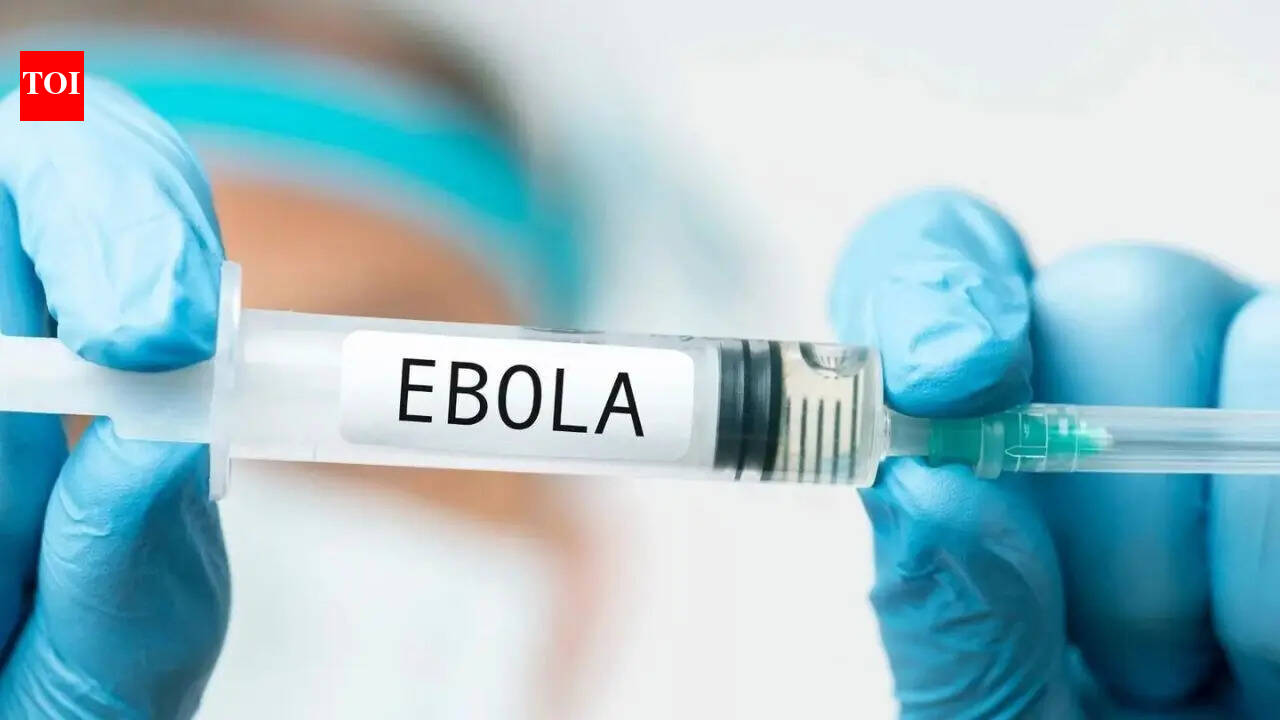

NEW DELHI: The World Health Organisation (WHO) on Sunday declared the Ebola outbreak a Public Health Emergency of International Concern after more than 300 suspected cases and 88 deaths were reported in Congo and Uganda.In a post on X, the WHO said a laboratory-confirmed case had also been reported in Congo’s capital, Kinshasa, around 1,000 kilometres (620 miles) from the outbreak’s epicentre in the eastern province of Ituri, raising concerns about possible wider spread.The organisation underlined that countries not sharing a land border with the affected nations should not close borders or impose restrictions on travel and trade.“No country should close its borders or place any restrictions on travel and trade. Such measures are usually implemented out of fear and have no basis in science. They push the movement of people and goods to informal border crossings that are not monitored, thus increasing the chances of the spread of disease. Most critically, these restrictions can also compromise local economies and negatively affect response operations from a security and logistics perspective,” the WHO said. However, Indian experts said there is no reason for panic as Ebola does not spread like Covid-19, though vigilance and early detection remain crucial.How big a concern is Ebola for India?
- The health ministry said the National Centre for Disease Control (NCDC) is closely monitoring the situation.
- It added that no Ebola case has ever been reported in India except one international traveller who tested positive in 2014.
- Former AIIMS director Dr Randeep Guleria said Ebola spreads through direct contact with infected body fluids such as blood, vomit, secretions or contaminated materials, unlike Covid-19, which spread widely through respiratory droplets.
- “There is no need to panic,” Guleria said, explaining that Ebola requires close physical contact for transmission and is therefore far less likely to trigger a global pandemic on the scale of Covid-19.
- Recalling India’s preparedness during the 2014 Ebola outbreak, he said authorities had conducted screening exercises and workshops across the country. He also referred to a case involving an Indian traveller returning from Sierra Leone who was isolated in Delhi after recovering from Ebola because body fluid samples continued to test positive for viral particles.
- The traveller remained in isolation for nearly three months as a precaution, though no further transmission was reported.
- Guleria said Ebola outbreaks are often linked to infected fruit bats or wild animals and may also spread through the handling of infected bodies. He stressed that screening travellers arriving from affected regions and monitoring them during the virus’s incubation period of up to 21 days remain crucial.
- Experts said India has the laboratory infrastructure to rapidly detect Ebola through specialised RT-PCR testing facilities operated by the Indian Council of Medical Research (ICMR) and the NCDC. However, they noted that early clinical suspicion and prompt reporting remain essential to containing any outbreak.
- “The overall risk remains low, but in today’s interconnected world, infectious outbreaks are literally just a flight away,” said Dr Neeraj Nischal, professor of medicine at AIIMS, highlighting the importance of airport surveillance, travel screening and emergency response systems.
- He noted that Ebola patients typically become infectious only after symptoms appear, especially fever, vomiting, diarrhoea or bleeding. Healthcare workers and caregivers face higher risks without proper protective equipment and infection-control practices.
- Nischal added that early Ebola symptoms often resemble other viral illnesses, making travel and exposure history critical for diagnosis. He said contact tracing remains among the most effective tools to stop transmission and added that lessons from Covid-19 — including surveillance, rapid testing and hospital preparedness — have strengthened India’s outbreak response systems.
- “Public cooperation, honest reporting of travel history and timely medical consultation are key to preventing outbreaks from escalating,” he said.
Ebola outbreak: Signs and symptomsIn Ebola infections, the incubation period — the interval between exposure to the virus and the onset of symptoms — typically ranges from two to 21 days.The illness usually begins suddenly with symptoms such as fever, fatigue, weakness, muscle pain, headache and sore throat.As the disease progresses, patients may develop vomiting, diarrhoea, abdominal pain, skin rashes, and signs of kidney or liver dysfunction. In severe cases, internal and external bleeding can occur, including blood in vomit or stool and bleeding from the nose, gums or vagina.People who recover from Ebola may continue to experience long-term health complications, including persistent tiredness, headaches, muscle and joint pain, vision-related problems such as blurred vision, eye pain or light sensitivity, as well as stomach pain, reduced appetite and weight changes.