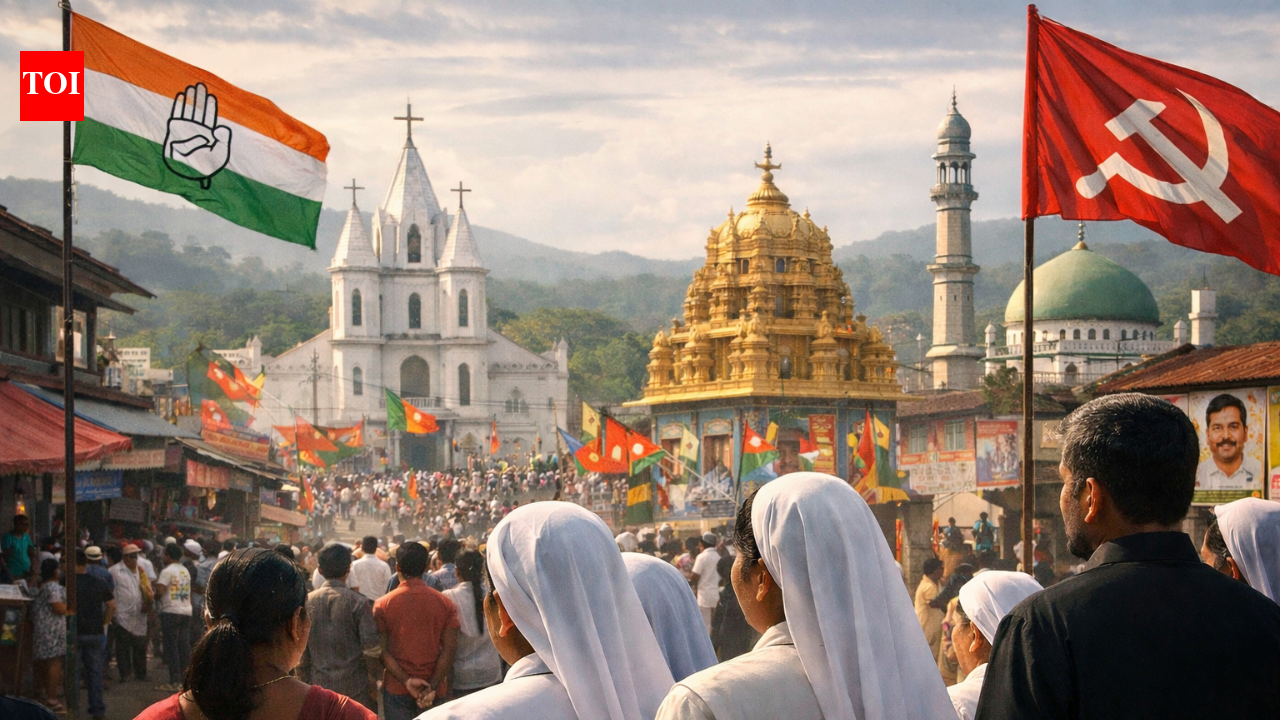

As the April 9 assembly elections in Kerala approach, the state’s political landscape is intensely focused on minority communities, particularly the Christian electorate. For decades, the United Democratic Front (UDF) has relied on Christian voters, especially the Syrian Christian population in central Kerala, to secure key constituencies. However, in 2026, this traditional alignment is being tested by a combination of socio-economic concerns, political realignments, and perceptions of communal favoritism, raising questions about whether the UDF can retain its historical advantage.Central Kerala, stretching across districts such as Kottayam, Idukki, Pathanamthitta, Ernakulam, and Thrissur, has always been a decisive battleground. The region’s Christian communities, while historically aligned with Congress, are increasingly evaluating parties based on current governance, performance, and minority welfare rather than long-standing allegiances. Complicating matters further are political defections, notably the shift of the Kerala Congress (M) from UDF to the Left Democratic Front (LDF) in 2020, which reconfigured local power dynamics and eroded the UDF’s once-reliable vote bank.Adding to this complexity are reports and recommendations from the J B Koshy Commission, which examined the socio-economic conditions of the Christian community in Kerala. With over 4.87 lakh submissions received, the commission highlighted perceptions of disproportionate minority welfare favoring Muslims, which has fueled political debate and influenced voter sentiment within Christian communities. Against this backdrop, the UDF faces the dual challenge of consolidating support among both Christians and Muslims, while navigating the rising influence of the LDF and the inroads made by the BJP in certain constituencies.
How influential are the Christian communities?
Christians comprise roughly 18.38% of Kerala’s population, according to the 2011 Census, making them a key minority with concentrated electoral power in central Kerala. Districts such as Kottayam, Idukki, Pathanamthitta, Ernakulam, Alappuzha, Thrissur, and Wayanad feature substantial Christian populations, often forming decisive blocks in closely contested constituencies. Their presence in the rubber-belt regions, plantations, and coastal areas means that even minor shifts in voting preferences can tilt outcomes, particularly in swing seats like Thrissur and Aranmula.While the UDF has traditionally relied on Christian loyalty, the community is increasingly evaluating parties on governance, minority welfare, and socio-economic performance. This shift has created space for other parties to attempt outreach, most notably the BJP. Despite its Hindutva-driven politics, which emphasize Hindu nationalism and have historically alienated minority communities, the BJP has made visible efforts to engage Christian voters. In a recent move, BJP leader Chandrasekhar demanded the release of two Kerala-based nuns arrested in Chhattisgarh on human trafficking charges, signaling sensitivity toward Christian concerns. Yet, this outreach faces structural limitations: policies associated with the central government, such as the Foreign Contribution (Regulation) Amendment Bill, 2026, have reinforced perceptions of the BJP as anti-minority, making it difficult to overcome historical distrust. Chandrasekhar’s own controversy over discrepancies in his election affidavit, though not fatal to his nomination, further complicates the party’s image among the electorate.The influence of Christians in Kerala extends beyond their numerical strength. Their high literacy rates, active participation in community organizations, and engagement with socio-political issues make them discerning voters. For the BJP, expanding this base requires not only symbolic gestures but a careful balancing act: appealing to Christian concerns while maintaining its Hindutva-driven core ideology. Meanwhile, UDF and LDF continue to treat the Christian vote as central to their electoral calculations, knowing that any realignment in this community could decisively reshape the state’s political map.
Regions that could swing
Central Kerala remains the epicenter of political unpredictability, where small shifts in voter sentiment can tip the balance. Constituencies here are shaped by a mix of religious diversity, industrial development, and local issues, creating a fluid political landscape.Kunnathunad in Ernakulam exemplifies this trend. Once primarily agrarian, the region has developed into a commercial and industrial hub, with rubber processing units, rice mills, small-scale factories, and major facilities like Kinfra and BPCL. These changes have not only boosted local revenues but also shifted voter expectations toward tangible development outcomes. Historically alternating between the UDF and LDF, the constituency became even more competitive with the rise of Twenty20 (T20) in 2015, which has attracted voters from both traditional fronts. With a population that is roughly 40% Christian (mostly Jacobites) and 20-22% Muslim, the constituency illustrates the complexity of minority vote patterns. While LDF emphasizes infrastructure and local development, corruption allegations and environmental concerns—like industrial pollution affecting water bodies—have created openings for opposition parties.Thrissur has long been a three-way contest arena, making it one of Kerala’s most closely watched constituencies. The 2021 Assembly election was decided by a razor-thin margin: CPI’s candidate won with just 34.25% of votes, narrowly beating Congress at 33.52%, while BJP secured 31.30%. The entry of prominent figures such as actor-turned-politician Suresh Gopi in the 2024 Lok Sabha elections and Congress leader Padmaja Venugopal contesting for BJP has added a new layer of unpredictability. Thrissur’s electorate is socially diverse, with significant Christian, Hindu, and Muslim populations, making coalition dynamics and community alliances critical for any candidate. Local issues, including urban development, industrial growth, and employment opportunities, dominate campaign narratives, while historical loyalties are being tested by emerging political players.Aranmula in Pathanamthitta district reflects a long history of electoral swings between the CPI(M) and Congress. Currently represented by Minister Veena George, the constituency has seen repeated shifts driven by performance and issue-based voting. With a considerable Christian presence, alongside Hindu and Muslim voters, Aranmula exemplifies the fluidity of central Kerala’s electorate. LDF’s focus on healthcare, education, and infrastructure is balanced by UDF’s critiques on corruption and governance, while BJP attempts to consolidate Hindu votes under Kummanam Rajasekharan’s leadership. These dynamics make even small shifts in voter sentiment capable of changing outcomes, particularly when voter alliances are not strictly along community lines.Pathanamthitta, another critical swing district, is heavily influenced by Syrian Christian voters and plantation-based communities. Local concerns include agrarian distress, human-wildlife conflicts, and the implementation of welfare policies like the JB Koshy Commission recommendations for Christians. The constituency’s electoral behavior is shaped as much by community-specific issues as by broader debates over development and governance. Both UDF and LDF continue to vie for minority support, while BJP’s presence remains limited, attempting symbolic outreach but constrained by perceptions of a Hindutva-driven agenda.
What issues will affect Christian voting behavior
Unlike earlier decades, where party loyalty often dictated voting patterns, today’s Christian electorate is more influenced by practical concerns. Human-wildlife conflict in hilly districts, agrarian distress among rubber plantation owners, and the delayed implementation of recommendations from the J B Koshy Commission are high on voters’ minds. These issues, which directly impact livelihoods and community welfare, often outweigh traditional political messaging or endorsements from church leadership.The Koshy Commission report, aimed at assessing the socio-economic conditions of Kerala Christians, received widespread attention, with submissions pointing to perceived disparities in minority welfare policies that favored Muslims over Christians. Community leaders, such as Fr Sabin Thoomullil of the Catholic Congress, have highlighted growing unease among sections of the Syro-Malabar Church. While acknowledging the historical loyalty of many Christian voters to Congress, he stresses that a larger segment now evaluates parties on governance, performance, and implementation of welfare measures rather than longstanding allegiances.Measures undertaken by the LDF, including EWS reservations, minority scholarships distributed based on population ratios, and proactive minority welfare initiatives, have resonated with some Christian voters, potentially shifting support away from the UDF. The key concern among politically aware Christians is whether UDF, if returned to power with IUML support, would implement minority welfare measures faithfully or continue practices perceived as communal appeasement.However, a critical factor influencing the election is the absence of a unified Christian voice. Communities are divided not only by denominations—Syro-Malabar, Latin Catholic, Jacobite, Orthodox—but also by age, geography, and socio-economic priorities. Fr Thoomullil notes that while some voters remain loyal to the UDF, a growing number are willing to cross party lines if they perceive better outcomes from LDF or other options.
UDF’s high-stakes gamble
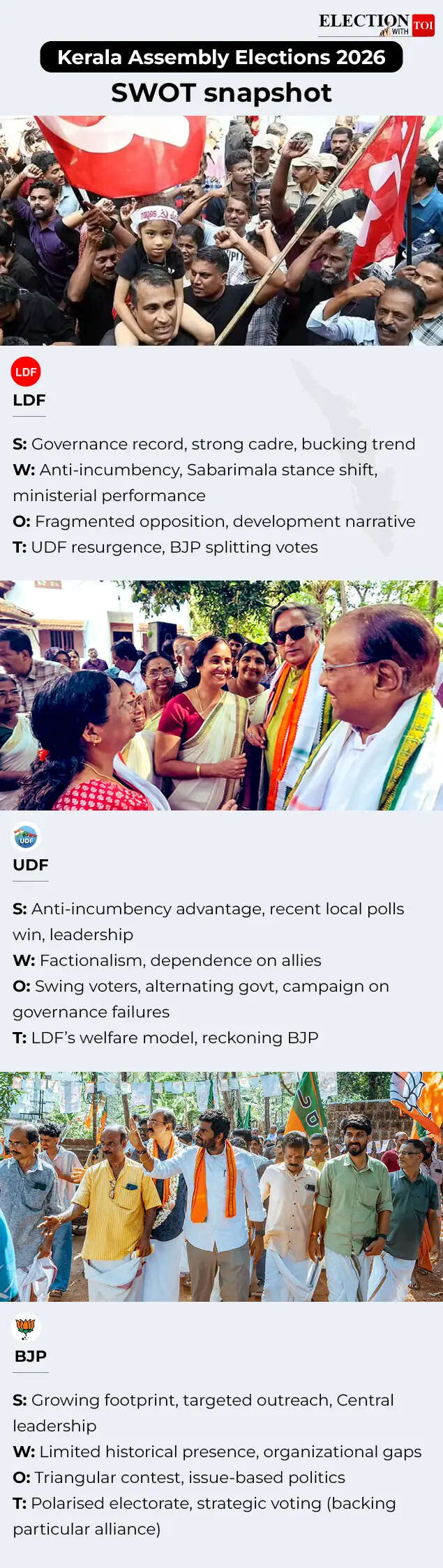
The UDF’s path to power in 2026 hinges on securing both Christian and Muslim votes. After two consecutive assembly defeats, the coalition cannot afford to take any segment of the minority electorate for granted. The UDF must maximize Muslim support without alienating Christian voters, who are increasingly willing to look elsewhere if their concerns are ignored.Concerns over UDF’s perceived soft stance towards groups like Jamaat-e-Islami Hind and the lingering memory of the ‘fifth minister’ controversy exacerbate the coalition’s challenges. The ‘fifth minister’ controversy refers to a 2012 political row in Kerala during the UDF government under chief minister Oommen Chandy, where the induction of a fifth minister from the Indian Union Muslim League (IUML), an UDF ally, was criticized as excessive appeasement. The UDF cabinet initially had four IUML ministers, but pressure mounted for a fifth post, leading to the appointment despite Congress resistance; opponents labeled it a “surrender to blackmail” that strained coalition unity.Analysts note that even minor missteps in addressing Christian voter concerns—especially regarding welfare policies, representation, and implementation of the Koshy Commission recommendations—could be costly in closely contested constituencies.For the UDF, retaining its Christian base will require a nuanced approach that addresses governance, minority welfare, and socio-economic concerns. The coalition must counter the appeal of the LDF, which has made visible efforts to implement welfare measures, acknowledge community grievances, and consolidate its support among economically aware Christians.
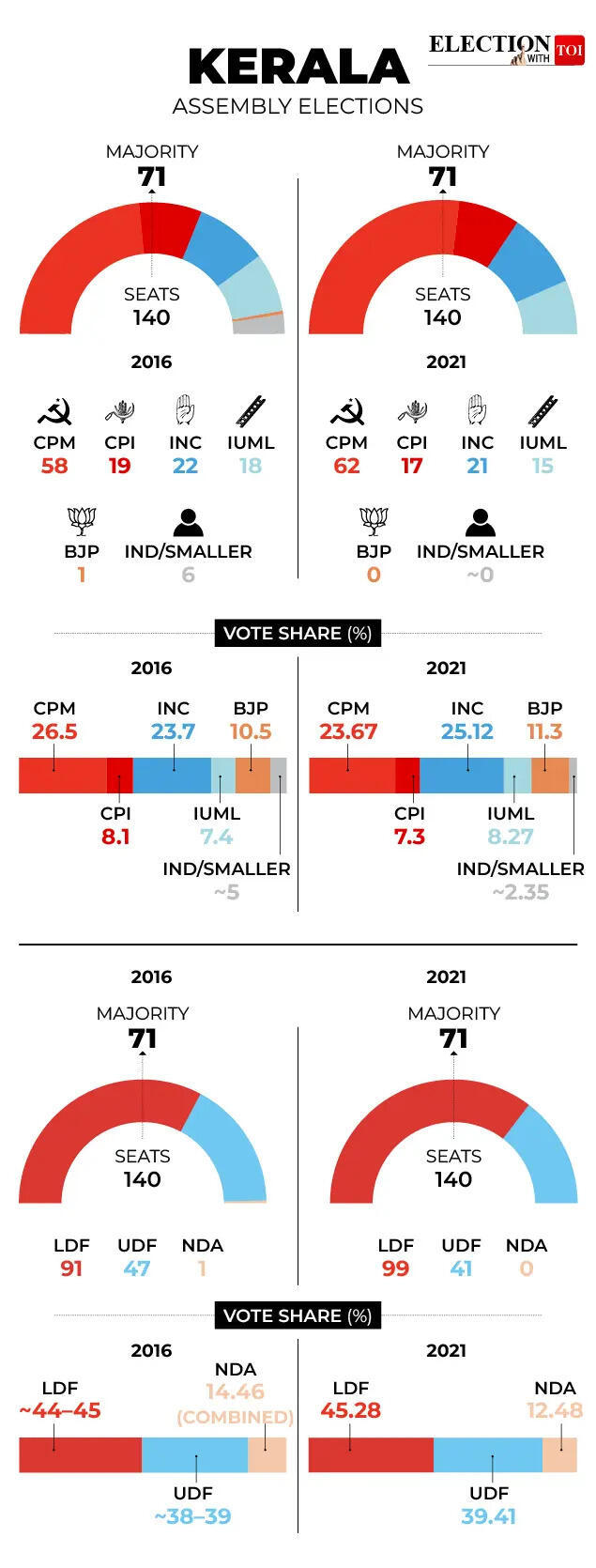
Political analysts caution that the UDF cannot rely solely on historical loyalty or anti-BJP sentiment. Christian voters are increasingly evaluating parties on performance, responsiveness, and long-term commitment to minority welfare.The 2026 Assembly elections will test whether UDF can recalibrate its strategy to retain minority support, whether LDF can consolidate its gains, and whether the BJP can make inroads in traditionally non-aligned constituencies. Go to Source