
AI generated image
Every morning across Indian hospitals, before the first doctor completes their rounds, nurses have already taken vitals, flagged deteriorating patients, administered overnight medications, and in many cases, made the quiet judgment calls that determine whether a patient makes it to the afternoon. They are the first responders within the ward, the last face a patient sees before surgery, and the only clinical presence most patients have through the night.Yet in the public architecture of healthcare, they are nearly invisible.India has approximately 3.4 million registered nurses, and a shortage of nearly two million, according to Indian Nursing Council data. WHO recommends a nurse-to-patient ratio of 1:5 in general wards. In most government hospitals across the country, the reality is closer to 1:15, sometimes worse. The work that falls into that gap, the monitoring, the counselling, the crisis management, the family communication, does not disappear. It is simply absorbed, silently, by whoever is standing at the bedside.That person is almost always a nurse.The role has expanded well beyond clinical care. Nurses today function as translators between medical jargon and patient comprehension, as counsellors absorbing fear and grief that formal systems have no protocol for, and as the earliest warning system in any ward. Studies consistently show that nurse-identified early warning signs are among the strongest predictors of patient outcomes, yet nursing assessments rarely carry the institutional weight of a physician’s note.On World Nurses Day, as the profession marks its global moment of recognition, the more urgent question is not one of celebration, it is one of reckoning. “In nursing we learn politics, administration, lobbying, psychology — our curriculum covers all of that. But we are a very disorganised human resource,” says Ms. Antonia Pushparaj, MBA in Hospital Management, MSc in Nursing, Apollo Spectra Hospital, Bengaluru. India, she points out, is the largest supplier of nurses on the global platform, a fact that speaks to the profession’s scale and competence, but also to a troubling paradox. The country that trains and exports nurses in the greatest numbers has not yet figured out how to adequately value them at home.
More than a caregiver: The expanding, uncredited role of the modern nurse
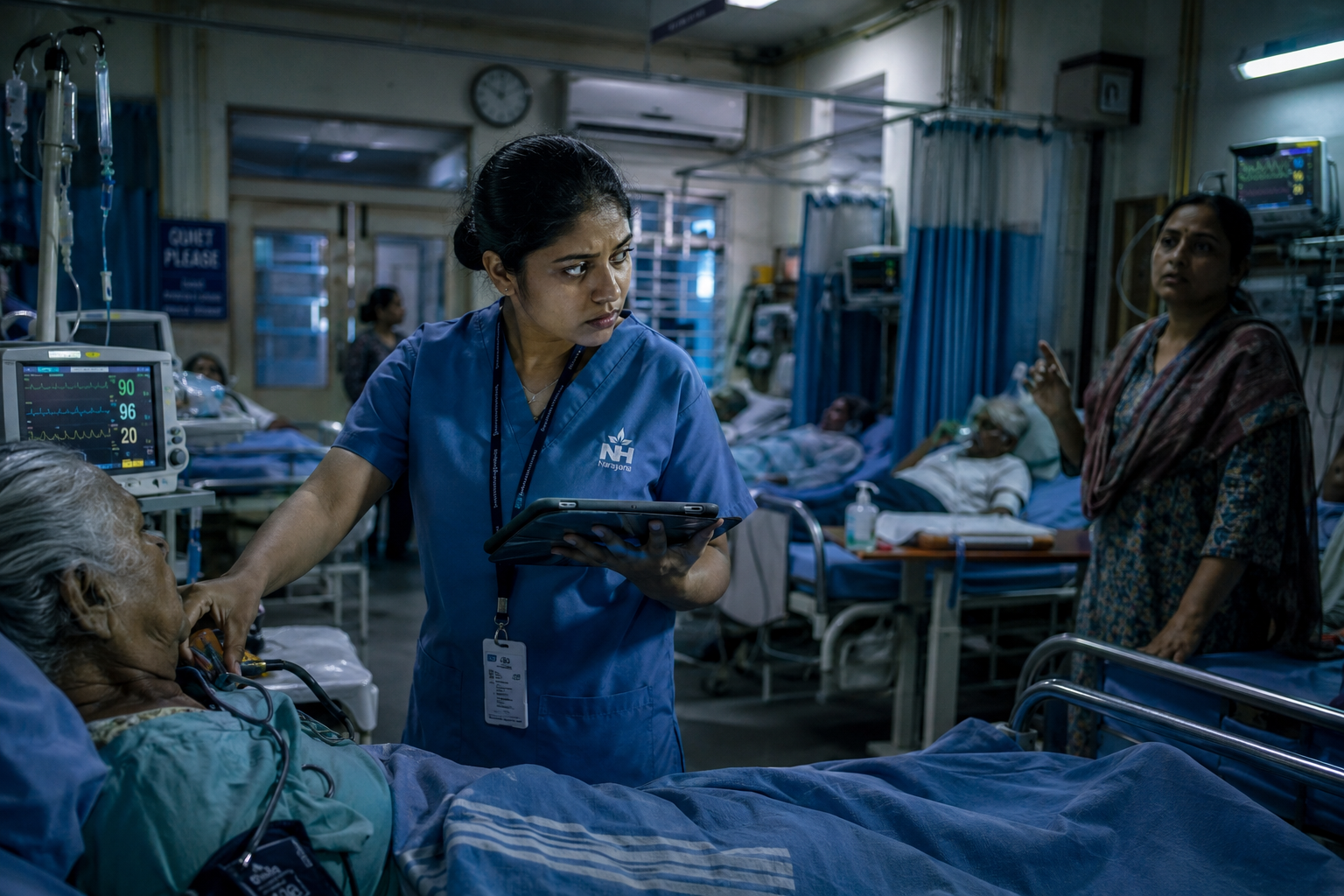
At any given moment in a hospital ward, a nurse is doing at least four things at once.She is checking a post-operative patient’s blood pressure and mentally comparing it against the reading from two hours ago. She is fielding a question from a family member camped outside the ward doors, explaining, for the third time, why the surgery is running late and what that does and does not mean. She is watching, from the corner of her eye, a patient three beds down whose breathing has shifted in a way that has no name yet but does not feel right. And she is documenting all of it, in real time, into a system that will later be read by a physician who will make decisions based on observations they did not make themselves.None of this is what most people picture when they think of a nurse.
AI generated image
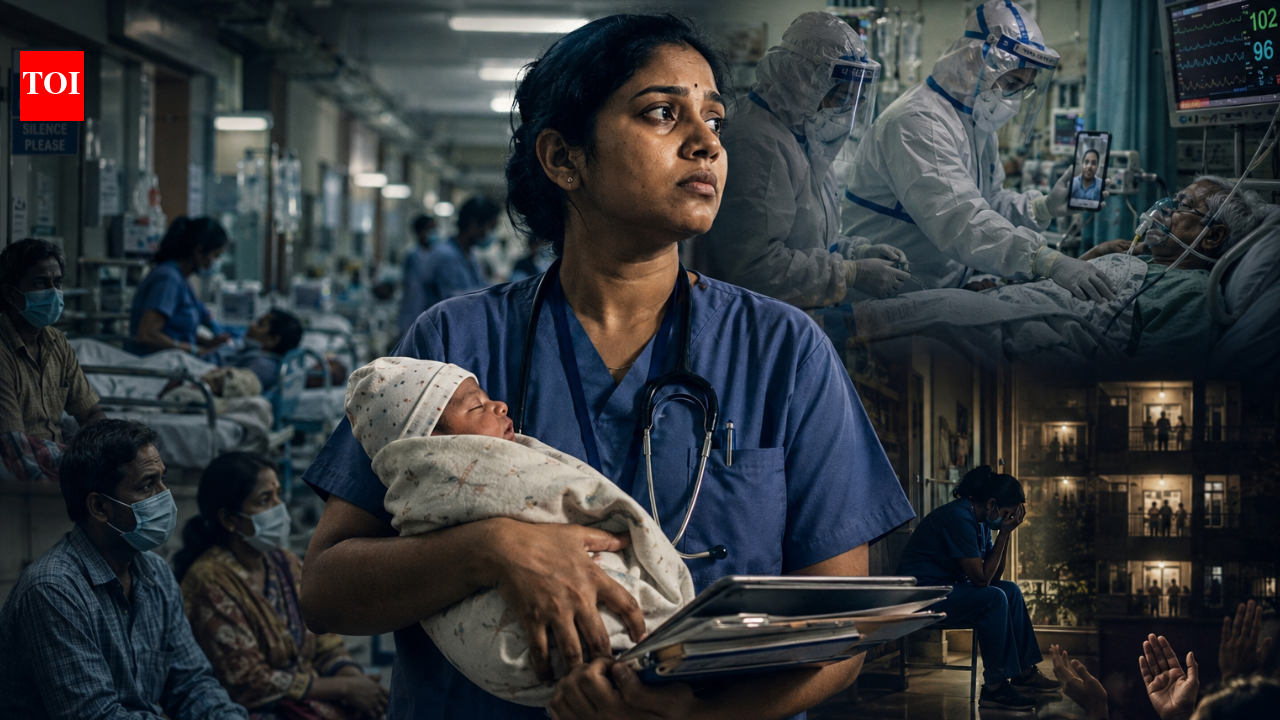
The popular image of nursing, inherited from decades of hospital dramas, is one of assistance. The nurse as support staff, executing physician orders, taking temperatures, changing dressings. Competent, certainly. But all of it carries the silent implication of a secondary role.The reality of contemporary nursing has outpaced that image entirely. As healthcare systems grow more complex and patient loads heavier, the scope of nursing work has expanded to fill gaps that no formal policy or job description fully accounts for.Nurses are now, in practice, the primary interpreters of clinical information for patients and families, translating diagnosis, prognosis, and procedure into language that frightened, non-medical people can actually absorb. They are the first to identify when a patient’s condition is turning, and the ones who must decide, often without immediate physician backup, how urgently to escalate.In psychiatric and palliative wards especially, the emotional labour is its own discipline entirely, sitting with patients in acute distress, holding space for families confronting terminal diagnoses, managing their own grief while remaining functional on a 12-hour shift.There is no billing code for any of it. There is rarely even acknowledgement.For Antonia, the profession’s central contradiction is personal.”Even if I had a daughter, I might not have allowed her to choose this profession,” she says. “I can see what nurses go through — the type of humiliation we go through.” It is a striking admission from someone who has spent her career not just in nursing, but leading it. But it is not, she is careful to clarify, a statement of regret. It is one of clear-eyed honesty about a system that has consistently failed the people holding it together.Antonia manages a large nursing workforce, and she describes the administrative complexity of that role, coordinating shifts, resolving conflicts, maintaining standards across departments, as genuinely demanding. But it is the mentoring, she says, that keeps her invested. “Guiding nurses in the modern healthcare spectrum gives me joy. It gives me an opportunity to lead and guide others.”
When the world stopped, nurses did not
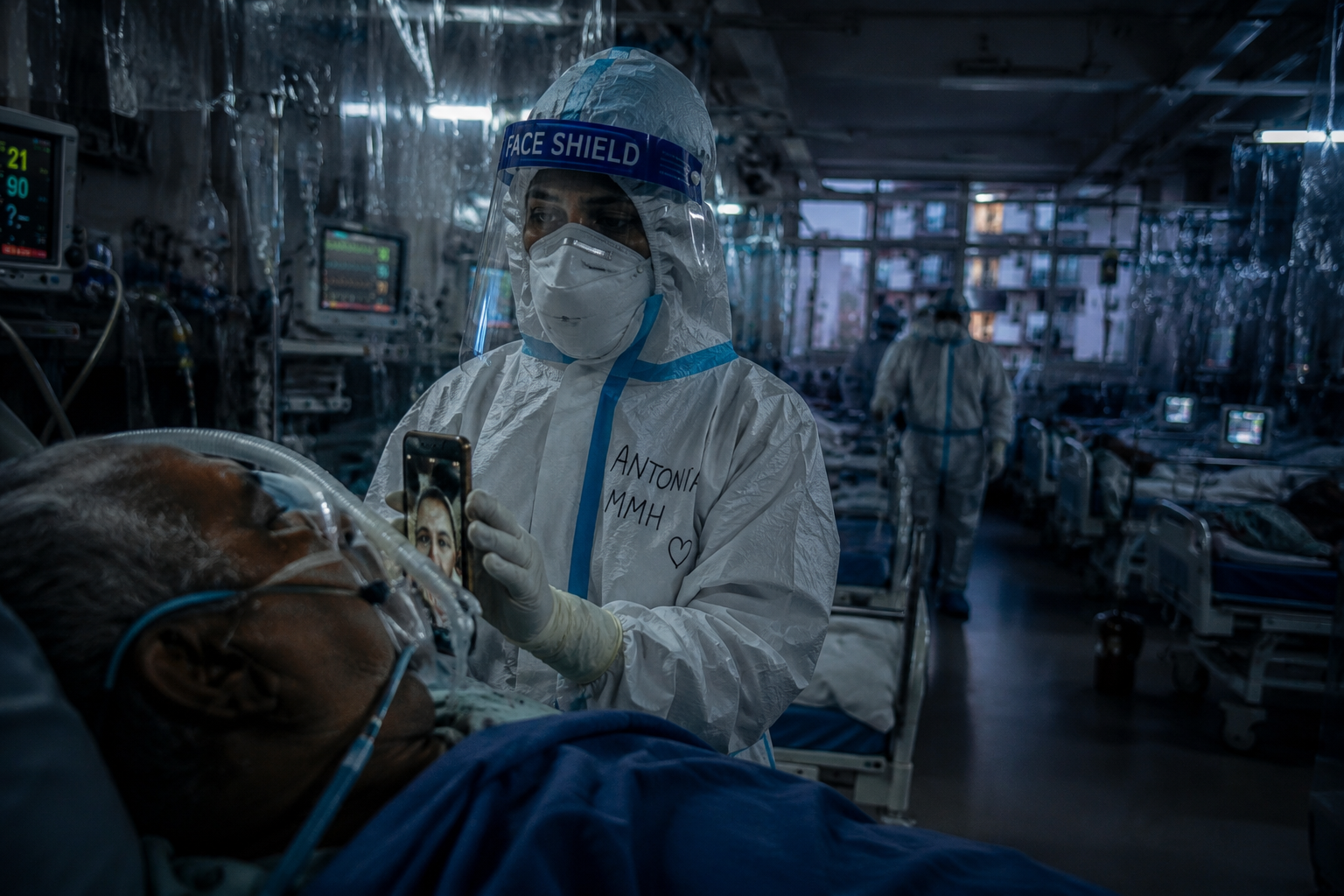
When Covid-19 swept through hospitals in 2020 and 2021, it did not disrupt the healthcare system so much as it exposed it. The shortages that administrators had long flagged in internal memos became visible overnight. The emotional labour that nurses had quietly absorbed for decades suddenly had a name and along with it came the statistics of the people we lost to the disease.In wards that had been hastily converted into Covid units, nurses worked in full PPE for shifts that routinely stretched beyond twelve hours. They could not always speak to patients clearly through their masks. They could not offer the physical reassurance, a hand held, a forehead checked, that had always been an unspoken part of the job. And yet they stayed. When ventilators ran short and families were barred from entering, nurses became the only human presence for patients in their final hours. They held phones to the ears of the dying so families could say goodbye.
AI generated image
The applause that rang out from balconies across the world during those months was genuine. But it was also quite short-lasting. Within two years of the pandemic’s peak, many healthcare systems reported record nursing attrition. Burnt out, underpaid, and psychologically hollowed, nurses left in numbers that confirmed what the profession had been warning for decades, that goodwill cannot be a retention strategy. In India, the exodus accelerated an already critical shortage, pushing nurse-to-patient ratios in public hospitals to levels that patient safety experts described as dangerous.Covid did not create the crisis in nursing. It simply made it impossible to look away.The pandemic, Antonia says, forced a moment of reckoning, but not a lasting one. “Everyone took a backseat, but nurses were in the forefront. Covid truly changed the trajectory of nurses.” What it did not change, at least not enough, was the culture around them. Recognition, she argues, cannot be seasonal. “It’s not just about celebrating us during a pandemic or on May 12th, but every time a patient gets discharged.”Responsibility for that shift, she believes, is shared. “The hospital management, the nursing council, and society at large all have a role to play in changing the perception of nursing as a profession.”And yet, beneath the policy arguments and the professional frustrations, what sustains her is something quieter. Her most cherished memory as a nurse, she says, is when a mother places her newborn in her arms. “I deem that as the highest form of responsibility. It is the most therapeutic relationship.”It is, in many ways, the image that cuts through everything else, the trust that patients place in nurses not because they are required to, but because in that moment, there is no one else they would rather have. Go to Source