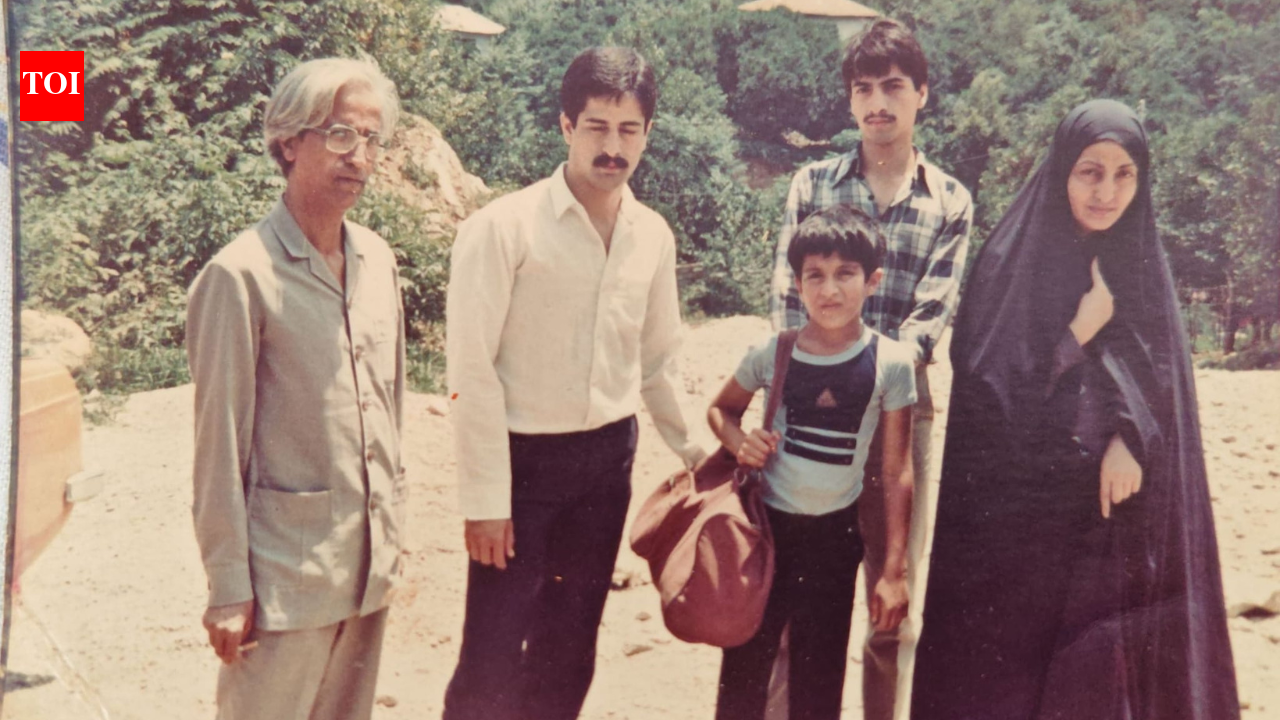

Family pictures before mother’s death
NEW DELHI: As tensions in West Asia disrupt global shipping routes and renew fears around the Strait of Hormuz—a crucial corridor for India’s oil and gas supplies—an old wartime tragedy is haunting one family in UP’s Aligarh all over again: nearly 40 years ago, Syed Husain Waheed, in his sixties now, lost his Iranian mother aboard Iran Air Flight 655, the civilian aircraft shot down by a US warship over the same waters. “Whenever West Asia moves toward war, those memories return automatically,” Waheed told TOI. “You realise how quickly ordinary civilians become casualties in geopolitical battles they have no control over.”Waheed—a mechanical engineering alumnus of Aligarh Muslim University, former ad-hoc president of the AMU Students’ Union and longtime political activist associated with the Janata Dal movement during the V.P. Singh era—has carried that memory since July 3, 1988. Just weeks before the UN-brokered ceasefire in August 1988, civilian Airbus A300 travelling from Bandar Abbas to Dubai—was struck shortly after takeoff over the Strait of Hormuz by two missiles fired from a US Navy warship during the final phase of a brutal eight-year conflict that began with Iraq’s invasion of Iran in September 1980.All 290 passengers onboard were killed. Among them was Waheed’s mother, Syeda Mahliqa Qarai, on her way to Delhi—an Iranian scholar, translator and AMU graduate whose death permanently altered the family’s life. Qarai, a scholar and translator, was known for translating Islamic texts from Persian to English, including Murtada Mutahari’s Society and history, a seminal work by the late Iranian philosopher. Long before the tragedy, the family shared deep intellectual and literary ties with Iran’s post-revolution academic world.Now, as tensions once again rise across Iran, Israel and West Asia, Waheed says the atmosphere feels painfully familiar. “The powers change. But civilians continue to suffer the same way.”The Strait of Hormuz has emerged as a global flashpoint, with commercial shipping through the route sharply affected amid fears of escalation. For India, historically dependent on the strait for a major share of its crude oil, LPG and other petrochemical imports, the crisis carries immediate economic consequences. But for Waheed, Hormuz is not just a strategic waterway discussed in geopolitical debates but the place where his family’s history changed forever.“I was 22 when my mother died. She was 47,” he recalled. “One flight changed the emotional history of our family. His mother, he said, had been chosen by Ruhollah Khomeini—the founder of the Islamic Republic of Iran who overthrew the Western-backed Shah Pahlavi, establishing the world’s first modern state ruled by Shia clerics—to translate his final book, The Forty Hadith (on Islamic traditions), into English. “She died while working on the translation. My uncle finished the project after some time.”
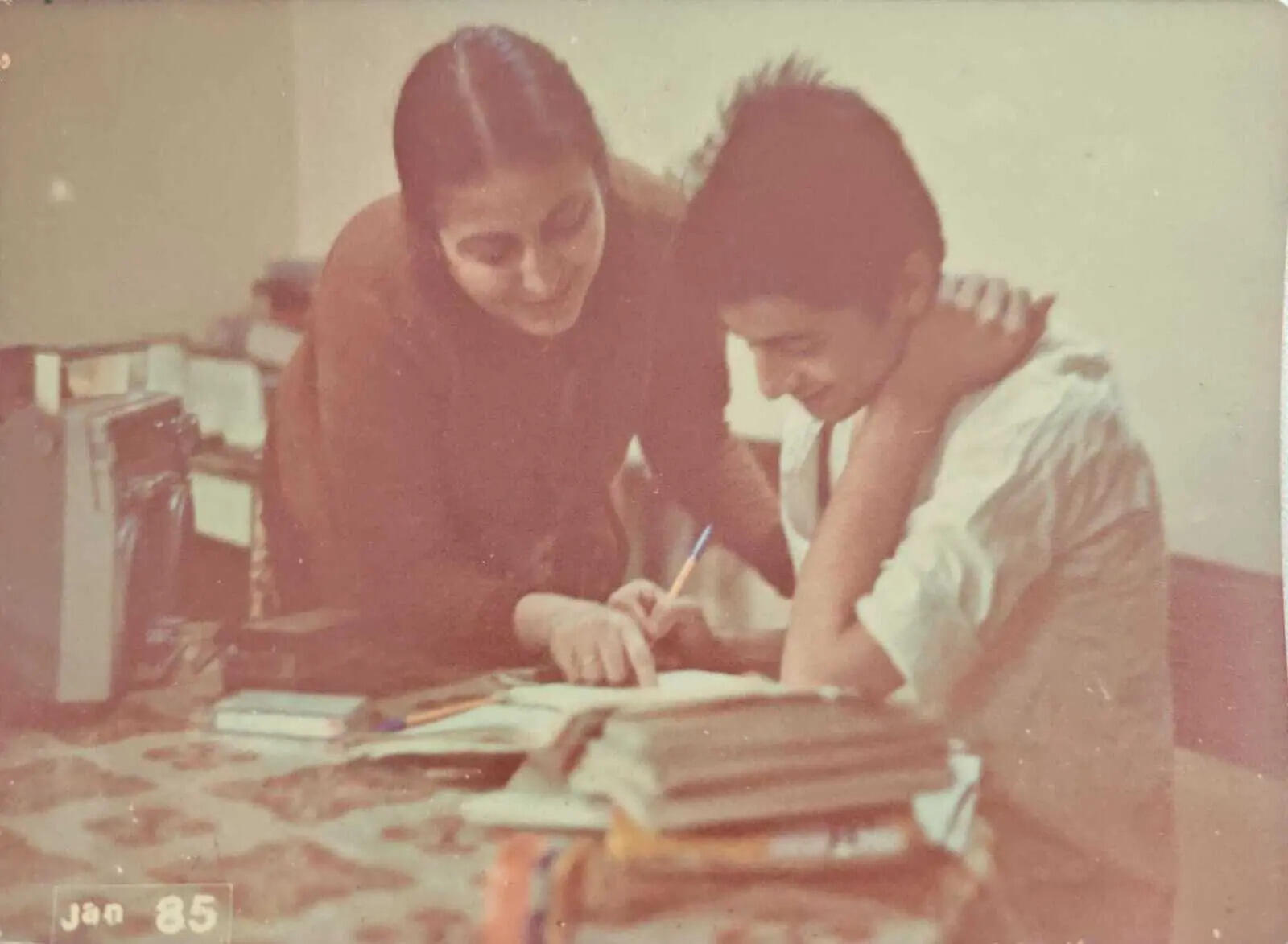
Family pictures before mother’s death
Mahliqa Qarai first studied mathematics at Osmania University before later completing an MA in English Literature at AMU after marriage and motherhood while continuing to work on translations and publications linked to Islamic philosophy and Persian intellectual traditions. Her brother, Ali Quli Qarai, now based in Qom, also later emerged as one of the most respected translators of Islamic texts in the Persian-speaking world.Waheed’s father, Prof. Waheed Akhtar—the towering Urdu poet-philosopher credited with reviving the classical marsiya (elegy) tradition in the 20th century—was among the most influential literary and intellectual voices of his era. Born in Aurangabad, he spent nearly four decades at AMU, eventually serving as Dean of the Faculty of Arts and Chairman of the Department of Philosophy. The family spent years closely connected to Iran during and after the revolution. Waheed remembers Tehran in the 1980s as intellectually alive but psychologically exhausted by war. “Everything came through coupons. Eggs, food, essentials,” now a regular Iran visitor, he recalled from his early visits. “People stood in queues all the time. There were funerals constantly. Yet people still discussed poetry, philosophy and literature.”Even amid destruction, he said, people clung to dignity and ideas.“The Iranian people wanted peace,” he said. “Even in harsh conditions, they wanted education, literature and dignity.”The war years also shaped his understanding of West Asia’s politics. “It is such a resource-rich and civilisationally rich region,” he said. “But those very things became a curse instead of a blessing.”Nothing scarred the family more deeply than the loss of his mother. “My father was never the same after that,” Waheed said quietly.Prof. Akhtar was 54 when his wife died. Friends and admirers across India and Pakistan watched the prolific Urdu scholar slowly withdraw into grief and silence.“In the years after her death, he hardly wrote,” Waheed said. “He was surrounded by books, but something inside him had collapsed.”The emotional devastation soon became physical. His health deteriorated steadily through heart and kidney complications. “The stress consumed him,” Waheed said. “He never really recovered.”Prof. Akhtar died in 1996.For Waheed, that is the part of war the world often forgets.“After some time, people stop seeing names and faces,” he said. “They only see numbers.”Yet amid the grief, the family’s relationship with AMU has continued across generations. In May this year, the family helped establish a state-of-the-art Artificial Intelligence laboratory at AMU’s Zakir Husain College of Engineering and Technology, focused on ethical AI research and future technologies.“Our family moved through literature, philosophy, politics and now technology,” Waheed said. “Maybe continuing to build institutions, ideas and knowledge is also a way of surviving loss.”“When people watch war on television today, they think destruction is temporary,” he said. “It isn’t. For some families, like ours, it becomes a permanent memory.” Go to Source