
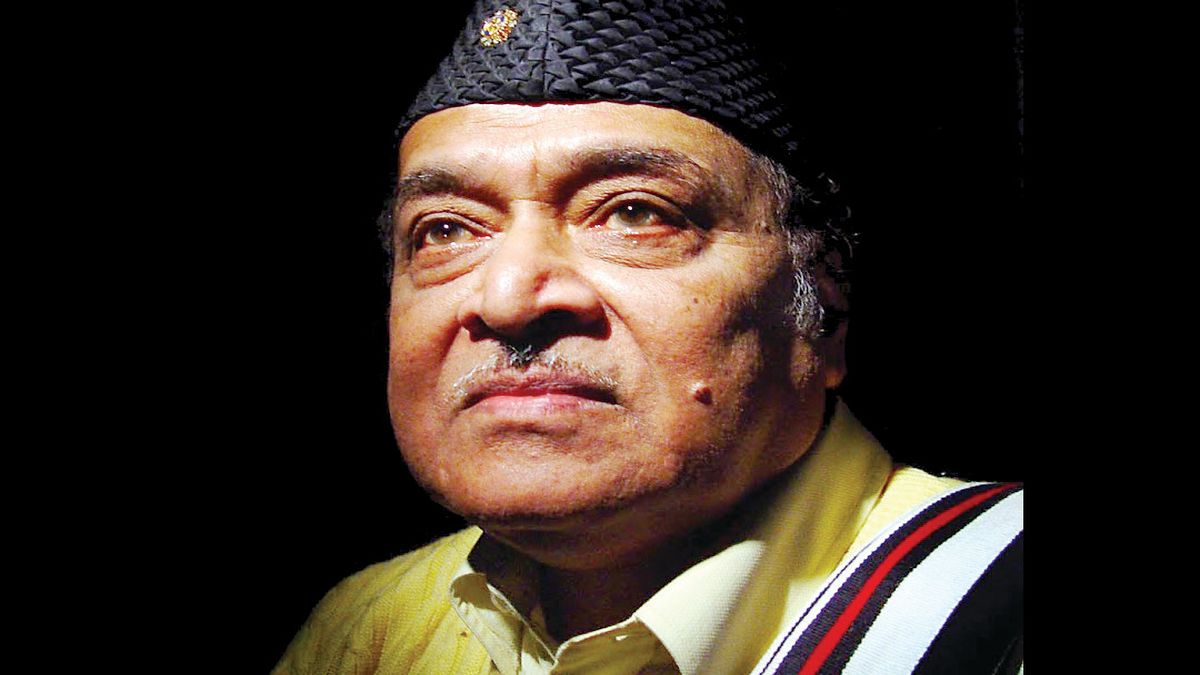
 "<div>From Assam, his voice flowed like a timeless river: PM Modi’s centenary tribute to Bhupen Hazarika</div>")

Bhupen Hazarika — the very name that resonates like the eternal rhythm of the Brahmaputra, synonymous with the heartbeat of Assam and the very soul of her people. He is not just an artist but a phenomenon — a cultural colossus whose voice, drenched in empathy and humanity, continues to echo across generations. Fondly hailed as the ‘Bard of the Brahmaputra’ and reverentially remembered as ‘Sudhakantha’ (the nectar-throated), his genius as a singer, lyricist, composer, filmmaker and poet transcended boundaries, making him not only the pride of Assam but of the entire North East, of India, and indeed, of the world.
Born on 8th September 1926, in the mist-kissed town of Sadiya in present-day Tinsukia district, Hazarika’s journey was destined to be timeless. Today, 8th September 2025, as the land of the Red River and Blue Hills rises in celebration, the world bows to mark the centenary of this immortal legend.
And what could be more befitting than the Prime Minister of India himself, Narendra Modi, penning an evocative tribute in The Economic Times? It is a testament to Hazarika’s unparalleled stature — a recognition that his melodies were not just songs, but movements; not just art, but a philosophy and a call to humanity itself.
“Today is a very special day for those passionate about Indian culture and music – it is the birth anniversary of Bhupen Hazarika, also marks the start of his centenary celebrations. What Hazarika gave us extends far beyond music. His works embodied emotions that transcended melody – he was the heartbeat of the people,” Prime Minister Modi wrote.
“From Assam, his voice flowed like a timeless river, crossing borders and cultures, carrying with it the spirit of humanity. Hazarika travelled the world, but he remained deeply connected to his roots. Assam’s rich oral traditions, folk melodies, and community storytelling practices shaped his early life. These experiences formed the bedrock of his artistic vocabulary,” the prime minister said bringing to the fore the very soul of Assam within Hazarika.
In the article, Prime Minister Modi highlighted how Hazarika’s brilliance emerged early—at just five years old, he impressed Assamese literary pioneer Lakshminath Bezbaruah, and as a teenager he recorded his first song. Prime Minister Modi noted that Hazarika’s artistic journey was deeply shaped by stalwarts like Jyoti Prasad Agarwala and Bishnu Prasad Rabha, along with his innate curiosity to learn and explore. His academic path, which spanned Cotton College, Banaras Hindu University, and later the United States, brought him into contact with civil rights icon Paul Robeson. According to the prime minister, Robeson’s song “Ol’ Man River” inspired Hazarika to create the timeless Bistirno Parore, a tribute to the Brahmaputra that also gave voice to the struggles and resilience of humanity.
In his article, Prime Minister Modi wrote that after returning to India, Hazarika devoted himself fully to music and creativity. He worked across mediums—from radio and theatre to feature films and documentaries—always using his art as a medium of expression and empowerment. Wherever he went, he extended support to emerging talent, nurturing the next generation of artists. Modi observed that Hazarika’s creations blended lyrical beauty with strong social messages, giving voice to the lives and struggles of boatmen, tea garden workers, women, farmers and ordinary people. Through his music, he not only reflected the changing face of modernity but also became a source of strength and hope for the marginalised and socially disadvantaged, who saw their own aspirations mirrored in his songs.
“The spirit of ‘Ek Bharat, Shreshtha Bharat’ found powerful expression in Hazarika’s life journey. His music transcended linguistic and regional boundaries… It’s no exaggeration to say he helped shape the cultural identity of modern Assam, both for those within the state and the Assamese diaspora across the globe,” Prime Minister Modi said.
Prime Minister Modi noted in his article that although Hazarika was not deeply involved in politics, he maintained a close connection with public service. In 1967, he was elected as an independent MLA from Nauboicha constituency in Assam, reflecting the deep trust and admiration people placed in him. Over the years, his immense contributions to music and culture were recognised with some of the nation’s highest honours, including the Padma Shri, Padma Bhushan, Padma Vibhushan, and the Dadasaheb Phalke Award. Finally, in 2019, the country paid its highest tribute by conferring upon him the Bharat Ratna, cementing his legacy as one of India’s greatest cultural icons.
“I remember the time Bhupen Da passed away in 2011. Lakhs attended his funeral. Even in death, he brought people together. It was fitting that he was cremated at the Jalukbari hillock overlooking the Brahmaputra, the very river that had been the lifeline of his music, metaphors and memories,” Prime Minister Modi wrote.
In his article, Prime Minister Modi reflected that Hazarika’s life is a lesson in empathy, rootedness and the power of listening to people. His songs, sung by both young and old, continue to inspire compassion and courage. Through his music, Hazarika reminded society to honour its rivers, workers, women, and youth, ensuring that their voices were never forgotten.
As the centenary year of this cultural icon begins, the prime minister urged that the nation renew its commitment to carrying Hazarika’s message far and wide. He observed that it is only fitting that one of India’s most significant infrastructure projects—the Dhola-Sadiya Bridge—bears Hazarika’s name. Just as his music connected hearts across regions, the bridge today stands as a symbol of connection between lands and people.
End of Article


&description=%E2%80%98From+Assam%2C+his+voice+flowed+like+a+timeless+river%E2%80%99%3A+PM+Modi%E2%80%99s+centenary+tribute+to+Bhupen+Hazarika)