
 "Why does Taliban minister need UN approval to visit India?")

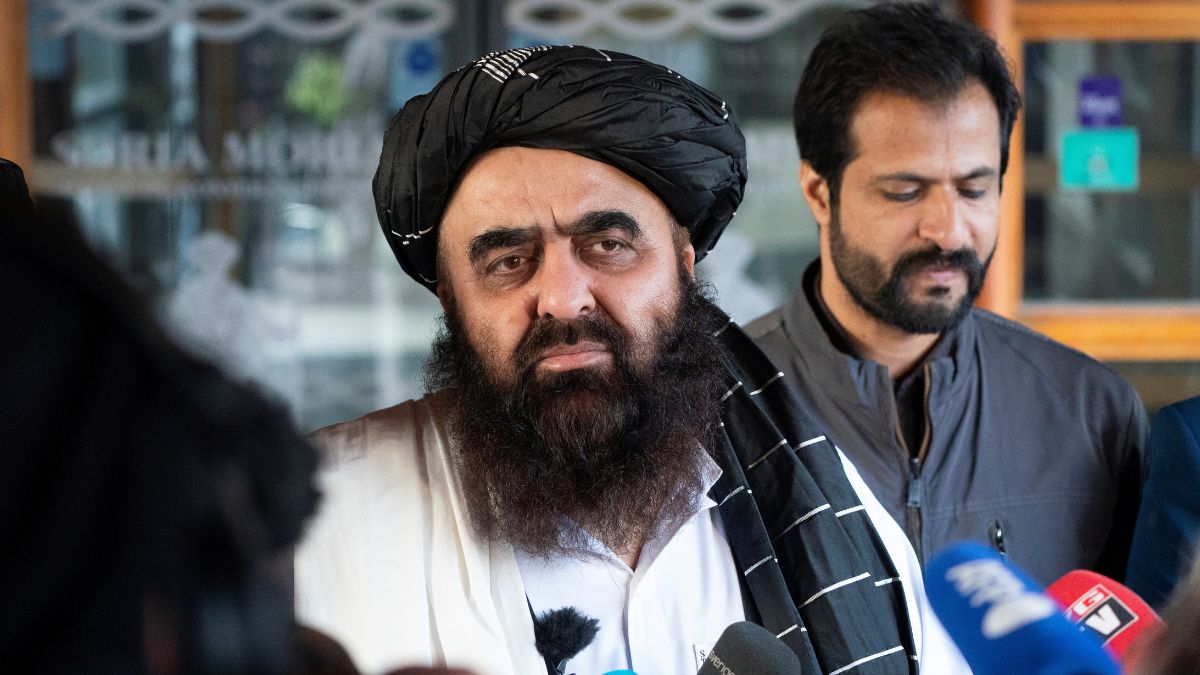
Afghanistan’s acting Foreign Minister Amir Khan Muttaqi, was preparing to travel to India this month in what would have been a landmark visit since the Taliban took over Kabul in August 2021.
The visit has now been postponed due to a technical yet significant hurdle: the travel ban imposed on Muttaqi and other senior Taliban leaders by the United Nations Security Council (UNSC).
The planned visit was expected to mark the first time a senior Taliban minister would officially visit India since the collapse of the previous Afghan government led by Ashraf Ghani.
According to officials familiar with the matter, discussions over the visit had been underway for several weeks. In late August, dates were tentatively explored for the trip, but they eventually did not materialise due to procedural hurdles.
Muttaqi, who has been under a UN-imposed travel ban since the Taliban came to power, needed formal approval from the Security Council to leave Afghanistan.
Without this waiver, he could not legally travel to India or any other country. When the exemption failed to come through, the visit had to be called off.
Diplomatic sources indicate that India continues to maintain direct communication with the Taliban and has not abandoned the idea of hosting Muttaqi.
Efforts are ongoing to reschedule the visit once the UN committee handling sanctions issues agrees to allow him to travel.
Editor’s Picks
Why Muttaqi was denied UN approval to visit India
The need for a waiver stems from a strict sanctions framework managed by the UN Security Council. The 1988 Sanctions Committee is tasked with overseeing measures related to Taliban figures and entities.
These measures include travel bans, asset freezes, and arms embargoes aimed at preventing sanctioned individuals from gaining resources or mobility that could destabilise Afghanistan or the broader region.
The committee operates by consensus, meaning that any of the 15 member countries can block a request by raising an objection. This gives every member a form of veto power over decisions such as granting travel exemptions.
Currently, Pakistan chairs the 1988 Sanctions Committee, giving it a pivotal role in shaping the committee’s actions.
According to individuals aware of the developments, Pakistan opposed the request for Muttaqi’s travel to India, effectively preventing the waiver from being approved.
This is not the first time Muttaqi has faced such an obstacle.
His planned visit to Pakistan earlier this year was similarly cancelled after the United States reportedly objected to a waiver.
How the UN Sanctions regime works
The current sanctions regime is the product of several UN resolutions over the past two decades. The original framework was established in 1999 under Resolution 1267, primarily targeting Al-Qaeda, the Taliban and related groups.
Over time, the framework evolved through subsequent resolutions such as 1989 (2011) and 2253 (2015).
Today, the 1988 Sanctions Committee focuses specifically on Taliban-related issues, while another committee under Resolution 1267 deals with Al-Qaeda, ISIS and associated organisations.
Together, these bodies maintain and update the UN’s consolidated sanctions list, ensuring that designated individuals and entities face restrictions globally.
Sanctions are designed to disrupt financial flows, limit international travel, and weaken the logistical networks of those on the list.
For senior Taliban leaders, this means that foreign trips are highly regulated and can only occur if a waiver is granted for specific diplomatic or humanitarian purposes.
How India has approached Taliban 2.0
India has historically had deep ties with Afghanistan, including strong cultural connections and a record of developmental cooperation.
Over the years, India has invested in over 500 projects in Afghanistan, spanning infrastructure, healthcare, education and other critical sectors.
The situation changed dramatically in August 2021, when the Taliban seized power following the withdrawal of US and Nato forces. Amid the rapid deterioration of security, India carried out a large-scale evacuation of its personnel and citizens.
This effort, known as Operation Devi Shakti, included the complete closure of India’s consulates and, eventually, the evacuation of its embassy in Kabul on August 17, 2021.
Despite these setbacks, India was quick to reestablish a presence in Afghanistan. In June 2022, the embassy was reopened with a reduced staff to facilitate humanitarian aid and oversee development initiatives.
This move was widely seen as a signal of India’s intention to remain engaged with Afghanistan even under Taliban rule.
Since the Taliban takeover, Afghanistan has faced severe humanitarian challenges, including widespread food insecurity and economic collapse. India has been a major contributor to international relief efforts.
In December 2021, India began sending aid shipments, including wheat and essential medicines, through arrangements coordinated with the World Health Organisation and other international partners.
The Taliban takeover triggered a wave of refugees seeking safety abroad, including in India. According to UN figures, India hosts around 16,000 documented Afghan refugees, with an estimated 18,000 more living without official documentation.
In response to the crisis, India created a special visa category to fast-track applications for Afghans wishing to relocate.
How India-Taliban have been growing closer
India’s engagement with the Taliban has grown steadily in recent months, with a clear focus on maintaining dialogue while avoiding formal recognition of the regime.
In January, Indian Foreign Secretary Vikram Misri held an important meeting with Amir Khan Muttaqi in Dubai. According to a statement issued by India’s Ministry of External Affairs, Misri conveyed that India would consider expanding its development projects in Afghanistan beyond the existing humanitarian programmes.
The two sides also discussed the potential for Afghan businesses to use Iran’s Chabahar port to boost trade, offering an alternative route to traditional pathways through Pakistan.
External Affairs Minister S Jaishankar has also been personally involved in these interactions. He spoke with Muttaqi by phone in May, marking the highest level of contact between the two governments since 2021.
The two leaders spoke again on September 1, shortly after India sent aid to earthquake-hit areas in Afghanistan.
While Muttaqi’s visit to New Delhi has been postponed, it has not been permanently cancelled.
India is expected to formally approach the UN Security Council to request a waiver at the appropriate time.
External Affairs Ministry spokesperson Randhir Jaiswal, when asked about the matter at a press briefing, refrained from giving specifics but reiterated India’s broader position.
“As you are aware, we have longstanding ties with the people of Afghanistan. India continues to support the aspirations and developmental needs of the Afghan people. We continue to have engagements with Afghan authorities. If there is an update on this account, we will share it with you.”
The Taliban leadership has openly expressed its desire for stronger bilateral relations.
The Afghan regime have also repeatedly assured India that its territory will not be used by Pakistan-based terror groups to carry out attacks. This commitment was reiterated earlier this year when the Taliban condemned the Pahalgam terror attack in India.
By deepening contacts with the Taliban, India aims to secure its own interests in Afghanistan while countering the influence of other regional powers, particularly Pakistan and China.
With inputs from agencies
End of Article


&description=Why+does+Taliban+minister+need+UN+approval+to+visit+India%3F)