
 "Smoke and silence: US firefighters risk cancer, lung diseases while Trump dismisses climate change risks")

The United States has already recorded more than 41,000 wildfires this year, scorching millions of acres across the West and straining firefighting resources nationwide.
According to a report in The New York Times, once confined to seasonal peaks, wildfires in America now burn almost year-round, fuelled by hotter temperatures, prolonged drought and stronger winds. Scientists have consistently tied these trends to the accelerating impacts of climate change and increasingly erratic weather patterns.
Despite the overwhelming evidence, President Donald Trump has repeatedly dismissed or downplayed the role of climate change. His two presidencies have been marked by rollbacks of environmental regulations and resistance to climate policies. That stance has worsened conditions on the ground, leaving firefighters to contend with both intensifying blazes and a system unwilling to fully protect their health.
Hidden toll on firefighters
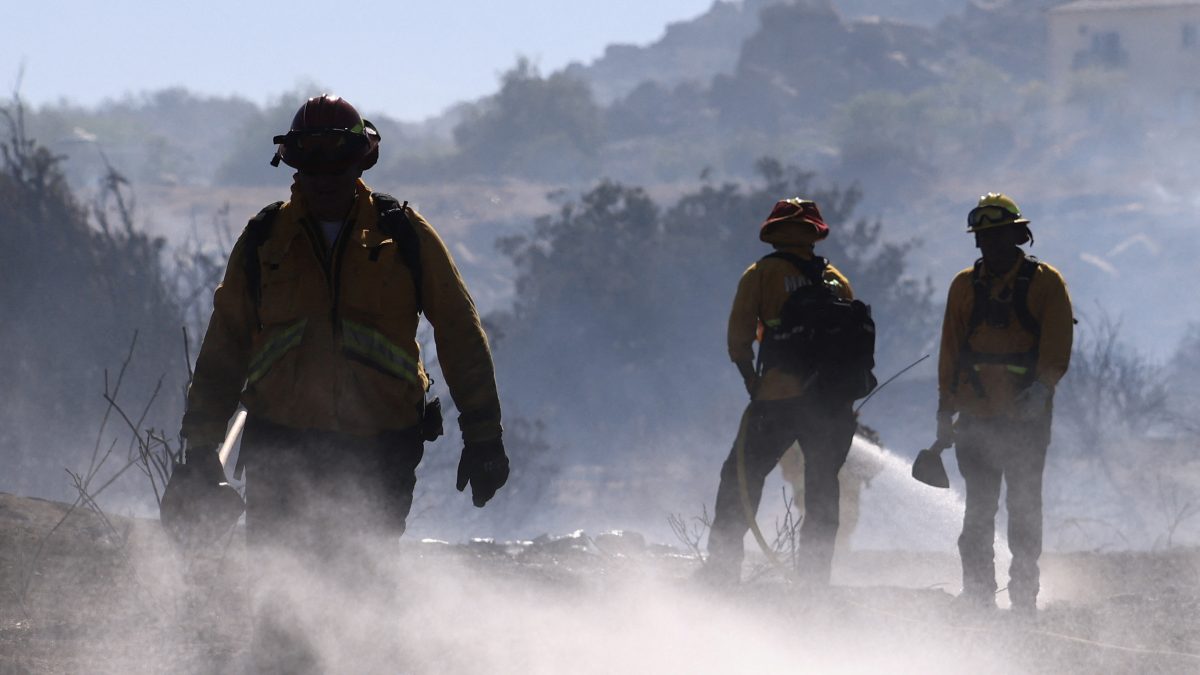
Behind the heroism and dramatic imagery of wildfire containment lies a devastating reality: countless firefighters are suffering life-threatening illnesses linked to prolonged exposure to toxic smoke.
Young firefighters in their 20s and 30s are being diagnosed with aggressive cancers. By their 40s, many require lung transplants after years of inhaling particulate-laden smoke. Others are debilitated by chronic heart disease, severe respiratory conditions and lasting immune system damage, a report in The New York Times said.
The consequences of this neglect are devastatingly personal. A 33-year-old firefighter who once ran six-minute miles now struggles to walk across a room after heart failure forced him out of the field. Another, diagnosed with non-Hodgkin lymphoma, postponed chemotherapy while waiting for workers’ compensation claims to be processed.
Dozens of online firefighter forums are filled with appeals for donations to fund cancer treatments, often followed months later by funeral announcements. The list of tragedies is long: firefighters in their 20s with terminal brain cancer, men in their 30s succumbing to rare carcinomas, and former athletes left incapacitated by lung disease. Each case exposes a systemic failure to protect those tasked with battling increasingly ferocious blazes.
The smoke from wildfires is not just wood ash. It contains at least 31 known carcinogens and other hazardous compounds, especially when houses, vehicles and synthetic materials ignite. Fine particulate matter penetrates deep into the lungs, entering the bloodstream and inflicting damage across multiple organs.
Studies have long established links between wildfire smoke and increased rates of cardiovascular disease, respiratory illnesses and premature death, a Centers for Disease Control and Prevention paper said.
Inadequate protections
Unlike their counterparts in Canada, Australia, or Greece, US wildland firefighters are rarely equipped with respirators or protective masks. Instead, they are often sent into toxic smoke clouds armed with nothing more than a bandanna or bare skin.
Internal Forest Service documents dating back decades reveal repeated warnings from researchers recommending respirators for wildland crews. Yet agency leadership consistently resisted, citing fears of reduced work capacity, cultural resistance among crews and budgetary concerns, The New York Times report said.
Even today, respirators remain absent from federal guidelines for wildland firefighting. The Forest Service argues that masks could increase the risk of heat exhaustion. But international experience contradicts that claim. Firefighters in countries already using respirators slow down or remove them when overheating, without spikes in heat-related illness.
At its core, the US reluctance to provide respiratory protection reflects institutional neglect and a culture of silence. Some firefighters say using masks would be perceived as weakness, while agency leadership avoids acknowledging the true dangers of smoke exposure because doing so could trigger costly reforms, recruitment challenges and long-term medical liabilities.
Trump’s climate stance and its consequences
The escalating risks firefighters face cannot be separated from national climate policy—or the lack of one. During both of his presidencies, Trump has repeatedly questioned or outright denied the science of climate change, shaping a record that has undermined efforts to address its growing dangers. His administration rolled back more than 100 environmental protections, including key regulations aimed at limiting emissions from power plants, oil drilling and vehicles.
He also withdrew the United States from the Paris Agreement during his first term, signalling a retreat from global climate leadership. In addition, federal agencies charged with researching and mitigating environmental health impacts were weakened, reducing the government’s capacity to respond effectively, a Politico report said.
The consequences of these actions have been two-fold: wildfire conditions have worsened as warming intensifies unchecked and protections for those on the front lines, including firefighters, have been eroded.
Cuts to firefighter health research
Even as evidence of firefighter illness has mounted, the Trump administration has undercut programmes designed to study and address these risks.
Thousands of staff at the National Institute for Occupational Safety and Health (NIOSH) were laid off, including nearly all members of teams dedicated to firefighter health and safety. This included the Fire Fighter Fatality Investigation and Prevention Program, research on exposure to toxic chemicals like PFAS, and the National Firefighter Registry for Cancer — a database established under Trump’s own 2018 Firefighter Cancer Registry Act, Politico reported.
The cuts effectively halted research into how firefighting gear retains toxins, how exposure to carcinogens in electric vehicle fires can be mitigated and how cancers cluster among fire crews. The paradox is striking as Trump frequently praised firefighters as national heroes, yet his administration gutted the very programmes meant to safeguard their health.
A culture of denial
Ironically, part of the problem lies not only with federal leadership but also with entrenched cultural attitudes in firefighting itself. A macho ethos discourages the use of protective equipment, often equating toughness with disregard for health risks.
Such attitudes echo the resistance urban firefighters once had toward masks in the 1970s. Back then, federal mandates eventually forced the adoption of respirators, leading to a measurable drop in cancer rates among city fire crews.
Workers left behind
For the men and women who dedicate their lives to containing America’s fires, the gap between rhetoric and reality is stark. They are praised publicly yet abandoned in practice. Compensation systems are slow and difficult leaving many without treatment when they fall sick.
The plight of US wildland firefighters reflects a broader crisis of environmental denial and institutional neglect. Climate change is lengthening and intensifying wildfire seasons, yet the government has failed to adequately protect those most exposed to its consequences.
The absence of respirators, the dismantling of health programmes and the cultural resistance to acknowledging long-term risks form a web of silence that leaves American firefighters sick, dying and unsupported.
End of Article

&description=Smoke+and+silence%3A+US+firefighters+risk+cancer%2C+lung+diseases+while+Trump+dismisses+climate+change+risks)