
Last Updated:
Israel’s attack on Doha was a surgical strike aimed at Hamas leadership. The strike disrupts Qatar’s reputation as a safe financial centre, potentially spiking oil and gas prices


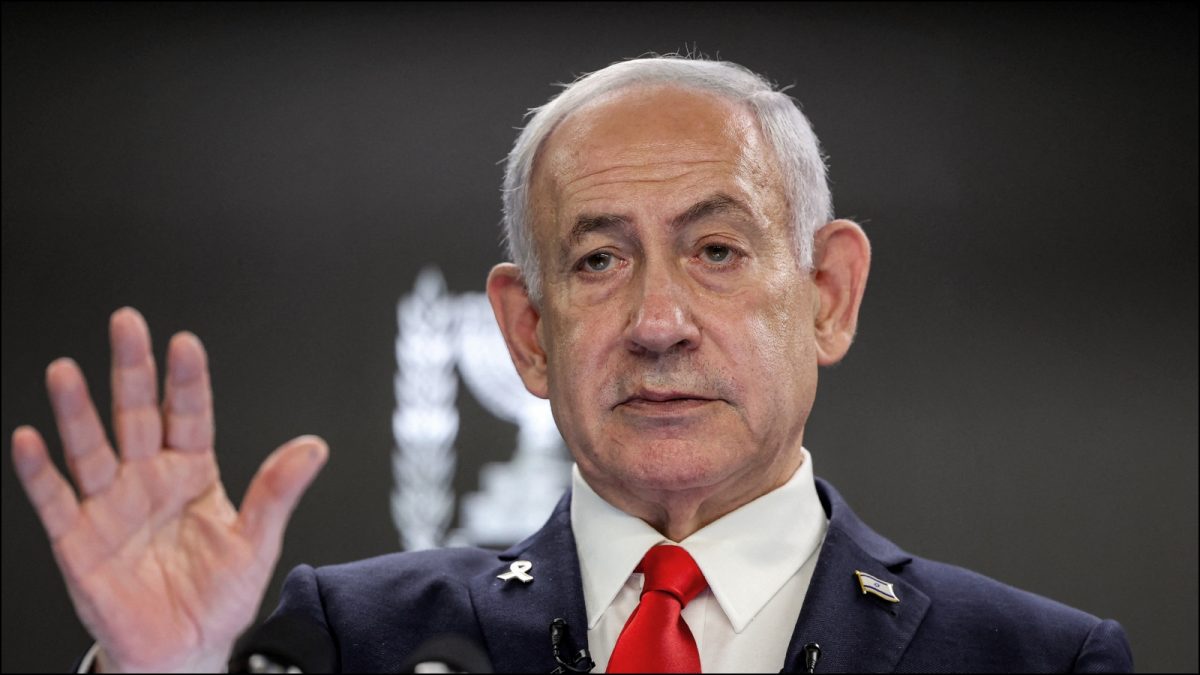
The Doha attack by Israel has set the Middle East ablaze with tension, threatening stability in a region already scarred by conflict. (File Image: AFP)
The Middle East was hit by a seismic jolt on September 9 when Israel launched airstrikes on Doha, Qatar’s capital, targeting senior Hamas leaders. The unprecedented assault on a Gulf state—a key US ally and Gaza ceasefire mediator—has sent shockwaves through a region already teetering on the edge.
With plumes of smoke rising over Doha’s skyline, questions swirl: Why did Israel strike? How does this escalate tensions in an already volatile Middle East? And why does Israel seem to act with impunity, hitting sovereign nations without immediate consequences? Let’s address them.
Recommended Stories
Why Israel Struck Qatar
Israel’s attack was a surgical strike aimed at Hamas’s political leadership, including chief negotiator Khalil al-Hayya, based in Doha since 2012. The operation, involving 15 fighter jets and 10 munitions, hit a residential compound near a petrol station, killing six, including a Qatari security officer and al-Hayya’s son, though Hamas claims its top leaders survived.
Israel’s stated motive was retaliation for Hamas’s October 7, 2023, attack that killed 1,200 Israelis and took 251 hostages, and Monday’s Jerusalem shooting claimed by Hamas’s al-Qassam Brigades, which left six dead.
But the timing and target tell a deeper story. Qatar has hosted Hamas’s political bureau at the US’s request, facilitating indirect talks with Israel for years. On September 9, Hamas negotiators were discussing a US-backed ceasefire proposal in Doha, making the strike a direct blow to peace efforts. Israeli Prime Minister Benjamin Netanyahu framed it as a “fully justified” operation to cripple Hamas, signalling a shift from Gaza-centric operations to a broader regional hunt for its leaders. Israel’s military chief Lt. Gen. Eyal Zamir had vowed weeks earlier to target Hamas abroad, and Doha—seen as a safe haven—was a bold choice to prove no hideout is untouchable.
Geopolitically, the strike aligns with Israel’s strategy to weaken Iran’s “axis of resistance,” which includes Hamas, Hezbollah, and Yemen’s Houthis. Qatar’s ties to Iran and its hosting of Hamas made it a symbolic target. Netanyahu’s government, bolstered by US military aid and a perceived green light from the Trump administration, calculated that striking Doha would disrupt Hamas’s operations while testing the region’s red lines. The attack also reflects domestic pressures: With Israeli hostages still in Gaza and protests mounting against Netanyahu’s war handling, a high-profile strike projects strength.
Ripples Across the Middle East
The Doha attack has set the Middle East ablaze with tension, threatening stability in a region already scarred by conflict. Qatar, a diplomatic powerhouse mediating Gaza talks alongside Egypt, called the strike “state terrorism” and a “flagrant violation” of its sovereignty. The assault killed a Qatari security officer, wounded others, and hit near embassies and schools, shattering Doha’s image as a neutral haven.
Qatari Prime Minister Sheikh Mohammed bin Abdulrahman Al Thani vowed a legal response, hinting at a potential freeze in mediation efforts. Without Qatar’s role, Gaza ceasefire talks could collapse, prolonging a war that has killed over 65,000 Palestinians and displaced millions.
The Gulf Cooperation Council (GCC), including Saudi Arabia and the UAE, condemned the strike as a “cowardly” breach of international law, warning of “grave consequences.” Saudi Arabia, eyeing normalisation with Israel, now faces pressure to harden its stance. The UAE, bound by the 2020 Abraham Accords, called the attack a “red line,” hinting at strain on its Israeli ties. These reactions underscore a growing regional view of Israel as a destabilising force, potentially unravelling years of diplomatic progress.
Beyond the Gulf, the strike inflames broader tensions. Iran, a Hamas backer, labelled it a “dangerous” escalation, raising fears of retaliatory strikes. Israel’s ongoing attacks on Hezbollah in Lebanon and Houthis in Yemen already stretch its military; hitting Qatar risks a multi-front conflict. Arab states like Egypt, Jordan, and Morocco, plus global players like France and the UN, decried the attack, fearing it pushes the region towards chaos. For Palestinians in Gaza, facing Israel’s planned offensive on Gaza City, the strike dims hopes for peace, trapping civilians in a worsening humanitarian crisis.
The economic fallout is equally dire. Qatar, a gas-rich hub hosting the US’s largest Middle East airbase, Al Udeid, relies on its stability for trade and investment. The attack disrupts its reputation as a safe financial centre, potentially spiking oil and gas prices in a region supplying 30% of global energy. Gulf states, already wary after Iran’s June 2025 missile strike on Al Udeid, now question US security guarantees, straining alliances.
How Does Israel Get Away with It?
Israel’s ability to strike Qatar without immediate repercussions stems from a mix of military might, diplomatic clout, and global power dynamics. First, its unmatched military, backed by $3.8 billion in annual US aid, gives it unmatched regional reach. Precision strikes, like the one in Doha, showcase its intelligence and air superiority, deterring direct retaliation from smaller states like Qatar.
Second, US support is Israel’s shield. Despite President Donald Trump’s rare rebuke, calling the strike “unilateral” and expressing regret to Qatar, his administration’s actions suggest tolerance. Trump notified Qatar too late to stop the attack and reiterated that “eliminating Hamas” is a “worthy goal”. This aligns with his first term, where he greenlit Israel’s actions while pressuring allies. The US veto power at the UN Security Council blocks resolutions against Israel, and its intelligence-sharing bolsters Israel’s operations.
Third, international law’s ambiguity plays into Israel’s hands. The UN Charter forbids attacks on sovereign states, but Israel justifies strikes as self-defence against terrorism, citing Hamas’s October 2023 attack. The International Court of Justice’s July 2025 ruling did not address statehood violations directly, leaving legal gaps. Failed states like Yemen retain status despite chaos; Israel argues its targets, like Hamas, lack such protection. Qatar’s hosting of Hamas, though US-endorsed, muddies its victim status, letting Israel exploit grey areas.
Finally, regional dynamics limit backlash. Gulf states, dependent on US security, hesitate to escalate beyond rhetoric. Saudi Arabia and the UAE, despite outrage, prioritise Iran as a bigger threat, aligning with Israel’s anti-Iran stance. Global powers like the EU condemn but avoid sanctions, wary of alienating a key Middle East player. This leaves Israel free to act, knowing economic and diplomatic costs fall on others.
Why It Matters
The Doha strike is not just a one-off — it is a warning of Israel’s willingness to escalate anywhere, anytime. For the Middle East, it risks unravelling fragile alliances and ceasefire hopes. Qatar’s mediation exit could trap Gaza in endless war, while Gulf states rethink US partnerships, potentially cozying up to China or Russia. Economically, disrupted energy markets hit global consumers, with India—reliant on Gulf oil—facing price spikes.
Israel’s impunity raises bigger questions. If it can strike a US ally without consequence, what stops it from targeting others? The Abraham Accords, already strained by Gaza’s toll, could fray further, isolating Israel diplomatically. For Palestinians, the attack signals no safe haven, even for negotiators, dimming peace prospects.
Strengthening international law to close loopholes, enforcing UN resolutions, and pressuring Israel for restraint are critical. Otherwise, the Middle East risks a free-for-all where might trumps right, and stability becomes a distant dream.
About the Author

Shilpy Bisht, Deputy News Editor at News18, writes and edits national, world and business stories. She started off as a print journalist, and then transitioned to online, in her 12 years of experience. Her prev…Read More
Shilpy Bisht, Deputy News Editor at News18, writes and edits national, world and business stories. She started off as a print journalist, and then transitioned to online, in her 12 years of experience. Her prev… Read More
September 10, 2025, 15:49 IST
Loading comments…

Scan the QR code to download the News18 app and enjoy a seamless news experience anytime, anywhere