
Last Updated:
The question is not whether Netanyahu can achieve Greater Israel in its maximalist sense. It needs to be seen whether his policies will erase the possibility of a Palestinian state

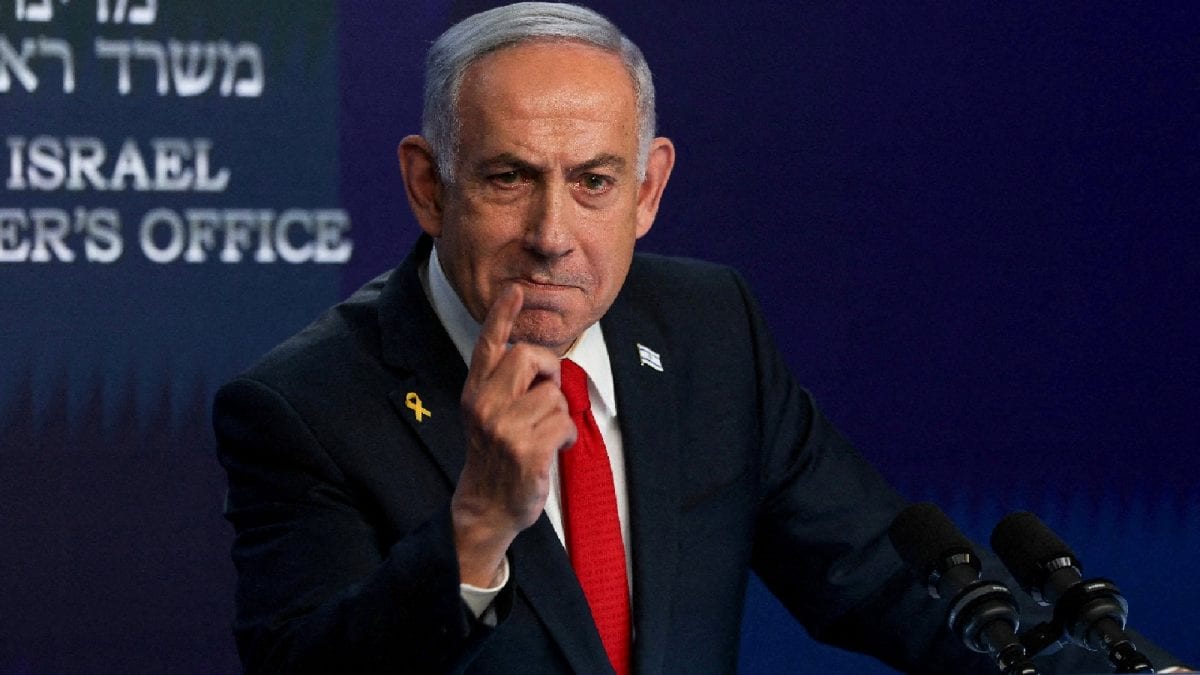
Benjamin Netanyahu’s current strategy seems less about outright declaration and more about incremental consolidation, ensuring that the map of Israel shifts in ways that become irreversible. (AP File Photo)
The phrase “Greater Israel” carries deep historical, political, and religious undertones. At its core, it refers to the idea of an expanded Israeli state encompassing not only its current internationally recognised borders but also parts of Palestinian territories, particularly the West Bank and Gaza, and, in some interpretations, land stretching into neighbouring countries such as Jordan, Lebanon, and Syria.
Recommended Stories
For decades, this idea has been more symbolic than practical, often tied to Zionist visions and religious claims to biblical land. But in modern politics, the concept resurfaces whenever settlement expansion, annexation talk, or military dominance in the occupied territories intensifies.
Netanyahu’s Political Vision
Benjamin Netanyahu has long cultivated the image of the leader who can deliver security and permanence to Israel. His policies towards Palestinians and his rhetoric around sovereignty suggest a steady push towards consolidating control over the West Bank. He presents himself not merely as a caretaker of Israel’s security but as the figure who can enshrine Israel’s dominance over disputed lands — an ambition that aligns with the ‘Greater Israel’ idea.
Settlements As A Silent Annexation
One of the clearest signs of the ‘Greater Israel’ project lies in the rapid expansion of Jewish settlements in the West Bank. Settlements began decades ago, but under Netanyahu, they have grown into sprawling towns with infrastructure, highways, and security systems that integrate them properly into Israel. While official annexation remains politically explosive on the global stage, the physical reality on the ground makes separation between Israelis and Palestinians increasingly difficult.
This “facts on the ground” approach has been a cornerstone of Netanyahu’s strategy. By encouraging settlement growth, Israel effectively locks in permanent control without making sweeping legal declarations. Over time, this has blurred the line between Israel and the occupied territories, aligning with the vision of a greater territorial Israel.
Why Israel Wants Gaza
Gaza presents a different, though equally complex, front. Israel withdrew its settlements from Gaza in 2005, but the territory has remained under blockade and military oversight. Netanyahu’s approach has been to maintain strict control over Gaza’s borders, economy, and movement while rejecting any steps that might lead to Palestinian sovereignty.
Some analysts argue that this, too, fits into the Greater Israel framework: While Gaza is not integrated through settlements, it is kept in a position of dependency and isolation, ensuring it does not emerge as an independent political or economic rival to Israel.
What’s The Role Of Religion & Nationalism In This?
The appeal of “Greater Israel” is not just strategic; it resonates deeply with nationalist and religious groups within Israel. For them, holding onto biblical lands is a matter of destiny, not diplomacy.
Netanyahu, though often seen as a pragmatist, has relied heavily on these groups for political support. By endorsing settlement growth and resisting Palestinian statehood, he aligns his policies with their ideological vision.
Obstacles To Realising The Dream
Despite the progress made through settlements and symbolic moves, Netanyahu’s project faces significant hurdles. International law considers West Bank settlements illegal, and any formal annexation could trigger severe diplomatic and economic consequences. The Abraham Accords showed Israel can normalise ties with Arab states without resolving the Palestinian question, but overt annexation could put even those fragile relationships at risk.
Domestically, Israel is deeply divided. While right-wing factions embrace the Greater Israel vision, many Israelis fear the demographic and security implications of absorbing millions of Palestinians without granting them full rights. Such a move could either undermine Israel’s Jewish majority or cement a system that critics describe as apartheid.
What Are The Arab Countries Saying?
A coalition of 31 Arab and Muslim nations, along with the Arab League, has strongly condemned Netanyahu for openly endorsing the vision of a “Greater Israel”.
In an interview with i24NEWS in August, Netanyahu was asked if he identified with the idea of a Greater Israel. His reply was unequivocal: “Absolutely … very much.”
In a joint statement released on August 15, the Arab coalition described Netanyahu’s remarks as a “blatant and dangerous violation” of international law and warned that such rhetoric threatens Arab national security, state sovereignty, and global peace.
The condemnation comes against the backdrop of rising international pressure on Israel. In September 2024, the United Nations General Assembly overwhelmingly passed a resolution calling for an end to Israel’s occupation of Palestinian territories within 12 months. That move echoed the International Court of Justice’s advisory opinion, which found Israel’s presence in the territories unlawful.
In January 2024, the International Court of Justice further stated that Israel was “plausibly committing genocide” in Gaza, though its final ruling in the case brought by South Africa is still pending.
Is Netanyahu Closer To Achieving It?
In practical terms, Netanyahu has already achieved parts of the Greater Israel vision. The West Bank is deeply integrated into Israel’s political, economic, and security systems. The idea of a fully sovereign Palestinian state appears more distant than ever. Gaza remains contained and isolated, with little prospect of independence.
Yet the dream of a formal “Greater Israel” remains elusive. Full annexation would bring immense international backlash, and integrating millions of Palestinians without granting them rights would create explosive internal tensions.
This week, France joined Canada, Australia, and the UK to recognise Palestine’s statehood at the United Nations General Assembly (UNGA) summit in New York. This comes more than almost two years after the war that saw several thousand Palestinians dead, displaced, with massive starvation now engulfing Gazans.
Netanyahu’s current strategy seems less about outright declaration and more about incremental consolidation — ensuring that, step by step, the map of Israel shifts in ways that become irreversible.
What Lies Ahead?
The question is not whether Netanyahu can achieve “Greater Israel” in its maximalist sense — few believe he can redraw borders to match biblical claims. The real question is whether his policies will permanently erase the possibility of a Palestinian state. If settlement expansion continues and Arab states remain silent, Israel could, in practice, absorb most of the territories it covets, even without legal annexation.
For Palestinians, this represents the slow disappearance of their aspirations for statehood. For Israelis, it may appear as security and permanence. For the region, it raises the prospect of a conflict frozen in place, unresolved but reshaped to reflect Netanyahu’s vision.
About the Author

Shilpy Bisht, Deputy News Editor at News18, writes and edits national, world and business stories. She started off as a print journalist, and then transitioned to online, in her 12 years of experience. Her prev…Read More
Shilpy Bisht, Deputy News Editor at News18, writes and edits national, world and business stories. She started off as a print journalist, and then transitioned to online, in her 12 years of experience. Her prev… Read More
September 25, 2025, 15:32 IST
Loading comments…

Scan the QR code to download the News18 app and enjoy a seamless news experience anytime, anywhere