
Last Updated:
As two Asian giants cautiously rebuild ties, Wang Yi’s Delhi visit brings border talks back in focus and sets the stage for PM Modi’s first China visit in seven years


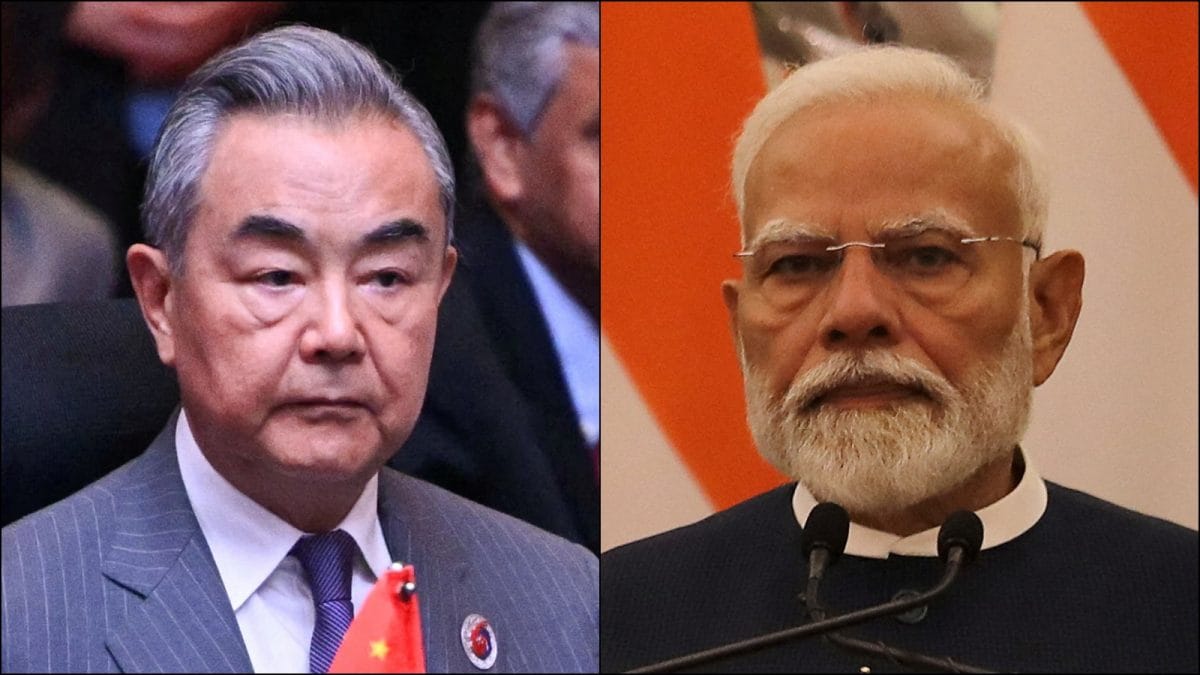
Chinese Foreign Minister Wang Yi will meet Prime Minister Narendra Modi on Tuesday. (Reuters/File)
Chinese Foreign Minister Wang Yi is set to arrive in New Delhi on Monday for a three-day visit that could reshape the trajectory of India–China relations. The trip comes at a delicate moment: the two neighbours are cautiously emerging from years of border tensions, attempting to revive suspended exchanges, and adjusting to a changing geopolitical environment shaped by US President Donald Trump’s tariff war on India.
With Prime Minister Narendra Modi expected to travel to Tianjin at the end of the month for the Shanghai Cooperation Organisation (SCO) summit, Wang Yi’s consultations in Delhi are widely viewed as both preparatory and pivotal, a test of how far the two Asian giants are ready to rebuild trust.
Recommended Stories
Why This Visit Matters Now
Relations between India and China have been in deep freeze since the Galwan Valley clashes of June 2020, when soldiers on both sides were killed in the worst violence on the frontier in decades. Although a disengagement agreement in October 2024 saw troops withdrawn from the remaining friction points at Demchok and Depsang, both militaries still keep an estimated 50,000–60,000 personnel each deployed in eastern Ladakh.
The fragile thaw since last year has been marked by resumed diplomatic mechanisms, but political contact has remained limited. Wang Yi and External Affairs Minister S Jaishankar last met in October 2024 at Kazan, Russia, on the sidelines of the BRICS ministerial, signalling the first cautious steps towards re-engagement. His arrival in Delhi is significant because it comes just ahead of PM Modi’s expected visit to China for the SCO summit, his first in seven years, and could set the tone for a more formal meeting with Chinese President Xi Jinping.
Boundary Talks: The Core Issue
At the centre of this visit is the 24th round of Special Representatives (SR) talks on the boundary issue, scheduled for Tuesday with National Security Advisor Ajit Doval. This dialogue mechanism, dormant for much of the post-Galwan years, was revived in December 2024 when Doval travelled to Beijing, reopening the channel for managing the frontier.
For New Delhi, progress on the boundary question is the non-negotiable foundation for any broader reset. Without confidence that the Line of Actual Control is stable, Indian policymakers remain wary of expanding cooperation elsewhere. For Beijing, restarting the SR dialogue demonstrates an intent to move past deadlock, though both sides remain cautious about how far they can go.
How Are India And China Rebuilding Ties?
Beyond the border, the two countries have begun cautiously restoring civilian and economic exchanges. India this month resumed issuing tourist visas for Chinese nationals, a step seen as a signal of willingness to restore people-to-people contact. Beijing has reopened two pilgrimage routes in western Tibet, allowing Indian devotees to once again access Kailash Mansarovar and other sacred sites after a five-year gap.
Trade and connectivity are also inching back. Talks are underway to restart border trade through Lipulekh in Uttarakhand, Shipki La in Himachal Pradesh, and Nathu La in Sikkim — passes that have remained closed since the 2020 standoff. The Ministry of External Affairs has confirmed discussions with Beijing, calling such exchanges an important part of confidence-building.
A bigger symbolic step could come through aviation. Passenger flights between India and China, suspended since the Covid-19 pandemic, are close to resuming. Indian carriers have been asked to prepare for short-notice services, with speculation that an announcement could be tied to the SCO summit.
The Uneven Side Of The Thaw
Yet the process of rebuilding ties remains uneven. Bilateral trade remains large, crossing $130 billion in recent years, but the imbalance is stark, with India importing far more from China than it exports. Restrictions on Chinese investment in sensitive sectors such as telecom and digital platforms, imposed after the 2020 crisis, remain in place. Military-to-military talks at the corps commander level continue separately to manage tensions in Ladakh.
And public opinion in India remains sceptical of Beijing, meaning official gestures of goodwill have not yet translated into broader trust.
The Trump Tariff Backdrop
Wang Yi’s visit also comes against the backdrop of a sudden strain in India–US ties. Earlier this month, President Donald Trump announced a steep escalation of duties on Indian exports, raising tariffs to 50 per cent. He justified the move by pointing to India’s purchases of Russian oil, which currently accounts for over a third of New Delhi’s crude imports.
The decision has been strongly contested in Delhi. Officials have underlined that India already maintains low tariffs on many American exports and that its agricultural tariffs are consistent with international practice. Indian policymakers have called the tariff hike unjustified and pointed to what they see as double standards, given that the US and Europe continue to import Russian fertilisers and chemicals.
Trump’s rhetoric has been unusually harsh, dismissing India’s economy as “dead” and its tariffs as “obnoxious.” While such remarks have added friction, Indian officials stress that the relationship with Washington rests on broader strategic and economic foundations that cannot be reduced to a single dispute.
How Has China Responded?
Beijing has been quick to frame Trump’s tariff escalation as part of a broader pattern of economic coercion, and has publicly aligned itself with India’s position. Chinese ambassador Xu Feihong took a pointed swipe on social media — “Give the bully an inch, he will take a mile” — echoing Foreign Minister Wang Yi, who had earlier denounced the use of tariffs as a political weapon.
Chinese foreign ministry spokesperson Mao Ning also underscored Beijing’s expectations ahead of Wang Yi’s Delhi trip. She said China was willing to use the visit to work with India in “implementing the important consensus reached by the leaders of the two countries, maintaining the momentum of high-level exchanges, enhancing political mutual trust, strengthening practical cooperation, properly managing differences, and promoting the sustained, healthy, and stable development of China–India relations.”
Alongside the rhetoric, Beijing has taken modest trade steps, such as easing restrictions on urea exports to India after a years-long pause. For the world’s largest importer of urea, the consignments were small but carried symbolic weight, a gesture timed to show flexibility as India absorbs tariff pressure from Washington.
Why Is Washington Watching Nervously?
For Washington, this triangular diplomacy carries worrying implications. The US has long sought to build India as a strategic counterweight to China in Asia, especially under the Indo-Pacific strategy. Trump’s tariff war, however, risks pushing India closer to Beijing and Moscow instead.
Former US National Security Advisor John Bolton has been especially blunt, warning that Trump’s policies “could push India closer to Russia and to China to oppose these tariffs.” Analysts say that by treating India as a transactional partner while easing up on Beijing, Trump may be creating precisely the alignment Washington has tried to prevent.
PM Modi’s Upcoming China Visit
Wang Yi’s Delhi trip also serves as a curtain-raiser for PM Modi’s expected participation in the SCO summit in Tianjin on August 31–September 1. The Prime Minister is scheduled to stop in Japan on August 29 before flying to China, marking his first visit there in seven years.
If confirmed, the summit would give Modi and Xi Jinping an opportunity for their most substantive interaction on Chinese soil since the border crisis began. The two leaders did meet briefly at the BRICS summit in Russia in October 2024, where they agreed to restart stalled dialogue mechanisms, but the Tianjin summit would mark a more formal setting.
Beijing has already signalled optimism, calling the Tianjin gathering a “summit of solidarity and cooperation.” For both sides, a Modi–Xi meeting would test whether the careful progress since last year’s disengagement can hold at the political level.
What Is On Wang Yi’s Delhi Schedule?
Wang Yi lands in New Delhi on Monday evening. His first meeting, at 6 pm, will be with External Affairs Minister S Jaishankar. On Tuesday, he will hold boundary talks with National Security Advisor Ajit Doval at 11 am, before concluding his visit with a 5:30 pm audience with Prime Minister Narendra Modi at Lok Kalyan Marg.
The packed schedule reflects the importance both governments are attaching to this visit, one that could shape the tone of PM Modi’s upcoming China trip and the trajectory of India–China relations in the months ahead.
About the Author

Karishma Jain, Chief Sub Editor at News18.com, writes and edits opinion pieces on a variety of subjects, including Indian politics and policy, culture and the arts, technology and social change. Follow her @kar…Read More
Karishma Jain, Chief Sub Editor at News18.com, writes and edits opinion pieces on a variety of subjects, including Indian politics and policy, culture and the arts, technology and social change. Follow her @kar… Read More
view comments
Read More