
Last Updated:
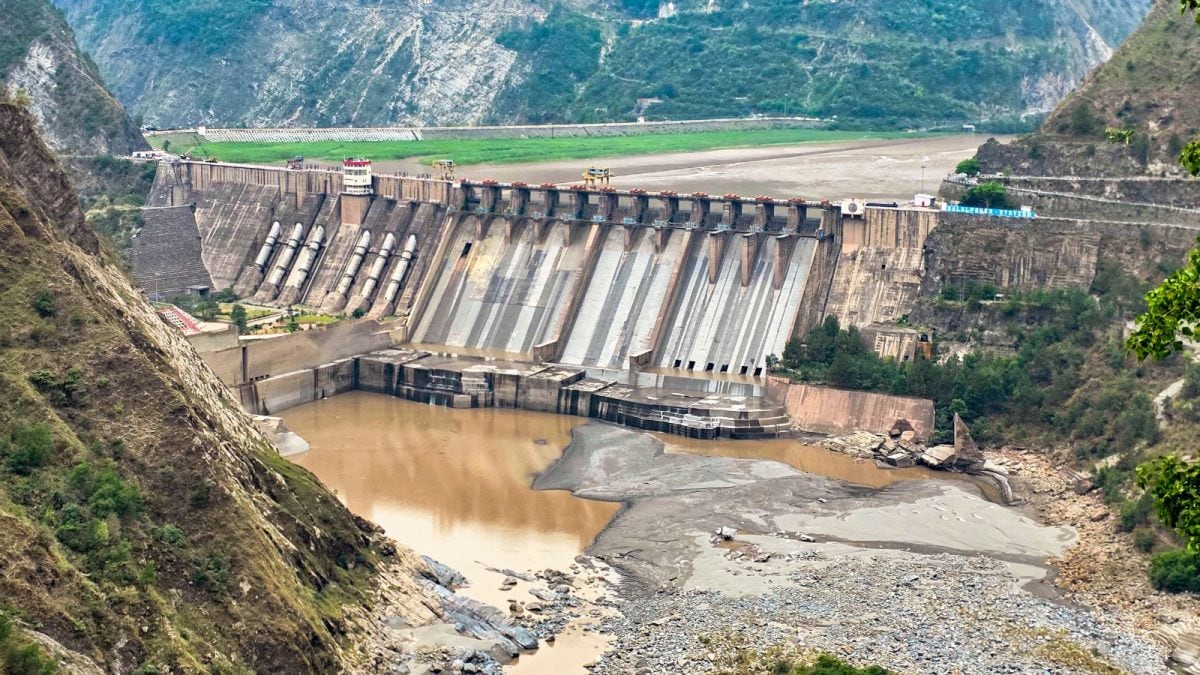
India’s decision to suspend the Indus Waters Treaty has given momentum to a range of water infrastructure projects long on the drawing board

PM Modi has said Indus Waters Treaty will remain on pause till Pakistan takes credible and verifiable action against terrorism on its soil. (PTI)
As the countdown to the 2029 Lok Sabha elections begins, the Centre is stepping up its ambitious plan to bring Indus River waters to large parts of North India. What began as a technical exercise is now shaping into a political, strategic and developmental push, underscored by the government’s decision to place the Indus Waters Treaty in abeyance following the Pahalgam terror attack.
Last Friday, Union Home Minister Amit Shah and Jal Shakti Minister C.R. Patil chaired a high-level review in Delhi with senior officials of the Government of India. Delhi Chief Minister Rekha Gupta was also in attendance, as the meeting took stock not only of the Indus-Beas link but also the Yamuna River Front project.
Recommended Stories
At the heart of the plan is a 14-kilometre-long tunnel designed to connect the Beas and Indus rivers. Sources confirmed that work has already begun on the Detailed Project Report (DPR), with engineering giant L&T tasked with preparing it within a year.
Officials admitted the tunnel poses a formidable challenge, given the rugged Himalayan terrain. Geological studies will map the strength of mountain rock, and in stretches of weaker rock, pipelines will be laid to ensure both speed and safety of construction.
Alongside the tunnel, plans for a canal are also being finalised, promising long-term water security for Rajasthan, Jammu & Kashmir, Delhi, Haryana and Punjab.
Modi’s Water Doctrine: From Geopolitics To Governance
Prime Minister Narendra Modi has made water security a cornerstone of his public rhetoric, repeatedly linking it to national security and self-reliance. At a recent rally, he reiterated that “trade and terror, water and blood, bullets and dialogue cannot go together,” signalling a policy that weds development priorities with a sharper stance against Pakistan.
India’s decision to suspend the Indus Waters Treaty has given momentum to a range of water infrastructure projects long on the drawing board. Among them is a 130-kilometre canal connecting the Beas River with the Ganga Canal, with a proposed extension to the Yamuna. Spanning nearly 200 kilometres and including a 12-kilometre tunnel, the initiative could one day see Yamuna waters flow all the way to Gangasagar, marking a historic engineering and hydrological achievement.
The government has indicated that work on this larger Beas–Ganga–Yamuna corridor is advancing rapidly and could be completed in two to three years.
Diplomatic Fallout And Strategic Messaging
The political and diplomatic implications are no less significant. Experts warn that the suspension of the treaty could severely impact Pakistan’s rabi crop cycle, potentially disrupting agricultural planning and urban water supply. While kharif crops may remain less affected, the long-term impact on daily life and irrigation could be substantial.
Islamabad has approached the World Bank, invoking the dispute resolution clause of the treaty. But the Bank has so far declined to intervene, calling India’s move an internal matter.
Indian officials, meanwhile, maintain that the original treaty, drafted in the 1950s and 60s, is no longer fit for purpose in an era of melting glaciers, erratic monsoons, population stress, and surging energy demands. Pakistan’s refusal to update or renegotiate the agreement, they argue, is a breach of the treaty’s spirit if not the letter.
Outreach Push In North India
As part of a wider push to align water diplomacy with domestic development messaging, the Central government is set to launch a comprehensive public outreach campaign to explain the rationale behind suspending the Indus Waters Treaty. The campaign, officials say, will target voters in northern states, where the impact of increased water availability could reshape both agriculture and daily life.
Ministers such as Shivraj Singh Chouhan, C.R. Patil, and Bhupender Yadav will travel across Punjab, Haryana, and Rajasthan, holding grassroots-level engagements with farmers, officials, and civil society groups. The objective: to present the suspension of the treaty not just as a foreign policy signal, but as a national resource reclamation project tied to local irrigation, drinking water supply, and drought-proofing efforts.
Development, Diplomacy, And The 2029 Roadmap
The convergence of electoral timing, infrastructure expansion, and diplomatic recalibration is unmistakable. For the Modi government, the Indus is no longer just a river system, it is a frontline in India’s developmental, electoral, and strategic narrative.
September 25, 2025, 13:22 IST
Loading comments…
Read More