
Last Updated:
Mushrooms are a culinary treasure but also one of nature’s silent traps. For every delicious oyster or morel, there exists a poisonous lookalike that can cause suffering or death.


Mushrooms Explained: The Varieties You Can Eat and the Ones to Avoid
Mushrooms are fascinating organisms – delicate, diverse, and deeply rooted in tradition. They grow wild in forests and fields, appear in local cuisines, and are celebrated for their nutritional and medicinal properties.
But mushrooms also carry a darker side. Among the thousands of species, many are poisonous, and some can be fatal even in small amounts. The challenge is that edible and poisonous mushrooms often look deceptively alike, making misidentification a real danger.
Recommended Stories
India, with its varied climate and forest ecosystems, is home to hundreds of mushroom varieties. While tribal communities and seasoned foragers often know which are safe, accidental poisonings are reported every year. Understanding which mushrooms to avoid, how to identify them, and what to do in an emergency is critical for anyone tempted to pluck wild fungi.
Poisonous Mushrooms Found in India
India’s forests host both edible delicacies and highly toxic mushrooms. Some of the known poisonous varieties include:
- Amanita phalloides (commonly called the Death Cap): Perhaps the deadliest mushroom in the world, containing toxins that attack the liver and kidneys. Rare in India but has been reported in Himalayan regions.
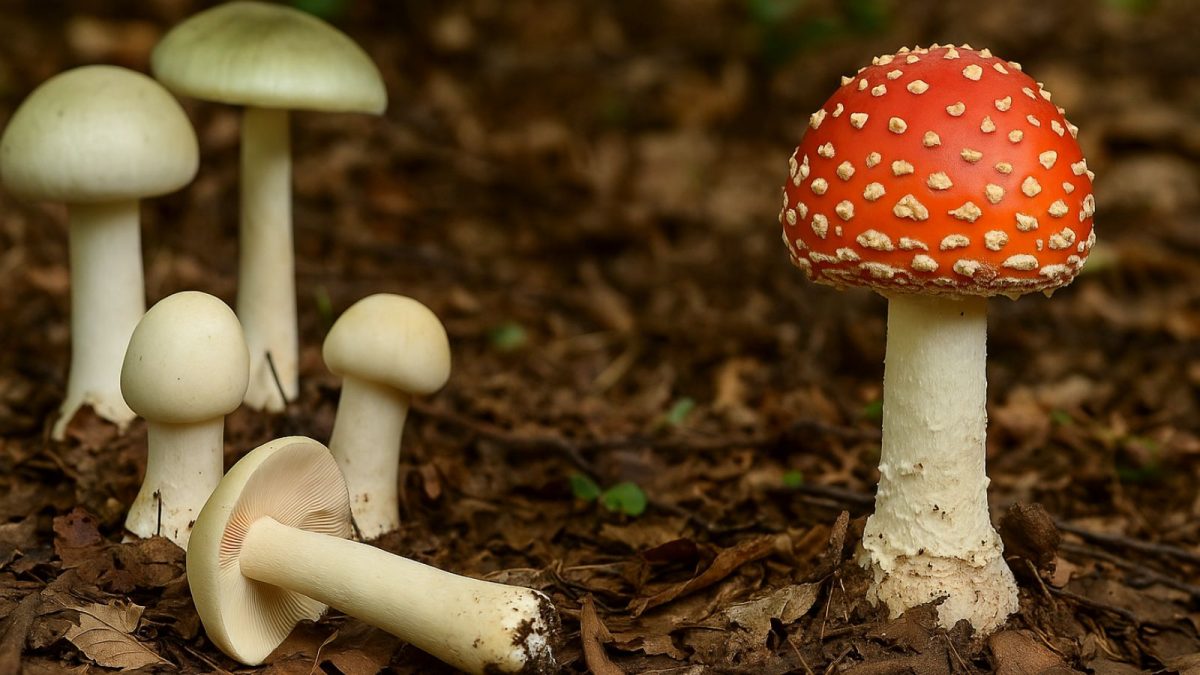
- Amanita muscaria (Fly Agaric): Recognizable by its red cap with white spots, hallucinogenic and poisonous in large amounts.
- Amanita pantherina (Panther Cap): Similar to Fly Agaric but brownish, causes delirium and seizures.
- Chlorophyllum molybdites (Green-spored Parasol): Common in India’s lawns and gardens; causes severe vomiting and diarrhea.
- Galerina marginata: A small brown mushroom with deadly amatoxins, often mistaken for edible varieties.
- Lepiota brunneoincarnata: Highly toxic, reported in southern India.
Alongside these, there are dozens of less lethal mushrooms that still cause stomach cramps, nausea, and hallucinations.
Edible Mushrooms Common in India
On the safer side, India consumes a variety of edible mushrooms:
- Agaricus bisporus: The common white button mushroom, cultivated widely.
- Pleurotus ostreatus: Oyster mushrooms, grown in controlled farms and kitchens.
- Volvariella volvacea: Paddy straw mushrooms, popular in eastern and southern India.
- Auricularia auricula: Wood ear mushroom, often used in northeastern cuisines.
- Morchella esculenta: The prized morel (gucchi), found in the Himalayas, highly expensive and edible.
These varieties are generally cultivated or sold in markets, making them safe when bought from trusted sources. The danger lies mostly in self-foraging.
How to Identify Safe vs Poisonous Mushrooms
There is no single foolproof rule for identifying poisonous mushrooms. Mycologists caution against relying on folk myths like “if animals eat it, it’s safe” or “toxic mushrooms turn silver black when cooked.” These are misleading. However, a few general guidelines help:
- Amanitas (deadly group): Often have white gills, a cup-like structure at the base (volva), and a ring around the stem. Many fatal species belong here.
- Chlorophyllum molybdites: Look similar to edible parasols but have greenish spore prints.
- Edible button mushrooms: Have brownish-pink to chocolate-colored gills, not white.
- Morels vs False Morels: True morels are hollow inside, while false morels are solid and toxic.
Still, experts insist that unless you are trained, identifying edible mushrooms in the wild is extremely risky. Cultivated mushrooms from reliable farms are the only truly safe choice.
Symptoms of Mushroom Poisoning
The effects of eating a poisonous mushroom can vary depending on the species, toxin, and quantity ingested. Some symptoms appear within hours, while others may take a day or two, making it harder to trace. Common symptoms include:
- Severe stomach cramps, vomiting, and diarrhea
- Excessive sweating, salivation, or tearing
- Confusion, hallucinations, or delirium
- Seizures or tremors
- Jaundice, abdominal pain, and dark urine (signs of liver damage)
- Kidney failure symptoms like reduced urination and swelling
In the case of the deadly Death Cap mushroom, symptoms may ease after initial vomiting, only to return with more intensity as the liver and kidneys fail.
Where Poisonous Mushrooms Are Found in India
- Forests of the Western Ghats and Himalayas: Rich in wild fungi, both edible and poisonous.
- Moist agricultural fields: Mushrooms often sprout after monsoon rains.
- Lawns, parks, and gardens: Species like Chlorophyllum molybdites are common here.
- Rotting wood and tree trunks: Home to both edible wood ears and dangerous Galerina.
Poisonous mushrooms thrive in the same damp, organic-rich conditions as edible ones, which is why misidentification happens easily.
What To Do Immediately After Ingesting a Poisonous Mushroom
Speed is critical in suspected mushroom poisoning. Delays can mean toxins spread irreversibly in the body. Recommended steps include:
- Seek medical help immediately: Rush to the nearest hospital, ideally with a sample of the mushroom eaten for identification.
- Do not wait for symptoms to appear: Even if you feel fine, toxins may still be working silently.
- Do not attempt home remedies: Inducing vomiting without medical guidance can make things worse.
- Provide details: Inform doctors about the timing of consumption, symptoms, and bring any leftover mushrooms.
- Supportive treatment: In hospitals, activated charcoal may be administered to absorb toxins, and IV fluids given to prevent dehydration. In severe cases, intensive care or even liver transplants may be needed.
Why Awareness Matters
In India, mushroom poisoning cases are often underreported, especially in rural and tribal areas. Foraging is common, particularly after rains, when mushrooms sprout abundantly.
While some communities pass down safe identification skills, others fall prey to dangerous look-alikes. Public health campaigns emphasize one golden rule: never eat a mushroom unless you are absolutely certain of its identity.
Mushrooms are a culinary treasure but also one of nature’s silent traps. For every delicious oyster or morel, there exists a poisonous lookalike that can cause days of suffering or even death. India’s diversity of mushrooms adds to both its richness and its risks.
The safest approach is simple: stick to cultivated, market-sold mushrooms, and admire the wild ones from a distance. If ever in doubt, it’s better to leave a mushroom untouched than to pay with your health. In mushroom hunting, one mistake can be the difference between a delicacy and a disaster.
September 08, 2025, 16:41 IST
Loading comments…

Scan the QR code to download the News18 app and enjoy a seamless news experience anytime, anywhere