
Ana Faguyin Minneapolis

 EPA
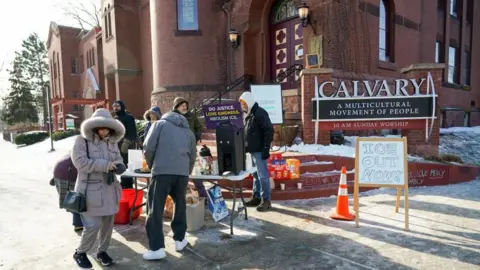
EPAAt the Calvary Baptist Church in Minneapolis, the doors swung open and shut as locals sought refuge from the biting cold on Sunday.
The 140-year-old building sits just blocks away from where Alex Pretti, an intensive care nurse, was shot dead by federal immigration agents during a confrontation on Saturday morning.
In the wake of the shooting, which marked the second time in less than a month that a US citizen has been killed by agents in the city, the church has become what locals describe as a haven from the unrest and uncertainty outside.
There was no service here on Sunday. Instead volunteers and church staff, such as Ann Hotz, who works at the church’s daycare centre, handed out coffee, snacks and hand warmers to those who stopped by.
Some were on their way to lay flowers at a nearby memorial for Pretti, while others visited on their way home from protests against the weeks-long federal immigration enforcement operation in the city.
“Yesterday, I fell apart,” Hotz told the BBC as she helped move cases of water outside. “Today I’m here to stand with my community and help our neighbours as they remember Alex and mourn him.”
“But I do have to say, the helpers are getting really tired,” she added. “This is exhausting, and so we need there to be a change.”
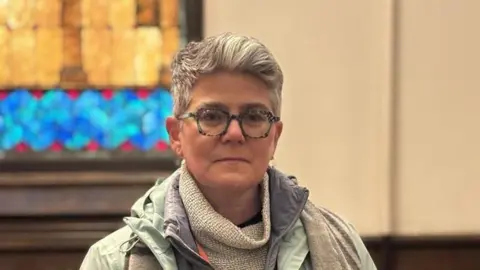
“This is what America is now,” Dean Caldwell-Tautges, the church administrator, said of the actions of federal immigration agents in his hometown in recent weeks.
Caldwell-Tautges, who was handing out whistles which have been used to alert people to Immigration and Customs Enforcement (ICE) activity, said supporting the community in this way was “the Christian thing to do”.
The city of Minneapolis now finds itself at the forefront of the national immigration debate for the second time this month. Renee Nicole Good, another Minnesota resident, was shot and killed by an ICE agent on 7 January.
Videos of both shootings quickly spread on social media. They prompted angry protests from those who want to see an end to an immigration enforcement operation that has seen thousands of agents deployed to the city’s streets.
 Getty Images
President Trump ordered the agents to the Democrat-held state in December, pledging a massive deportation of undocumented migrants. A crackdown on illegal immigration was central to his successful re-election campaign and is backed by many around the country.
The administration has characterised the Minneapolis operation as a public safety efffort aimed at deporting criminals illegally in the US. Critics warn migrants with no criminal record and US citizens are being detained, too.
On Sunday, in an interview with the Wall Street Journal, Trump praised the agents’ work but suggested the operation would eventually end, although he did not specify when.
“At some point we will leave,” Trump said. “They’ve done a phenomenal job.”
The state’s Governor Tim Walz has urged the president to remove the agents immediately. “We believe that Trump needs to pull his 3,000 untrained agents out of Minnesota before they kill another American in the street,” he said on Sunday. Other state and local officials have echoed Walz’s view.
The Department of Homeland Security (DHS) said the agents fired in self-defence after Pretti, who they say had a handgun, resisted their attempts to disarm him on Saturday.
Eyewitnesses, local officials and the victim’s family have challenged that account, pointing out Pretti had a phone in his hand, not a weapon. His parents, meanwhile, have accused the administration of spreading “sickening lies” about what happened.
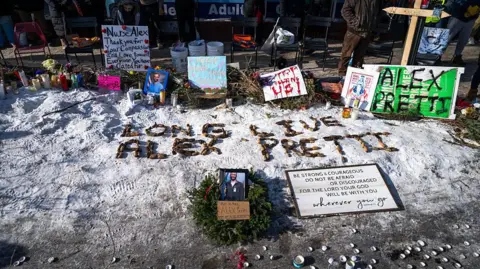
Over the course of the weekend, multiple vigils were held in the city as residents sought to remember and celebrate Pretti’s life.
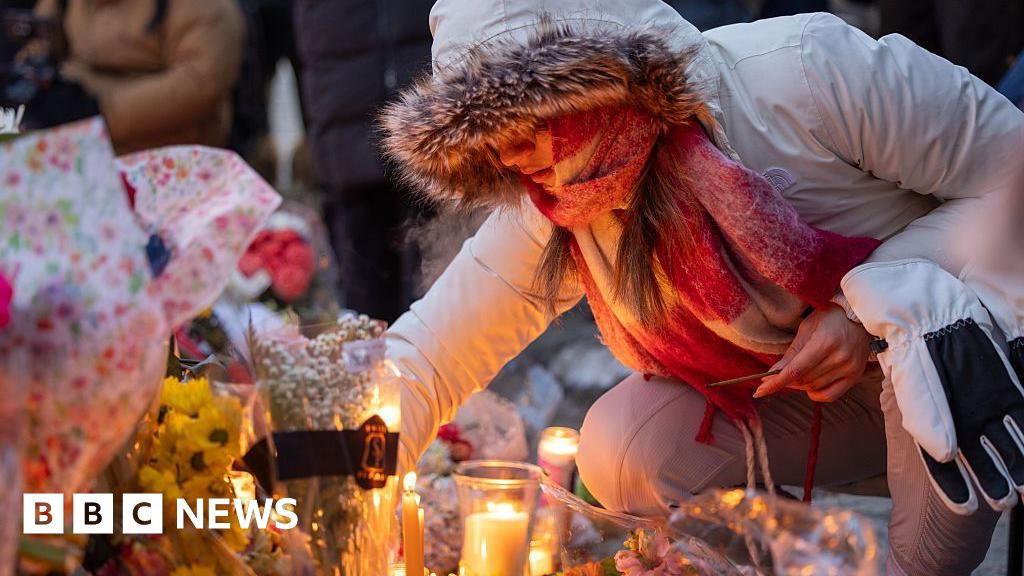
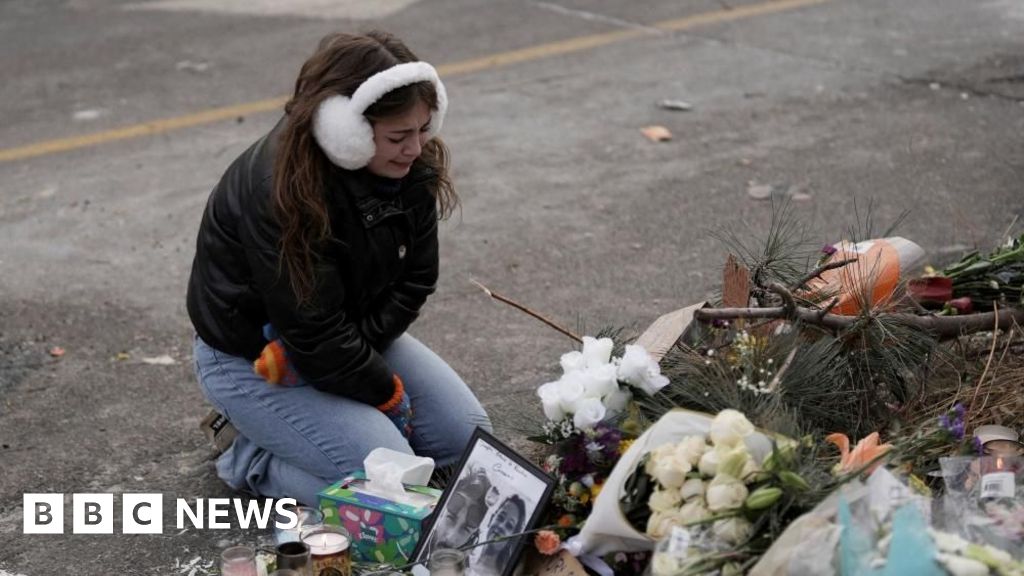
At the site where he was killed in south Minneapolis, close to the Calvary Baptist Church, mourners gathered at all hours to lay flowers and light candles in his honour. One sign, drawn with red paint and directed at federal agents, read “stop killing us”.
Lifelong Minneapolis resident Pege Miller, 69, was among those gathered on Sunday afternoon to protest against ICE and pay her respects to Pretti.
“I’m tired of protesting,” she said. “We can’t comprehend how this is happening. Why are we letting this happen?”
“We’re on tenterhooks,” she added. “We don’t know what’s going to happen next.”
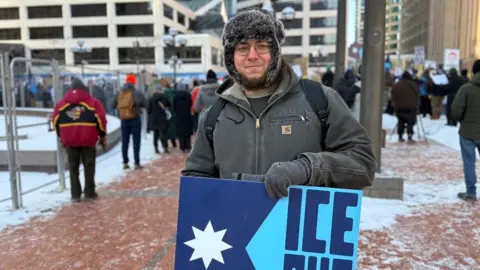
Hundreds of people gathered for an impromptu protest downtown later on Sunday. Many there expressed anger and sadness about the immigration operation. Protesters repeatedly chanted: “No more Minnesota nice, Minneapolis will strike.”
Among those chanting was Felix Johnson, who said he protested for the first time in his life a few weeks ago when he saw a video which appeared to show a four-year-old girl who was left in a car after her father was detained by ICE.
He held a sign that read “ICE out”, while dozens of other posters in the crowd included profanities directed at immigration officials.
“I don’t understand how they can come in and just start snatching people that are citizens and start treating them like they’re animals,” Johnson said.
Few Minnesotans the BBC spoke to said they supported ICE operations, but several polls suggest about half of voters nationwide support President Trump’s efforts to deport those living in the US illegally.
Other polls indicate voters are split on how Trump is carrying out that crackdown on undocumented immigrants. One conducted by Politico shortly after Renee Good’s death this month suggested about half of Americans felt the mass deportation campaign was too aggressive.
At the protest in downtown Minneapolis on Sunday, one man held a sign that read “Veterans Against ICE”.
“I joined [the military] to serve a country that, while never perfect, was a country that was improving, that was growing,” he said.
“I joined to support the tenets of freedom of this country and what we’re seeing here, this is the opposite, this is not promoting freedom. This is horrifying.”