
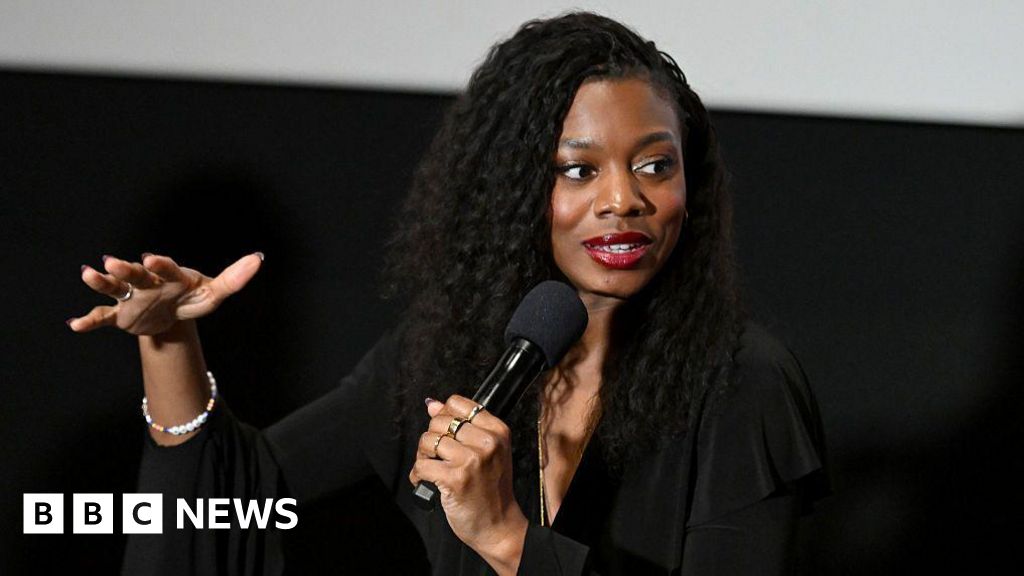

Sophie van Brugen


 Getty Images
In the summer of 2002, I was an excited teenager buying a cinema ticket to 28 Days Later, the new British zombie film everyone was talking about.
As a devoted horror fan, I had high expectations, and the film didn’t disappoint. In fact, it changed my relationship with the horror genre.
What struck me most was the sense that this movie, about a zombie virus outbreak, acknowledged women on screen – and in the audience – as equals.
The women in 28 Days Later were afforded emotional realism, agency and moral complexity.
This felt like a marked departure from much of the horror cinema of the late 1990s and early 2000s, which often relied on familiar slasher conventions and seemed to use female characters as objects of vulnerability or spectacle. Think: Scream, I Know What You Did Last Summer, Jeepers Creepers, The Haunting…
Fast forward more than 20 years, and the 28 Days Later franchise has been passed to a female director, Nia DaCosta, for the first time.
DaCosta directs 28 Years Later: The Bone Temple, which was released earlier this week.
It was filmed back-to-back with Danny Boyle’s 28 Years Later, which came out in June last year. Both movies are set in 2030.
 Sony Images
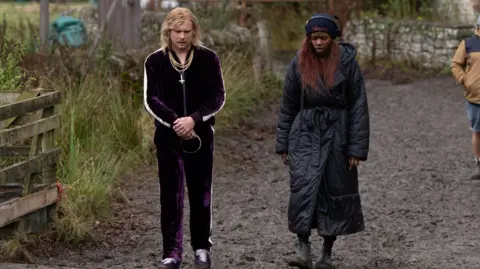
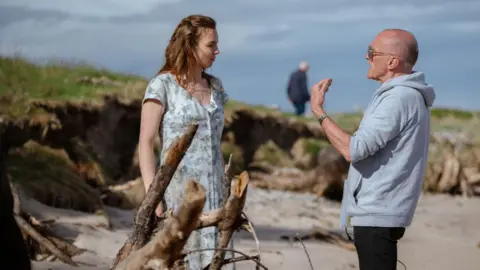
The new film opens with Spike (Alfie Williams) navigating life alone as a young survivor of the “Rage Virus” that has left much of the UK uninhabitable.
DaCosta tells me she was a “huge fan of horror films growing up” and recalls repeatedly watching 28 Days Later on DVD as a teenager.
So, when she was asked to do this film, she arrived with a clear sense of what the franchise meant to her, and how she wanted to evolve it.
“I have a lot of reverence for it,” DaCosta says of the original film, adding that she also had “so much respect” for the way writer Alex Garland took the franchise in another direction with the first part of 28 Years Later last year.
“As a fan of franchises, I love when creators say: we’ve given you this, now let’s take you somewhere else. That feels really brave and exciting.”
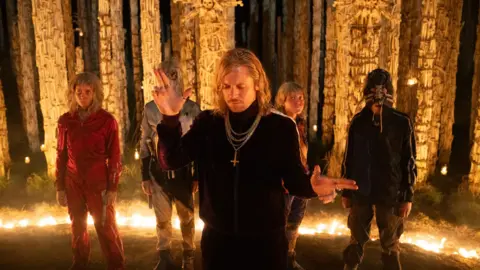
DaCosta particularly enjoyed directing the narrative arc of the film’s principal female character, Jimmy Ink, played by Erin Kellyman. Audiences may initially struggle to recognise Kellyman (Willow and Karli Morgenthau in Marvel’s The Falcon and the Winter Soldier) underneath her strange blonde wig.
DaCosta says Jimmy Ink guides protagonist Spike’s survival, while “occupying the story’s moral centre”. The character is “integral to the film and the wider story”, she says.
 Sony Images
While male characters have often occupied the foreground of the 28 Days Later films – including those portrayed by Cillian Murphy, Robert Carlyle, Aaron Taylor-Johnson and Ralph Fiennes – the women have consistently shaped the direction of the story, their actions carrying real narrative weight rather than simply supporting the plot.
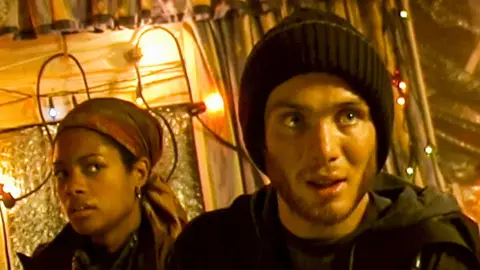
In the first film, Naomie Harris plays Selena, who repeatedly saves fellow survivor Jim’s life in the early days of the outbreak, often emerging as the more capable of the two.
As a young woman watching horror films at the time, it felt notable to see a movie not asking you to endure the story from the sidelines but instead inviting you into the experience as someone resilient and capable.
 Sony Images
When I mention this to Harris, she tells me she believes her character’s complexity was a big part of the film’s enduring appeal.
“When we made 28 Days Later, it didn’t feel like we were consciously trying to subvert tropes – it just felt instinctive,” she says.
“Selena’s strength came from necessity, not bravado. Looking back now, I realise that inhabiting a woman who was emotionally guarded, decisive and unflinching was radical, especially at that moment in cinema. That instinctive realism is a large part of why the film has endured.”
 Alamy
AlamyHorror’s audience has shifted over the past two decades, says Brandon Katz, an analyst at Greenlight Analytics, which tracks audience interest and box-office performance across the film industry.
According to Katz, women – particularly those under 35 – are now emerging as a make-or-break demographic for the genre’s biggest releases.
And for Naomie Harris, the timing of The Bone Temple feels significant.
“What feels especially powerful about 28 Years Later arriving now, with Nia DaCosta directing, is how much the audience has evolved since the first film” she says.
“There’s a real hunger – particularly among women – for stories that allow female characters to be complicated, resilient and deeply human without explanation or apology.”
‘More female horror fans’
Film critic Bethan Ackerley believes a steady growth of female horror fans has gone hand in hand with an uptick in films with women as protagonists rather than victims.
Films like Get Out (2017), Midsommar (2019) and The Substance (2024) place women at the emotional heart of their stories, reflecting a potential shift in how fear and trauma are explored on screen.
Isabel Stevens from the British Film Institute (BFI) agrees, adding: “It’s much more normalised for women to like horror films now.”
So far, The Bone Temple has received positive reviews, achieving 94% on film reviews aggregation site Rotten Tomatoes. Reviewers have been especially glowing about DaCosta’s direction.
There has also been early awards-season chatter around some of the film’s stars, including Ralph Fiennes’ performance as eccentric loner Dr Ian Kelson.
Danny Boyle has also suggested he may be open to returning for a further instalment – so this is unlikely to be the last we hear from the franchise.
28 Years Later: The Bone Temple was released in cinemas on 14 January 2026.