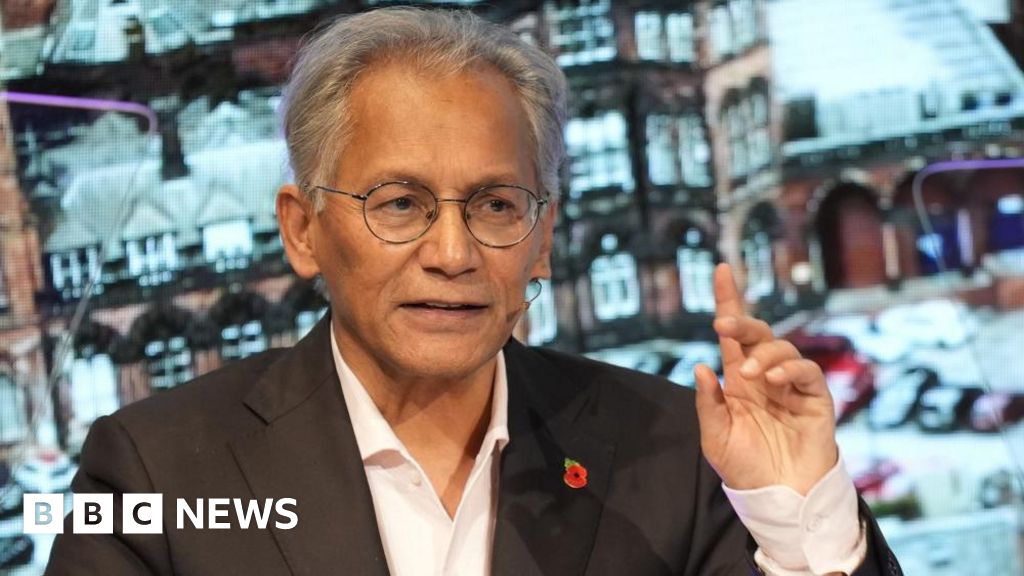

Shumeet Banerji is not a household name.
In the three years, 10 months and 14 days that he spent on the BBC board, Banerji kept his thoughts on BBC matters firmly out of the public domain.
Now he is making headlines. His resignation is the latest blow to the corporation, and it looks timed to add to the pressure.
Banerji’s role on the board was due to end on 31 December anyway but he has instead resigned early, three days before other board members are due to face a committee of MPs – and nearly two weeks after the BBC lost its director general and its CEO of news.
The resignation, fairly or not, looks like a direct critique of the BBC’s chair Samir Shah.
Banerji, according to an insider, was known to be angry that Shah was – in his view – weak in not challenging a number of other board members and their assertion about systemic bias at BBC News.
In this characterisation, the four political appointees to the board – Shah is the fifth – have banded together around the view that the BBC too often suffers from liberal groupthink, and the chair has been unable, or unwilling, to steer his board to a place of real consensus.
In the end, after all the drama of the past few weeks – the leaked memo, the resignations, the apology over the Panorama edit and the threat of a defamation suit by Donald Trump – it boils down to one simple question. Is BBC News institutionally biased?
Turness and Davie reject that. So does Shah. While acknowledging mistakes have been made, he told me “the BBC News DNA and culture is to be impartial, to provide the best news we can and the most trustworthy news we can”.
BBC News remains the most trusted source of news in the UK.
But if some members of the board believe that the BBC does suffer from systemic bias, and others do not, where does this end?
A senior TV executive told me Shah inherited “a house divided but this board is melting down, it’s very sad”. They added: “It’s a leadership issue.”
When I interviewed him after the resignations of Davie and Turness, Shah told me the board had “a diversity of views, as there are in the public, as there are in the country itself… I want robust conversations, I want discussion”.
But Banerji has now claimed he was not consulted over the events that led to those departures.
If true, it will feed into the narrative advanced in some quarters that what has happened has been a coup by some members of the board.
Sir Ed Davey, the leader of the Liberal Democrats, has called on the government to remove Sir Robbie Gibb, an ex-BBC executive and former Downing Street director of communications to Theresa May, from the board.
Shah told me the notion of a coup was “fanciful”. He added that “it’s unfair and it’s disrespectful to the members of the board to say that because they feel strongly about something, that somehow it’s to do with their history”.
In the last few days, prior to Banerji’s resignation, I spoke to insiders at the BBC as well as people outside, who told me that Shah will remain as chair, whatever his perceived shortcomings. As one person put it to me, “you can’t have the DG, the CEO of News and the chair all resign”.
Does Banerji’s resignation shift the dial on his ability to continue in the role? It certainly makes Shah’s appearance along with fellow board members Sir Robbie Gibb and Caroline Thomson in front of the Culture Media and Sport Committee on Monday even more critical.
MPs on that committee voiced their reservations about whether he was qualified for the job when he was appointed as chair last year.
He will need to demonstrate to those MPs, the industry, BBC audiences and staff at the corporation who will be watching, that he has the capabilities and support needed to steer the BBC through these turbulent times.