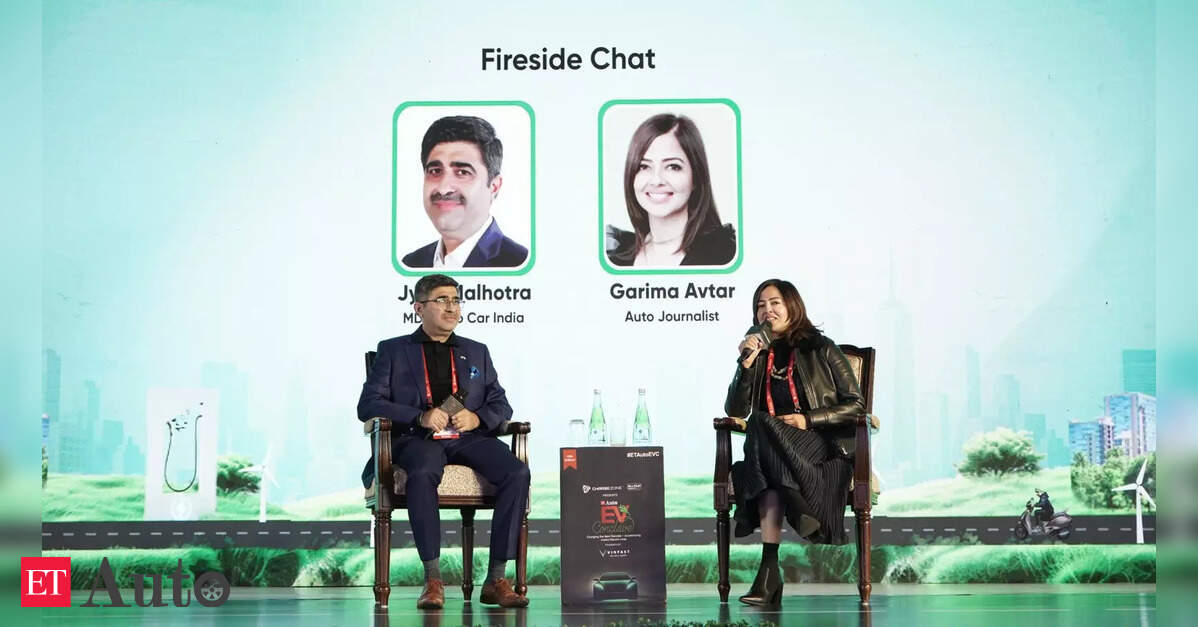

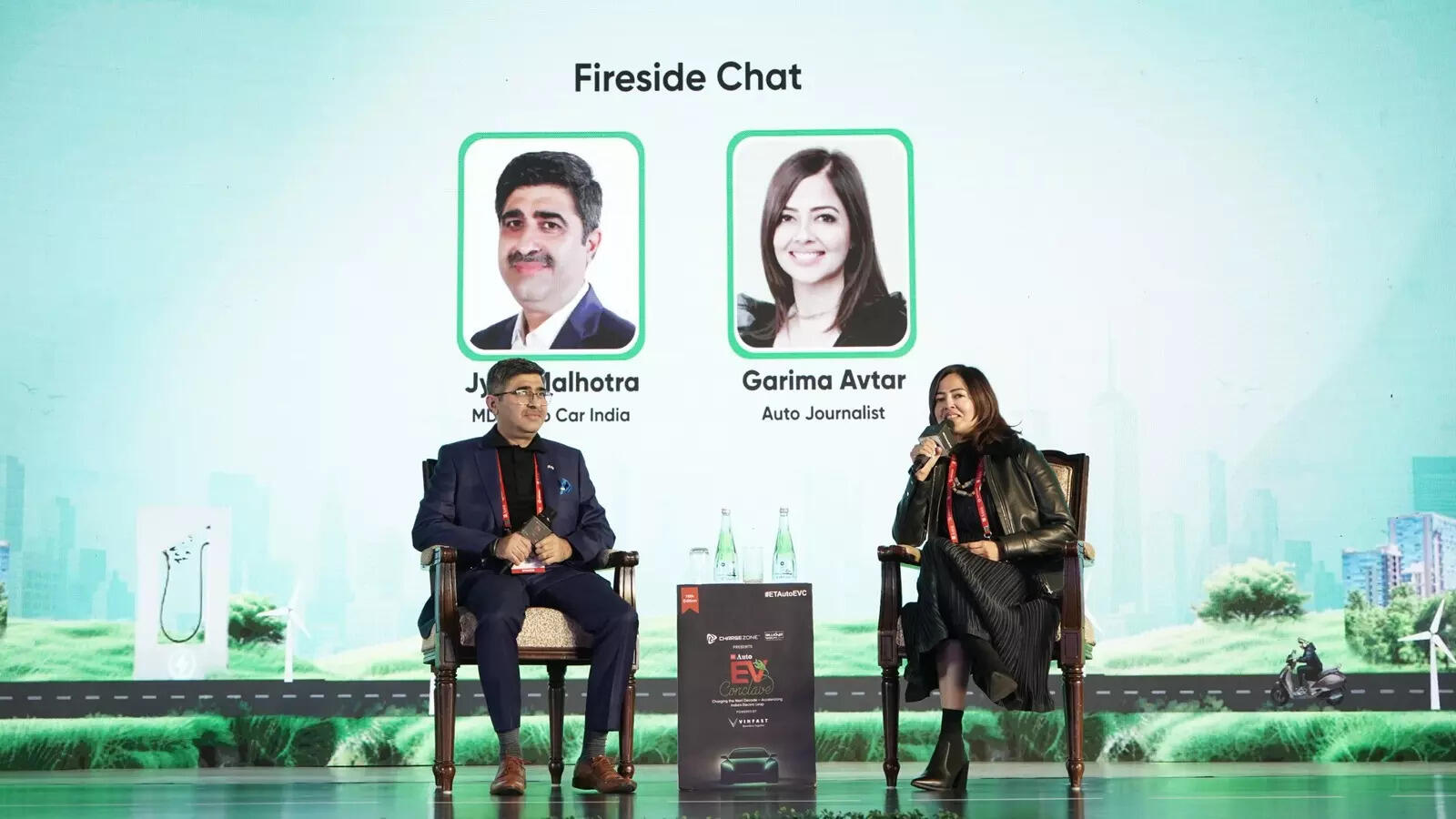
At ETAuto EV Conclave 2025, Volvo Car India MD Jyoti Malhotra said that luxury EVs are moving from “one of the options” to first choice as younger, eco-conscious buyers push demand, and argues that home charging, hybrid support and holistic sustainability will be crucial to scaling adoption.
India’s electric mobility story has decisively shifted from “future” to “right now”, and the luxury segment is helping lead that change. At ETAuto EV Conclave 2025, Jyoti Malhotra, MD, Volvo Car India, said EV penetration in the overall market may still be modest, but the signs in the premium segment are clear.
While India’s total EV share is around 6 per cent, luxury penetration is already close to 10 per cent. “The moment it crosses eight, nine, ten percent is when the inflection point happens,” he said, adding that EVs in luxury are growing faster than any other powertrain.
Malhotra underlined that the profile and mindset of Indian buyers are changing. Younger, more eco-conscious customers are influencing purchase decisions, and a green number plate has turned into a visible badge of pride.
“There is always a fight at home for who takes the EV,” he remarked, noting that many luxury households with multiple cars now ensure at least one is electric. The availability of dedicated parking and easier home-charger installation for affluent buyers is further accelerating premium adoption, with one in four Volvos sold in India already being an EV.
Sustainability anchors Volvo’s electrification strategy
On the brand’s global direction, Malhotra was unequivocal. “Our ambition is to become a fully electrified company,” he said, clarifying that Volvo’s roadmap includes both battery electric vehicles and strong hybrids as part of an electrified portfolio.
Sustainability, he stressed, is the core driver. “We are part of the problem, so we have to be part of the solution,” he said, emphasising that it is not just about selling EVs but also how they are designed, what materials are used and how responsibly they are produced.
Looking ahead to 2030, Malhotra identified three ecosystem enablers. First, he called for much easier home-charging approvals and DISCOM processes, pointing out that even in Delhi, getting a sanctioned home charger took considerable time despite policy-level support. “If I am ready to buy an EV, the home charging solution should be easy,” he said, arguing that widespread home charging—just like in the two-wheeler segment—will be crucial for scale.
Second, he stressed the continued need for government support on GST and registration benefits while EV penetration remains in single digits. Third, he argued that hybrids deserve policy recognition as a bridge technology that can ease consumer uncertainty and accelerate mass adoption.
EV experience converts buyers into ambassadors
On customer experience, Malhotra said the feedback is overwhelmingly positive once buyers switch. “Most customers really love the torque and the silent acceleration,” he said, adding that the calm cabin and ability to skip weekly fuel-station visits create tangible lifestyle benefits. With ranges now in the 400–500 km band, many users comfortably charge just once a week at home.
Over time, initial anxieties about range and charging give way to confidence, turning early adopters into vocal advocates. “They are our biggest ambassadors,” he noted, arguing that real user stories shared across platforms like ET Auto will play a key role in normalising EVs for the wider market.
Outlining his strategic priorities for Volvo Car India in this new era, Malhotra listed three focus areas: bringing the right EV products tailored to Indian preferences; ensuring the right industrial and regulatory setup in partnership with government, especially as platforms become more advanced; and embedding sustainability end-to-end, beyond just tailpipe emissions.
Electric cars, he concluded, must be seen not only as premium technology products but as part of a larger, purpose-driven shift towards safer, cleaner and more responsible mobility.