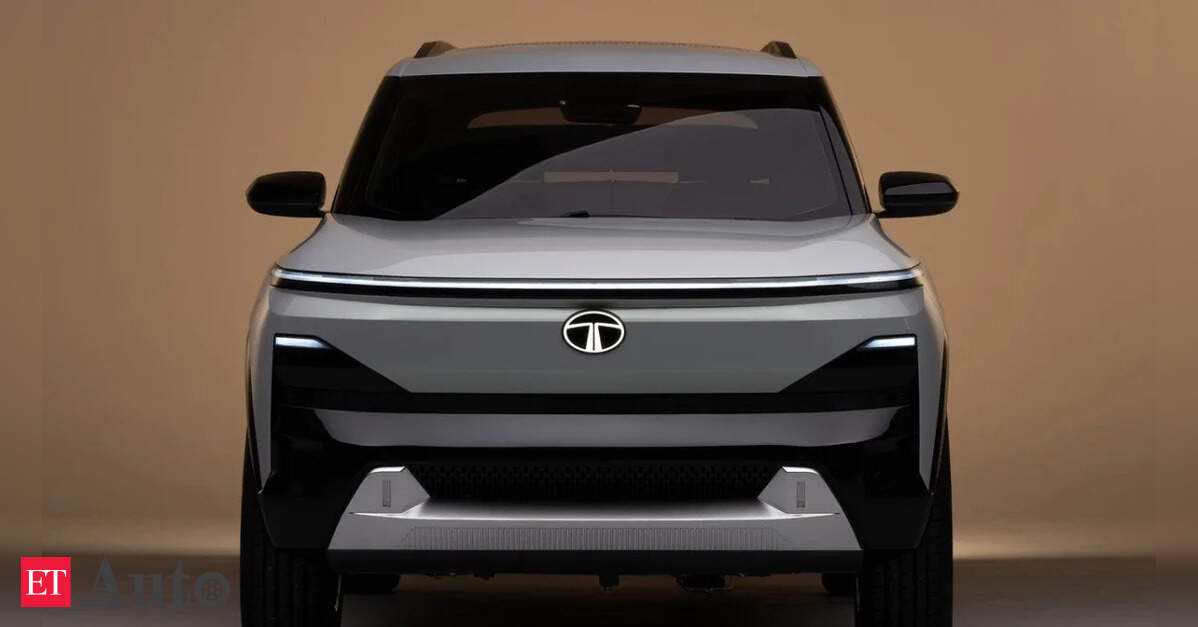

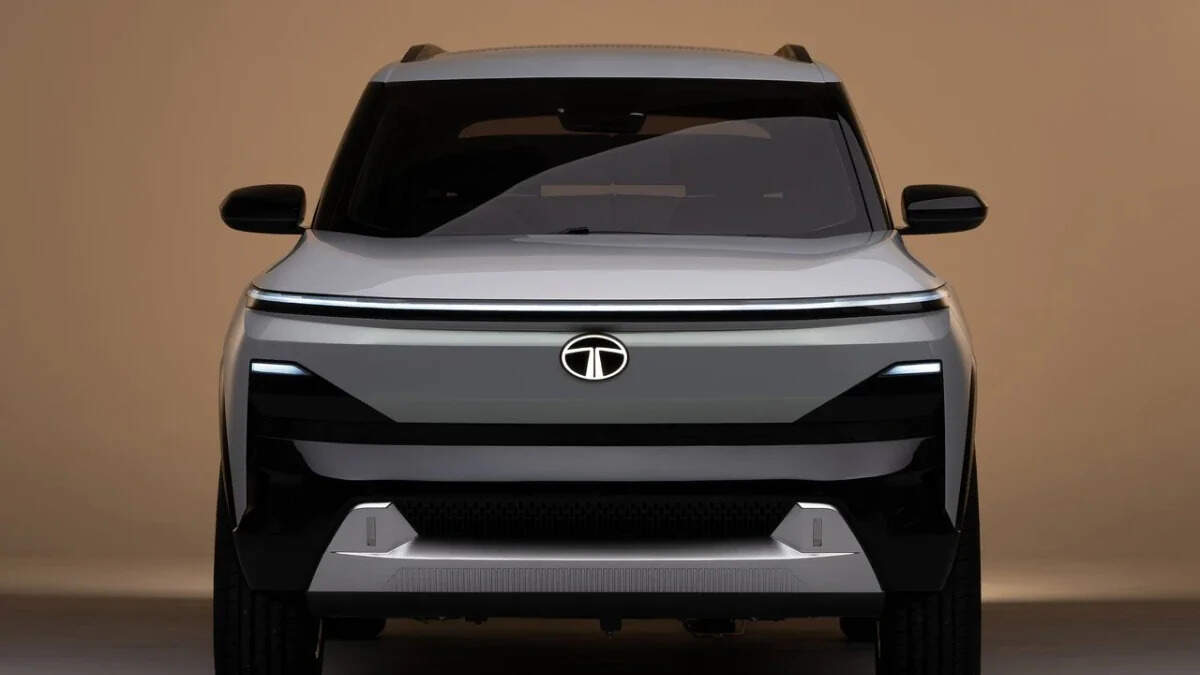
 Tata Sierra EV will test India’s fast-growing mid-size EV SUV market with 30–40 per cent expected EV penetration.
“/>
After nearly two years of uneven growth in India’s electric passenger vehicle market, Tata Passenger Electric Mobility (TPEM) believes the segment may be entering a more broad-based adoption phase, driven by improving consumer confidence, a wider choice of products and a gradual easing of concerns around charging infrastructure.
The country’s largest electric carmaker says enquiries and bookings across its EV portfolio have tripled over the past quarter—a trend it describes as a “structural shift” rather than a short-term spike, even as the broader industry prepares for a fresh wave of electric SUV launches over the coming months.
“We are seeing a three-fold increase in enquiries and bookings in the last quarter. This is not a blip, it is a structural change,” Vivek Srivatsa, Chief Commercial Officer, Tata Passenger Electric Mobility, told ETAuto.
According to the company, the recent geopolitical tensions in West Asia, which revived concerns around fuel availability and prices, have added fresh momentum to an EV market that was already showing signs of recovery after a prolonged period of relatively modest growth.
For much of the past two years, passenger EV penetration remained in the 4.5-5 per cent range despite a steady stream of new launches. While charging infrastructure continued to expand and battery technology improved, adoption was tempered by higher acquisition costs, limited choices across some vehicle segments and lingering questions around resale value and long-distance usability.
Srivatsa argues that several of those barriers are now beginning to ease simultaneously.
“Customers suddenly started feeling they should have an EV at home as a backup plan in case fuel availability or prices become uncertain. But that is only one part of the story. Trust in EVs has gone up, charging infrastructure has improved and customers now have many more choices than they had even three years ago.”
Growing familiarity with EVs
If the first phase of India’s EV journey was driven largely by early adopters, the next phase could be shaped by familiarity.
Tata Motors has cumulatively sold more than 300,000 electric cars, while the overall industry fleet has crossed an estimated 400,000 units. According to Srivatsa, the growing number of existing EV users is helping replace perception with ownership experience.
“Earlier, people relied on third-person or fourth-person opinions about EVs. Today, they know someone who has driven an EV for 50,000 or even 100,000 kilometres. That first-hand experience is changing perceptions.”
The executive also pointed to the rapid expansion of charging networks and the growing adoption of charger aggregation platforms, which have made public charging easier to locate and plan around than in the early years of EV adoption. While charging density remains uneven across the country, particularly beyond major urban centres, visibility of charging infrastructure has improved significantly.
Sierra to test India’s largest EV opportunity
The changing demand environment comes as Tata prepares to introduce the Sierra EV, one of its most significant electric launches this year. The model will compete in the mid-size SUV segment, which today accounts for nearly 30 per cent of all SUV sales. With SUVs contributing around 60 per cent of India’s passenger vehicle market, the segment has emerged as the single largest volume opportunity for manufacturers.
Unlike the early years of EV adoption, when demand was concentrated in compact SUVs and premium offerings, Tata believes the market is gradually widening across body styles and price bands. Srivatsa said the mid-size SUV segment occupies a unique position in the Indian market because it combines aspiration with practicality.
“A mid-size SUV has aspiration value while remaining practical enough for Indian families. It works equally well for office commute, school runs and long-distance travel, while also being comfortable for multiple drivers within the family.”
The company expects the Sierra EV to achieve an electric mix of around 30-40 per cent, broadly in line with what it is witnessing for the Harrier EV.
Economics becoming a bigger driver
Another shift emerging in the market is the growing importance of ownership economics.
Rather than viewing EVs primarily through the lens of sustainability, customers seem to be increasingly comparing them against similarly equipped automatic ICE vehicles, particularly in the premium segments. Srivatsa said that above the ₹20 lakh price point, EVs are increasingly approaching price parity while offering stronger performance, richer feature content and significantly lower running costs.
That trend is reflected in Tata’s own portfolio, where the company says EV penetration has crossed 40 per cent within the Harrier nameplate, while the Tiago EV contributes around 30 per cent of overall Tiago sales.
EV market coming of age?
Perhaps the clearest sign of a maturing category, according to Tata, is the emergence of distinct customer cohorts. In the early years, a relatively small set of buyers accounted for most EV demand irrespective of body style or usage pattern. Today, the company says customers are increasingly choosing products based on specific use cases.
“The Tiago customer has a different use case. The Punch customer is different. The Nexon customer is different. Earlier, one EV served everybody. Now customer cohorts are emerging.” The company is also seeing a growing share of first-time Tata buyers entering through its electric portfolio, particularly in the mid and premium segments.
Another behavioural trend is that EVs, even when purchased as a second vehicle, are gradually becoming the most-used car within households. Tata estimates that EV owners drive nearly 30 per cent more kilometres than they did with comparable ICE vehicles, helped by lower operating costs and the ease of driving automatic electric vehicles.
EV Supply Constraints
While demand indicators are improving, Tata says production capacity remains a challenge for some models. According to Srivatsa, demand for products such as the Punch EV continues to outstrip supply, with the company currently unable to fulfil nearly half of the demand for certain variants.
He expects passenger EV penetration to move beyond 12 per cent during the current financial year, supported by a steady pipeline of launches across the industry.
Whether the recent surge in enquiries translates into sustained retail demand over the coming quarters, however, will depend on more than product launches alone. Expansion of charging infrastructure, continued battery cost reduction, localisation of critical components and manufacturers’ ability to ramp up production are likely to determine whether India’s passenger EV market is indeed entering the next phase of growth—or simply witnessing another cyclical upswing.