
How does the product team approach lifecycle innovation? At what stage do you begin planning for facelifts, variant extensions, or powertrain diversification — and how do you ensure they’re meaningfully timed across a model’s lifecycle?
We treat lifecycle innovation as a strategic and continuous process, not a reactive one-time update. It starts from the very beginning of a model’s life. When we define the product architecture and platform, we also lay down a roadmap for potential variants, technology upgrades, and powertrain flexibility that can unfold over time. This includes planning for alternative fuel technologies, special editions, transmission diversification, and connected features.
In addition to above, to assess where the product stands versus emerging consumer expectations, we continuously monitor how product is doing in market. Based on the market feedback, we plan for the next set of Interventions and features.
Importantly, we don’t wait for sales to slow down before reacting. We proactively sequence upgrades — whether it’s introducing ADAS, infotainment enhancements, or introducing CNG or AMT variants — so that the product stays contemporary and competitive. This modular, insight-backed approach ensures that every intervention, whether major or minor, contributes meaningfully to both customer satisfaction and business sustainability.
Can you take us through the conceptualization of the Tata Punch? What were the key consumer insights or white spaces in the market that led to the creation of this new micro-SUV segment?
The Tata Punch was born out of a very specific and sharp consumer insight—we saw a clear gap in the market for a compact, affordable SUV that still delivered on the core promises of SUV ownership. Through multiple rounds of consumer research, what stood out was that buyers at the entry level weren’t looking for a compromise. They wanted a vehicle that gave them a commanding driving position, high ground clearance, and the ability to take on poor road conditions with confidence—hallmarks of a true SUV experience.
We saw this as an opportunity to create something new—a whitespace product that didn’t really exist in the market until then. That’s where the idea of a micro-SUV took shape. We approached it with a human-centric mindset, building not just for a price point or a segment, but for a lifestyle. It wasn’t about offering trims; it was about understanding how different consumers interact with their vehicles daily, and designing around those needs.
We kicked off the development with a global design competition across our studios in India, the UK, and Italy. Each team brought a different perspective, and the final design actually carries the DNA of all three. The UK studio was ultimately tasked with executing the production design to the highest global quality standards. The Punch was also the first SUV built on our ALFA architecture, which gave us the flexibility to package a compact car with SUV proportions and deliver strong fundamentals—safety, space, modularity, and future powertrain compatibility. We drew inspiration from our own portfolio too; we wanted the Punch to carry the dynamism of the Nexon and the strength of the Harrier, but in a form that was more accessible. It’s been a rewarding journey—right from concept to market—and the customer response has reinforced our belief in the original idea.
Tata Motors has often spoken about creating “segment-defining” products. From a product planning lens, how do you differentiate between launching a new nameplate and shaping an entirely new segment?
At Tata Motors, we approach product planning with a lens that balances current market dynamics with forward-looking consumer insights. When we talk about segment-defining products, we mean solutions that do more than meet an existing need—they shift the way the category is perceived or expand its relevance. Launching a new nameplate typically means introducing a differentiated product within an established segment. The Nexon, for example, entered the compact SUV space but raised the bar with 5-star safety, connected car technology, and a bold design language. It didn’t create a new segment, but it redefined expectations within that space.
In contrast, shaping a new segment involves identifying whitespace—an unmet or unarticulated need—and crafting a product that gives that need a new category identity. The Punch is a textbook example. It didn’t just compete with hatchbacks or entry SUVs—it created a new reference point altogether: the micro-SUV. Similarly, products like the Altroz iCNG or Nexon iCNG are helping redefine how alternative fuel vehicles are perceived—not just as cost-saving solutions but as premium, feature-rich options. So, the decision depends on whether we’re responding to a known need with a sharper proposition or discovering and addressing a latent gap in the market. In either case, our goal is not just to participate in the segment—but to elevate it, or in some cases, even invent it.
The Altroz has carved a space in the premium hatchback segment, traditionally dominated by others. What were the core product decisions — in architecture, powertrain mix, and feature packaging — that allowed it to balance premiumness with Tata’s value-led positioning?
The Altroz is a product that reflects how we think about balancing aspiration with accessibility. From the start, it was developed on the ALFA architecture—a modular, scalable platform that allowed us to engineer high levels of structural stiffness, crash safety, and NVH performance, while giving us flexibility to support multiple powertrains and future technologies.
We made deliberate decisions to offer a wider powertrain choice than anyone else in the segment: a 1.2L Revotron petrol engine with both manual and DCA (dual-clutch) automatic, a 1.5L Revotorq diesel—unique in the hatch segment—and our twin-cylinder iCNG technology. This variety addresses different usage patterns, price sensitivities, and city-vs-highway preferences.
From a feature standpoint, we focused on delivering experiences that feel premium—HD infotainment, digital cluster, Harman sound system, ambient lighting, and a refined cabin layout—without losing sight of our core strengths like safety and build quality. We’ve priced the product carefully to keep it accessible, while offering clear value steps through personas and variants.
What this results in is a hatchback that offers the practicality and affordability expected from the segment, and also delivers features, strong safety, and a more premium driving experience. It’s a deliberate articulation of how we can punch above category expectations while staying true to Tata’s trusted values.
We’ve seen a shift in buyer preferences toward features and in-cabin tech. How has this influenced the product evolution of models like the Harrier and Safari, especially post their recent updates?
We’ve seen a fundamental shift in how buyers evaluate cars—especially in the mid to upper segments. It’s no longer just about engine performance or design; features, connected tech, and the overall in-cabin experience are playing a decisive role in purchase decisions. That shift was at the core of how we updated the Harrier and Safari. Both products underwent significant upgrades—not just aesthetically, but functionally. We introduced a full digital cockpit with a 12.3-inch infotainment system, a digital instrument cluster, an improved touch-and-voice interface, LED lights, and a premium audio setup. We also integrated a suite of ADAS features, enhanced seat comfort with ventilation, added ambient lighting, and improved overall NVH levels.
These updates were not just about keeping up with trends—they were based on very specific customer feedback and usage patterns. We saw, for example, that buyers in this segment increasingly use their cars for longer journeys and family travel—so comfort, ease of use, and peace of mind become critical. That’s why we focused heavily on intuitive tech, safety enhancements, and overall refinement. In effect, we’ve made the Harrier and Safari much more relevant to today’s tech-savvy, feature-conscious buyer—without changing their core character as capable, robust SUVs.
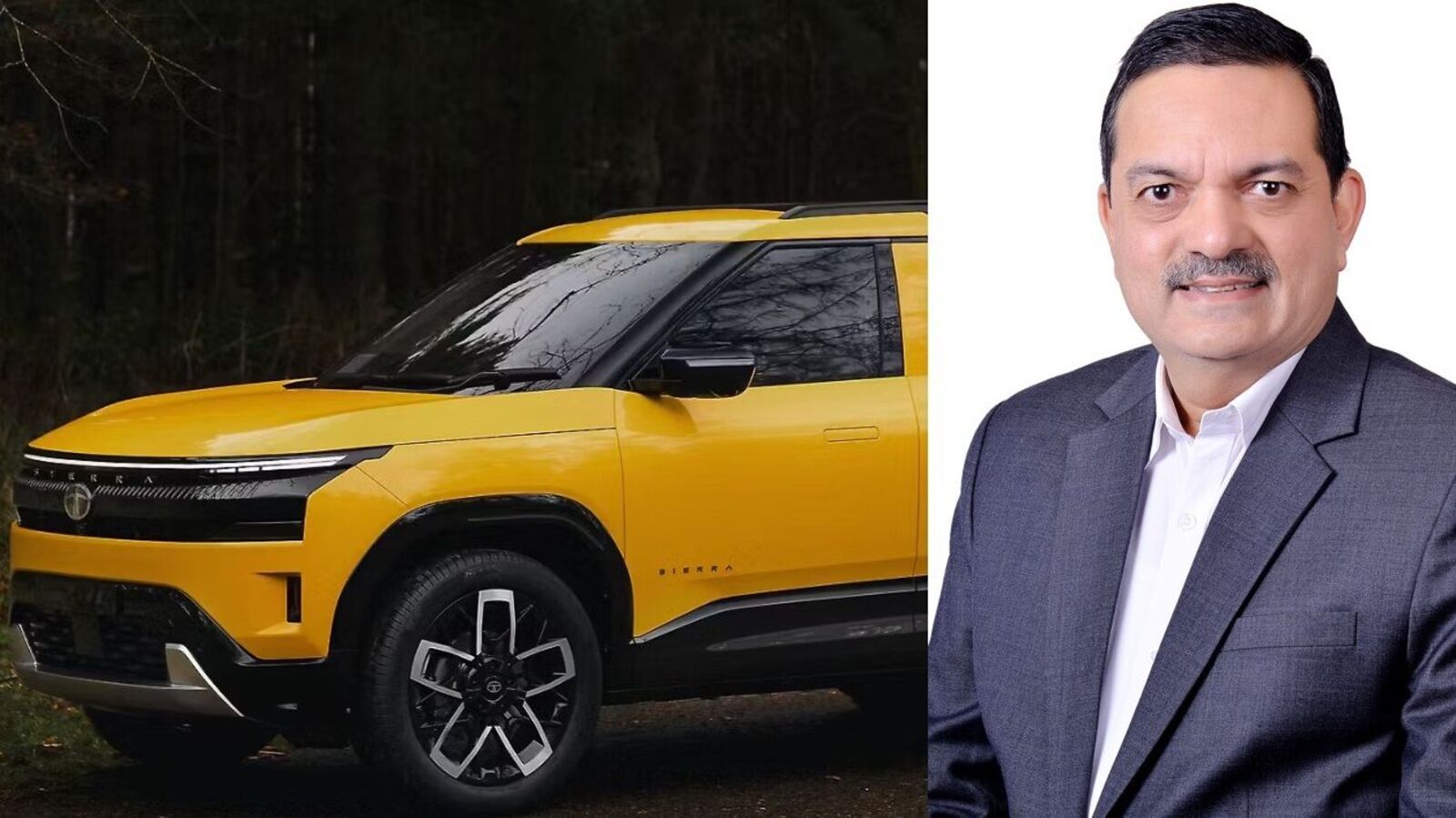
Looking ahead, the Sierra is among your most anticipated nameplates. How is the ICE variant of the Sierra being developed to balance nostalgia with modern-day expectations — and what role does it play in your broader product roadmap?
The Sierra is a nameplate that carries emotional equity in the Indian market. It stood for something aspirational in its time, and that legacy gives it a strong brand recall. But for us, bringing back the Sierra isn’t about retro styling or nostalgia—it’s about reinterpreting its essence for a new generation of buyers. We’re building the Sierra on a modern, flexible platform that supports multiple powertrains ensuring an aspirational identity. It will be engineered to offer high levels of refinement, drivability, and safety, while meeting the expectations of buyers who still prefer conventional powertrains.
ICE Sierra plays a crucial role in our product roadmap leading up to FY2030. As we move toward a more electrified portfolio, ICE products like the Sierra will continue to anchor volume and reach, especially in markets where infrastructure or consumer readiness for EVs may still be developing. The Sierra represents how we see the future of SUVs in India—emotionally resonant, technologically advanced, and flexible enough to suit a wide range of users. It’s not just a product revival—it’s a future-focused evolution.
Check out Upcoming Cars in India 2025, Best SUVs in India.
First Published Date: 19 Aug 2025, 19:08 pm IST