
 Mexico imposed 50 per cent tariffs on Chinese cars and other goods last year, which was widely seen as an effort to appease Washington.
Two of China’s leading automakers, BYD and Geely, are among the finalists vying to purchase a Nissan-Mercedes-Benz plant in Mexico, according to a person familiar with the matter, as China seeks a manufacturing foothold in a country where US tariffs are fueling factory closures and layoffs.
The finalists emerged from nine companies expressing interest in acquiring the factory, including at least two other major Chinese manufacturers: Chery and Great Wall Motor, according to two sources familiar with the matter. Vietnamese electric-vehicle maker VinFast is the third finalist, one of the people said.
The interest from Chinese automakers, which has not been previously reported, heralds a potentially major shift in Mexico’s car industry. For decades, US, European and Japanese automakers have dominated, mostly building US-bound vehicles.
Now, Mexican officials face a balancing act. Trump administration tariffs are battering Mexico’s auto sector, and Chinese investment could generate much-needed jobs. But Mexican officials also fear that Chinese production in Mexico could inflame Washington and jeopardize this year’s North American trade-agreement negotiations.
The United States has effectively banned Chinese-brand vehicle sales, and President Donald Trump has accused Mexico of providing a back door for Chinese goods to enter the US market.
BYD, Geely, Chery, Great Wall and VinFast did not comment for this story.
The Mexico-manufacturing ambitions of BYD and Geely underscore the explosive global growth of China’s auto industry. BYD’s vehicle sales have jumped ten-fold since 2020 and Geely’s have doubled. Both sold more than 4 million vehicles last year – about as many as Ford.
Mexico is a major export market for BYD, Geely and other Chinese automakers, who collectively have boosted their market share from zero in 2020 to about 10 per cent last year, according to an estimate from consultancy AutoForecast Solutions. Mexico has about 1.5 million car sales annually.
Government seeking to stall
While Mexico can’t block a factory sale, economy ministry officials have quietly urged state authorities to stall Chinese automakers’ investments until it completes US trade talks, two government sources said.
US trade barriers are rooted in national and economic security concerns, a White House spokesperson said. “The issue here is subsidized Chinese overcapacity pushing Chinese firms to dump excess production into other markets,” the spokesperson said.
China’s Ministry of Commerce did not respond to comment requests.
Mexico imposed 50 per cent tariffs on Chinese cars and other goods last year, which was widely seen as an effort to appease Washington. But the import taxes also incentivize Chinese automakers to manufacture in Mexico.
That’s already happening further down the supply chain. In the industrial city of Ramos Arizpe, Shanghai Yongmaotai Automotive Technology is building a new 600-worker auto-parts factory. That coincides with 1,900 layoffs at a General Motors’ plant that produces electric vehicles in the same city, with GM citing weak US demand. EV sales in the US have plummeted in the wake of Trump administration subsidy rollbacks.
Mexico’s auto industry depends heavily on the United States. In 2024, US customers bought 2.8 million of the 4 million passenger vehicles produced in Mexico, according to the Mexican Automotive Industry Association (AMIA). But it has struggled since last March when Trump imposed a 25 per cent tariff on Mexican-made cars.
After three decades of growth, vehicle exports to the United States fell nearly 3 per cent in 2025, according to AMIA. The trade association’s president, Rogelio Garza, said he expects an even steeper decline this year if tariffs remain. Mexico lost about 60,000 auto-industry jobs last year, government data shows.
“We cannot continue like this,” Garza said. “Right now, it’s cheaper to send cars to the US from Europe and Asia than it is from Mexico.”
We don’t need cars in Mexico
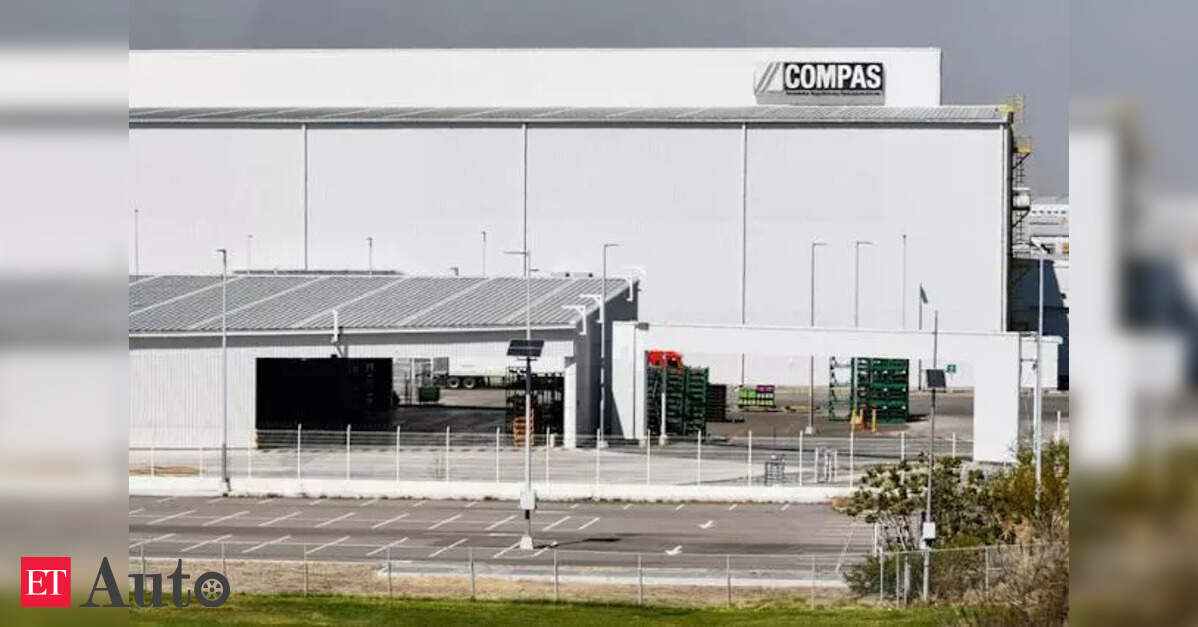
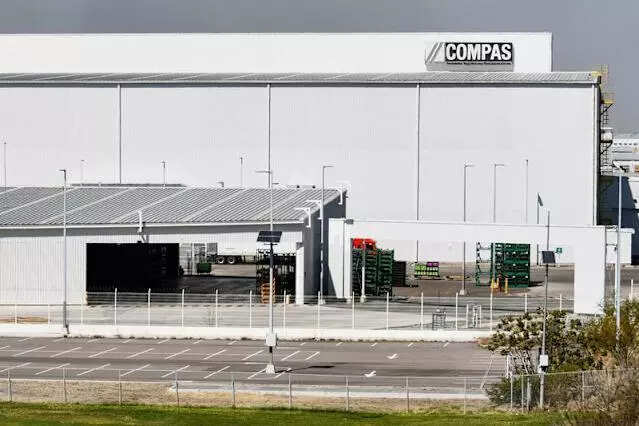
The Nissan-Mercedes plant in Aguascalientes in central Mexico is shuttering for many reasons, with US tariffs being the final coffin nail, industry insiders said.
Mercedes, which makes the Mercedes-Benz GLB at the factory, is moving production to Hungary, where it could export cars back to the United States at lower tariff rates than from Mexico. Mercedes did not detail the reasons for the move or whether tariffs were a factor, saying only that production of the current-generation GLB model was ending.
Nissan, which manufactured the Infiniti QX50 and QX55 at the plant, is canceling those slow-selling models. Nissan said the decision to shutter the plant reflects “broader strategic shifts.” The struggling Japanese automaker is also closing a second factory outside Mexico City in a global restructuring.
Trump says his tariffs are sparking a US auto-manufacturing boom. “We don’t need cars made in Mexico,” he said at a Ford factory in January.
But federal data shows a loss of 17,000 auto-sector jobs since Trump took office in January 2025. The White House said new factories take time to build.
Mexico could gain from Chinese investment
Chinese companies see Mexico as a strategic linchpin for the sale of their vehicles in Latin America.
The nine automakers that expressed interest in the Nissan-Mercedes plant skewed toward hybrid and electric-vehicle manufacturers focused on producing for Mexico and Latin America, the Aguascalientes state government said, without specifying the company names or origins.
Chinese automakers must seek Beijing’s approval for overseas factory investments. One of the sources familiar with the plant proposals said China’s commerce ministry is aware of the automakers’ interest and has not raised objections.
BYD had earlier planned to build a new factory in Mexico, but the company grew weary of the red tape required to get it approved, according to one government official familiar with the matter.
The automaker doesn’t need Mexican government approval to buy the Aguascalientes factory, which opened in 2017. The plant has capacity to build 230,000 vehicles annually and comes with a pool of skilled workers and transportation infrastructure.
Mexico stands to benefit from such Chinese investments, said Victor Gonzalez, a business consultant who has advised Mexican states on attracting Chinese investment.
“Politics aside,” he said, “there’s not a single state in Mexico that wouldn’t be open and even support having Chinese automakers invest, manufacture and hire locally.”