
Mahindra & Mahindra, Tata Motors, Hyundai, and Kia are among automakers offering record year-end discounts on electric vehicles (EVs) in a bid to revive sluggish demand.
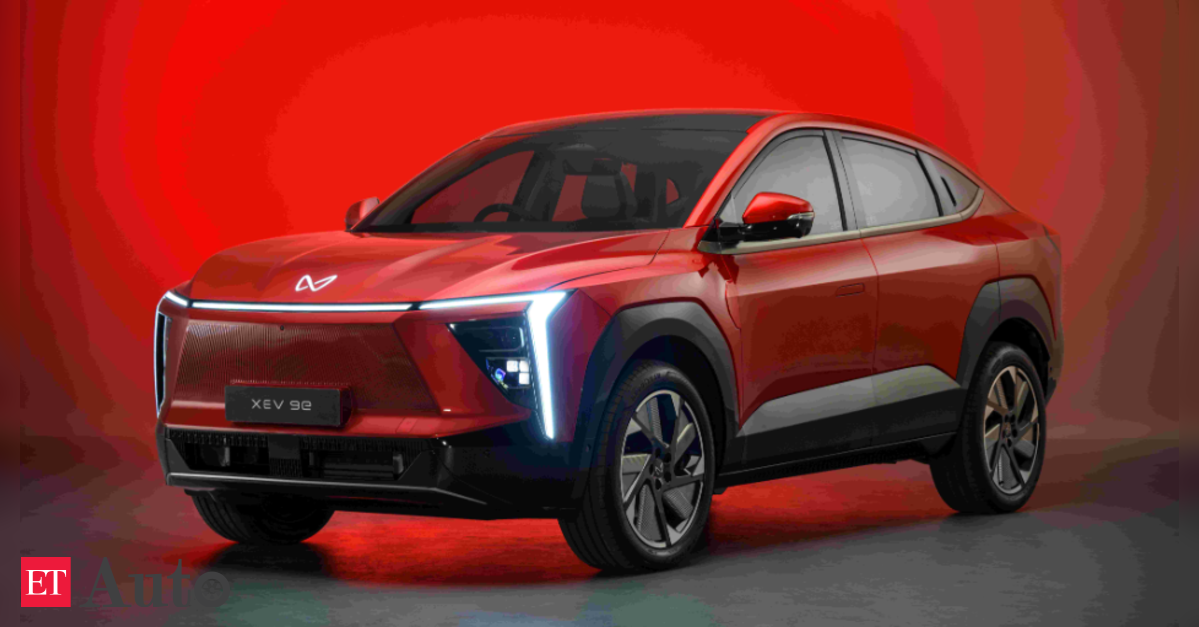
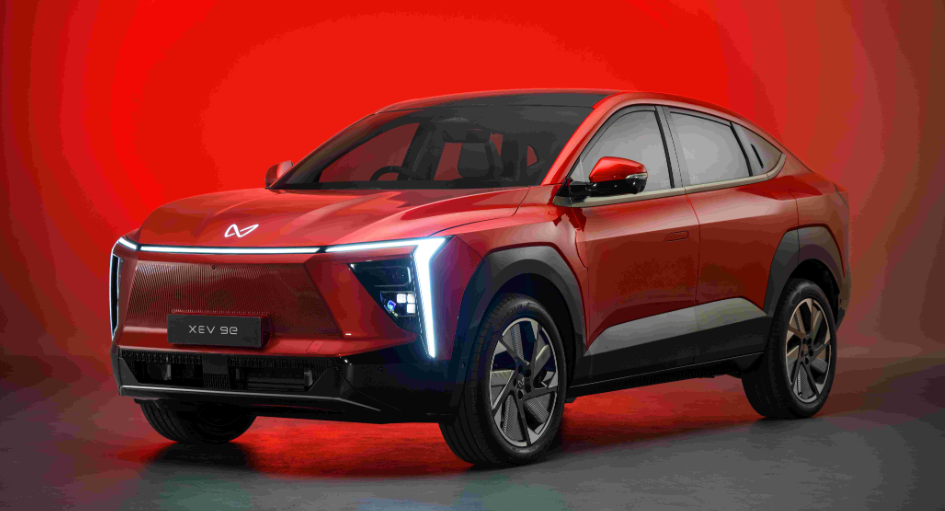
Sales of such ecofriendly vehicles softened after the government cut goods and services tax (GST) on petrol and diesel cars with effect from September 22. This led to a drop in prices of internal combustion engine (ICE) models, widening the gap with EVs and eroding their relative affordability. Electric car market leader Tata Motors is offering benefits of up to ₹3.5 lakh on the Curvv RS model, while Mahindra’s XEV 9e has incentives of as much as ₹3.5 lakh.
Last week, JSW MG Motor announced its ‘Mid-Night Carnival’, under which buyers can avail benefits of up to ₹1 lakh on the Comet EV, and up to ₹1.35 lakh on the ZS EV models.
To be sure, manufacturers are also giving offers on slow-moving ICE models, but the size of discounts is significantly lower compared to EVs.
Tata Motors didn’t respond to an email seeking details on its year-end discount strategy and inventory levels.
M&M said its year-end campaigns are aimed at sustaining demand across powertrains, with a sharper focus on electric models.
“As part of year-end schemes, we have rolled out targeted benefits across both ICE and EV portfolios, with additional offers on BEVs (battery electric vehicles) commemorating the one-year anniversary of our Electric Origin SUVs,” said Nalinikanth Gollagunta, CEO, automotive division, M&M. “With our recently launched XEV 9S, the big electric SUV, we are confident of continuing this momentum.”
Despite headline growth in electric car volumes, overall EV penetration in the country remains low.
“Electric car sales rose 63 per cent yearon-year to 14,700 units in November 2025; however, penetration stood at 3.7 per cent, remaining below the pre-GST rate-cut level of 5 per cent as demand continues to shift toward ICE vehicles,” wrote Mihir Vora and Ronak Jain, analysts at Equirus Research, in a report.
The festive season, typically a strong period for big-ticket purchases, coincided with the GSTled price correction in petrol and diesel cars during October and November. This boosted overall passenger vehicle sales to record levels, even as EVs lost some momentum.
Widening price gaps
A total of 557,000 vehicles got registered in October, up 11 per cent from a year earlier. EVs had a marginal 3.2 per cent share of the total.
Registrations in November jumped 20 per cent from a year earlier to 394,152 vehicles, with EVs comprising 3.7 per cent, a 1.4 percentage points decline from September, according to the Federation of Automobile Dealers Associations (FADA).
Dealers and industry executives said the widening price gap has impacted the total cost of ownership case for EVs, especially among price-sensitive buyers.
“It will be the first year of change for quite a few EV models currently in the market,” said Vinkesh Gulati, former president at Fada and director, United Automobiles. “With EV resale values still being very low, manufacturers do not want to be saddled with unsold current-year inventory. As a result, automakers are using year-end discounting as a de-stocking strategy.”
The luxury EV segment however remained an outlier to overall weak industry sales. Discounting is limited while some models continue to command long waiting periods. At BMW, the iX1—which accounts for around 85–90 per cent of the brand’s EV sales- —has a waiting period of about four months.
Luxury EVs are priced more competitively relative to ICE models, leaving limited room for aggressive discounts, dealers said.