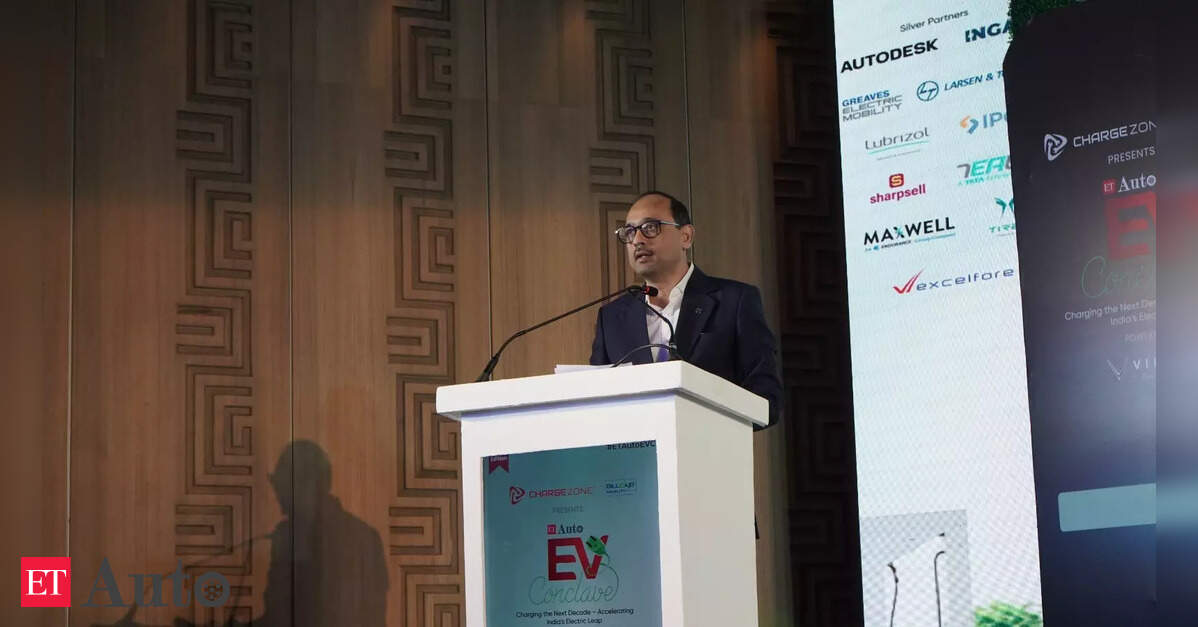

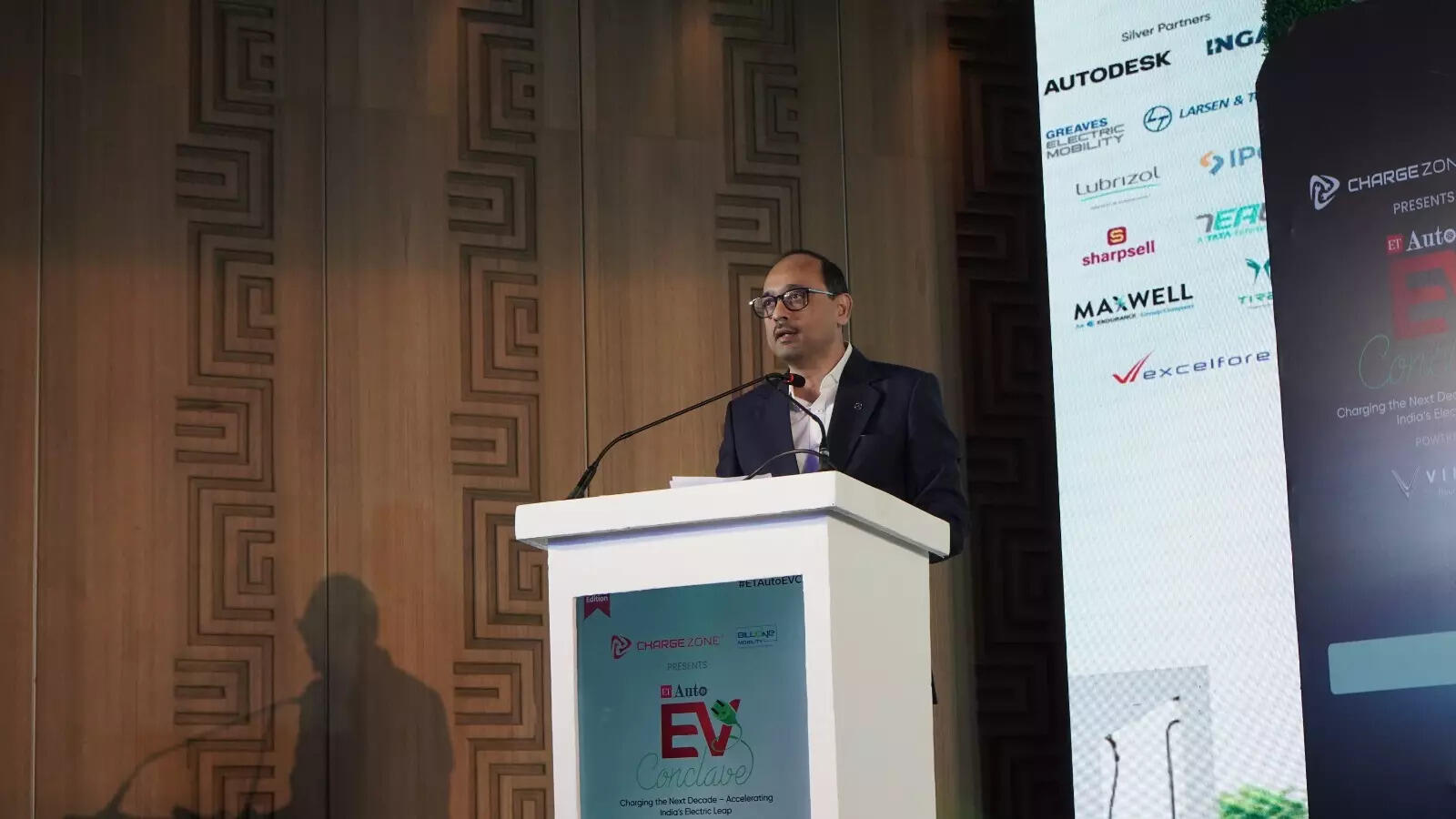
 Santosh Iyer, MD & CEO, Mercedes-Benz India at the ETAuto EV Conclave 2025
India is witnessing the early stages of an EV revolution—one that mirrors the scale and societal impact of the country’s Green Revolution, said Santosh Iyer, MD & CEO, Mercedes-Benz India. Delivering the keynote on clean and smart mobility, he noted that the rapid growth of startups, software capabilities and charging networks reflects a fundamental shift in how the automotive ecosystem is evolving. “From skepticism to conviction, the conversations have changed. Customers are now asking which EV to buy,” he said. Iyer emphasised that electrification is not only an environmental imperative but also an economic opportunity. With 14 of the world’s 20 most polluted cities located in India and transport contributing 12% of greenhouse gas emissions, EVs offer a clear pathway to decarbonisation. Even a 5% penetration across road transport could reduce 38 million tonnes of CO₂ by 2030. At the same time, the transition is creating new jobs in battery manufacturing, semiconductors, electronics, charging infrastructure and AI-driven mobility solutions.
Turning to the luxury segment, Iyer said sustainability has become inseparable from premium mobility. “There is no luxury without sustainability,” he noted, adding that Gen Z and Gen Alpha are significantly influencing mobility decisions. Luxury EV penetration has reached 12% and is doubling annually. Mercedes-Benz’s own data shows that 20% of its top-end vehicles—priced above ₹1.5 crore—are now electric, with many first-time luxury buyers entering the segment through EVs. “When a product delivers performance, technology and experience, environmental consciousness becomes a competitive advantage,” he said.
Iyer highlighted the rising importance of software-defined vehicles (SDVs), which he believes will fundamentally reshape EV performance and customer experience. These vehicles can enhance range, optimise charging, integrate digital services and personalise the driving experience. “When you add SDVs to EVs, it opens a lot of possibilities,” he said, noting that software-led innovation can resolve many of today’s pain points.
However, he cautioned against reactionary or abrupt policy decisions targeting specific engine technologies. Such moves, he warned, could inadvertently slow the transition if customers are forced to retain older vehicles longer—a dynamic he described as the “hour effect.” Instead, he called for a technology-agnostic, consumer-paced shift supported by tax incentives and industry viability.
Iyer identified three challenges that could hinder India’s EV momentum: low residual value due to battery-health concerns, inadequate battery recycling capacity and fragmented charging infrastructure. Mercedes-Benz is exploring a battery-health certificate to reassure customers and has already established a battery-recycling facility in Europe to close the material loop. On charging, Iyer announced a significant development: “Within the next 90 days, Mercedes-Benz India will launch a seamless EV charging ecosystem with integrated location services for our customers.”
He said this initiative aims to eliminate compatibility issues, multiple payment systems and reliability challenges—common pain points for Indian EV users. The solution will also serve as a precursor to the launch of the next-generation CLA EV in the first quarter of next year.
Iyer concluded by affirming that India’s EV journey must balance ambition with pragmatism, drawing on ecosystem collaboration and sustained policy support. “Decarbonisation should not sacrifice business viability. Technological diversity will be essential as we build for tomorrow’s electric future,” he said.