

 Renault India has achieved a 13 per cent reduction in drag coefficient of the new Duster. The Articulation Index stands at a claimed 73% – indicating at better NVH performance inside the cabin.
The Kanpur campus of the prestigious Indian Institute of Technology (IIT) has played a crucial role in the design and development of the upcoming new model – the second-generation Duster – of the French carmaker Renault in India.
According to the company, its design and development teams collaborated with IIT Kanpur to leverage the latter’s state-of-the-art NWTF or National Wind Tunnel Facility to test and validate the Duster’s aerodynamics, particularly tuning its wind noise performance with extensive tests at this facility.
Renault India claims a segment-best Articulation Index or AI of 73 per cent for its latest mid-size SUV, thereby indicating an extremely effective NVH performance inside the cabin. The new Duster is slated to launch in India on March 17.
“It is a matter of pride for us to have partnered with one of the top-most engineering institutions of the country. We have developed the new Duster’s aerodynamics in collaboration with IIT Kanpur,” Vikraman V, Chief of Engineering, Renault India, told journalists during a technical product presentation at the company’s Design Centre in Chennai.
The Articulation Index is a metric used to adjudge the quality of conversation that can take place between occupants inside a vehicle cabin. A lower AI score is an indicator of the high levels of roughness, loudness, and sharpness of the outside (engine, road, and wind) noise inside the cabin.
“At 73 per cent, the score tells about the absolute conversation quality between occupants inside the Duster’s cabin. This high score is a result of the extensive development done inside the wind tunnel at IIT Kanpur,” he added.
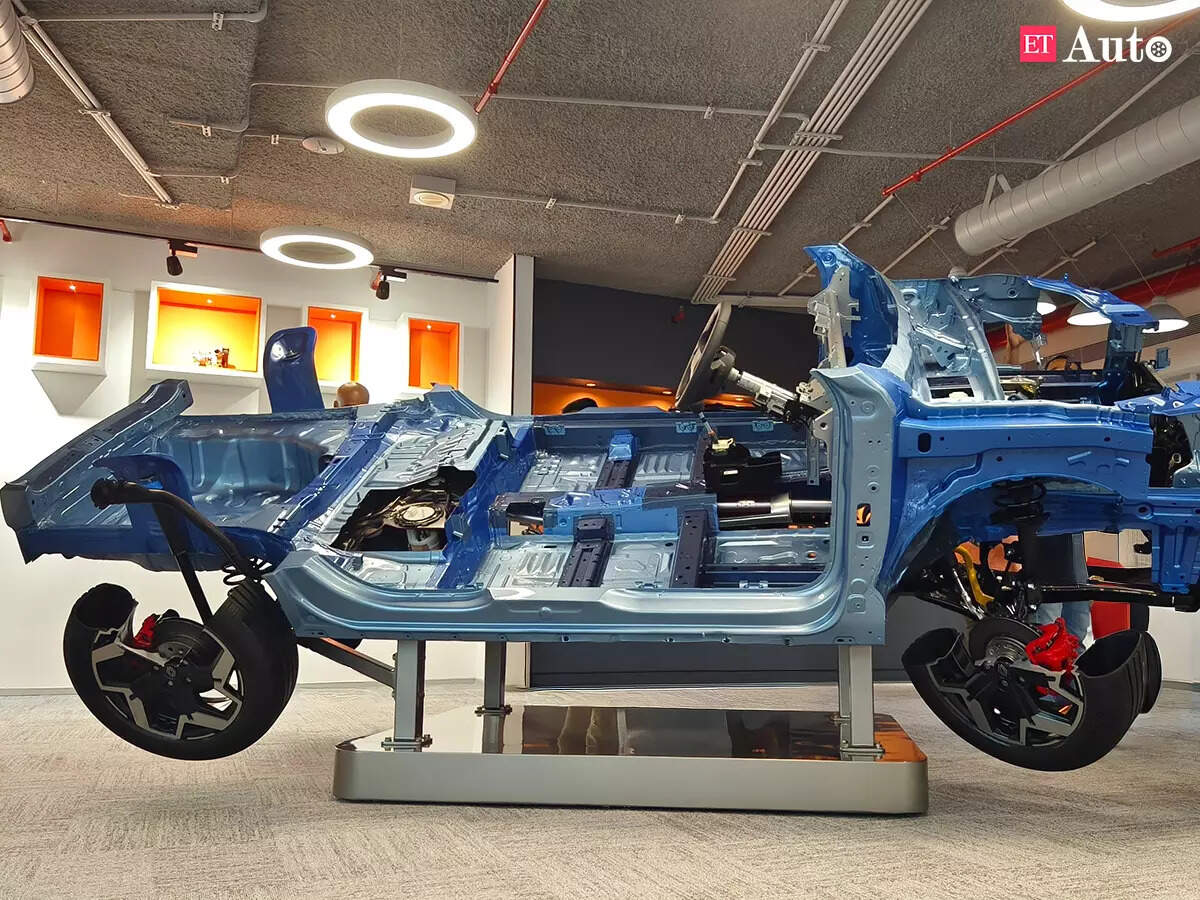 With up to 57 per cent high-strength steel in its BIW, the torsional rigidity of the Duster’s platform claims to compliment its suspension to offer a balanced ride-and-handling package.
The company has also relied on a number of computer-aided engineering or CAE tools to digitally engineer the aerodynamics of the new Duster and achieve 13 per cent reduction in the drag coefficient of the upcoming SUV, as compared to the previous-generation model.
Vikraman explained that the Indian Duster, which is built on a heavily-localised Renault Global Modular Platform (R-GMP), is almost 50mm taller than the global model with its higher ground clearance as well as a taller cabin to compensate for the reduced headroom with the inclusion of a panoramic sunroof in the Indian model.
“With an SUV stance, getting this wind noise performance was a massive challenge, and that is why he had to take IIT Kanpur’s expertise in developing the Duster’s aerodynamics. The new Duster beats competition in acoustic performance – rumbling noise, engine noise and rough road noise – and among all these metrics, the absolute noise inside the cabin is the lowest in its segment,” he noted.
Focus on robust vehicle dynamics
Renault India has also paid detailed attention to the vehicle dynamics of the new Duster – with an intent to offer a wholesome package. The company has aimed to maintain the Duster’s legacy that stands on the foundations of providing an appreciable ride comfort, fun-to-drive appeal, a good balance of handling and stability as well as ensuring ease of driving for daily commutes.
While the new Duster gets a fully-independent McPherson strut front suspension, the semi-independent rear twist beam suspension is the area of differentiation over its chief competitors such as the Hyundai Creta, Maruti Suzuki Grand Vitara, Kia Seltos, VW Taigun, and Honda Elevate in the segment.
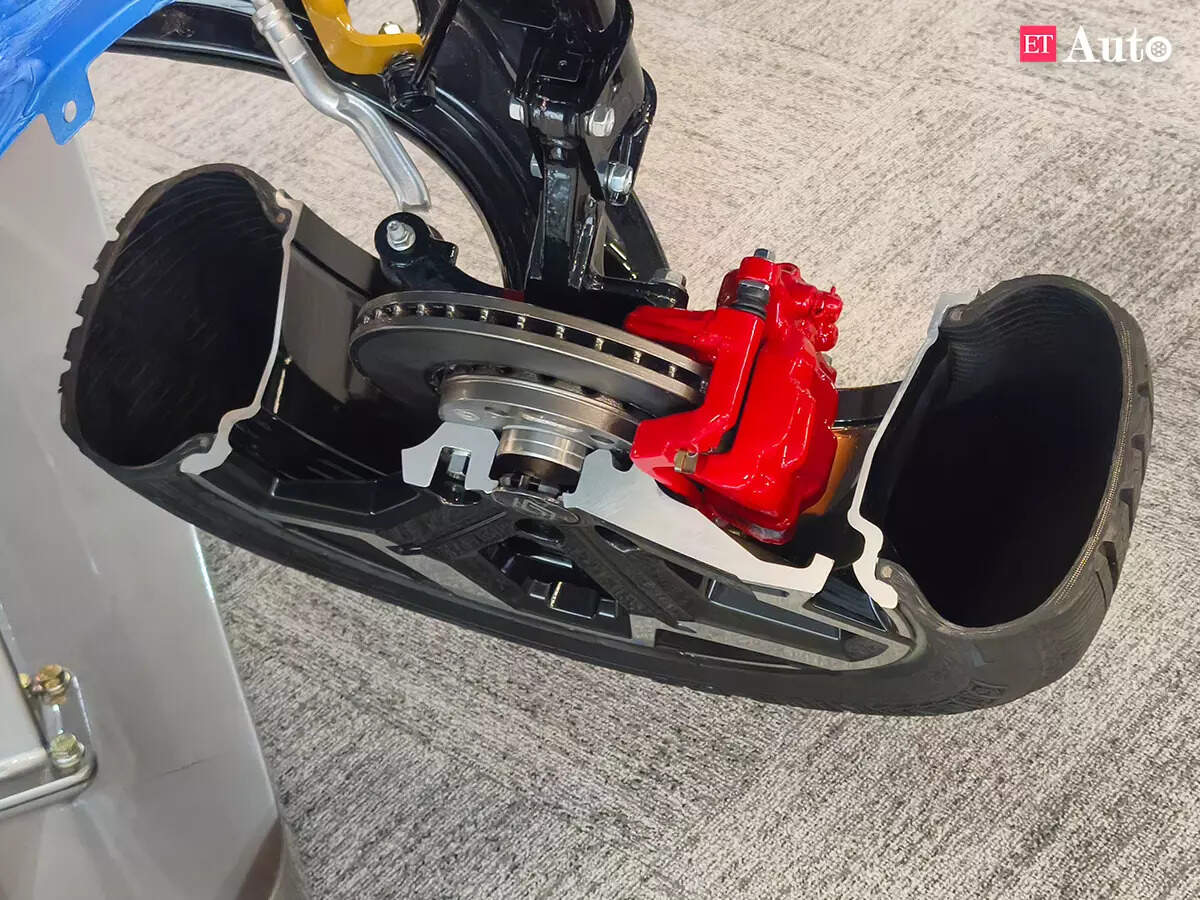 Renault India claims to have used highest cornering-stiffness tyres to minimise tyre slip angles during lateral loads while deploying low-steel brakes for achieving optimal braking performance at high speed.
According to Vikraman, “The rear-axle stability is the most fundamental criteria to determine a vehicle’s handling performance. The Duster’s twist beam is integrated with a stabiliser bar inside — and this is unique to Renault.”
He further explained that when one tries to chase ride comfort, there is bound to be a loss on the other parameter of agile handling as both attributes are antagonistic in vehicle dynamics.
“We solved this problem by putting in a stabiliser bar which is inside the twist beam, and it ends up giving the lateral support required by the chassis during steering inputs at high speeds. And this is the biggest differentiator in the Duster and it is the reason why the car is very agile because the rear axle responds very fast,” he said.
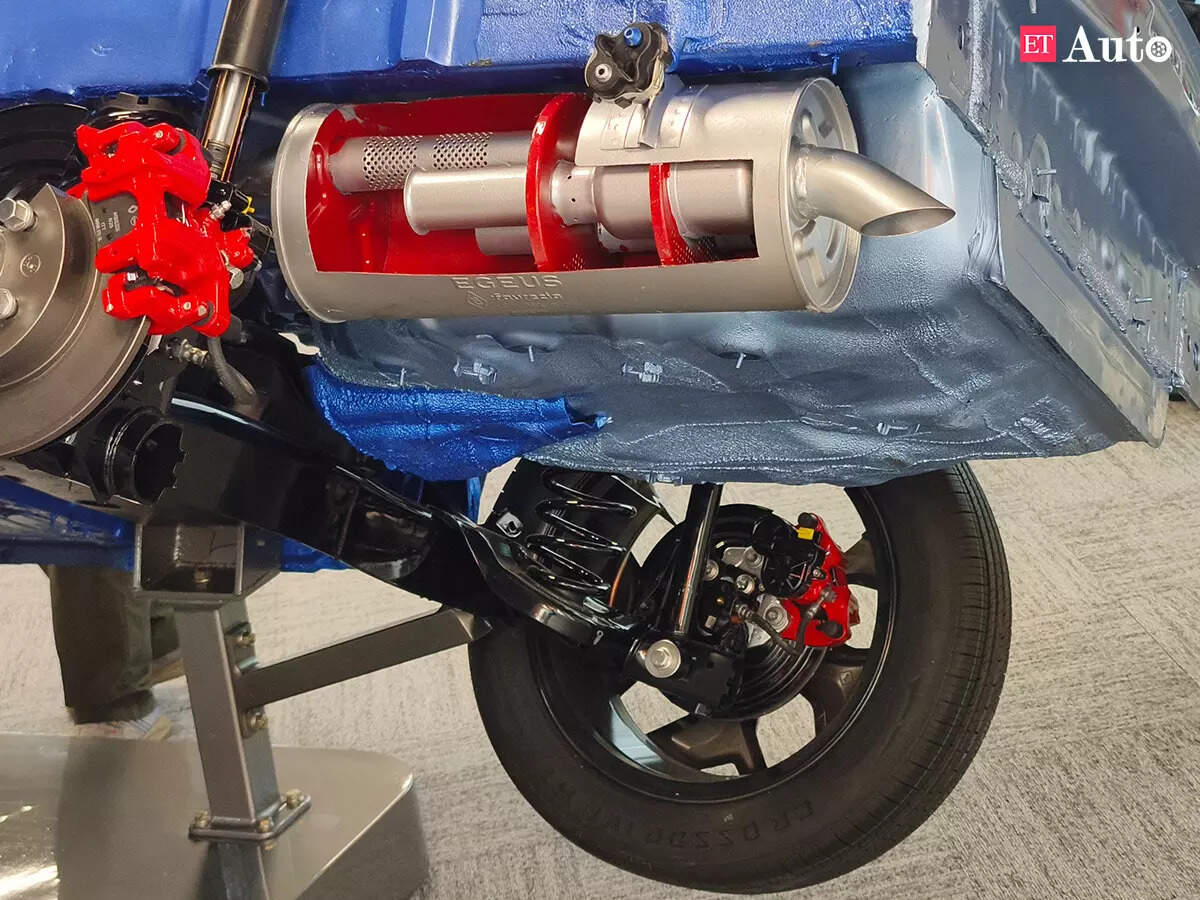 A stabilizer bar embedded within the rear twist-beam axle appears to be the key factor behind the Duster’s acclaimed handling performance.
The new Duster also uses MTV-CL or Multi-Tuned Valve Technology with Concentric Land, which deploys a bigger piston in the dampers to achieve optimised response to the primary (yaw, pitch and roll) and secondary (wheel movement) motions experienced while the vehicle is being driven on the road.
According to the company, the Duster’s suspension has been calibrated at the Madras International Circuit. The torsional stiffness and rigidity of the chassis, achieved with up to 57 per cent high-strength steel in the BIW, also compliments the suspension’s performance.
“The front- to-rear lag is minimised and there is no fishtail effect, which means one would seldom go out of control and there is no oversteer in the Duster,’ he added.