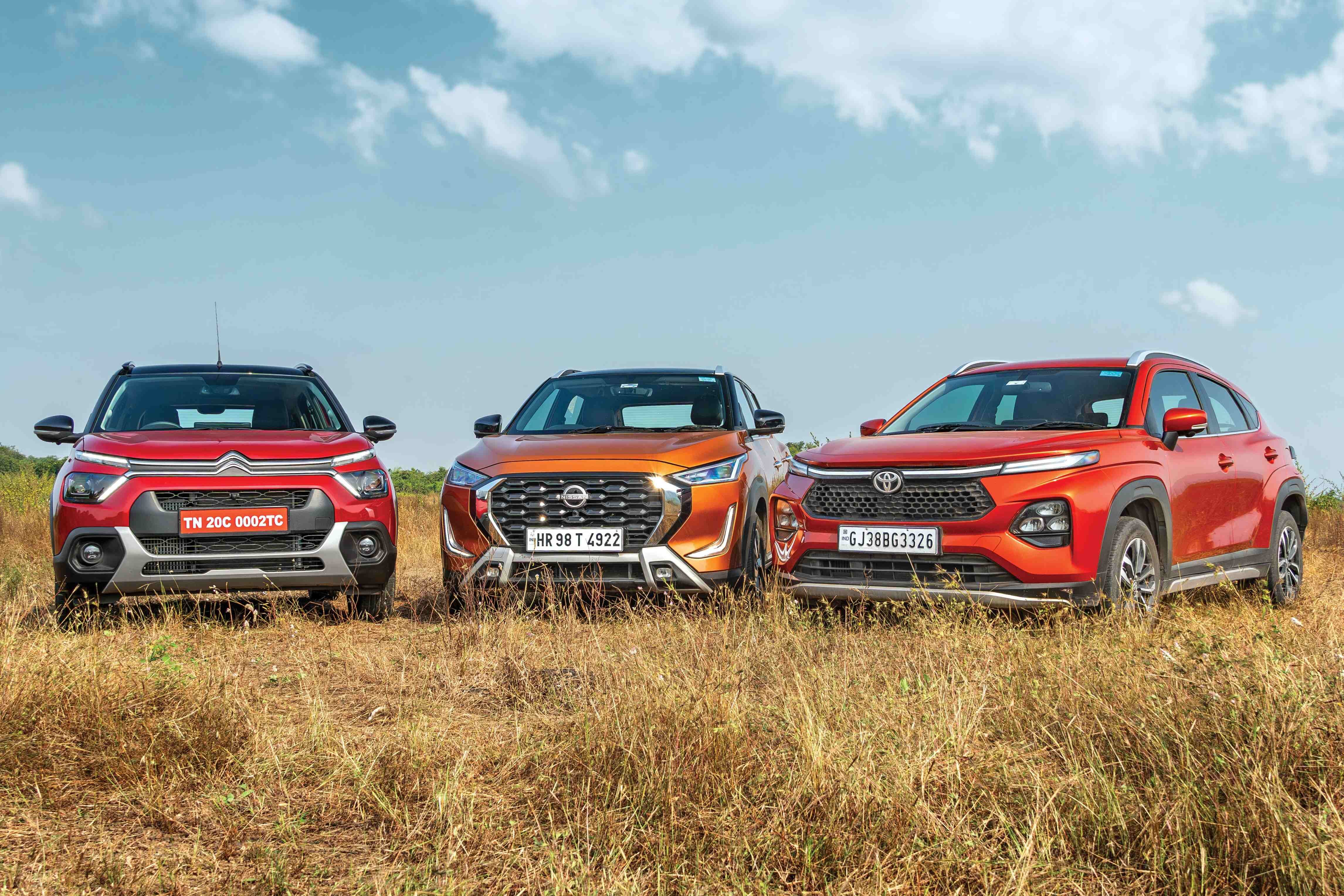

Small turbo-petrol automatics have been gaining popularity of late, and we’ve brought together three of the smallest ones on offer today – the Citroën C3 X, the Nissan Magnite and the Toyota Urban Cruiser Taisor. They all measure under 4 metres, take the shape of a small SUV/crossover, get a turbo petrol-automatic powertrain and cost under Rs 12 lakh, but there are some key differences too. Let’s take a closer look.
Citroen C3 vs Nissan Magnite vs Toyota Taisor exterior design
C3’s wheelbase is the longest
|
Citroen C3 X Shine Turbo AT vs Nissan Magnite Tekna+ Turbo CVT vs Toyota Taisor Turbo V AT dimensions |
|||
|---|---|---|---|
| C3 | Magnite | Taisor | |
| Length (mm) | 3,981 | 3,994 | 3,995 |
| Width (mm) | 1,733 | 1,758 | 1,765 |
| Height (mm) | 1,604 | 1,572 | 1,550 |
| Wheelbase (mm) | 2,540 | 2,500 | 2,520 |
| Boot capacity (litres) | 315 | 336 | 308 |
Being compact SUVs, they all measure about the same size. The Citroën is the tallest and has the longest wheelbase of the lot, while the Taisor is the widest and the longest overall. The Magnite has the shortest wheelbase here, but where it gets a leg up over the other two is in regards to boot space – 336 litres against the Citroën’s 315 litres and the Toyota’s 308 litres.
In terms of style, the Taisor and C3X are more crossover or a jacked-up hatch rather than SUV. The C3 X is the newest of the lot, and it gets the typical Citroën design cues of a split headlamp and a chrome-lined grille with the Chevron logo in the centre. A faux skid plate element, wheel arch cladding and roof rails add some SUV appeal to its design. On the whole, it does cut a handsome figure, but certain elements like the flap-type door handles and the simple halogen tail-lamps give away its cost-cutting measures.
Magnite styling is the most SUV-like of the lot
The Nissan Magnite, meanwhile, received a refresh late last year. The front grille has been tweaked, featuring gloss black and chrome elements, while the new front bumper gets a faux silver skid plate element lower down that also houses the fog lights. Along the sides, not much has changed save for a new design for the 16-inch alloy wheels. At the back, there are new tail-lights with new 3D LED signatures that make it stand out. Thanks to its upright stance, it’s the Magnite that looks the most like an SUV here.
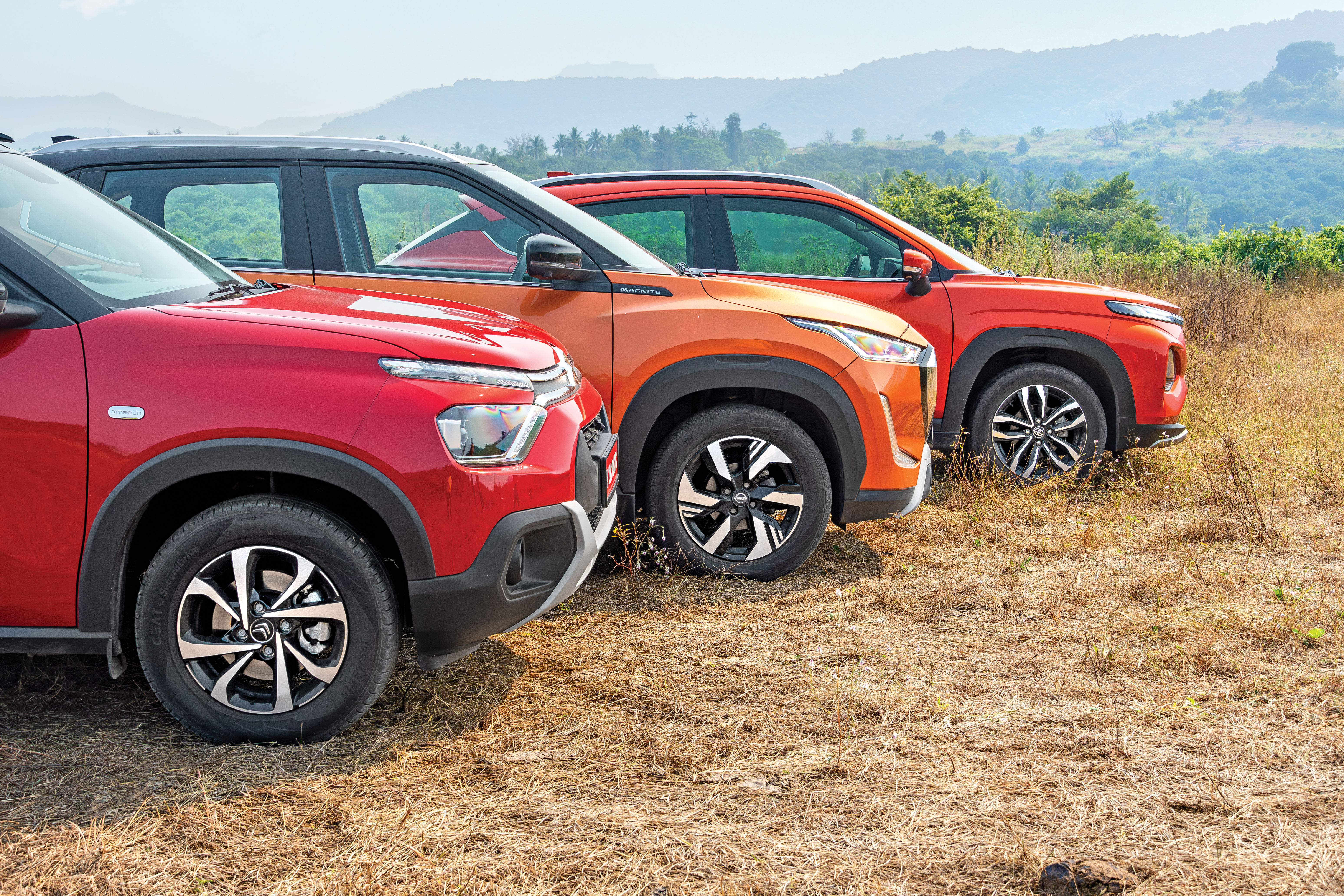
The Toyota Taisor is a badge-engineered Fronx, which is a handsome car to begin with, owing to its crossover-esque stance and coupé-like roofline. But Toyota has done well to give it some familiar design elements. For example, its DRLs are similar to the Hyryder, and the grille, with its honeycomb pattern, is similar to the pre-facelift Innova Crysta.
Compared to the Fronx, the Taisor gets different 16-inch alloys, and at the rear, the outer section of the tail-lamps with C-shaped LEDs is new. The connected LEDs on the tailgate are identical to the Fronx – when you look closely, the LEDs in the tail-lights and the tailgate don’t match. Still, it’s a design that has some serious appeal.
Citroen C3 vs Nissan Magnite vs Toyota Taisor interior and features
‘X’ update for C3 spruced up its cabin
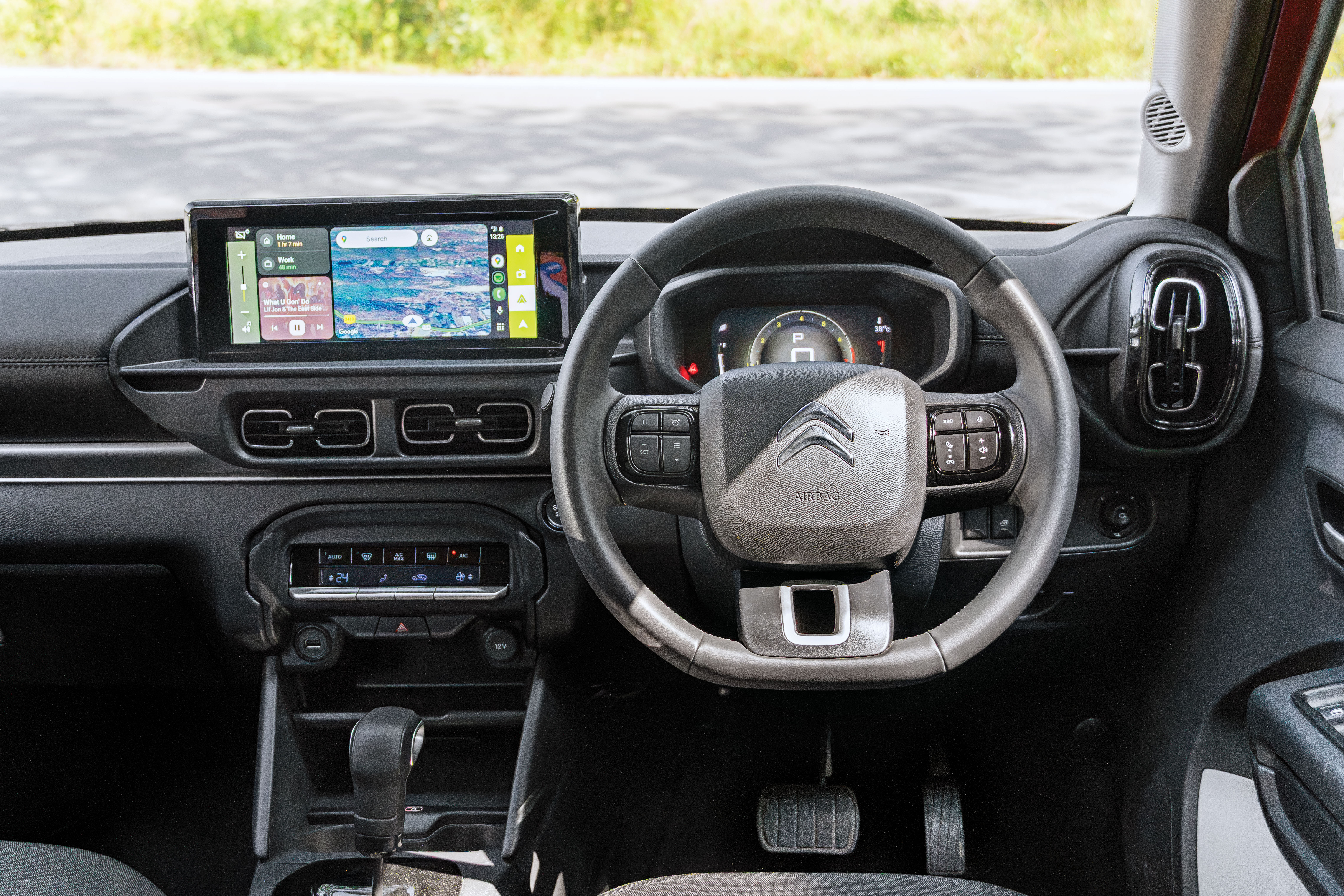
In typical French fashion, the Citroën’s cabin is unconventional, and certain elements like the unique AC vents add flair. The plastics feel decent up top, but some cheap bits are visible lower down in the cabin. What helps uplift the ambience, though, is the new leatherette pad on the dash and the new toggle-type switches for the climate control unit. The all-black theme does look a bit drab, and a dual-tone theme like on the larger Aircross would’ve definitely helped matters.
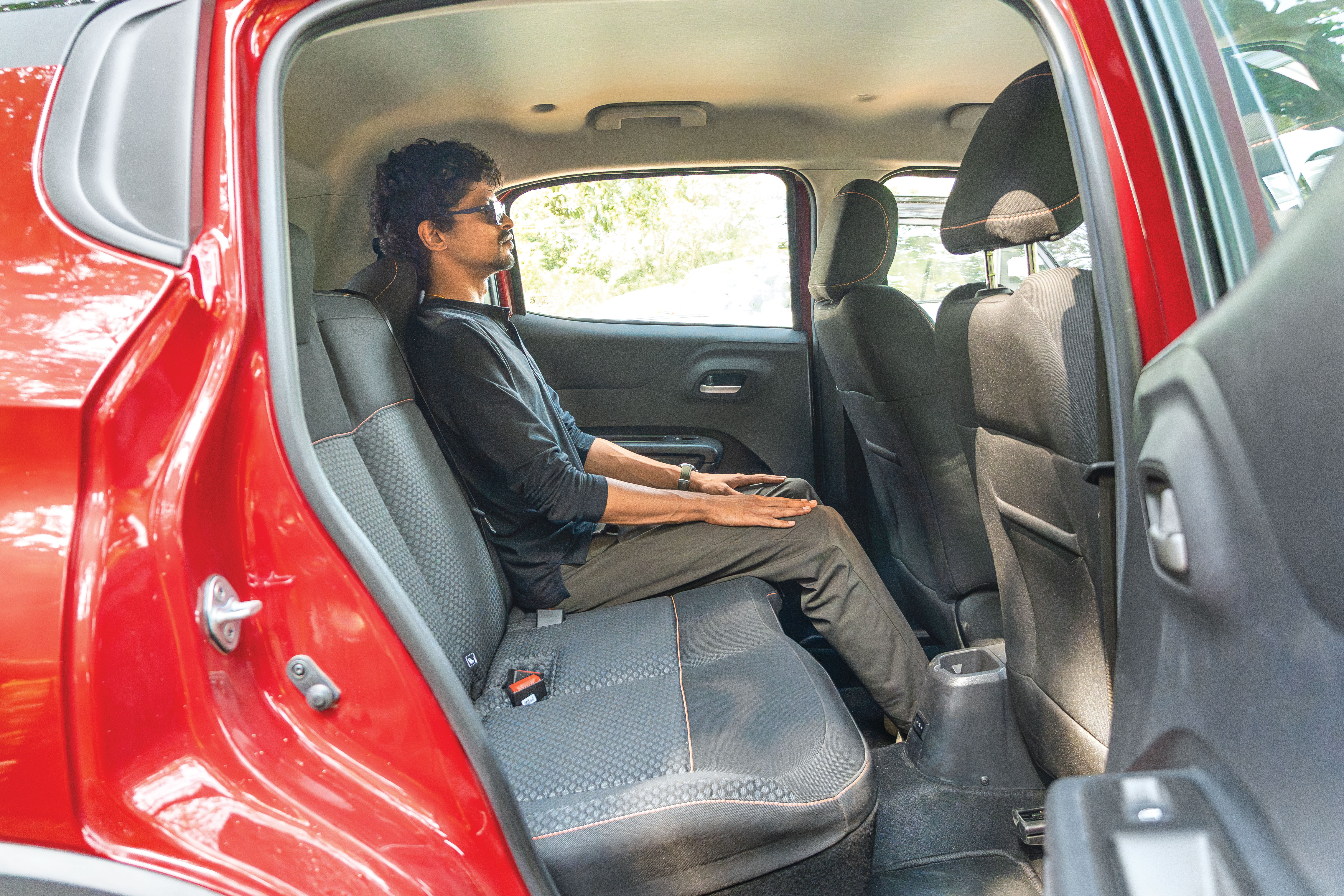
The Citroën’s slim front seats are generously cushioned, though some might find the driving position too tall even in its lowest setting. The back seat is roomy with good leg- and headroom, and it can even fit three adults in relative comfort. But there’s no rear armrest, adjustable headrests or dedicated AC vents, but you do get two USB ports. The 315-litre boot is practical, and you can even fold the rear seat backrest, though lifting bags over the tall loading lip isn’t ideal.
Magnite interior looks bright and feels premium
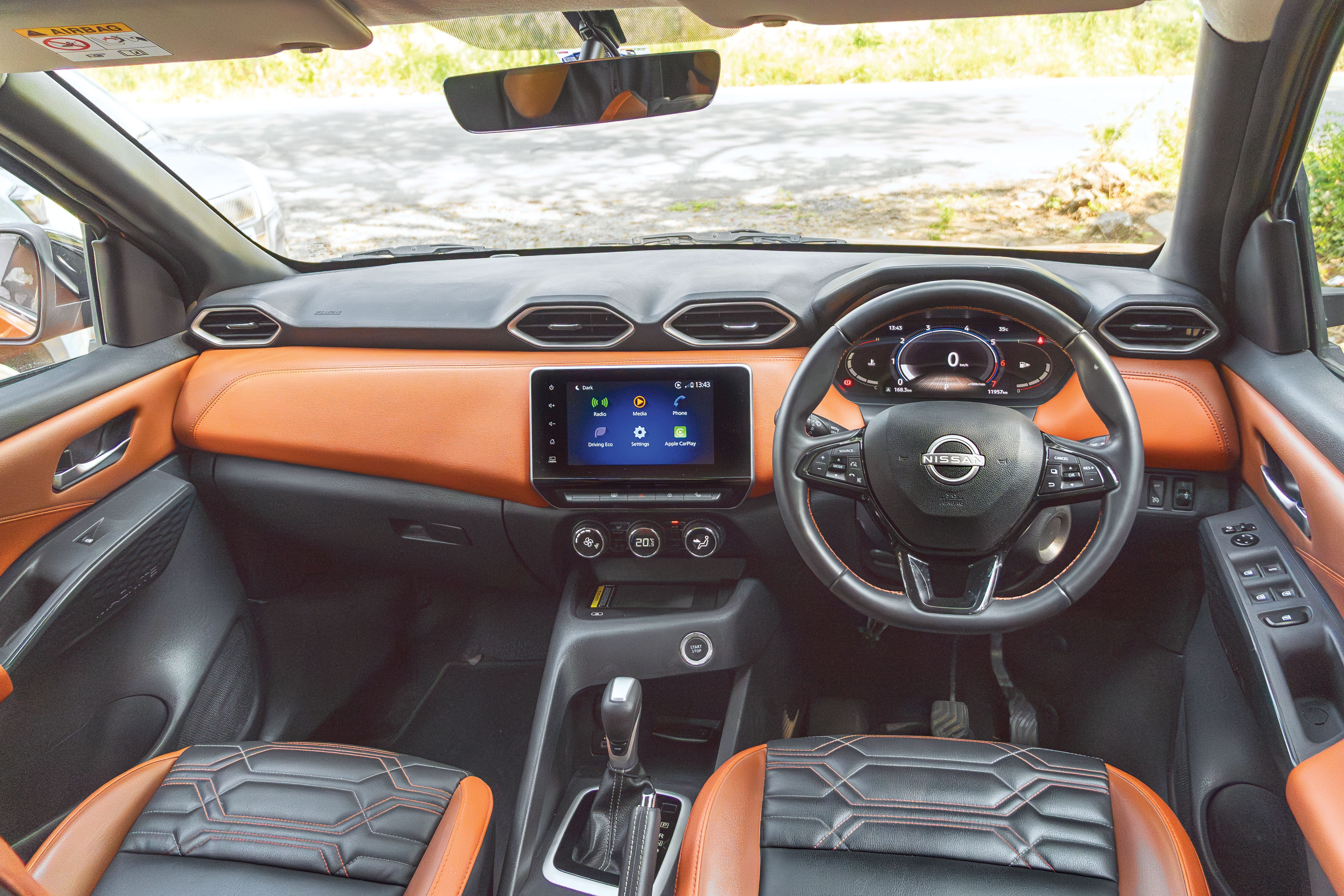
With the refresh, the Magnite also got an updated cabin, which looks and feels more premium than before. Key to this is the large leatherette panel on the dashboard and the dual-tone brown and black upholstery. The touch and feel inside has improved, and a nice touch is the frameless rear view mirror, which looks classy. The front seats also get the same dual-tone upholstery and a unique stitching pattern, though they are a bit flat and the cushioning is on the firm side.
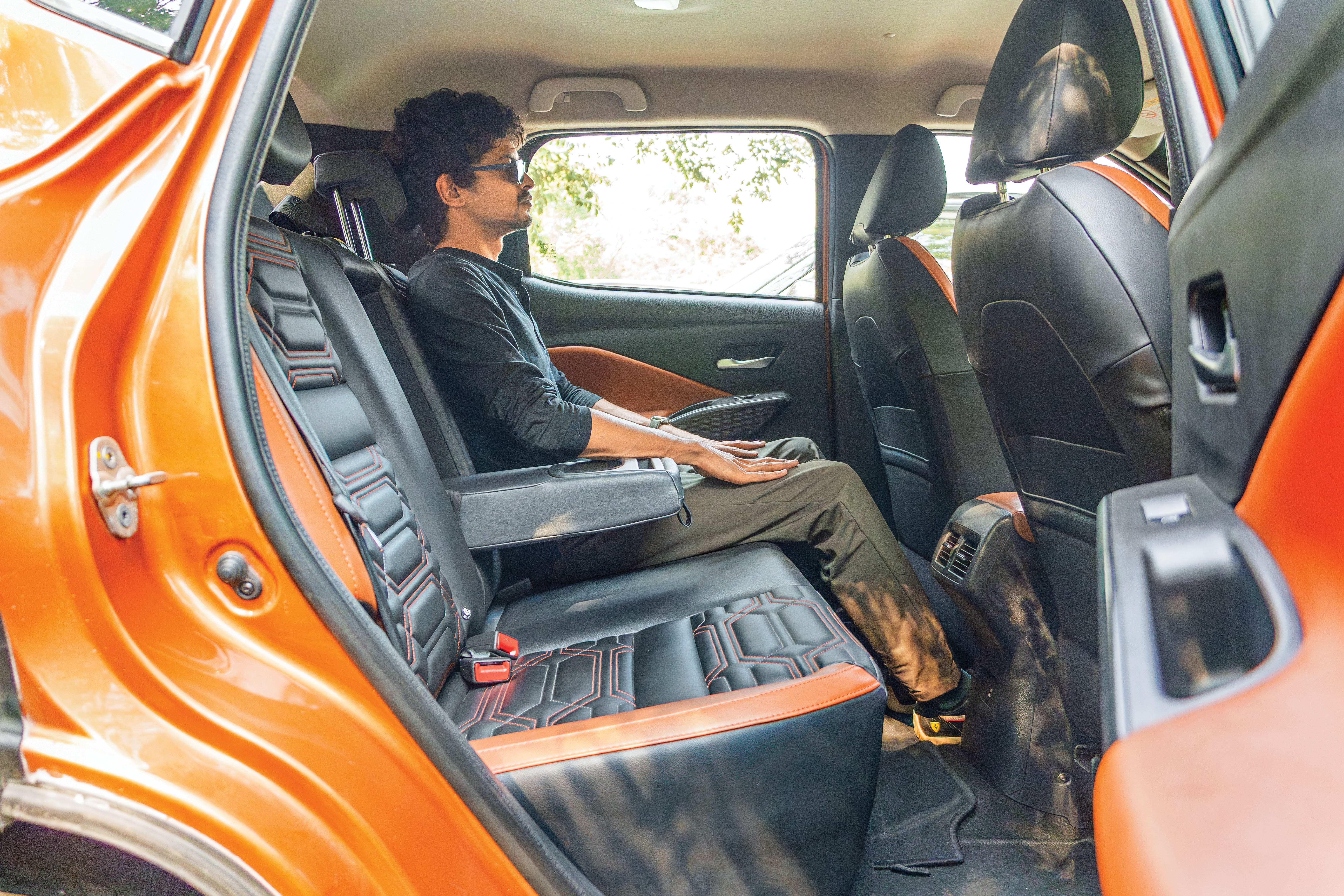
At the back, the Magnite feels the most spacious for three adults with ample width, kneeroom and legroom. The Nissan is also the only one that gets a rear armrest with cup holders, and you also get AC vents and adjustable head rests for the outer two passengers. The Nissan has the largest boot here that can be further expanded thanks to the split-folding rear seat. While the Magnite’s interior does look and feel more premium now, there’s some evident cost-cutting – like the steering column that’s visible in the footwell.
Taisor feels sportier thanks to lower seating position
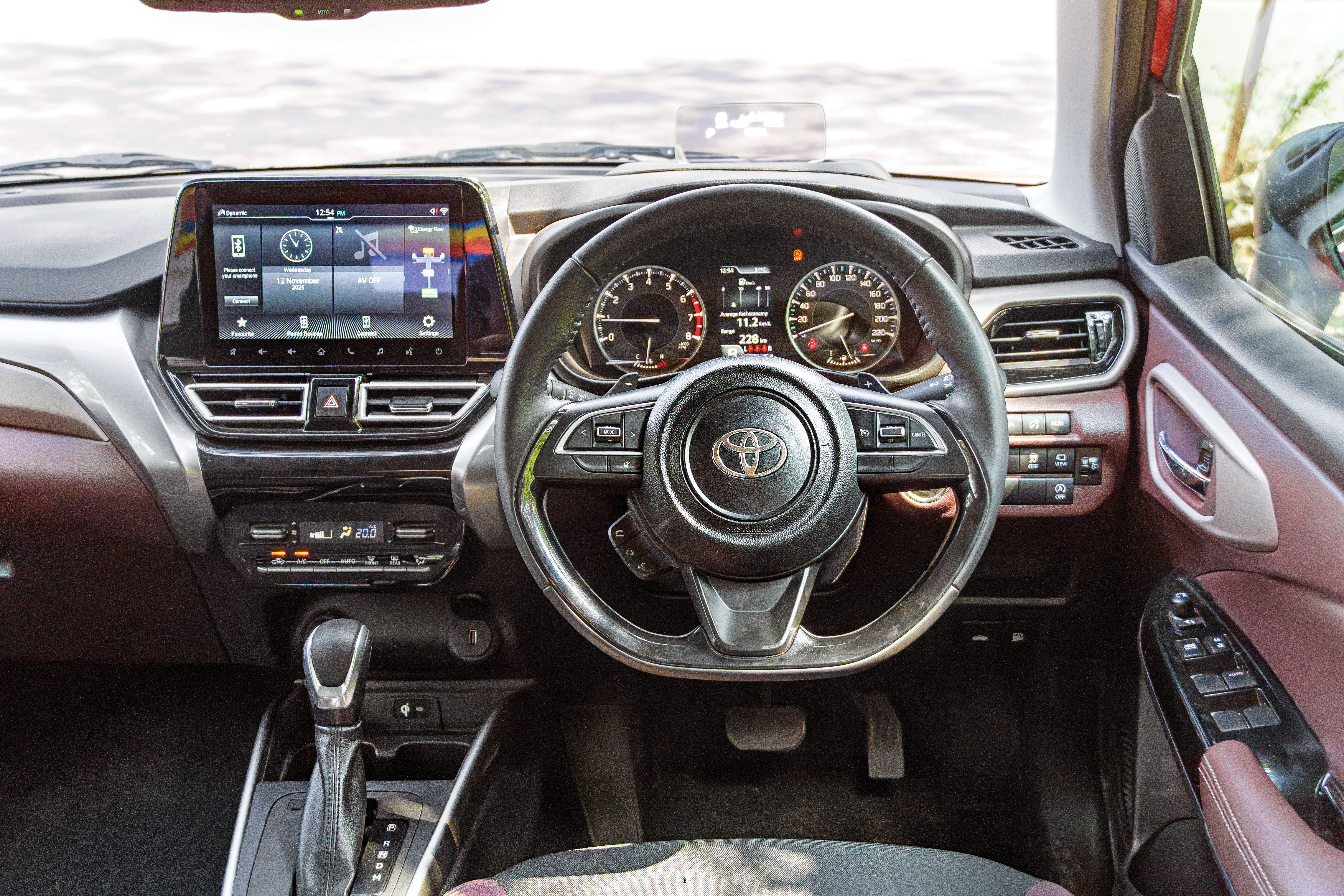
The Taisor feels the most car-like from behind the wheel, thanks to a lower seating with your legs stretched more forward than down. If you’re someone who enjoys a sporty driving position, you’ll like the Taisor, but if you prefer a more upright seating like an SUV, you’ll prefer the other two. The Taisor’s layered dash looks attractive, as does the dual-tone maroon and black upholstery with silver accents. The Taisor has the best front seats, which are supportive and generously padded.
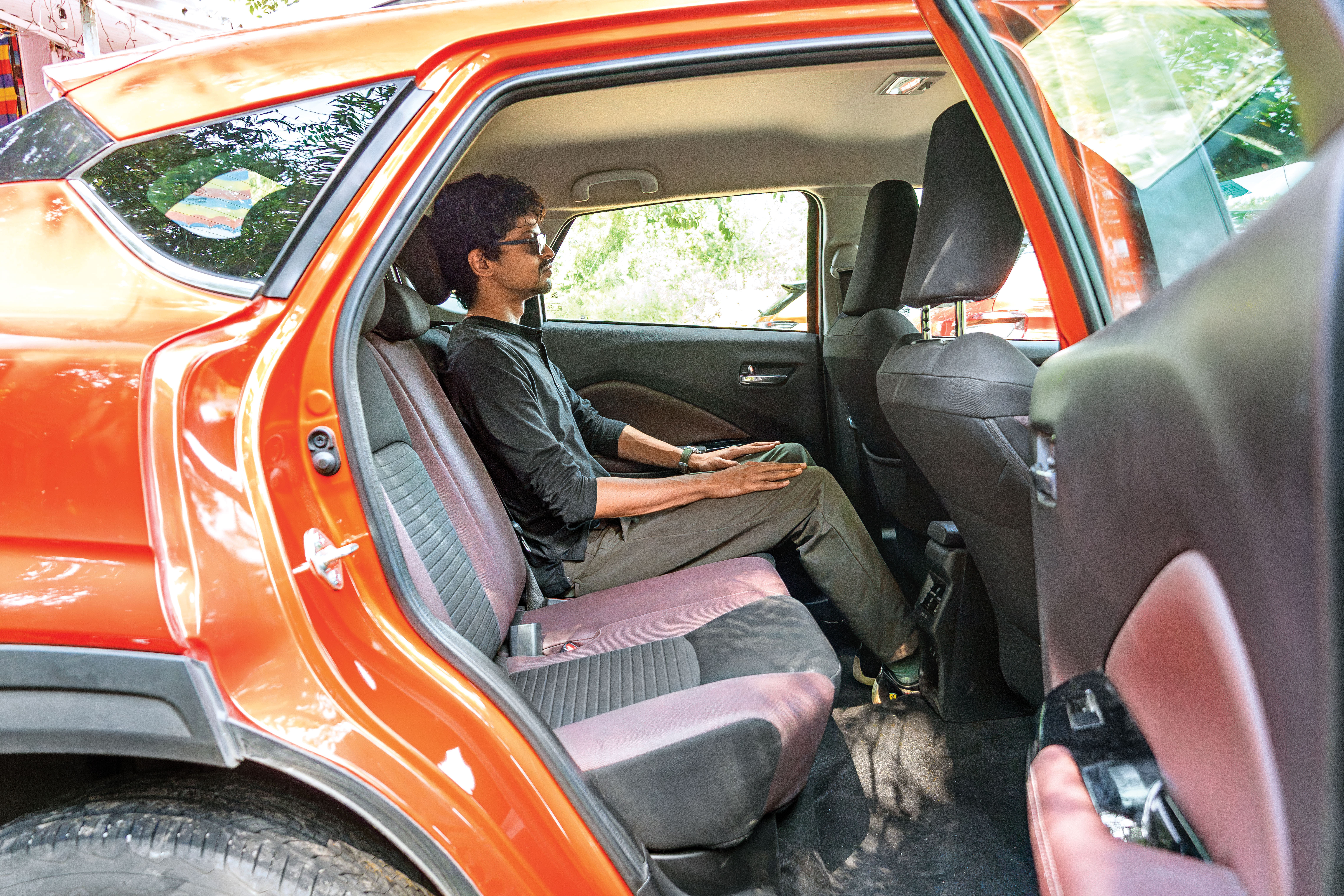
At the back, it’s got a good amount of headroom and kneeroom, but shoulder room is the tightest while sitting three abreast. The Taisor is the only one to get adjustable head rests and three-point seat belts for all three passengers. You also get dedicated AC vents and charging ports, but it misses out on a centre armrest. It may have the smallest boot on paper, but you can fit in a similar amount of luggage as the other two, and you also have the option of split-folding rear seats.
| Citroen C3 X Shine Turbo AT vs Nissan Magnite Tekna+ Turbo CVT vs Toyota Taisor Turbo V AT features and safety kit | |||
|---|---|---|---|
| Feature | C3 | Magnite | Taisor |
| Alloy wheels | 15-inch | 16-inch | 16-inch |
| Touchscreen | 10.25-inch | 8-inch | 9-inch |
| LED headlamps | Yes | Auto | Auto |
| Wireless Apple CarPlay/ Android Auto | Yes | Yes | Yes |
| Wireless phone charging | Yes | Yes | Yes |
| Digital instrument cluster | Yes | Yes | NA |
| Upholstery | Fabric | Leatherette | Fabric |
| Rear AC vents | NA | Yes | Yes |
| Paddleshifters | NA | NA | Yes |
| Rear armrest | NA | Yes | NA |
| Keyless entry and go | Yes | Yes | Yes |
| Auto climate control | Yes | Yes | Yes |
| Auto dimming IRVM | Yes | Yes | Yes |
| Auto folding mirrors | Yes | Yes | Yes |
| 360-deg camera | Optional | Yes | Yes |
| Tyre pressure monitor | Yes | Yes | NA |
| Hill start assist | Yes | Yes | Yes |
| ESC | Yes | Yes | Yes |
| Airbags | 6 | 6 | 6 |
In terms of features, all three get 6 airbags, ESP, LED headlamps, a touchscreen infotainment system, wireless charging, auto climate control, auto-folding mirrors, auto-dimming IRVM, a 360-degree parking camera, and more. Unique features on the Taisor include a heads-up display and paddle shifters, while the Magnite is the only one to get a rear armrest.
Citroen C3 vs Nissan Magnite vs Toyota Taisor engine and gearbox
C3 develops 10 percent more power than the rest
|
Citroen C3 X Shine Turbo AT vs Nissan Magnite Tekna+ Turbo CVT vs Toyota Taisor Turbo V AT engine specs |
|||
|---|---|---|---|
| C3 | Magnite | Taisor | |
| Engine | 3 cyl, 1199cc, turbo-petrol | 3 cyl, 999cc, turbo-petrol | 3 cyl, 999cc, turbo-petrol |
| Power | 110hp at 5500rpm | 100hp at 5000rpm | 100hp at 5500rpm |
| Torque | 205Nm at 1750rpm | 152Nm at 2200-4400rpm | 147Nm at 2000-4500rpm |
| Kerb weight (kg) | 1,114 | 1,103 | 1,060 |
| Gearbox | 6-speed auto | CVT auto | 6-speed auto |
All three feature a 3-cylinder, turbocharged petrol engine mated to an automatic gearbox, and that’s where the similarities end. The Citroën has the largest engine – 1.2 litres –and as a result, it also has the highest output of 110hp/205Nm and is paired to a 6-speed torque converter automatic. The Nissan is powered by a smaller 1.0-litre unit that makes 100hp/152Nm and is mated to a CVT automatic. While the Toyota also gets a 1.0-litre unit, its output of 100hp/147Nm is the lowest here. And like the C3 X, the Taisor also comes paired with a conventional 6-speed torque converter automatic gearbox.
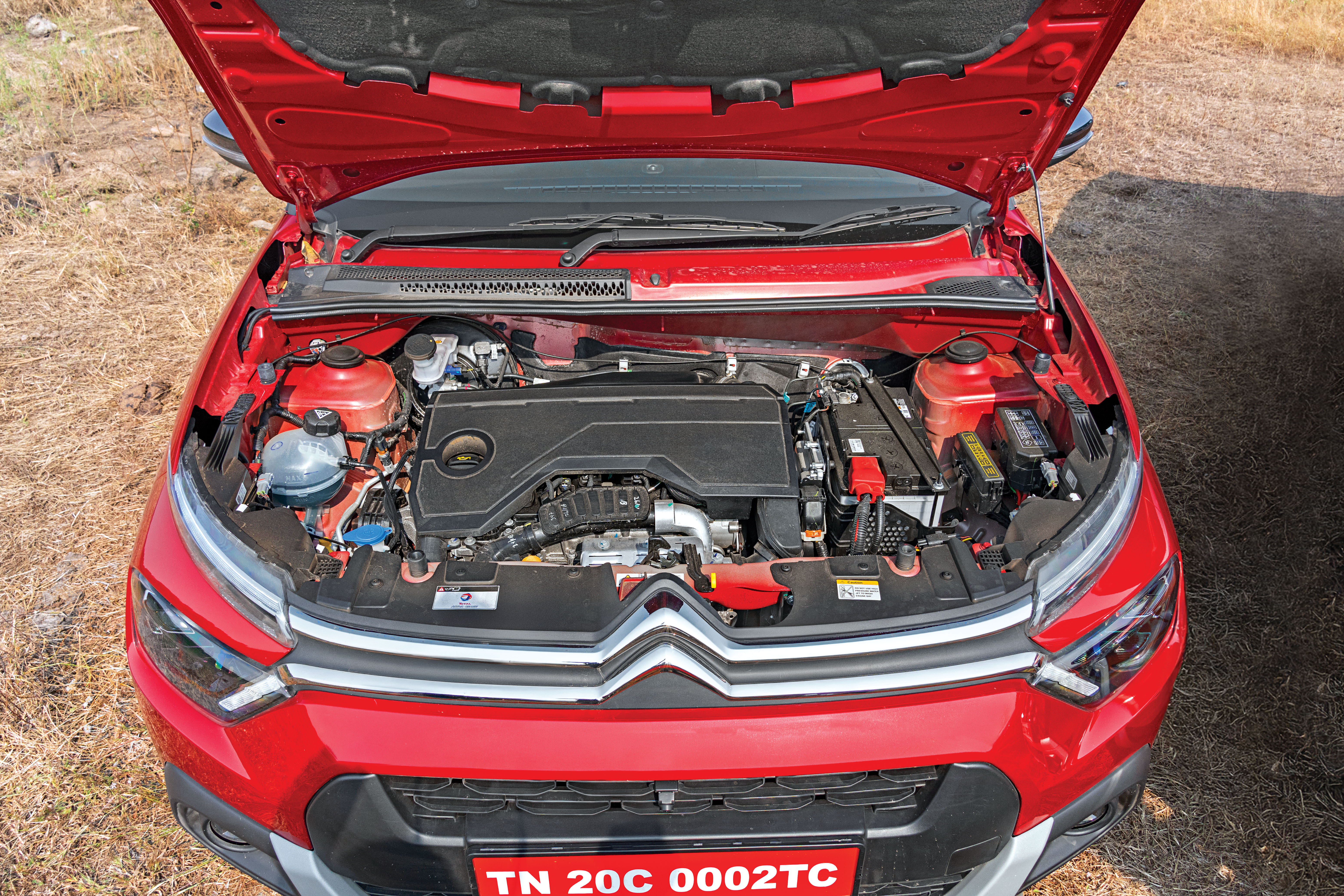
Citroën’s 1.2 turbo-petrol is one of the nicest small-capacity engines on sale today, and it impresses with its responsive nature. There is that typical three-cylinder thrum at idle, but it does smoothen out on the move. Paired with the automatic, response off the line is immediate – a little too eager even. It comes off as jerky in slow-moving traffic, but on the move, quick overtakes are a breeze. The Aisin-sourced gearbox is a smooth-shifting unit, and you can even take manual control via the gear lever, which does its bit to add engagement.
Magnite’s CVT barely presents rubberband effect
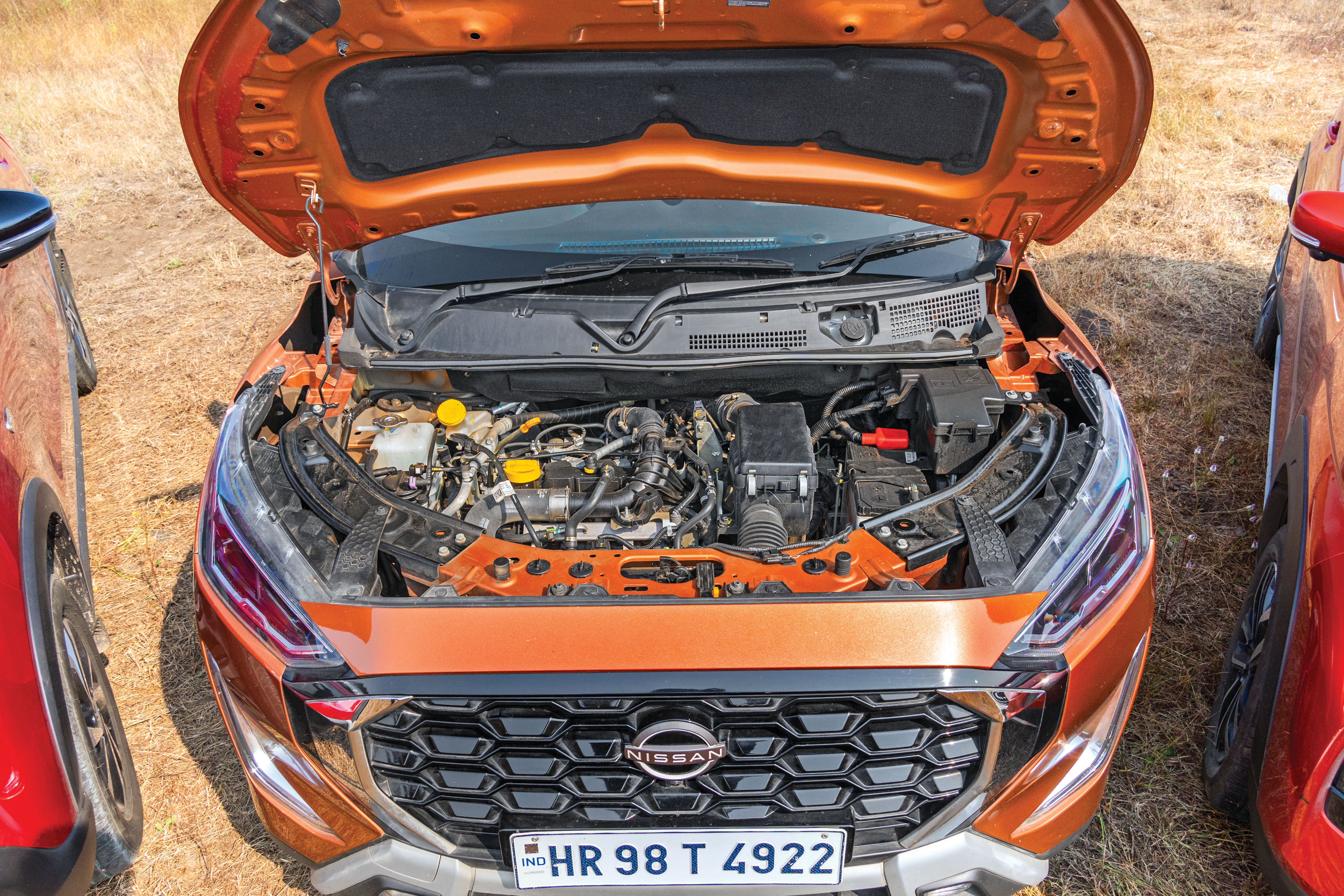
The Magnite’s 1.0-litre turbo-petrol is also thrummy at idle, but it has a strong mid-range punch and works well with the smooth CVT to mask any turbo lag at lower revs. What’s nice is that at low and medium engine speeds, the typical ‘rubberband’ effect is barely there, and it sets in only with a heavy right foot.
Taisor is the only one to offer paddle shifters
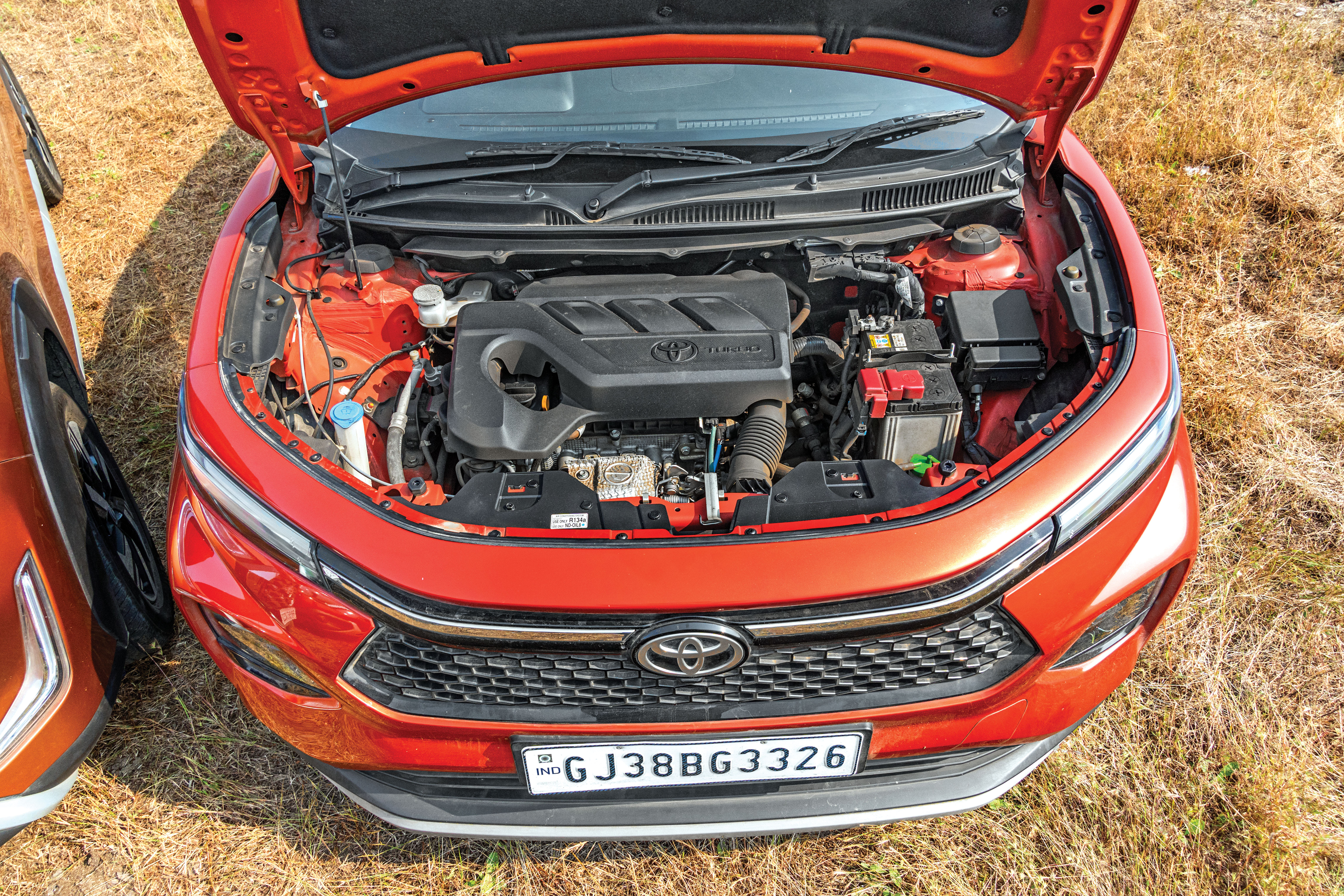
The Taisor’s 1.0-litre BoosterJet unit is also responsive like the other two. It is rev happy and has the upper hand when it comes to refinement. On the move, it feels the most linear of the lot, and paired with the Aisin 6-speed torque converter, it makes for a seamless drive experience. The gearbox isn’t particularly a quick-shifting unit, but it is smooth. What’s nice is that it comes with paddle shifters for manual control, unlike the other two. On the whole, it’s the Taisor’s powertrain that feels the best in terms of drivability, refinement and efficiency, while not sacrificing much performance.
Citroen C3 vs Nissan Magnite vs Toyota Taisor performance and refinement
|
Citroen C3 X Shine Turbo AT vs Nissan Magnite Tekna+ Turbo CVT vs Toyota Taisor Turbo V AT performance and braking |
|||
|---|---|---|---|
| Acceleration | C3 | Magnite | Taisor |
| 0-20kph | 1.20 seconds | 1.27 seconds | 1.61 seconds |
| 0-40kph | 2.77 seconds | 2.75 seconds | 2.80 seconds |
| 0-60kph | 4.76 seconds | 4.68 seconds | 4.95 seconds |
| 0-80kph | 7.46 seconds | 7.29 seconds | 7.79 seconds |
| 0-100kph | 10.82 seconds | 10.87 seconds | 10.96 seconds |
| 0-120kph | 15.59 seconds | 15.93 seconds | 15.80 seconds |
| 20-80kph (in-gear) | 6.31 seconds | 6.10 seconds | 6.48 seconds |
| 40-100kph (in-gear) | 7.35 seconds | 8.25 seconds | 8.40 seconds |
| 80-0kph (braking) | 27.48 metres, 2.37 seconds | 27.08 metres, 2.48 seconds | 25.98 metres, 2.27 seconds |
Speaking of which, with the most cubic capacity, power and torque, the Citroën is the quickest accelerating car here, but it’s much closer than you’d expect. 0-100kph takes 10.82sec in the Citroën, compared to the Nissan’s 10.87sec and the Toyota’s 10.96sec.
Taisor is the slowest overall
In the 20-80kph run, the Magnite mid-range punch makes it the quickest, followed by the C3 and the Taisor. But in the 40-100kph run, it’s the Citroën that comfortably outpaces the other two. On the clock then, the Toyota Taisor is the slowest. Not by much, though, and you’d be hard-pressed to tell that from behind the wheel.
Citroen C3 vs Nissan Magnite vs Toyota Taisor fuel efficiency
|
Citroen C3 X Shine Turbo AT vs Nissan Magnite Tekna+ Turbo CVT vs Toyota Taisor Turbo V AT mileage (kpl) |
|||
| C3 | Magnite | Taisor | |
| City | 8.46 | 9.5 | 10.17 |
| Highway | 13.38 | 15.22 | 15.35 |
Given that the Citroën has the most performance and weighs the most, it has an effect on its fuel efficiency. The C3 X was the least fuel efficient in our real-world efficiency tests, returning 8.46kpl in the city and 13.38kpl on the highway. Its throttle calibration is noticeably aggressive, making the car feel eager and responsive – something enthusiasts will enjoy. However, this trait also contributes to its lower real-world efficiency.
Magnite doesn’t get auto start/stop function
The Magnite is up next, managing 9.5kpl in the city and 15.22kpl out on the highway. The Magnite’s CVT automatic has been tuned for drivability, so it keeps the engine spinning optimally and feels very responsive; as a result, it isn’t quite frugal. The Nissan is also the only one here that doesn’t feature fuel-saving auto stop/start tech.
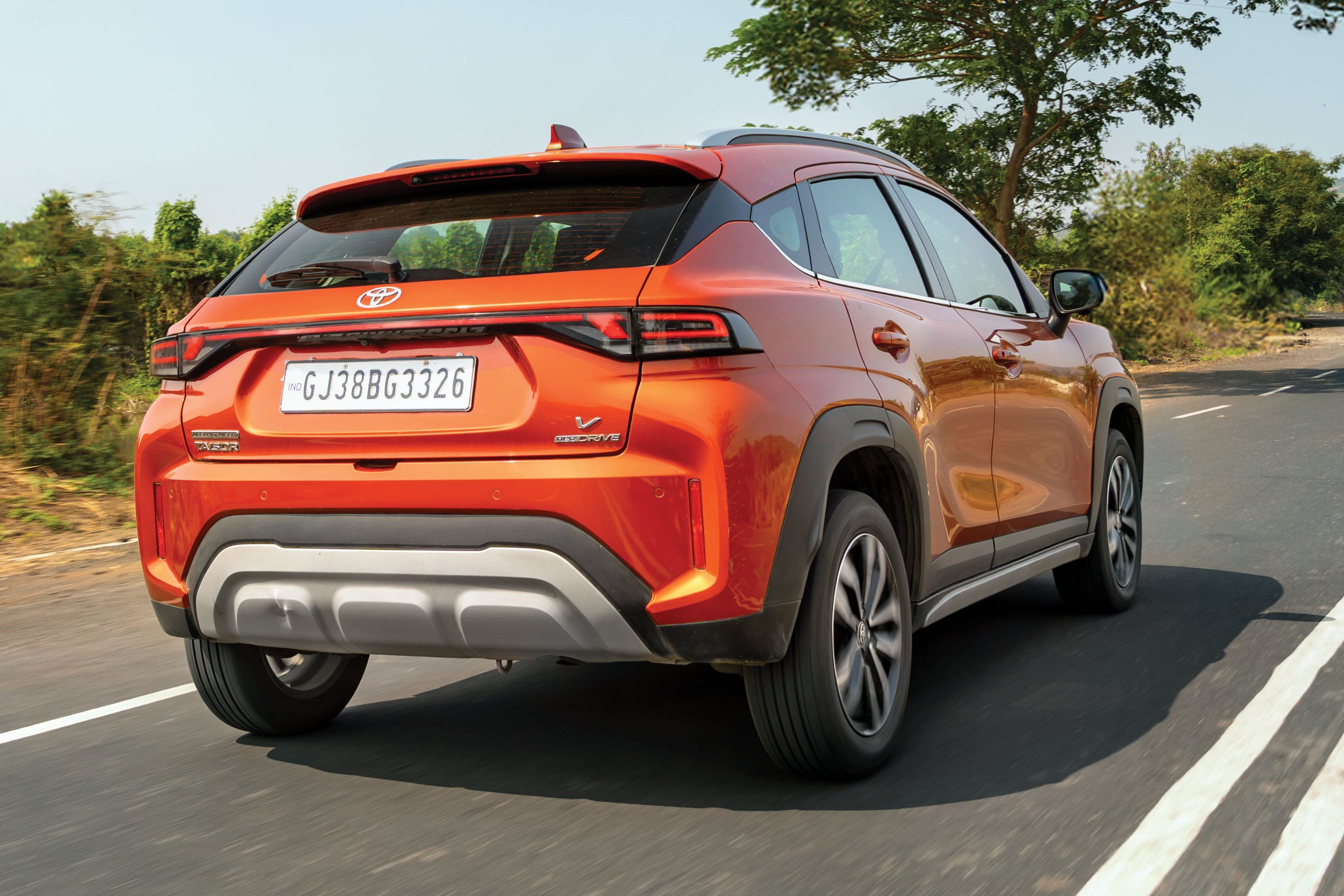
That brings us to the Taisor, which is the most efficient here, returning 10.17kpl in the city and 15.35kpl out on the highway. What helps efficiency is the Taisor AT’s relatively low kerb weight and the fact that it gets mild-hybrid technology. However, high ambient temperatures, ranging between 35 and 40 deg C, during our test meant that the ACs of all three had to work hard to keep the cabin cool, affecting efficiency.
Citroen C3 vs Nissan Magnite vs Toyota Taisor ride comfort and handling
C3 features excellent ride quality
As is with all Citroëns, the C3 X’s ride comfort is outstanding. The suspension soaks up bumps and potholes with ease, making it feel composed while keeping passengers comfortable. High-speed stability is excellent, the steering feels direct, and handling is tidy with predictable body roll. Thanks to its mature road manners, the C3 feels like a car from a segment above.
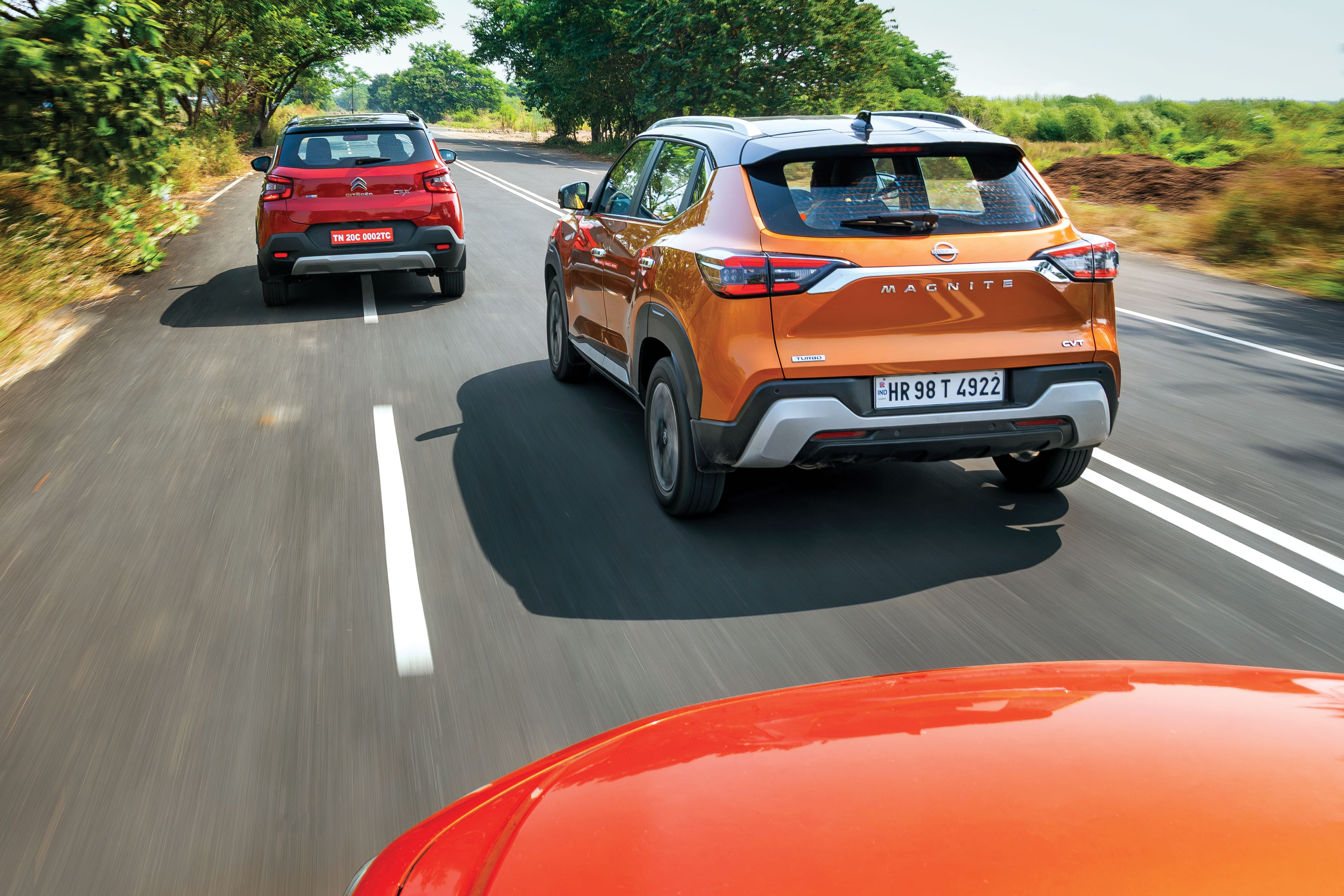
The Magnite’s ride is on the stiff side but not to the point of being uncomfortable. The Nissan does take broken roads in its stride, but it doesn’t feel as tough as the other two. The light steering and controls make it easy to drive in the city, while the handling can be best described as neutral. A downer, though, is the tyre and road noise, which is much more apparent in the Magnite than in the other two.
Taisor has a firm ride, but handles well
The Taisor’s ride feels firm at low speeds, though that makes it feel stable at highway speeds. The light steering and tight turning circle mean it’s easy to drive in the city. And despite not having much in terms of feel and feedback, the Toyota does feel engaging around bends. Overall, the Taisor drives with a sense of confidence and feels composed at all speeds.
Citroen C3 vs Nissan Magnite vs Toyota Taisor price and verdict
C3 is the most affordable by a hefty margin
|
Citroen C3 X Shine Turbo AT vs Nissan Magnite Tekna+ Turbo CVT vs Toyota Taisor Turbo V AT price (ex-showroom) |
|||
| C3 | Magnite | Taisor | |
| Price (Rs, lakh) | 9.30 | 10.76 | 11.91 |
If this were a comparison based purely on price, the Citroën C3 X would comfortably be the winner. It undercuts the Magnite by about Rs 1.5 lakh and the Taisor by over Rs 2 lakh. The Citroën C3 X also has a roomy back seat for three, and it excels in terms of ride and handling; so it’s great value for money. But you can’t shake the feeling that it’s built to a strict budget, and that dampens the experience.
Both Magnite and C3 feel somewhat built to a cost
The Magnite strikes a great balance between performance, features and price, and it makes for the best in-city car of the three thanks to its responsive and smooth turbo-petrol CVT and well-calibrated throttle. The Nissan is also reasonably efficient, decently equipped and has a spacious cabin. But in this company, it falls short in terms of robustness, and this, too, shows some traits – like the NVH levels – of being built to a cost.
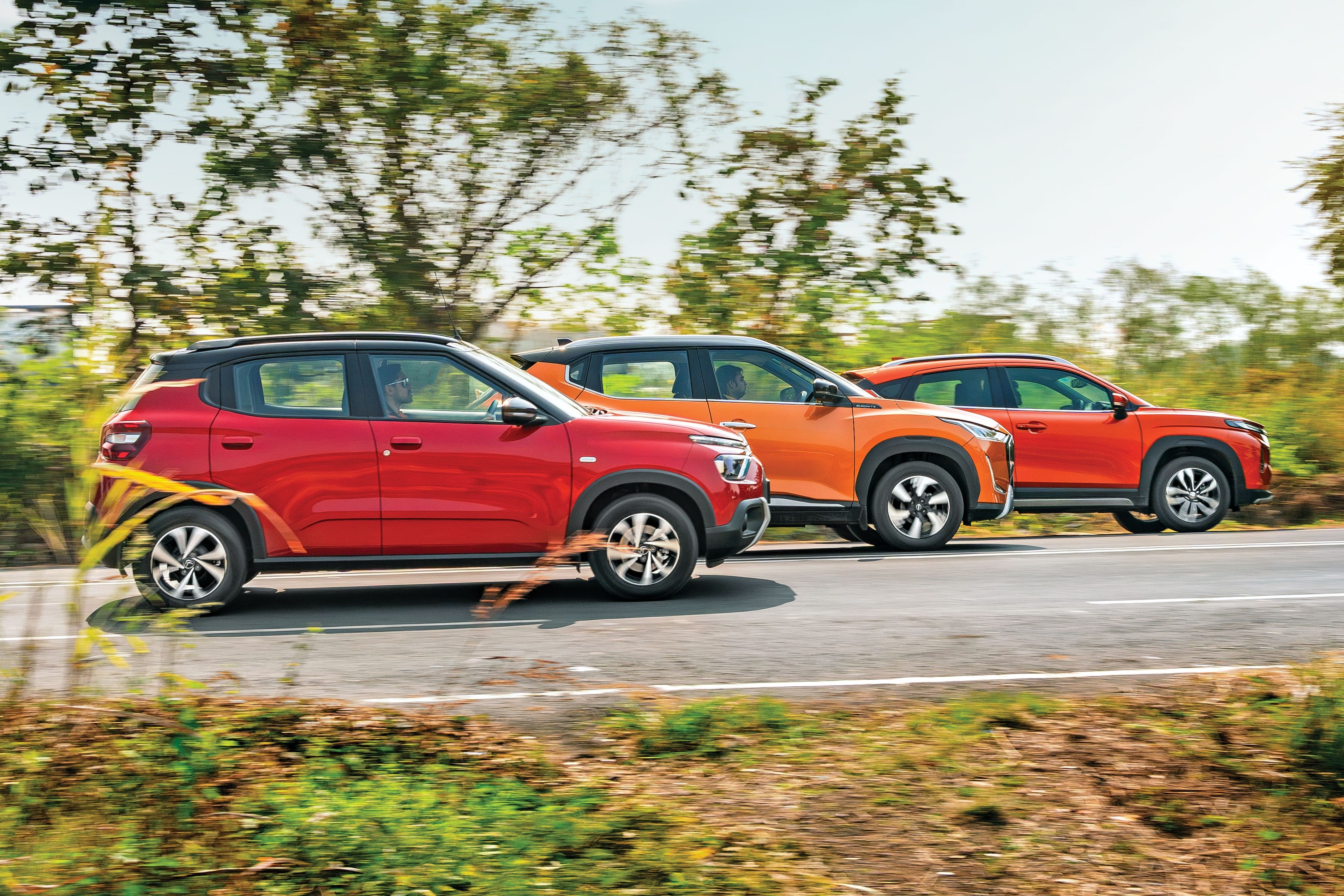
That brings us to the Taisor; though the most expensive, it clearly feels like it belongs in a class above. It comes across as the most polished of the lot, it has the most refined powertrain, the best fuel efficiency and is very well loaded. It also comes with the peace of mind associated with Toyota/Maruti Suzuki ownership, and you’re backed up by the widest spread service network of the trio. So, if you can stretch your budget, the Taisor definitely feels worth the extra cash.