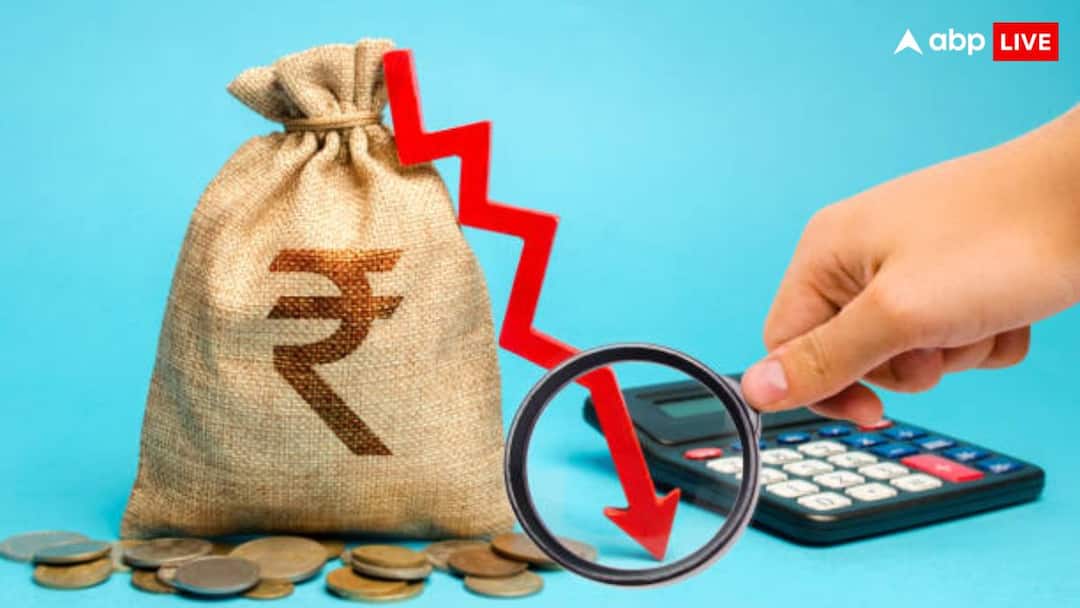

India’s currency, which has remained under pressure in recent months, could be headed for a meaningful turnaround in the latter half of the next financial year, according to a recent report by the State Bank of India (SBI).
While the rupee is currently navigating a phase of depreciation, the country’s largest lender believes this trend is unlikely to be permanent and may reverse between October 2026 and March 2027.
The assessment offers a longer-term perspective on the rupee’s trajectory, arguing that structural resilience in India’s economy and a potential easing of global uncertainties could allow the currency to regain lost ground.
A Temporary Phase of Weakness, Not a Structural Breakdown
SBI’s report makes it clear that the rupee is presently in a depreciating regime, but emphasises that such phases have historically been cyclical rather than permanent.
Drawing on past patterns and internal analysis, the bank said it expects the rupee to “exit the present depreciation regime” and strengthen in the second half of the next fiscal year, reported ANI.
“We believe that the Rupee is likely to bounce back strongly in the second half of next fiscal,” the report noted.
According to SBI, the current weakness does not reflect a collapse in domestic fundamentals but is largely being driven by global factors that have altered capital flows and investor behaviour.
Why Capital Flows No Longer Drive the Rupee Like Before
One of the key shifts highlighted in the report is the changing role of foreign portfolio investment (FPI) in determining rupee movements. Before calendar year 2014, abundant portfolio inflows played a dominant role in strengthening the Indian currency.
During the period from CY07 to CY14, net portfolio inflows averaged $162.8 billion, providing consistent support to the rupee. However, that era of easy global liquidity has largely ended.
From CY15 to CY25 (till date), portfolio inflows have averaged just $87.7 billion, reflecting a more cautious global investment climate. SBI pointed out that geopolitical risks, delayed trade negotiations, and rising protectionism have significantly reduced the scale and predictability of capital inflows.
Geopolitics Now a Bigger Currency Driver
Unlike earlier years, when capital flows were the dominant influence, the report said geopolitical uncertainty has become the most critical factor affecting the rupee today. Delays in global trade agreements, regional conflicts, and shifting supply chains have added new layers of volatility to currency markets.
These uncertainties, SBI noted, have overshadowed traditional drivers such as interest rate differentials and short-term portfolio movements, keeping emerging market currencies, including the rupee, under pressure.
Three Phases That Explain the Rupee’s Journey
To put the current phase into context, SBI divided the rupee’s long-term movement into three distinct periods.
Phase I (January 2008 to May 2014): During this period, the rupee weakened far more sharply than the US dollar strengthened. While the dollar appreciated by an average of 1.7 per cent, the rupee depreciated by 16.3 per cent, reflecting weaker domestic fundamentals and heightened vulnerability.
Phase II (May 2014 to March 2021): The rupee’s depreciation became more aligned with global trends. It weakened by an average of 7.9 per cent, broadly in step with the dollar’s 5.1 per cent appreciation, indicating improved macroeconomic stability.
Phase III (September 2024 to present): In a break from historical patterns, both the rupee and the dollar have been depreciating simultaneously. SBI said this unusual trend reflects the scale of current geopolitical uncertainty rather than country-specific weaknesses.
Trade Resilience Offers a Cushion
Despite external headwinds, SBI highlighted that India’s trade performance has shown resilience. The country has managed prolonged global uncertainty, rising protectionism and labour supply shocks without severe disruptions.
This ability to absorb shocks, the report argued, strengthens the case for a rupee recovery once global conditions stabilise.
According to SBI, a moderation in geopolitical risks and greater clarity on global trade arrangements could act as catalysts for the rupee’s rebound. Once uncertainty eases, capital flows may stabilise and currency pressures could diminish, allowing the rupee to recover in the second half of FY27.
For now, the report suggests patience. While the rupee remains under pressure in the near term, SBI’s analysis indicates that the current phase is transitional rather than permanent, with a stronger outlook emerging over the medium term.