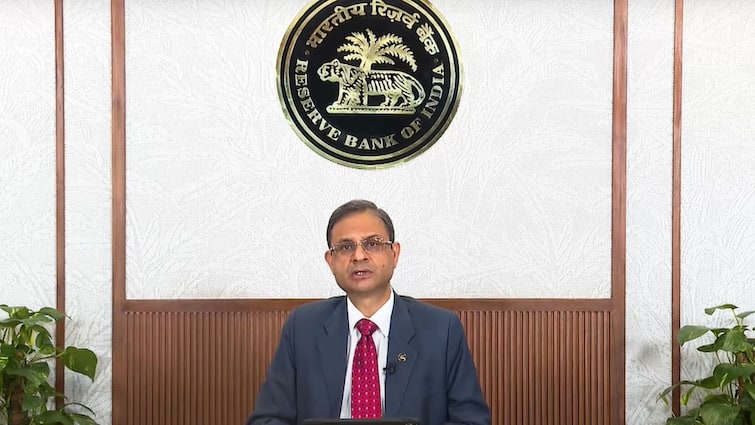

The Reserve Bank of India’s Monetary Policy Committee (MPC) is gearing up for its fifth policy meeting of FY26, scheduled from December 3–5. This review assumes greater significance as the central bank weighs a unique combination of robust economic momentum and sharply easing inflation. India’s Q2 GDP growth has accelerated to 8 per cent even as inflation in October touched record lows, presenting the MPC with a nuanced policy backdrop amid persistent global uncertainty.
The RBI has already cut the benchmark repo rate by 100 basis points in the first half of 2025 to support growth. However, it has maintained a pause since August to study how earlier rate reductions are transmitting through demand, liquidity flows, and credit markets.
Policymakers now face a delicate balance: supporting growth without fuelling price pressures, while keeping a close eye on geopolitical risks, external shocks, and evolving global monetary cues.
RBI Could Slash Key Rates This MPC
HSBC Global Investment Research has projected that the RBI may move towards a 25-basis-point rate cut during the upcoming MPC meeting. The cut, if announced, would bring the policy repo rate down to 5.25 per cent, a shift the agency believes is supported by inflation trends that are expected to remain well below the central bank’s target for the foreseeable future, reported IANS.
The assessment comes at a time when India’s growth momentum has remained firm, aided by front‑loaded government expenditure and a boost in retail activity following the reduction in Goods and Services Tax (GST) rates.
India’s GDP Remains Strong
India’s GDP growth for the July–September quarter stood at 8.2 per cent year‑on‑year, surpassing the previous quarter’s 7.8 per cent and even beating HSBC’s own above‑consensus forecast of 7.5 per cent. Gross Value Added (GVA) also expanded by 8.1 per cent, while nominal GDP growth came in at 8.7 per cent.
HSBC attributed some of this heightened momentum to the GST rate cuts announced on August 15, with the revised rates taking effect from September 22. According to the report, production likely accelerated in anticipation of stronger consumer demand.
Another notable trend influencing growth is the emergence of lower‑income states as faster-growing contributors to national economic output. HSBC’s analysis indicated that several such states are now advancing at a pace that outstrips that of higher‑income regions, adding to the resilience of India’s broader growth trajectory.
However, the latest Manufacturing Purchasing Managers’ Index (PMI) reading for November inidcated that India’s factories are not immune to the impact of steep US tariffs. The data, released on Monday, showed that manufacturing clocked a higher than average expansion last month, but the growth softened in comparison to October as a result of the aggressive tariffs imposed by US President Donald Trump.
New orders showed softer momentum, suggesting that activity could start cooling as the economy moves into early 2026.
Growth To Ease Ahead
While the current strength in economic activity is undisputed, HSBC anticipated that growth could moderate in the March 2026 quarter. The report pointed to two major factors: a likely contraction in fiscal impulse and a slowdown in exports.
The fiscal stance, which has provided a boost in recent quarters, might become more restrictive as the government resumes consolidation efforts. Simultaneously, global economic uncertainty continues to cast a shadow over India’s export outlook.
HSBC also noted that India’s economic resilience has held up despite the 50 per cent reciprocal tariff imposed by the United States on Indian exports since August.
With inflation expected to remain benign, HSBC argued that monetary easing is justified at this stage. The bank’s analysts suggested that the environment is conducive for a rate cut in the December meeting, a move that would be aimed at supporting growth as domestic and external demand begin to soften.
The report emphasised that while the Indian economy has performed strongly so far, the near‑term trajectory will depend on how well policymakers balance fiscal restraint, external risks, and the need to sustain growth momentum.
India’s next monetary policy announcement on December 5 will be closely watched as markets assess the RBI’s stance heading into 2026.