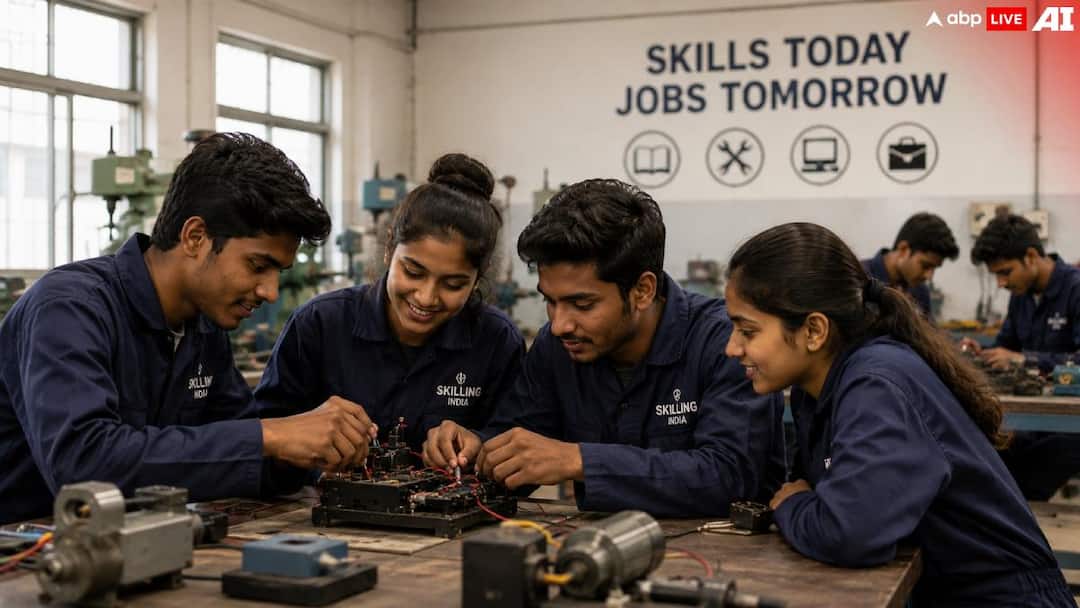

- Vulnerable youth face employment gaps; possess resilience but lack access.
- Bridge skills gaps with early foundational, market-aligned training.
- Soft skills, mentorship, and post-placement support ensure job retention.
- Collaboration among stakeholders ensures equal opportunity for all youth.
India’s job market has never been more demanding. Every year, employers across sectors report a widening gap between the skills they need and the skills available in the workforce. For most young people, navigating this gap is hard enough. For vulnerable children, those who have grown up without stable family support, in poverty, or through institutional care, the climb is steeper still than it needs to be. Yet with the right interventions, this group can not only close the gap but turn their resilience into a genuine competitive advantage.
The first step is recognising that vulnerability and employability are not opposites. Children who have navigated difficult circumstances often develop adaptability, resourcefulness and grit, qualities employers increasingly value. What they typically lack is not capability, but access: to quality education, to industry-relevant training, to mentorship, and to networks that connect ambition with opportunity. Upskilling strategies for this group must therefore do more than teach a skill; they must build the entire bridge between a child’s circumstances and a functioning career.
The key success factors for the most employable young people would be the right combination of strong educational foundation, technical and digital skills, effective communication, practical experience, professional networks, adaptability, resilience and a commitment to lifelong learning. For children and young people in situations of vulnerability, these factors are especially important in helping them secure stable, well-paying employment and achieve long-term independence in the competitive labour market.
ALSO READ: US-Iran Talks Lift Market Sentiment, All Eyes On RBI MPC, Sensex Over 78,600, Nifty 400 Points Up
Start Early, & Start With Foundations
Vocational exposure should not wait until the final year of school. Introducing children to digital literacy, communication skills and basic problem-solving from adolescence gives them a running start.
Foundational skills such as reading comprehension, numeracy, spoken English or a regional-language equivalent, and basic computer use remain the single biggest predictor of whether later technical training will actually translate into employment.
Align Training With Market Demand, Not Assumption
India’s fastest-growing sectors, including retail, logistics, healthcare support, IT-enabled services, renewable energy, and the broader gig and service economy, are actively hiring for mid-level skilled roles. Training programmes for vulnerable youth work best when they are designed in direct consultation with employers, so that certifications map to real job openings rather than generic curriculum.
Short, stackable certifications in areas like data entry, customer service, basic coding, tailoring, electrical work or hospitality allow a young person to enter the workforce quickly and then build upward, rather than waiting years for a single large qualification.
Make Soft Skills Non-Negotiable
Technical skill gets a candidate an interview; workplace behaviour, communication and confidence often decide whether they get the job and keep it.
Many vulnerable children have had limited exposure to structured environments, so training must explicitly include interview practice, workplace etiquette, financial literacy and digital communication, not as an afterthought, but as a core part of the curriculum.
Mentorship Changes Outcomes
A skilled young person without a professional network is still at a disadvantage compared to a peer who has one. Structured mentorship, connecting youth with working professionals, alumni or industry volunteers, gives them what family networks might otherwise have provided: guidance on choosing a path, feedback on real-world readiness, and a foot in the door when it matters most.
Employers, too, benefit from formal apprenticeship and on-the-job training pipelines that de-risk hiring from this talent pool while building loyal, motivated employees.
ALSO READ: 5 Mutual Fund Mistakes That Could Hurt Your Long-Term Wealth And How To Avoid Them
Support Must Extend Beyond Placement
Getting a first job is not the finish line. Many young people from vulnerable backgrounds leave their first jobs within months due to a lack of ongoing guidance on finances, housing, or workplace conflict.
Post-placement support, even light-touch check-ins for the first year, dramatically improves retention and long-term career progression.
Finally, None Of This Works In Isolation
It requires collaboration between training institutions, employers, civil society and government skilling missions, all aligned around a shared goal: ensuring that a child’s start in life does not determine their ceiling.
India has the demographic advantage and the economic momentum. What it needs now is the intentional design to ensure that its most vulnerable young citizens are not left out of the opportunity this growth represents.
For vulnerable youth, more than training, success depends on developing future ready skills, industry experience, confidence and having a strong support system to back them.
Every youth who is given the tools, the training and the trust to succeed is not just a personal success story, they are proof that talent, wherever it starts, deserves the chance to compete on equal footing.
(The author is the CEO of SOS Children’s Villages India)
Disclaimer: The opinions, beliefs, and views expressed by the various authors and forum participants on this website are personal and do not reflect the opinions, beliefs, and views of ABP Network Pvt. Ltd.