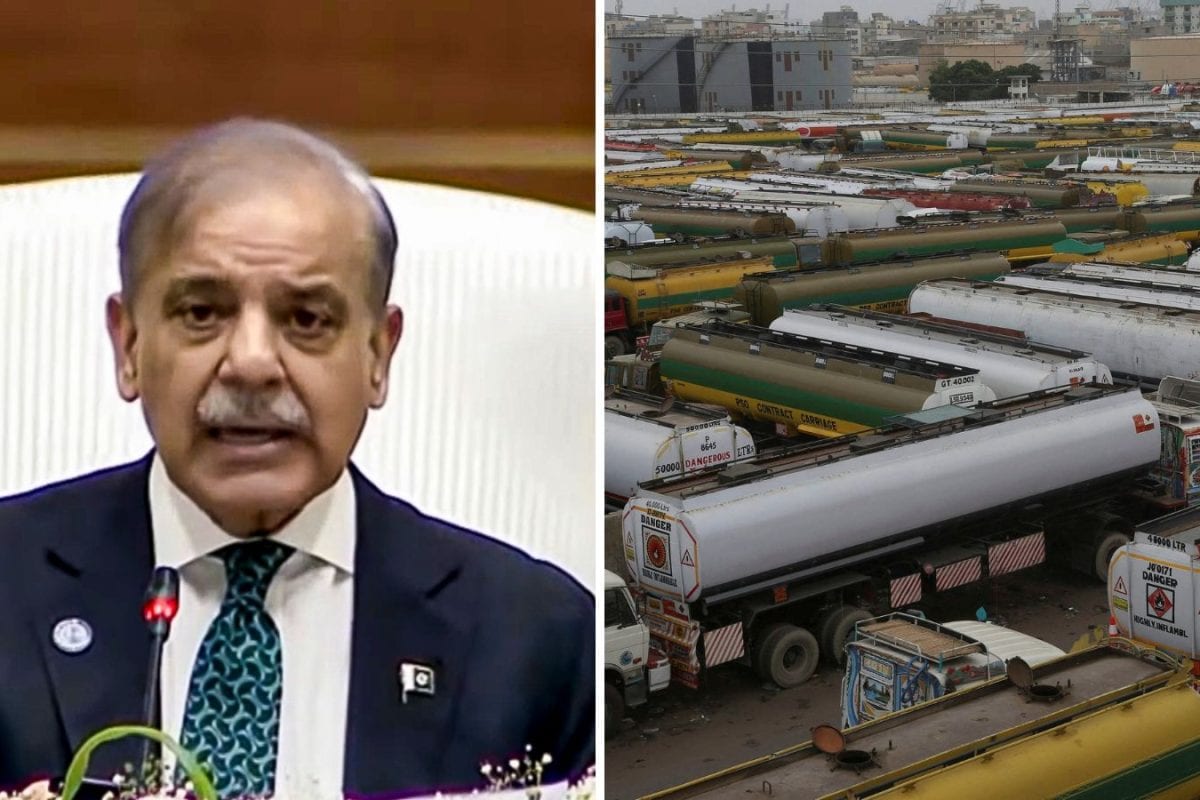
Global crude oil prices cooled marginally on Friday after the United States announced a temporary waiver allowing countries to purchase Russian oil that is currently stranded at sea.
The move, aimed at stabilising supply during a period of heightened geopolitical tensions, offered some relief to energy markets that have been rattled by the ongoing conflict in West Asia.
According to market data reported by IANS, Brent crude was trading at $99.99 per barrel, down 0.47 per cent, while West Texas Intermediate (WTI) declined 0.67 per cent to $95.09 per barrel.
The modest pullback comes after a sharp surge in crude prices over recent days as fears of supply disruptions intensified following escalating tensions in West Asia and concerns about shipping routes through the Strait of Hormuz.
US Announces Temporary Waiver For Russian Oil Purchases
The easing in oil prices followed a policy announcement by the United States that temporarily relaxed restrictions on certain Russian crude shipments.
US Treasury Secretary Scott Bessent said in a post on X that the US Treasury was providing a short‑term authorisation allowing countries to buy Russian oil already in transit.
“To increase the global reach of existing supply, @USTreasury is providing a temporary authorisation to permit countries to purchase Russian oil currently stranded at sea,” Bessent said.
He added that the measure was narrowly designed and would apply only to oil that had already been loaded onto vessels.
“This narrowly tailored, short‑term measure applies only to oil already in transit and will not provide significant financial benefit to the Russian government, which derives the majority of its energy revenue from taxes assessed at the point of extraction,” he said.
According to the US Treasury announcement, the waiver applies to Russian‑origin crude oil and petroleum products loaded on vessels on or before 12:01 AM Eastern Daylight Time on March 12.
Bessent also noted that the recent spike in oil prices should be viewed as a temporary market reaction. “The temporary increase in oil prices is a short‑term disruption that will result in a massive benefit to our nation and economy in the long term,” he added.
Strategic Petroleum Reserve Release Adds To Supply
In another effort to stabilise global energy markets, the United States earlier announced the release of 172 million barrels from its Strategic Petroleum Reserve (SPR).
Such releases are typically used during periods of severe supply disruptions or sharp price volatility in order to inject additional supply into global markets and moderate price spikes.
The announcement comes at a time when the global oil market is navigating a complex mix of geopolitical risk, disrupted shipping routes and tightening supply conditions.
West Asia Crisis Continues To Shape Energy Markets
Oil markets have been particularly sensitive to developments in West Asia in recent weeks.
The conflict involving the United States, Israel and Iran has triggered concerns about supply disruptions across the region. One of the most closely watched risks is the security of the Strait of Hormuz, a narrow maritime passage connecting the Persian Gulf with global shipping routes.
The Strait of Hormuz is one of the world’s most critical energy corridors. A significant share of global crude oil and liquefied natural gas exports pass through the route each day, making it a key artery for international energy trade.
Any disruption to shipping in this region tends to trigger immediate reactions in global oil markets, as even short‑term supply interruptions can tighten availability and push prices higher.
India Says Crude Supply Position Is Secure
Amid the global volatility, the Indian government has said that the country’s crude supply situation remains stable.
Union Minister for Petroleum and Natural Gas Hardeep Singh Puri stated that India has secured oil volumes exceeding what would normally have been delivered through the Strait of Hormuz.
Before the current crisis, approximately 45 per cent of India’s crude imports passed through the Hormuz route. However, according to the minister, alternative sourcing has significantly increased since the disruption began.
“Non‑Hormuz sourcing has risen to approximately 70 per cent of crude imports, up from 55 per cent before the conflict began,” Puri said.
He added that India’s diversified procurement strategy has strengthened the country’s energy security during periods of geopolitical uncertainty.